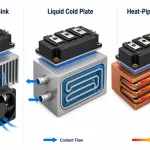
what is a heat sink and how does it work
Think about all the powerful electronics we use daily – from your computer’s brain (CPU) to its graphics card (GPU) and even those sturdy power transistors. They all crank out a lot of heat when they’re working hard. If that heat isn’t dealt with properly, things can go wrong fast: your device might slow down, break completely, or just not last as long. That’s precisely why heat sinks are so crucial. They’re the silent heroes of thermal management, making sure our gadgets stay cool enough to function safely and efficiently by quickly moving excess heat away into the air around them.
How Does a Heat Sink Work?
So, how exactly do these unsung heroes do their job? Well, they tap into the basic physics of how heat moves: through conduction, convection, and occasionally, radiation. Most of the time, though, it boils down to three key stages:
It starts with **conduction**. Picture your CPU generating heat – that heat immediately transfers directly into the flat base of the heat sink. To ensure a super-efficient connection, we often use a thermal interface material, like a dab of thermal paste or a thin pad, between the component and the sink. This little layer fills in tiny air pockets that would otherwise block heat from moving smoothly. Next comes **heat spreading**. Once that heat hits the sink’s base, it quickly spreads out through the material, usually making its way into those distinctive fins. That’s why you’ll often see materials like aluminum or copper here; they’re fantastic at conducting heat, letting it zip across a large surface area evenly. Finally, it’s all about **convection**. The heat, now spread across the fins, moves into the surrounding air. As the fins get warm, they heat up the air right next to them, making it lighter and causing it to rise. Colder, heavier air then rushes in to fill that space, creating a constant cycle that pulls heat away – what we call natural convection. For devices that really crank out the heat, like gaming PCs, a fan usually kicks in to actively blow air over those fins, dramatically boosting how quickly heat gets carried away through what’s known as forced convection.
Key Components and Design Elements
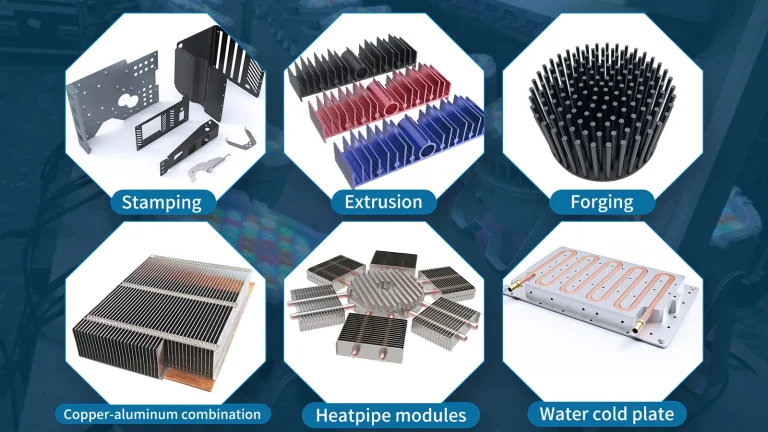
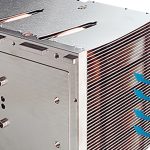
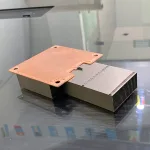
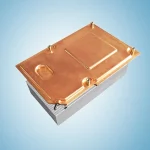
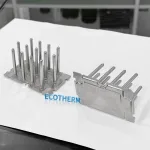
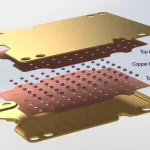
Every heat sink is carefully designed with a few key parts to get the job done right. There’s the **base**, which is that flat bottom surface making direct contact with whatever component is getting hot. Then you have the **fins** – those comb-like or pin-shaped bits sticking up from the base. They’re crucial because they dramatically boost the surface area available for heat to escape into the air. When it comes to **materials**, copper and aluminum are the usual suspects. Copper is a thermal superstar, moving heat incredibly well, but it’s heavier and costs more. Aluminum is a lighter, more budget-friendly option that still performs really well. And don’t forget the **thermal interface material (TIM)**; this is that vital layer of paste, a pad, or even liquid metal that goes between the heat source and the sink, filling any tiny gaps to ensure the best possible thermal connection.
You’ll find heat sinks practically everywhere in our modern world, quietly doing their job across countless devices and industries. They’re essential inside your **computers** – cooling CPUs, GPUs, and even smaller parts like chipsets. In **LED lighting**, especially high-power setups, they’re critical for keeping those bright lights efficient and long-lasting. Look inside **power electronics**, like power supplies or electric vehicle components, and you’ll spot them on transistors and rectifiers. They’re even in your car’s **automotive** systems, from engine control units to infotainment. The **telecommunications** industry relies on them for network routers and servers, and of course, they’re common in everyday **consumer electronics** such as game consoles, laptops, and audio amplifiers.
| Material | Thermal Conductivity (W/m·K) | Pros | Cons |
|---|---|---|---|
| Aluminum (Alloy 6063) | 160-200 | Lightweight, Cost-effective, Good formability | Lower thermal conductivity than copper |
| Copper (C11000) | 380-400 | Excellent thermal conductivity, Durable | Heavier, More expensive, Prone to oxidation |
“Efficient thermal management is no longer an afterthought; it’s a fundamental design consideration that dictates the performance, reliability, and lifespan of every electronic device, from smartphones to supercomputers.” — Dr. Kaveh Azar, CEO of Advanced Thermal Solutions, Inc.
Applications of Heat Sinks
Heat sinks are ubiquitous in modern technology, found in a wide range of devices and industries, including: – **Computers:** CPUs, GPUs, chipsets, voltage regulator modules (VRMs). – **LED Lighting:** High-power LEDs generate significant heat, requiring heat sinks to maintain efficiency and longevity. – **Power Electronics:** Transistors, rectifiers, and other components in power supplies, inverters, and motor drives. – **Automotive:** Engine control units, infotainment systems, electric vehicle components. – **Telecommunications:** Network routers, servers, base stations. – **Consumer Electronics:** Game consoles, laptops, audio amplifiers.
Frequently Asked Questions About Heat Sinks
A passive heat sink relies solely on natural convection to dissipate heat without any moving parts (like a typical CPU heat sink without a fan). An active heat sink incorporates a fan or other mechanical means to force air or liquid over its surface, significantly enhancing heat transfer through forced convection.
Thermal paste (or thermal interface material – TIM) is crucial because it fills the microscopic air gaps and imperfections between the rough surfaces of the heat-generating component and the heat sink base. Air is a poor thermal conductor, so filling these gaps with a highly conductive paste vastly improves the thermal contact and heat transfer efficiency.
While a heat sink is highly effective at dissipating heat, it’s part of a larger thermal management system. Its ability to prevent overheating depends on its design, material, the airflow around it, and the amount of heat generated by the component. In extreme conditions or with inadequate design, even a heat sink might not be sufficient to prevent all overheating.