Maximizing Thermal Efficiency: Why Skived Fin Heat Sinks are the Gold Standard for High-Density Cooling
Thermal management is no longer a secondary consideration in hardware design; it is the primary bottleneck. As Thermal Design Power (TDP) continues to climb in 800G transceivers, high-speed networking switches, and AI accelerators, standard extrusion methods are reaching their physical limits.
For mechanical engineers, the pain point is clear: How do you increase surface area without increasing the footprint? When your volumetric constraints are fixed but your heat flux is rising, you need a solution that eliminates thermal interface resistance and maximizes fin density. This is where Skived Fin Heat Sinks become the indispensable choice for high-performance applications.
What is Skived Fin Technology?
Unlike traditional extruded heat sinks, which are limited by the “extrusion ratio” (the ratio of fin height to the gap between fins), skived fin technology uses a precise slicing process to achieve superior density.
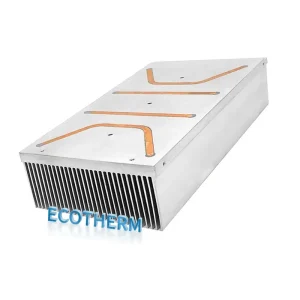
A high-speed, CNC-controlled machine uses a sharp blade to peel up thin layers of material from a solid block of copper or aluminum. These layers are bent vertically to form the fins. Because the fins are “shaved” directly from the base material, the heat sink remains a single, continuous piece of metal.
The Physics of One-Piece Construction
In bonded or soldered heat sinks, the interface between the fin and the base creates a thermal contact resistance. Even with high-conductivity solder, this microscopic gap acts as a barrier, slowing down the rate at which heat moves from the base to the fins.
With a Skived Fin Heat Sink, the thermal path is uninterrupted. This seamless transition allows for a significantly lower Thermal Resistance (Rth), ensuring that heat moves from the hotspot to the cooling surface with maximum efficiency. This “monolithic” structure is the primary reason skived fins outperform bonded fins in high-vibration and high-heat-flux environments.
Comparing Skived Fins to Extrusion and Bonded Fins
When selecting a manufacturing method for your Custom Heat Sink Services, understanding the technical trade-offs is vital for optimizing both cost and performance.
| Feature | Skived Fin Heat Sinks | Aluminum Extrusion | Bonded/Solder Fin |
| Material Options | Copper (C1100) or Aluminum (A6063) | Aluminum Only | Multi-material |
| Max Aspect Ratio | Up to 50:1 | ~10:1 to 15:1 | Up to 60:1 |
| Thermal Interface | None (Monolithic) | None (Monolithic) | Solder/Epoxy Gap (Resistance) |
| Fin Thickness | As thin as 0.1mm | Min ~1.0mm | ~0.2mm – 0.6mm |
| Tooling Cost | Low (CNC Based) | High (Die Required) | Medium |
| TDP Capacity | Very High | Low to Moderate | High |
Why Density Matters: Surface Area vs. Airflow
Skived fins allow for much thinner fins and tighter gaps than extrusion. This allows engineers to pack significantly more surface area into the same volume (W/cm3).
However, increased density creates higher air resistance. It is crucial to calculate the pressure drop (Delta P) across the heat sink to ensure your chosen fan or forced-air system has enough static pressure to push air through the fin stack. Our engineering team can help model this trade-off to find the “sweet spot” between surface area and flow.
Material Selection: Copper vs. Aluminum Skiving
While aluminum is lightweight and cost-effective, Skived Copper Heat Sinks are the preferred choice for localized high-heat sources like CPUs, GPUs, and laser diodes.
Elimination of Spreader Plates: In many high-end designs, an aluminum heat sink requires a copper plate embedded in the base to handle the initial heat spread. Skiving allows you to create a 100% copper unit, providing superior heat spreading throughout the entire structure without the complexity of embedding disparate metals.
Precision CNC Machining Tolerances: Our factory utilizes advanced skiving machinery that maintains CNC Machining Tolerances within ±0.1mm. This precision is critical when the heat sink must interface perfectly with delicate optical modules or flip-chip BGA packages.
Prototype Flexibility: Unlike extrusions, which require expensive steel dies and lead times of 4-6 weeks for tooling, skived fins are produced via a machining process. This makes them ideal for rapid prototyping—we can often ship samples in under 2 weeks.
Applications in 800G Transceivers and AI Hardware
The shift toward 800G and 1.6T optical modules has pushed the thermal management industry toward Skived Fin Technology. These modules generate significant heat in an incredibly small form factor (QSFP-DD / OSFP).
Optical Modules: Thin-fin copper skiving allows for effective cooling within the tight Z-height constraints of networking faceplates. The high conductivity of copper (approx. 400 W/m\cdot K) is essential here.
Power Converters: High-power density DC-DC converters benefit from the thin-fin geometry to dissipate heat in liquid-cooled or high-airflow environments.
AI Edge Computing: For ruggedized AI hardware where fans might fail, skived aluminum offers a balance of lightweight construction and high natural convection performance.
Optimizing Your Thermal Design
When designing a Custom Heat Sink, it is not enough to simply maximize fin count. You must balance the Fin Pitch (the distance between fins) with the Airflow Velocity.
If the fins are too close together, the air will bypass the heat sink entirely (airflow bypass), leading to a spike in component temperature. Our engineering team uses CFD (Computational Fluid Dynamics) to simulate these variables, ensuring that your Skived Fin Heat Sink is optimized for your specific system impedance.
Why choose our factory?
We don’t just cut metal; we engineer solutions. From initial DFM (Design for Manufacturing) analysis to final thermal testing, we ensure your heat sink meets the rigorous demands of modern electronics. If you are currently facing thermal throttling in your prototypes, our Custom Heat Sink Services can help you transition from a standard “off-the-shelf” part to a precision-engineered skived solution.
Conclusion: The Precision Advantage
Skived Fin Heat Sinks offer the unique combination of high fin density, zero interface resistance, and low upfront tooling costs. For engineers managing high TDP components in space-constrained environments, the monolithic construction of a skived fin provides a reliability and performance level that extrusions simply cannot match.
By choosing skived technology, you are investing in a more compact, more efficient, and more reliable thermal solution.
Ready to optimize your thermal management?
[Contact our engineering team today] to discuss your project requirements, or visit our [Skived Fin Technology] page to see our full manufacturing capabilities.
FAQ: Frequently Asked Questions
1. What is the maximum fin height for Skived Fin Heat Sinks?
While the process is highly flexible, the practical limit for skived fin height is typically around 50mm to 100mm, depending on the material and the fin thickness. As the fin gets taller, the risk of “fin curling” or bending increases during the skiving process. Our factory uses specialized guides to maintain verticality even in high-aspect-ratio designs.
2. Is a Skived Fin Heat Sink more expensive than an extruded one?
On a per-unit basis for high-volume production (10,000+ units), aluminum extrusion is usually more cost-effective due to the speed of the process. However, for low-to-medium volumes (100 to 5,000 units) or for designs requiring copper and high fin density, Skived Fin Heat Sinks are often more economical because they eliminate the thousands of dollars required for extrusion dies.
3. Can you combine Skived Fin Technology with heat pipes?
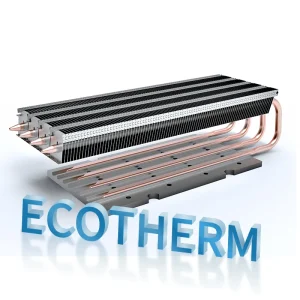
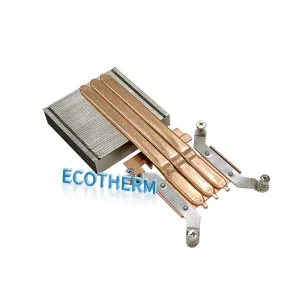
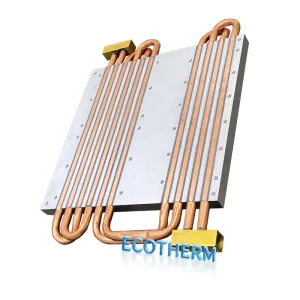
Absolutely. We frequently manufacture skived fins with CNC-machined grooves in the base to embed heat pipes or vapor chambers. This “hybrid” approach uses the heat pipes to move heat quickly away from the source and utilizes the high-density skived fins to dissipate it into the ambient air, providing the ultimate solution for extreme TDP requirements.