Eight Key Differences Between Air Cooling and Liquid Cooling in Energy Storage Systems
Energy storage systems are a critical pillar in building new-type power systems, capable of converting electrical energy into chemical energy for storage and releasing it when needed. Currently, air cooling and liquid cooling are two widely used thermal management methods in energy storage systems. This article provides a detailed comparison of the differences between air cooling and liquid cooling.
1. Different Cooling Principles
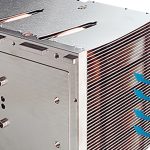
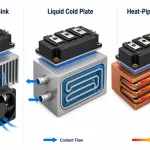
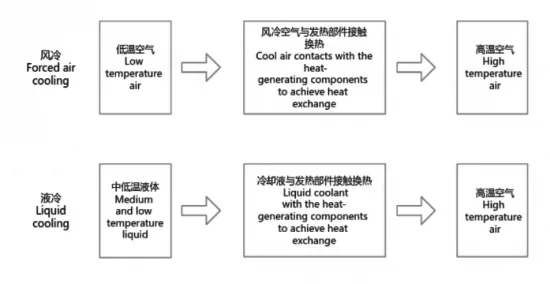
Air cooling dissipates heat by using airflow to carry away thermal energy, thereby reducing the surface temperature of equipment. Its advantages include a simple structure and low cost. However, its cooling efficiency is significantly affected by environmental temperature and airflow conditions, making it unsuitable for high-power, high-density devices.
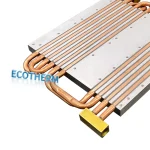
Liquid cooling removes heat through circulating coolant to lower the internal temperature of equipment. It offers superior cooling performance and high stability but comes with higher costs and requires maintenance of the liquid circulation system.
2. Different Applicable Scenarios
Air cooling systems are suitable for energy storage systems of various scales and types, particularly in outdoor environments where they demonstrate better adaptability. As the most widely adopted cooling technology today, they are used in industrial refrigeration, communication base stations, data centers, and temperature-controlled scenarios, offering relatively high technological maturity and reliability. Air cooling remains the mainstream choice for medium-to-low power applications.
Liquid cooling systems are also applicable to energy storage systems of diverse scales and types, but they excel in large-scale, high-energy-density projects, especially those with high battery pack energy density, fast charge/discharge rates, or environments with significant temperature fluctuations.
3. Varying Design Complexity
Air-cooled energy storage systems are relatively simple in design, primarily involving the installation of cooling fans and airflow path optimization. Their core components include air conditioners and air ducts, where refrigeration and heat exchange occur.
In contrast, liquid cooling designs are typically more complex, requiring considerations such as layout planning for liquid circulation systems, pump selection, and ongoing maintenance of coolant circulation.
4. Different Cooling Efficiency
Air cooling efficiency is heavily influenced by environmental temperature and airflow, often failing to meet the thermal demands of high-power devices. In contrast, liquid cooling provides superior heat dissipation, effectively lowering internal device temperatures while enhancing stability and longevity.
5. Variations in Operational Power Consumption
The composition of power consumption differs between the two methods. Air cooling primarily relies on air conditioners and electrical compartment fans, while liquid cooling depends on liquid cooling units and electrical compartment fans (some manufacturers adopt full-system liquid cooling). Under equivalent conditions to maintain the same temperature, air cooling typically consumes more power than liquid cooling.
6. Contrasts in Cost and Maintenance
Air cooling systems have lower upfront costs and simpler maintenance. However, due to their limited cooling capacity, additional heat sinks or higher fan speeds may be required to improve performance, increasing energy use and long-term maintenance expenses.
Liquid cooling systems involve higher initial costs and demand maintenance of the liquid circulation infrastructure. Yet, their excellent cooling performance and stability reduce device failure rates and repair costs. Over the long term, liquid cooling may prove more cost-effective overall compared to air cooling.
7. Differences in Noise and Space Requirements
Air cooling generates lower noise levels and has minimal environmental impact. However, the installation of fans and heat sinks may occupy more physical space. Liquid cooling systems produce higher noise levels, affecting the surrounding environment, but their compact heat exchangers save space. Additionally, noise impacts from liquid cooling can be mitigated through optimized radiator design and layout.
8. Safety and Risk Considerations
Air cooling systems are inherently safer due to their simple structure and absence of liquid leakage risks. However, fan-related safety issues—such as malfunctions or overheating—require attention. Liquid cooling carries higher risks, including potential coolant leaks and corrosion. Consequently, liquid cooling systems demand high-quality materials and rigorous sealing designs to ensure safe operation.
Conclusion
Air cooling and liquid cooling are two prevalent thermal management methods in energy storage systems, each with distinct advantages and limitations. When selecting a cooling approach, factors such as device power, thermal demands, budget constraints, and environmental conditions must be holistically evaluated. As technology advances, future innovations—such as hybrid air-liquid cooling, immersion cooling, or other novel solutions—may deliver more efficient and cost-effective cooling methods, further ensuring the stable operation of energy storage systems.