What Is a Vapor Chamber?
A vapor chamber is a sealed, evacuated, flat heat spreader that transfers heat through the evaporation and condensation of a small amount of working fluid.
Heat entering the evaporator turns the liquid into vapor. The vapor spreads through the chamber and condenses over cooler areas, while an internal wick returns the liquid to the heat source by capillary action.
This continuous two-phase cycle spreads concentrated heat across a larger surface with a smaller temperature difference than a solid copper or aluminum plate.
Vapor chambers are commonly used to cool CPUs, GPUs, power electronics, smartphones, servers and other devices with high heat flux or limited installation space.
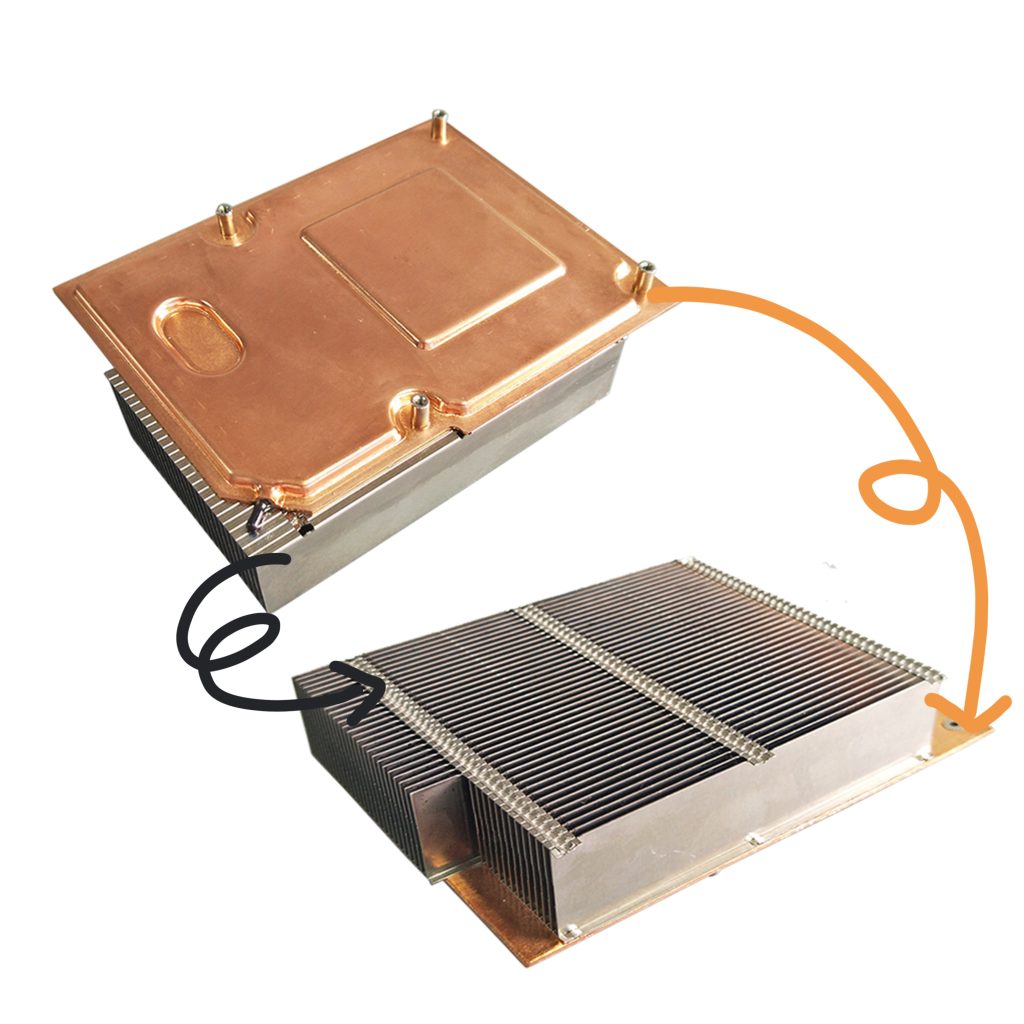
In short: a vapor chamber is a passive two-phase heat spreader.
It moves heat away from a concentrated source and distributes it across a larger cooling surface.
You find vapor chamber cooling technology in lots of new electronics. It helps move heat fast and spread it out evenly. These are flat and thin copper heat spreaders that contain a little water or another liquid inside. Makers often use two stamped plates to build vapor chambers. Sometimes, they flatten big copper tubes to create them, which are usually 2.5 to 4 mm thick. The market for vapor chamber cooling technology is growing quickly and may reach about USD 1400 million by 2033. This indicates that good heat control is very important for the devices you use every day.
Vapor Chamber Cooling Technology Overview
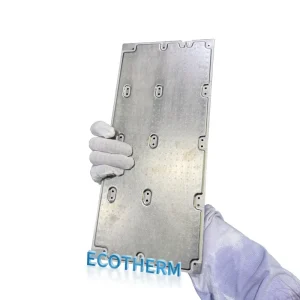
What Is a Vapor Chamber
Vapor chambers are found in lots of new electronics. They help control heat well. A vapor chamber is flat and thin. It is mostly made from copper. Inside, there is a little water or another liquid. The vapor chamber has three main parts. There is a sealed shell, a wick, and the working fluid. The shell is closed tight to keep the liquid inside. The wick helps move the fluid around. The fluid and vapor stay balanced. The fluid can change when heat comes.
Tip: Copper is used most because it moves heat fast. Aluminum is used for lighter devices. Metal mesh or powder helps the fluid move inside the chamber.
You can find vapor chambers in many devices. They are in hard drives, gaming laptops, graphic cards, servers, and smartphones. Vapor chambers help keep batteries and processors cool. This is important when you play games or edit videos. Data centers use vapor chambers to spread heat. This means they do not need as many fans. Some LED lights use vapor chambers so they do not get too hot.
A vapor chamber spreads heat; it does not remove heat from the system by itself. The condenser side normally transfers the heat to fins, a heat sink, airflow or another cooling interface.
Vapor Chamber Structure
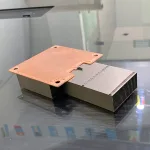
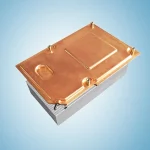
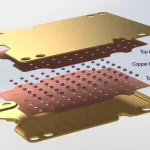
A typical vapor chamber consists of a sealed metal shell, an internal wick, a small amount of working fluid, a vapor space and structural supports.
The shell is commonly made from copper because it offers good thermal conductivity and is compatible with water, which is widely used as the working fluid in electronics cooling. The wick may be made from sintered copper powder, metal mesh, grooves or a composite structure. Its purpose is to return condensed liquid to the evaporator through capillary action.
Inside the chamber, the vapor core allows vapor to move rapidly from the hot region to cooler areas. Support columns or internal ribs maintain the vapor-flow space and prevent the thin shell from deforming under external pressure or mounting loads.

How Vapor Chambers Work
1. Heat enters the evaporator
Heat from a CPU, GPU or another component passes through the chamber shell and reaches the wick and working fluid.
2. The working fluid evaporates
Under the chamber’s reduced internal pressure, the liquid absorbs latent heat and changes into vapor.
3. Vapor spreads through the chamber
The resulting pressure difference drives the vapor away from the hot spot and toward cooler regions.
4. Vapor condenses
At the condenser area, the vapor releases heat to the external cooling surface and changes back into liquid.
5. The wick returns the liquid
Capillary pressure in the wick moves the condensed liquid back toward the evaporator.
6. The cycle repeats
As long as a temperature difference exists, evaporation, vapor transport, condensation and liquid return continue without a pump.
Because vapor can spread in two dimensions inside the chamber, a vapor chamber is particularly effective at reducing hot spots and improving temperature uniformity across a heat sink base. Its actual performance depends on chamber size, thickness, wick design, working fluid, orientation, heat-source area and condenser conditions.
This process makes vapor chamber cooling technology work very well. The chamber can handle heat from 20 W to 500 W. It does not lose much performance. Some vapor chambers have thermal resistance as low as 0.029 °C/W at 200 W. This means they move heat very well.
| Material | Properties |
|---|---|
| Copper | Moves heat very well |
| Aluminum | Light and spreads heat well |
| Metal Mesh | Helps fluid move inside the chamber |
Vapor chamber cooling technology helps devices last longer. If your device stays cool, it works better and lasts more years. Vapor chambers can survive over 500,000 heating and cooling cycles. Devices with good cooling last 7 to 10 years. Poor cooling can make them last only half as long.
Note: As electronics get smaller and stronger, vapor chamber cooling technology gets more important. You will see more vapor chambers in laptops, gaming devices, electric vehicles, and data centers soon.
Why Vapor Chamber Cooling Is Used
Vapor chamber cooling is used when a small, high-power component generates more concentrated heat than a conventional metal plate can spread effectively. Instead of relying only on conduction through copper or aluminum, a vapor chamber uses evaporation, vapor movement, condensation and capillary liquid return to distribute heat across a larger surface.
The main purpose of a vapor chamber is heat spreading. It reduces concentrated hot spots and helps more of the connected heat sink or cooling surface participate in heat transfer. However, a vapor chamber does not make heat disappear. The heat must still be transferred from the chamber to fins, airflow, a chassis, a cold plate or another cooling interface.
Hot-Spot Reduction
Processors and power electronics often generate heat within a relatively small contact area. CPUs, GPUs, IGBTs and other semiconductor devices can therefore develop localized hot spots even when the average system temperature appears acceptable.
A vapor chamber places its evaporator region close to the heat source. The working fluid in this region absorbs heat and changes into vapor. The vapor then spreads through the internal vapor space toward cooler areas, where it condenses and releases the heat. This process distributes concentrated thermal energy over a wider part of the chamber.
By reducing spreading resistance between the heat source and the cooling surface, a vapor chamber can help:
- Reduce peak component temperatures;
- Limit localized temperature gradients;
- Improve the use of a larger heat sink base;
- Reduce thermal throttling in high-performance electronics;
- Support components with high heat flux and small contact areas.
The final result depends on the complete thermal system, including the vapor chamber dimensions, wick structure, heat-source area, interface material, mounting pressure, fin design and available airflow.
Temperature Uniformity
Another important benefit of vapor chamber cooling is improved temperature uniformity. A solid copper or aluminum base transfers heat through conduction, so areas farther from the heat source may remain significantly cooler than the region directly above it. As a result, part of the heat sink may be underused while a hot spot remains near the component.
A vapor chamber spreads vapor in multiple directions across its internal space. This allows heat to reach a larger condenser area and can produce a more uniform surface temperature than a solid metal plate of similar dimensions.
Better temperature uniformity can improve system performance in several ways:
- More of the fin stack contributes to heat dissipation;
- Multiple heat sources can share a larger cooling surface;
- Temperature differences across batteries, LEDs or electronic modules can be reduced;
- Thermal stress caused by uneven heating may be limited;
- Cooling-system performance becomes less dependent on the area directly above the heat source.
A vapor chamber is especially useful when the heat source is much smaller than the available heat sink or when several components must transfer heat into a shared cooling assembly.
Compact Thermal Design
Modern electronic devices must often provide higher performance within thinner and smaller enclosures. Increasing heat sink height or adding larger fans may not be possible in these designs. Vapor chambers provide a passive way to spread heat within a relatively flat form factor, making them suitable for space-constrained thermal systems.
Common applications include:
- Smartphones: Ultra-thin vapor chambers spread processor heat across a larger area inside a slim enclosure.
- Gaming laptops: Vapor chambers can distribute heat from CPUs, GPUs and memory components to shared fin stacks.
- Graphics cards: A large vapor chamber base helps spread GPU heat across multiple heat pipes or cooling fins.
- Servers: Vapor chambers can connect high-heat-flux processors to a larger air-cooled heat sink surface.
- Power electronics: IGBTs, power modules and converters may use vapor chambers to reduce concentrated thermal loads.
- High-power LEDs: Improved heat spreading helps create a more uniform temperature across LED modules and their cooling bases.
Although vapor chambers support compact cooling designs, they are not automatically the best solution for every application. A low-power device may be cooled adequately with a solid aluminum or copper plate. Systems with very high continuous heat loads may require pumped liquid cooling or another active cooling method.
Vapor chamber cooling should therefore be selected according to the heat load, heat-source size, available space, orientation, required temperature uniformity and the performance of the final heat-rejection system.
Key point: A vapor chamber improves how heat is spread from a concentrated source to a larger cooling surface. It does not replace the need for fins, fans, liquid loops or other methods that ultimately reject the heat to the surrounding environment.
Common Types of Vapor Chambers
Vapor chambers are available in several forms to suit different space and heat-spreading requirements. The main types are standard flat, ultra-thin and 3D vapor chambers.
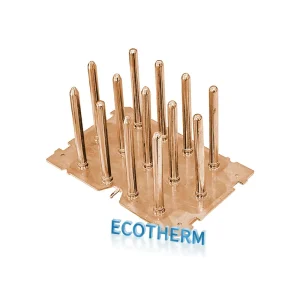
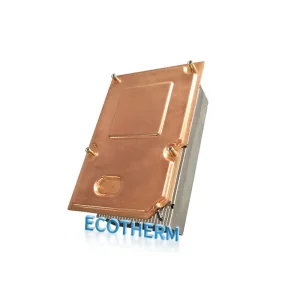
Standard Flat Vapor Chambers
A standard flat vapor chamber spreads heat in two dimensions across a sealed, plate-shaped enclosure. It is commonly installed between a concentrated heat source, such as a CPU or GPU, and a larger heat sink or fin stack. This is the most widely used vapor chamber design for electronics cooling.
Ultra-Thin Vapor Chambers
Ultra-thin vapor chambers use the same evaporation and condensation cycle in a much thinner package. They are designed for smartphones, tablets, slim laptops and other devices with limited internal height. Because reducing the thickness also reduces the space available for vapor flow and liquid return, the internal structure must be matched carefully to the heat load.
For more detail, see our guide to ultra-thin vapor chambers.
3D Vapor Chambers
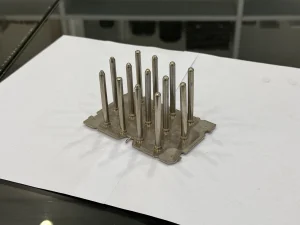
A 3D vapor chamber moves heat between surfaces that are not on the same plane, making it useful for thermal layouts where a standard flat chamber cannot connect the heat source and cooling surface directly. Its structure and manufacturing requirements differ from those of a flat vapor chamber.
For a detailed explanation, see our 3D vapor chamber guide.
A 3D vapor chamber extends the evaporator or condenser geometry beyond a single flat plane, allowing heat to move through more complex mechanical layouts. Because 3D vapor chambers involve different structures and manufacturing considerations, they are covered in a separate technical guide.
Where Are Vapor Chambers Used?
Vapor chambers are used when heat from a small component needs to be spread across a much larger cooling surface. They are especially useful in compact devices where space, temperature uniformity and hot-spot control are important.
| Application | Why a Vapor Chamber Is Used |
|---|---|
| Smartphones | Spreads heat from the processor across a thin device enclosure |
| Laptops and GPUs | Reduces hot spots and makes better use of the heat sink and fin stack |
| Servers | Distributes concentrated processor heat across a larger cooling area |
| Power electronics | Manages concentrated heat from IGBTs, power modules and other compact components |
| High-power LEDs | Improves temperature uniformity across the LED cooling base |
High-performance smartphones increasingly use ultra-thin vapor chambers to spread processor heat across the device enclosure. For a device-specific example, see our analysis of the iPhone 17 Pro vapor chamber.
Vapor chambers are passive heat spreaders rather than complete cooling systems. In most applications, they work with fins, fans or another cooling interface that removes the distributed heat from the device.
Vapor Chamber Cooling Technology vs Other Methods
Heat Pipes Comparison
Heat pipes are found in laptops and graphics cards. They move heat from one place to another. Vapor chamber cooling technology spreads heat in more than one direction. This helps your device stay cool in many spots.
Here is a table that shows how vapor chambers and heat pipes are different:
| Feature | Vapor Chamber | Heat Pipe |
|---|---|---|
| Thermal Conductivity | Great for even heat spreading | Good for moving heat along pipe |
| Heat Carrying Capacity | Up to 450 watts | Max about 125 watts sideways |
| Isothermality | Keeps temperature steady | Temperature changes more |
Vapor chambers keep the whole surface at a steady temperature. Heat pipes work best for moving heat from one end to another. Vapor chambers are better for cooling chips and batteries evenly.
You can also look at how they are built and used:
| Feature | Heat Pipes | Vapor Chambers |
|---|---|---|
| Structure | Sealed pipe with wick inside | Two plates sealed with vapor and wick inside |
| Heat Transfer Direction | Moves heat along the pipe | Moves heat in many directions |
| Mechanical Stress Handling | Handles strong forces well | Can be hurt by mounting, but new designs help |
| Flexibility | Can bend to fit places | Usually stiff, so harder to fit |
Tip: Vapor chamber cooling technology works better than heat pipes if you need cooling in tight spaces or want heat to move in many ways.
Metal Heat Sinks Comparison
Metal heat sinks use copper or aluminum fins to pull heat away. You see these in desktop computers and some old laptops. Vapor chambers move heat faster and spread it out better.
Here is a table that shows the difference:
| Property | Vapor Chambers | Copper Heat Sinks |
|---|---|---|
| Effective Thermal Conductivity | Over 5000 W/m°C | 401 W/m°C |
| Density | Lower than copper | Higher than vapor |
| Weight | Lighter | Heavier |
| Thermal Resistance | Lower | Higher |
Vapor chambers are lighter and fit well in thin devices. Metal heat sinks are heavier and take up more space. Vapor chambers cool slim laptops and smartphones better.
Note: Vapor chambers keep your device cool without making it big or heavy.
Water Cooling Comparison
Water cooling uses pumps and tubes to move liquid. This system works well for gaming computers and servers. Vapor chamber cooling technology gives strong cooling in a small space.
Here is a table that compares vapor chambers and water cooling:
| Feature | Vapor Chamber | Liquid Cooling |
|---|---|---|
| Efficiency | Spreads heat evenly | Gets rid of heat very well |
| Maintenance Requirements | Needs little care | Needs more work and checking |
| Design | Small, fits in tight spaces | Big, may not fit in small places |
| Response Time | Changes temperature quickly | Slower because liquid moves around |
Vapor chambers need less care and fit in small devices. Water cooling needs pumps and tubes, so it takes up more room. You need to check water cooling often to keep it working.
You can also look at cost and risk:
| Feature | Vapor Chamber Cooling | Liquid Cooling |
|---|---|---|
| Cost | Costs more to make | Usually costs less at first |
| Complexity | Needs almost no care | Needs regular care and checking |
| Size | Small, fits in tight spaces | Bigger because of extra parts |
| Risk of Failure | Very low chance of leaks | Higher chance of leaks and pump issues |
Callout: Vapor chambers give strong cooling with less risk and less work. Water cooling works well for big computers but may not fit in small devices.
You can pick vapor chamber cooling technology for slim laptops, tablets, and phones. Water cooling is best for big gaming computers and servers. Vapor chambers help you get great cooling in a small space with less worry.
Advantages and Limitations of Vapor Chambers
Vapor chambers can reduce spreading resistance between a concentrated heat source and a larger cooling surface. Their performance, however, depends on the internal design and how the chamber is integrated into the complete thermal system.
| Advantages | Limitations |
|---|---|
| Spreads heat in two dimensions | Costs more than a simple copper or aluminum plate |
| Improves temperature uniformity across the cooling surface | Available thickness affects vapor flow and mechanical strength |
| Operates passively without a pump | Performance depends on the wick, vapor space and condenser design |
| Works well with small, concentrated heat sources | Heat transport is limited by capillary, boiling and vapor-flow conditions |
| Can be integrated with heat sinks and fin stacks | Requires controlled flatness, mounting pressure and thermal interfaces |
A vapor chamber is most useful when a small heat source must transfer heat into a much larger cooling surface. CPUs, GPUs and power modules are common examples because their heat-source area is often much smaller than the attached heat sink.
A vapor chamber may offer little benefit when the heat load is low or when the heat source already covers most of the cooling surface. In these cases, a solid copper or aluminum plate may provide adequate performance at a lower cost.
Mechanical integration also matters. Excessive mounting pressure can deform a thin chamber or restrict the internal vapor space, while poor flatness and uneven thermal interface material can increase contact resistance. The vapor chamber must therefore be selected as part of the full thermal path, including the heat source, interface material, heat sink, airflow and operating orientation.