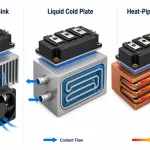
Liquid Cold Plate Heat Sink for Efficient Cooling
As electronics become more advanced, managing heat effectively is essential for maintaining performance and extending the lifespan of devices. A heat sink, especially the liquid cold plate type, provides an efficient way to dissipate heat from high-powered components. This article explores how liquid cold plate heat sinks work and why they are a vital part of modern cooling systems.
Takeaway
- Liquid cold plate heat sinks use liquid coolant to transfer heat from high-performance electronics, providing better thermal management than traditional air-cooled systems.
- The system works by circulating liquid through channels or plates in direct contact with heat-generating components, ensuring efficient heat dissipation and reliable performance.
- Benefits include higher thermal conductivity, compact design, quieter operation, and enhanced performance for applications needing precise temperature control, like data centers and electric vehicles.
- Design and manufacturing focus on optimizing channel layouts, selecting suitable materials, and ensuring coolant compatibility to maximize efficiency and durability.
- Performance is evaluated by measuring factors such as thermal resistance, pressure drop, and coolant flow rate to ensure effective operation under different conditions.
- New industry trends include using advanced materials, 3D printing for custom designs, and integrating smart technologies for real-time temperature monitoring.
- Liquid cold plate heat sinks are becoming essential for managing heat dissipation challenges in modern high-power electronics and renewable energy systems.
Introduction to Heat Sink Technology
Heat sinks are vital components in electronic systems, designed to dissipate heat generated by electronic devices. Efficient heat management ensures the longevity and reliable performance of these devices. A heat sink works by absorbing heat from the electronic components and dispersing it into the surrounding environment. This is achieved through mechanisms like conduction, convection, and radiation. Heat sink technology is central to cooling systems in advanced electronics.
What is a Heat Sink?
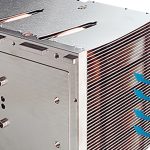
A heat sink is usually made from materials with high thermal conductivity, such as copper or aluminum. Copper is valued for its excellent heat transfer capabilities, while aluminum provides a lightweight and cost-effective alternative. Heat sinks are designed with fins or channels to increase the surface area for heat exchange. As technology advances, heat sinks have become more sophisticated, incorporating innovative designs like microchannels to meet the needs of compact, high-power systems such as AI servers and GPUs. This is especially critical for industries like data centers and electric vehicles, where efficient heat management is essential.
The Role of Liquid Cold Plates in Heat Dissipation
Liquid cold plate heat sinks are a major advancement in thermal management technology. Unlike traditional air-cooled systems, liquid cold plates use a coolant to transfer heat away from electronic components. This design improves heat dissipation, making it ideal for high-power applications. Ecothemgroup, a leader in thermal management solutions, highlights the importance of liquid cold plates in reducing power usage and enhancing efficiency in data centers.
Liquid cold plates feature internal channels that allow coolant to circulate and remove heat through conduction and convection. The performance of these systems depends on the flow rate and channel configuration, which are crucial for maintaining consistent thermal performance and preventing hot spots. Regular maintenance, such as checking for leaks and cleaning channels, can extend the lifespan of these heat sinks and ensure reliable operation.
| Material | Characteristics |
|---|---|
| Copper | High thermal conductivity, excellent heat transfer |
| Aluminum | Cost-effective, lightweight |
Liquid cold plate heat sinks are essential for modern electronics that require efficient thermal management. As power densities increase, air cooling becomes less effective, making liquid cooling solutions indispensable. Insights from industry leaders like Ecothemgroup show that these heat sinks are crucial in advancing electronic cooling technology.
How Liquid Cold Plates Work
Heat Transfer Mechanisms
Liquid cold plates use fluid dynamics and thermal conductivity to efficiently dissipate heat. In these systems, coolant—typically water or a glycol mixture—flows through internal channels within the metal base plate. Heat-generating components transfer their thermal energy to the metal surface of the cold plate, where the circulating liquid absorbs the heat and carries it away. This process is more effective than traditional air-based heat sinks, especially for high-power applications like data centers and electric vehicles. Liquid cooling enhances thermal performance and enables the cooling of smaller, denser components.
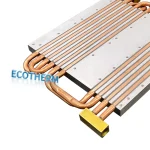
Advanced designs like microchannels or serpentine paths are key features of liquid cold plates. These geometries maximize the contact area between the coolant and the heat source, ensuring even heat distribution and improving thermal conductivity. For instance, Ecothemgroup incorporates these designs in their systems to enhance cooling efficiency in high-density electronics.
Key Components of Liquid Cold Plates
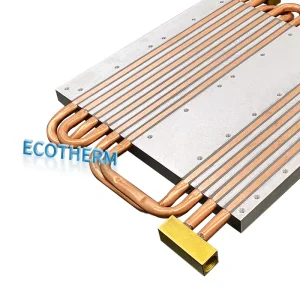
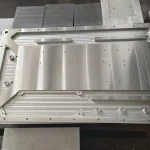
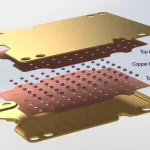
Several important components define the efficiency of liquid cold plates. The base plate, often made from aluminum or copper, plays a critical role due to its high thermal conductivity. These materials enable rapid heat transfer from the heat source to the coolant. Embedded channels or tubes within the plate are designed to maintain consistent liquid flow, which is essential for optimal cooling.
The pump circulates the coolant through the plate and external heat exchanger, ensuring the proper flow rate for effective heat dissipation. Manufacturers like Ecothemgroup prioritize reliable sealing technologies to prevent leaks that could harm sensitive electronics. Choosing the right coolant, such as water or glycol mixtures, is also vital due to their thermal properties and system compatibility.
| Component | Function |
|---|---|
| Base Plate (Aluminum/Copper) | Transfers heat from components to coolant |
| Internal Channels | Circulate coolant for heat absorption |
| Pump | Ensures proper liquid flow |
| Coolant (Water/Glycol) | Absorbs and carries away heat |
- Improved thermal performance compared to air cooling
- Supports high-density electronics
- Reduces power consumption in data centers
- Minimizes risk of overheating for critical systems
Advantages of Liquid Cold Plate Heat Sinks
Efficiency Compared to Air Cooling
Liquid cold plate heat sinks provide significantly better thermal performance than traditional air-cooled systems. By using liquid as the primary cooling medium, these heat sinks take advantage of the superior thermal conductivity of liquids to dissipate heat more effectively. Microchannel designs, for example, can manage high heat loads in data centers, ensuring optimal temperatures for critical components. Ecothemgroup highlights that liquid cooling solutions can lower energy consumption by improving power usage effectiveness (PUE), a key metric for energy efficiency in high-density environments.
Another benefit is the compact design of liquid cold plate heat sinks. Unlike bulky air-cooled systems, they require less space while delivering superior cooling performance. This makes them ideal for applications where space is limited, such as compact electronic devices or densely packed server racks.
| Cooling Method | Thermal Conductivity | Space Requirement |
|---|---|---|
| Air Cooling | Low | High |
| Liquid Cooling | High | Low |
Applications in High-Density Systems
Liquid cold plate heat sinks are especially useful in high-density systems where managing heat output is crucial. Industries such as data centers, electric vehicles (EVs), and advanced computing systems rely on these solutions for effective thermal management. For example, modern EVs use liquid cold plates to maintain consistent battery performance by preventing overheating. In data centers, liquid cooling reduces the risk of temperature-related failures, enhancing the reliability of critical systems.
Another advantage is the customization potential of liquid cold plate heat sinks. Manufacturers like Ecothemgroup offer tailored solutions to meet specific industry needs, ensuring optimal performance based on unique heat dissipation requirements. This flexibility makes them suitable for a wide range of environments, from harsh industrial conditions to precision electronics.
- Improved reliability and reduced overheating risks
- Efficient cooling for high-power electronics
- Customizable designs for specific applications
- Enhanced energy efficiency for sustainable operations
Design and Manufacturing Processes
Material Selection
Material selection is a crucial step in designing liquid cold plate heat sinks. Copper and aluminum are commonly used due to their excellent thermal conductivity and mechanical strength. Copper, while heavier and more expensive, provides superior thermal performance, making it ideal for high-power applications like AI data centers. Aluminum is lightweight and cost-effective, making it suitable for applications with moderate thermal demands, such as EV battery cooling. Both materials are treated to resist corrosion, ensuring long-term reliability and durability.
| Material | Key Features |
|---|---|
| Copper | High thermal conductivity, ideal for high-power systems |
| Aluminum | Lightweight and cost-effective, suited for moderate thermal loads |
To boost the performance of liquid cold plate heat sinks, manufacturers often apply surface coatings or anodization processes to enhance corrosion resistance and compatibility with various cooling fluids. These treatments help maintain the structural integrity of the plates, even in demanding conditions.
Microchannel Design Innovations
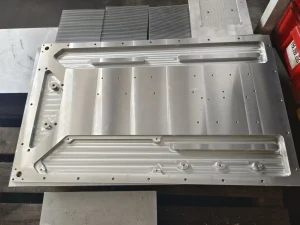
Advances in manufacturing have led to significant improvements in microchannel designs for liquid cold plate heat sinks. Techniques like CNC milling and gun drilling enable the creation of complex internal flow paths to maximize heat dissipation. Microchannels, with their narrow and intricate structures, increase the surface area for heat exchange while maintaining efficient coolant flow. This innovation is especially valuable for high-density thermal applications, such as power systems in data centers and electric vehicles.
- Increased surface area for better heat transfer
- Optimized coolant flow to reduce thermal resistance
- Custom configurations for specific application needs
Ecothemgroup has been a leader in incorporating advanced microchannel designs into their liquid cold plate heat sinks. Using techniques like vacuum brazing and friction stir welding, their products deliver leak-proof construction and outstanding performance. Their design approach balances flow rate, coolant pressure, and thermal resistance, ensuring efficient operation even under high thermal loads.
Performance Evaluation and Future Trends
CFD Simulations for Thermal Analysis
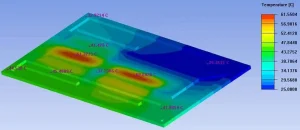
Computational Fluid Dynamics (CFD) simulations are essential for evaluating the performance of liquid cold plate heat sinks. These simulations enable engineers to analyze key factors such as temperature distribution, flow rate, and pressure drop across the heat sink. For instance, research on microchannel heat sink designs shows that optimized geometries improve heat dissipation while minimizing coolant pressure drops. Ecothemgroup uses CFD modeling to enhance designs for high-power applications, ensuring consistent heat removal and greater efficiency. Experimental validation often complements CFD analysis, offering practical insights into performance across various operational conditions.
Modern electronics with increasing power density require precise thermal management solutions. CFD simulations predict how liquid cold plates handle rising heat loads, helping manufacturers develop systems for data centers and electric vehicles. As power demands grow, these tools are vital for ensuring reliability and thermal stability.
Advancements in Power Density Solutions
Future developments in liquid cold plate heat sink technology focus on managing higher power densities while maximizing cooling efficiency. Innovations include advanced materials like copper alloys and graphene composites, which provide exceptional thermal conductivity. Additionally, designs featuring microchannel geometries and serpentine flow paths are becoming popular for optimizing heat dissipation without adding complexity.
Ecothemgroup leads these advancements, applying state-of-the-art materials and designs to create compact solutions for high-power applications. Smaller cold plate heat sinks are being developed to meet the needs of miniaturized microchips and high-performance servers, particularly in industries like 5G infrastructure and electric vehicles. Sustainability is also a priority, with manufacturers exploring biodegradable coolants and recyclable materials to lessen environmental impact.
| Parameter | Impact |
|---|---|
| Advanced Materials (e.g., graphene) | Enhanced thermal conductivity |
| Microchannel Geometries | Improved heat dissipation |
| Sustainable Coolants | Reduced environmental impact |
- Improved cooling solutions for higher power densities
- Focus on compact and efficient designs
- Adoption of eco-friendly materials and processes
People Also Ask
A liquid cold plate heat sink uses channels to circulate coolant over heat-generating components, efficiently transferring heat away from devices. This method is highly effective for systems like data centers and electric vehicles where air cooling is insufficient.
Liquid cold plate heat sinks offer superior thermal management, enabling higher power density and lower energy consumption. They also improve reliability by maintaining consistent temperatures and reducing thermal stress on components.
Liquid cold plate heat sinks are designed using techniques like CFD simulations for optimal thermal performance. Manufacturing includes precision machining and brazing to create microchannels for efficient coolant flow.
Future trends involve advanced materials like graphene and compact designs to handle higher thermal densities. Innovations also focus on integrating liquid cooling into smaller devices and improving energy efficiency for next-generation electronics.