Custom Peltier Heat Sinks: Engineered Solutions for Unique Thermal Challenges
As electronics get smaller and more powerful, keeping them cool has moved from a minor worry to a major engineering puzzle. Regular heat sinks just can’t keep up with tiny, super-hot spots, big temperature swings, or cramped spaces. That’s where custom Peltier heat sinks — or thermoelectric coolers (TECs) built right into a heat sink — really shine. They’re designed specifically for particular heat loads and environments, giving us incredibly precise control over device temperatures.
As electronics get smaller and more powerful, keeping them cool has moved from a minor worry to a major engineering puzzle. Regular heat sinks just can’t keep up with tiny, super-hot spots, big temperature swings, or cramped spaces. That’s where custom Peltier heat sinks — or thermoelectric coolers (TECs) built right into a heat sink — really shine. They’re designed specifically for particular heat loads and environments, giving us incredibly precise control over device temperatures.
The Imperative for Customization in Peltier Cooling
Peltier modules work by using electricity to create a temperature difference, essentially ‘pumping’ heat from one side to the other. You can find standard Peltier modules easily, but fitting them into a cooling system often means you need custom-made heat sinks to truly get the best performance and efficiency. This need for unique thermal solutions often comes from things like: Oddly Shaped Hot Spots: When components don’t heat up evenly or have strange shapes. Tight Fits: If regular heat sinks are too big or just don’t work well in small areas. Exact Temperatures Needed: For times when you need to hold a very specific temperature, often even colder than the room. Tough Conditions: Like operating in a vacuum, with corrosive stuff, or where there’s a lot of shaking.Saving Energy: When you need to cool efficiently without wasting too much power.
Key Design Considerations for Bespoke Peltier Heat Sinks
Creating a custom Peltier heat sink is a detailed job. It means carefully balancing how well it cools, what materials are used, how it fits together mechanically, and its electrical properties. Engineers really have to think about the whole thermal journey – from where the heat starts, through the Peltier module, and out to the surrounding air. This thorough method makes sure every part of the design works together for the best possible cooling.
| Design Parameter | Impact on Performance | Customization Options |
|---|---|---|
| Peltier Module Selection (Qc_max, ΔT_max, I_max, V_max) | Determines maximum heat pumping capacity and achievable temperature differential. | Choosing multi-stage modules, specific geometric sizes, or specialized materials. |
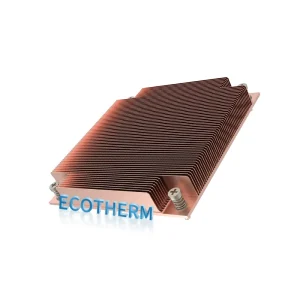
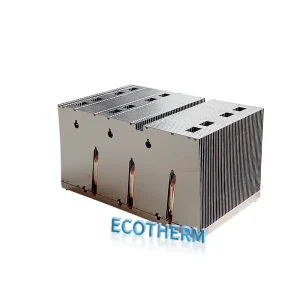
| Hot Side Heat Sink Design (Fin geometry, material, airflow) | Dictates efficiency of heat rejection to ambient; crucial for overall system performance. | Optimized fin density, custom extrusion profiles, vapor chambers, liquid cold plates. |
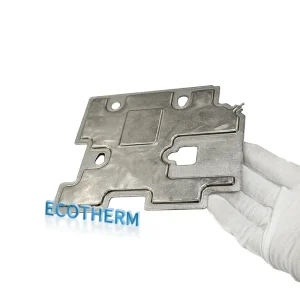
| Cold Side Heat Sink Design (Contact area, material, interface) | Ensures efficient heat capture from the component to the Peltier module. | Precisely machined surfaces, embedded heat pipes, custom cold blocks for specific component footprints. |
| Thermal Interface Materials (TIMs) | Minimizes thermal resistance between surfaces, critical for heat transfer efficiency. | Selection of specific gap pads, thermal pastes, or solder interfaces based on application and reliability needs. |
| Mechanical Integration & Mounting | Ensures stable contact, proper pressure distribution, and vibration resistance. | Custom mounting brackets, spring-loaded mechanisms, isolation techniques. |
| Power Supply & Control (PID, switching) | Enables precise temperature regulation and energy optimization. | Integrated controllers, custom feedback loops, intelligent power management for dynamic loads. |
Applications Benefiting from Engineered Peltier Solutions
Because they’re so precise and can be tailored, custom Peltier heat sinks are crucial in many high-tech fields and specialized uses: *Medical Devices: Think DNA sequencers, diagnostic tools, portable coolers for samples, and laser therapy systems. Aerospace & Defense: For things like satellite sensors, IR detectors, guidance systems, and avionics that need super stable temperatures. Optoelectronics: Used for laser diodes, CCD/CMOS sensors, optical amplifiers, and fiber optic components where precise temperature keeps wavelengths in check. Laboratory & Scientific Instruments: Found in spectrometers, calorimeters, microscope stages, and environmental chambers. Industrial Automation: Essential for machine vision cameras, process control sensors, and key electronic enclosures.
Getting a custom Peltier heat sink solution usually follows a few key steps:
1. Figuring Out What’s Needed: We start by thoroughly understanding the heat load, surrounding conditions, how much space is available, the power limits, and the exact temperature you’re aiming for.
2. Checking If It’s Possible & Simulating:We use tools like CFD (Computational Fluid Dynamics) and FEA (Finite Element Analysis) to model how it will perform and fine-tune the design.
3. Making Prototypes: Next, we build initial physical models to test them out. 4. **Testing & Confirming:** This involves tough performance tests under different conditions to make sure everything meets the agreed-upon specs. 5. Production & Quality Assurance: Finally, we manufacture the finished product, complete with strict quality checks.
“The move towards custom Peltier solutions isn’t just about cooling; it’s about enabling next-generation technology. When off-the-shelf solutions compromise performance or spatial efficiency, a tailored approach unlocks the full potential of sensitive components.” – Dr. Eleanor Vance, Lead Thermal Engineer, Advanced Materials Division.
The Engineering Process: From Concept to Implementation
By bringing together deep knowledge in thermodynamics, mechanical engineering, and material science, custom Peltier heat sinks provide a powerful way to tackle even the trickiest thermal challenges, making sure complex systems stay reliable and perform at their best.
By leveraging specialized expertise in thermodynamics, mechanical engineering, and material science, custom Peltier heat sinks offer a robust path to overcoming unique thermal management hurdles, ensuring reliability and peak performance for sophisticated systems.
Frequently Asked Questions About Custom Peltier Heat Sinks
A Peltier heat sink is considered custom when its design, including the hot-side heat sink, cold-side cold plate, Peltier module selection, and mechanical integration, is specifically engineered to meet unique thermal, spatial, power, or environmental requirements that standard, off-the-shelf components cannot adequately address.
The primary benefits include optimized thermal performance for specific loads, precise temperature control, maximized energy efficiency, better integration into confined spaces, enhanced reliability for critical applications, and the ability to operate effectively in challenging environmental conditions.
The development timeline varies greatly depending on the complexity of the requirements, the simulation needs, and the iteration cycles. It can range from a few weeks for minor modifications of existing designs to several months for entirely novel solutions involving extensive prototyping and testing.
Key data includes the heat load (in Watts), desired operating temperature of the component, ambient temperature range, available space, power budget, any airflow restrictions, and specific environmental considerations (e.g., vibration, vacuum, humidity).