The Critical Nexus of Electrical & Optical Domains
Introduction: The Critical Nexus of Electrical and Optical Domains
In the relentless pursuit of faster data transmission and greater network capacity, the optical module, often referred to as an optical transceiver, has cemented its position as one of the most critical and technologically sophisticated components in modern communication infrastructure. Operating at the physical layer of the Open Systems Interconnection (OSI) model, its function is deceptively simple but fundamentally vital: to act as the conversion interface between the electrical signals used by network equipment and the optical signals that travel through fiber optic cables.
The optical module is the linchpin that enables the massive bandwidth and low latency required by hyperscale data centers, 5G networks, cloud computing, and the burgeoning fields of Artificial Intelligence (AI) and Machine Learning (ML). Without this seamless, high-speed conversion, the digital information superhighway would grind to a halt. This deep analysis explores the fundamental functions, intricate components, diverse form factors, and the escalating challenges, such as thermal management, that define the $40 billion-plus global market.
I. The Core Function: Electro-Optical Conversion
The primary, indispensable function of the optical module is to bridge the gap between electrical-based circuitry (found in switches, routers, and servers) and the light-based transmission medium (fiber optic cable). This process is executed in two fundamental steps:
A. The Transmission Process (Electrical-to-Optical Conversion)
On the transmitting side, the module receives high-speed electrical data signals from the host equipment. This data is processed and driven by sophisticated circuitry to power the light-emitting components.
The core of this conversion is the Transmitter Optical Sub-Assembly (TOSA). The TOSA performs the following actions:
- Signal Conditioning: Driver electronics process the raw electrical data, often using advanced signaling like PAM4 (Pulse Amplitude Modulation 4-Level) for 100G, 400G, and 800G applications, which encodes two bits of data per symbol to effectively double the data rate.
- Electro-Optical Conversion: A light source, typically a Laser Diode (LD)—such as a Distributed Feedback (DFB) laser for long-reach or a Vertical-Cavity Surface-Emitting Laser (VCSEL) for short-reach multimode fiber—is modulated by the conditioned electrical signal. When the electrical signal is ‘on’ (representing a data bit ‘1’), the laser emits a pulse of light; when it is ‘off’ (data bit ‘0’), the light stops.
- Signal Launch: The generated optical signal is focused by internal lenses and launched into the fiber optic cable via a physical connector (e.g., LC, SC, MPO/MTP).
B. The Reception Process (Optical-to-Electrical Conversion)
At the receiving end, the process is reversed to recover the digital data.
The core component here is the Receiver Optical Sub-Assembly (ROSA).
- Light Detection: The ROSA uses a photodetector, either a PIN photodiode or a highly sensitive Avalanche Photodiode (APD), to detect the incoming light pulses from the fiber.
- Optical-to-Electrical Conversion: The photodetector converts the light signal into a corresponding, albeit weak, electrical current.
- Signal Amplification and Restoration: A Trans-impedance Amplifier (TIA) and a post-amplifier strengthen and reshape this weak electrical signal, filtering out noise, before passing the clean, restored high-speed electrical signal back to the host system’s circuitry for processing.
II. Key Architectural Components and Standards
Optical modules are a triumph of miniaturization, packaging complex optoelectronics and high-speed electronics into compact, hot-pluggable form factors defined by industry Multi-Source Agreements (MSAs) to ensure cross-vendor interoperability.
A. Essential Internal Architecture
| Component | Function | Significance in High-Speed Systems |
|---|---|---|
| TOSA (Transmitter Optical Sub-Assembly) | Converts electrical signal to optical signal (light). | Determines optical power output and wavelength stability. |
| ROSA (Receiver Optical Sub-Assembly) | Converts optical signal back to electrical signal. | Determines Receiver Sensitivity—the module’s ability to reliably detect weak light signals. |
| Driver/Limiting Amplifier | Amplifies the electrical signal to drive the laser. | Must be precise to maintain signal integrity and Extinction Ratio (the ability to distinguish ‘1’ from ‘0’). |
| Digital Signal Processor (DSP) | Used in coherent and high-speed modules (400G/800G) to condition and equalize complex signals (PAM4). | A major component for power consumption and heat generation. |
| PCBA & Housing | Main control circuit board and external protective shell. | Provides the interface and must ensure optimal thermal dissipation. |
B. Standardized Form Factors (The MSA Landscape)
The physical structure, or form factor, dictates the module’s speed, power consumption, and port density in networking equipment.
| Form Factor Family | Typical Rate / Channel Structure | Primary Application |
|---|---|---|
| SFP/SFP+ | 1G to 16G (e.g., SFP+ is 10G) | Enterprise, Campus, and Low-Density Data Center Access. |
| QSFP/QSFP+ | 40G to 100G (Quad Small Form-factor Pluggable) | Data Center Core/Spine and Aggregation Networks. |
| QSFP-DD | 200G, 400G, 800G (Double Density) | Hyperscale Data Centers, AI/ML Clusters. Doubles the port count by supporting 8 electrical lanes. |
| OSFP | 400G, 800G, 1.6T (Octal Small Form-factor Pluggable) | High-Density, Next-Generation AI/ML and Hyperscale Networks. Physically slightly larger than QSFP-DD, often designed with superior integrated thermal solutions. |
III. The Market Drivers and Advanced Technologies
The functionality of optical modules is constantly evolving, driven by unprecedented growth in data traffic from specific, high-demand sectors.
A. Hyperscale Data Centers and AI/ML
Data centers are the single largest consumer of high-speed optical modules. The shift from 100G to 400G is largely complete in hyperscale environments, with the adoption of 800G modules currently accelerating to support the parallel processing demands of AI and ML applications. These next-generation modules reduce the energy consumed per bit, simplifying network architecture and minimizing the number of transceivers and cables needed for a given capacity.
B. Coherent and WDM Optics
For high-capacity, long-distance links (Metropolitan Area Networks and Long-Haul), advanced functions are integrated:
- Wavelength Division Multiplexing (WDM): This technique allows an optical module (CWDM/DWDM) to transmit multiple data streams simultaneously over a single fiber strand by using different wavelengths (colors) of light. This dramatically increases the fiber’s effective capacity. Wavelength drift due to temperature is a critical performance factor for these modules.
- Coherent Optics (ACO/DCO): Coherent modules employ sophisticated Digital Signal Processing (DSP) to modulate both the amplitude and phase of the light signal, allowing them to carry vastly more data over continental distances. These modules, while exceptionally powerful, are also extremely power-hungry, with some long-range versions consuming up to 40W, presenting significant thermal management challenges.
IV. The Critical Challenge: Thermal Management and System Longevity
As data rates double (e.g., from 400G to 800G), the power consumption of a single optical module can surge (e.g., 800G modules typically draw 15W–25W). The combination of higher power consumption and shrinking form factors (like QSFP-DD and OSFP) has pushed high-density network equipment to its thermal limits. This escalating power density makes effective thermal management a paramount design priority, directly impacting network reliability and cost of ownership.
The Impact of Heat on Performance
Operating an optical module above its rated temperature—typically 0 to 70 for commercial modules—causes severe performance degradation.
- Wavelength Shift: Heat causes the laser’s internal components to expand, which shifts the laser’s output wavelength. In WDM systems, this can cause channel crosstalk and system failure.
- Increased BER and Noise: High temperatures increase thermal noise in the photodetectors and TIA, reducing receiver sensitivity and resulting in a higher Bit Error Rate (BER), necessitating data re-transmissions and reduced throughput.
- Accelerated Aging: Prolonged heat exposure significantly accelerates the aging and degradation of the internal semiconductor components, drastically shortening the Mean Time Between Failure (MTBF) and overall lifespan of the module.
Advanced Thermal Solutions for High-Speed Optics
To mitigate these risks and ensure the long-term reliability of high-capacity networks, modern module design integrates sophisticated cooling techniques. These strategies are evolving beyond traditional forced-air cooling:
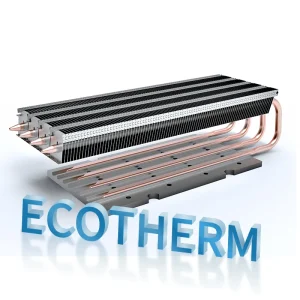
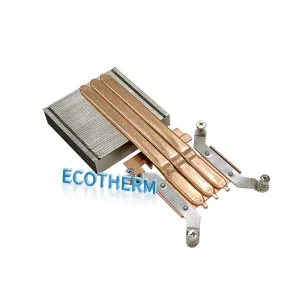
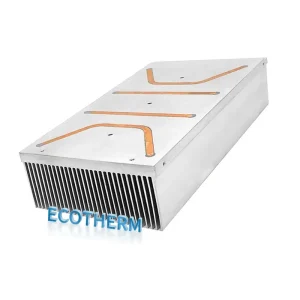
- Optimized Heatsinks and Thermal Path: Newer form factors (OSFP, QSFP-DD) incorporate riding heatsinks or integrated thermal structures to create a low-resistance thermal path from the heat-generating components (like the DSP and laser) to the outside air/chassis.
- Integrated Thermoelectric Coolers (TECs): TECs provide precise, active temperature control, which is essential for stabilizing the laser wavelength in long-haul DWDM modules, though they also contribute to the overall power draw.
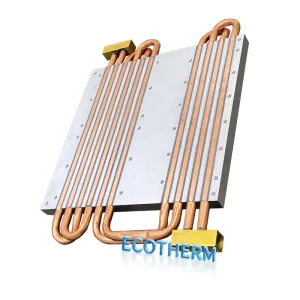
- Liquid Cooling Technologies: For the highest power modules (1.6T and beyond) in high-density AI clusters, which can no longer be adequately cooled by air alone, the industry is moving towards advanced liquid cooling solutions. These involve integrating cold plates or micro-channels directly into the module’s housing or host system. This shift highlights the critical need for specialized expertise in managing high-density heat loads across data center and networking hardware. Companies that specialize in high-efficiency thermal management solutions and robust mechanical packaging, which are essential for maintaining stable operating conditions in these power-hungry systems, are playing an increasingly important role in enabling the next generation of network speeds. For professional thermal management solutions that address these critical challenges in high-performance networking and data center infrastructure, specialized expertise is required.
The industry’s drive for higher data rates is fundamentally tied to an urgent demand for efficient thermal management solutions. As the power budget per rack becomes the limiting factor for scaling, innovation in cooling design and heat dissipation—for example, incorporating high-performance heat sinks and thermal interface materials within the compact module shell—is as important as the optoelectronic design itself. Companies providing specialized heating, ventilation, and thermal management solutions are now core partners in data center architecture, working to ensure system efficiency and longevity. The challenge of controlling temperature in dense, high-performance environments is a major focus for innovation in network infrastructure, and solutions must be robust and scalable to meet the demands of future data growth (Target Link: thermal management solutions).
V. Conclusion: The Future of Optical Interconnects
The optical module is far more than a simple plug-and-play component; it is an incredibly complex, high-precision engineering feat that dictates the speed, capacity, and power efficiency of all modern networks. From the fundamental electrical-to-optical conversion enabled by the TOSA and ROSA to the intricate thermal management strategies needed for 800G and 1.6T coherent links, its function underpins the global digital economy.
The future of the optical module is being shaped by two powerful forces: Silicon Photonics (SiPh) and Co-Packaged Optics (CPO). SiPh integrates optical components directly onto silicon chips, promising lower power consumption and higher yields. CPO moves the optical module components closer to the switch ASIC itself, virtually eliminating the energy-sapping electrical trace between them. These innovations signal a clear trajectory: the optical module’s function will become even more integrated, more efficient, and, most critically, will require even more sophisticated thermal management solutions to handle the concentrated power density that drives the next era of interconnected intelligence.
Technical Deep Dive: Performance Metrics
The performance and reliability of an optical module are measured by a set of precise technical indicators:
| Metric | Definition | Importance |
|---|---|---|
| Average Optical Power | The average power of the light signal emitted by the transmitter (Tx). | Must be within the specified range to ensure the signal reaches the receiver without overloading it. |
| Extinction Ratio (ER) | The ratio of the average optical power when transmitting a logical ‘1’ to the average optical power when transmitting a logical ‘0’. | A higher ER (typically 8.2dB) ensures clear distinction between bits, reducing errors. |
| Receiver Sensitivity | The minimum optical power the receiver (Rx) can detect and successfully decode at a specified Bit Error Rate (BER). | Determines the maximum transmission distance; lower (more negative dBm) is better. |
| Overload Optical Power | The maximum optical power the receiver can handle without saturation or excessive errors. | Defines the upper limit for link distance and is critical for short-reach applications. |
| Bit Error Rate (BER) | The number of errored bits divided by the total number of transmitted bits. | The primary measure of quality; industry standard is typically 10-12to 10-15. |