The Role of Heat Sinks in Data Centers
Heat sinks play a crucial role in reducing power consumption, allowing data centers to operate efficiently. Managing thermal conditions in data centers presents significant challenges, especially with increasing computational workloads and high-performance computing environments.
Introduction
Overview of Data CentersA data center is a centralized and highly optimized collection of large-scale computing equipment designed to ensure the secure, reliable storage, and efficient processing of data.
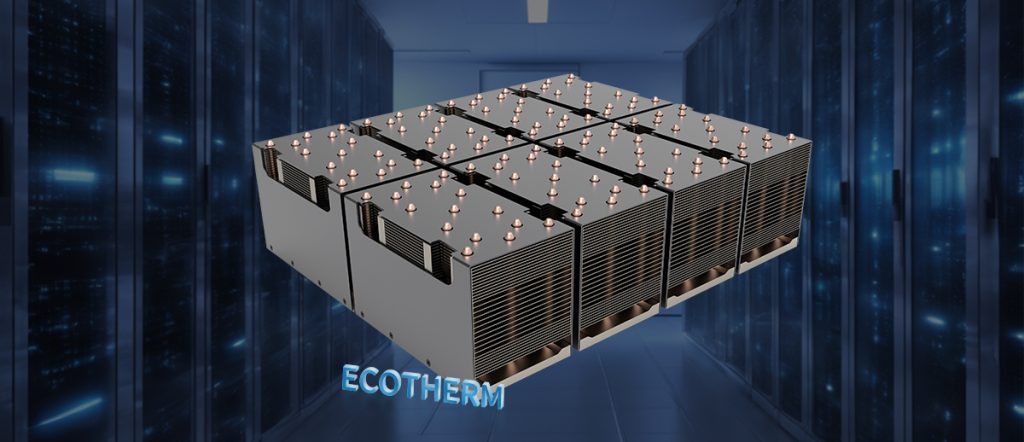
Typically, data centers consist of thousands of servers, network devices, storage equipment, and cooling systems working together to support critical business applications and information technology services. As data demands continue to grow, data centers are expanding in scale and complexity, becoming a vital part of modern societal infrastructure.
Challenges in Data Center Thermal Management Approximately 40% of a data center’s electricity consumption is dedicated to maintaining an appropriate temperature in server rooms throughout the year, with most of it used for cooling.
Heat sinks play a crucial role in reducing power consumption, allowing data centers to operate efficiently. Managing thermal conditions in data centers presents significant challenges, especially with increasing computational workloads and high-performance computing environments.
The high power density of modern computing devices generates a substantial amount of heat in a limited space, making traditional air cooling systems inadequate. Managing uneven heat loads, improving energy efficiency, and seeking sustainable solutions become essential. Additionally, data center operators face rising maintenance costs, space constraints, hotspots, and the challenges of adopting new technologies. In this ever-evolving field, data center managers must continually innovate to address these diverse challenges and ensure the stability and sustainability of data centers.
Starting a custom Heatsink?
Send us your project to receive free project evaluation suggestions!
Improved Efficiency
Working Principles of Heat Sinks
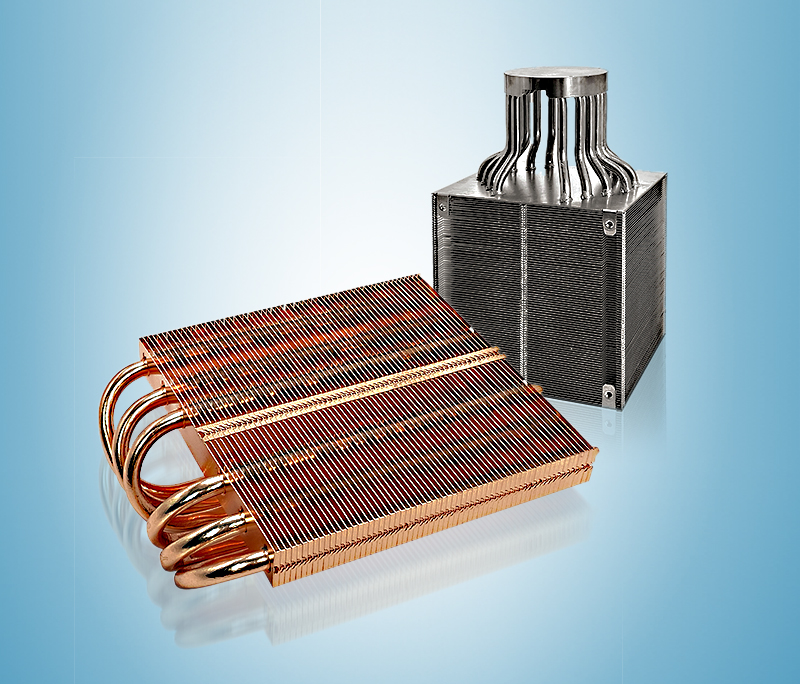
A heat sink is a critical component used to manage and disperse heat, widely used in data centers and computing devices.
Heat sinks are typically made of highly thermally conductive materials such as copper or aluminum.
These materials efficiently absorb and transfer heat from the heat source to the heat sink’s surface. Heat sinks often have a large surface area, which increases the rate of heat transfer by enlarging the area in contact with the surrounding air.
These surfaces often take on shapes like fins, wings, or fins to enhance the heat sink’s effectiveness.
Matching Heatsink Topologies to Server Rack Units (1U/2U/4U): A Selection Guide
While standard extrusions work for auxiliary chips, modern CPUs with TDPs exceeding 350W require specific manufacturing technologies based on available Z-height:
1U Servers (Height < 40mm): Airflow is high-velocity but volume is limited. Skived Copper Fins are the only viable option here, offering the maximum surface area per cubic inch without the thermal resistance of solder interfaces.
2U Servers (Height < 80mm): This is the sweet spot for 3D Vapor Chamber Assemblies. By soldering a VC base to a zipper fin stack, we can spread the high heat flux from a small die to a larger fin volume, reducing thermal resistance by up to 30% compared to solid copper bases.
Custom Logic (AI/FPGA): For non-standard footprints, we integrate Embedded Heat Pipes directly into the mounting bracket to scavenge heat from VRMs and adjacent memory modules.
Working Principles of Heat Sinks
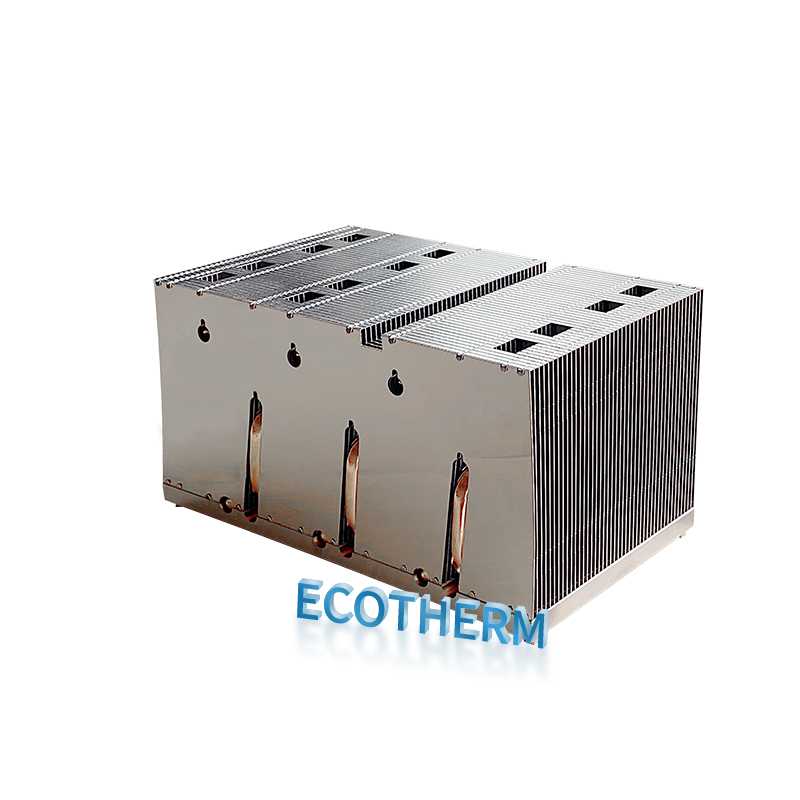
In data centers, the choice of heat sink depends on specific application requirements, equipment configurations, and budgets. Different types of heat sinks can meet various cooling needs, so a careful evaluation of each type’s performance, cost, and applicability is necessary to ensure data centers operate smoothly and equipment remains reliable.
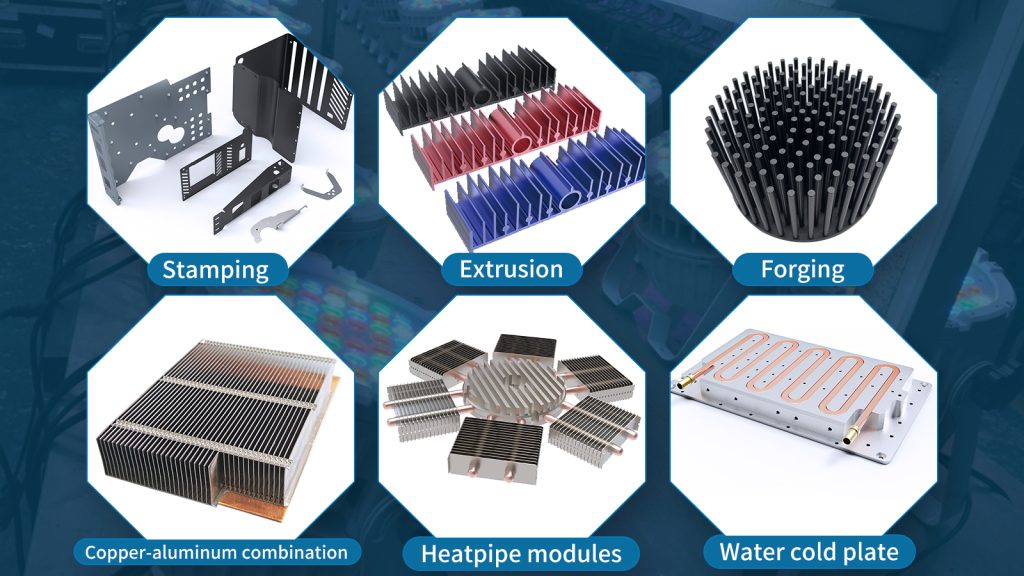
Ecotherm offers various types of heat sinks, including heatpipe cooling modules, skived heat sinks, liquid cold plates, extrusion heat sinks, zippered fin heat sinks, forging heat sinks, folded fin heat sinks, CNC, and vapor chamber heat sinks.
Heatpipe Cooling Module: Heatpipe cooling modules are often used in servers and high-performance computing clusters with high cooling requirements. They use heat pipe technology to conduct heat from the heat source to the heat sink and then dissipate the heat through convection or fan cooling. These modules are particularly useful in compact server architectures, as they can enhance server performance and ensure temperature control.
Skived Heat Sink: Skived heat sinks are typically used in servers and computing devices that require efficient cooling. Their design features a high surface area for effective heat dispersion. In data centers, skived heat sinks are commonly employed to address cooling needs in high-density server architectures, ensuring proper temperature maintenance under high workloads.
Liquid Cold Plate: Liquid cold plates are part of liquid cooling technology and are used to handle high-power servers and storage devices. They include built-in pipelines that reduce temperatures by passing a liquid cooling medium (usually coolant) through the equipment. In data centers, liquid cold plates are often used in high-performance computing, GPU servers, and other high-heat-generating devices.
Extrusion Heat Sink: Extrusion heat sinks are typically employed for general cooling needs, such as standard servers and network equipment. Their design is usually straightforward and suitable for large-scale deployments. In data centers, these heat sinks can be used to cool various types of equipment, providing basic temperature control.
Starting a custom Heatsink?
Send us your project to receive free project evaluation suggestions!
Delaying the Liquid Leap: Maximizing Air Cooling Efficiency for 50kW Racks
The industry narrative suggests a forced march to immersion cooling, but upgrading component-level thermal management can extend the life of air-cooled facilities.
Reducing PUE at the Component Level: Inefficient heat sinks force CRAC (Computer Room Air Conditioning) units to work harder. By upgrading to Low-Impedance Heatsinks (designed with CFD to minimize pressure drop), you can reduce server fan speeds by 20%. This directly lowers the facility’s overall energy consumption.
The Hybrid Approach: For racks approaching the 40-50kW threshold, we offer Thermosiphon & Loop Heat Pipe modules. These fit within standard air-cooled chassis but offer near-liquid performance, bridging the gap without requiring facility-level plumbing.
Active Coolers for Edge Data Centers: Reliability Beyond the Clean Room
While hyperscale facilities rely on massive CRAH units, Edge Data Centers often operate in uncontrolled environments with dust, higher ambient temperatures, and limited airflow.
The “Active Cooler” Solution: For these scenarios, passive heatsinks fail. We manufacture Industrial Active Coolers—integrated heatsink-fan assemblies designed for harsh environments.
Dust Resistance: Unlike standard consumer fans, our assemblies use IP68-rated dual-ball bearing fans integrated directly into the fin stack.
Fail-Safe Redundancy: We design “N+1” fin geometries that maintain safe operating temperatures even if airflow drops by 30% due to filter clogging, ensuring uptime in remote edge locations.