Aluminum for Heat Sinks: What You Need to Know
In today’s fast-paced electronics world, where processors, power amplifiers, and other high-performance gadgets constantly generate excess heat, heat sinks aren’t just an option – they’re essential. Without smart ways to manage this heat, these critical components face a host of problems, from losing efficiency and dying prematurely to completely failing. When we look at all the materials available for building heat sinks, aluminum consistently shines through as a top contender. Its fantastic blend of thermal capabilities, robust mechanical properties, and sensible cost makes it absolutely foundational for managing heat across countless sectors.
Why Aluminum is a Preferred Choice
What exactly makes aluminum such a go-to material for heat sinks? It really boils down to an impressive mix of advantages:
1. **Top-Notch Thermal Conductivity:** Sure, it doesn’t quite match copper’s peak conductivity, but aluminum alloys, like the popular 6061 and 1055, still boast excellent heat-transfer capabilities, usually between 120-205 W/m·K. This means they’re incredibly efficient at drawing heat away from its origin.
2. **Remarkably Lightweight:** With a density of only about 2.7 g/cm³, aluminum’s low weight is a massive plus. Think about where this matters most: cars, airplanes, and all those portable gadgets we carry around. It’s a stark difference when you compare it to copper’s much heavier 8.96 g/cm³.
3. **Budget-Friendly:** When you stack it up against copper, aluminum is considerably more affordable. This makes it a smart and economical choice for large-scale manufacturing, offering great performance without breaking the bank.
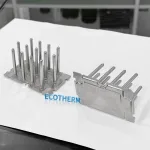
4. **Simple to Manufacture:** Aluminum is incredibly pliable – easily stretched and molded – which means it can be readily extruded, machined, and cast into the intricate shapes needed for optimal heat dissipation, like those complex fins and pins. This manufacturing flexibility is a huge part of why it keeps production costs down.
5. **Resistant to Corrosion:** Aluminum naturally develops a thin, protective oxide coating that fends off corrosion quite effectively. This natural shield helps heat sinks last longer, particularly when facing different environmental challenges.
Key Thermal Properties and Considerations
| Property | Aluminum (e.g., 6061-T6) | Copper |
|---|---|---|
| Thermal Conductivity (W/m·K) | 160-205 | 385-400 |
| Density (g/cm³) | 2.7 | 8.96 |
| Relative Cost | Low | High |
| Weight | Light | Heavy |
| Machinability/Extrudability | Excellent | Good |
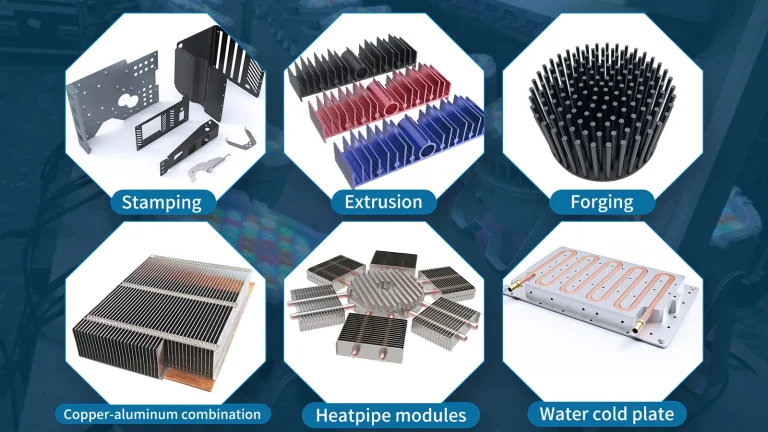
But even with aluminum’s great qualities, a truly effective heat sink needs smart design. Engineers also have to factor in things like how the fins are shaped, the overall surface area, how air flows around it, and what material sits between the component and the heat sink. The main objective? To maximize the surface area that can interact with the cooling element, whether it’s air or a liquid, and streamline the path heat takes from the device right into its surroundings. Here, aluminum’s incredible ability to be extruded makes it possible to craft those super intricate fin designs that would simply be too tough or expensive to pull off with other metals.
Dr. Anya Sharma, a leading thermal engineering expert, states, “Aluminum’s versatility and performance-to-cost ratio make it indispensable in modern thermal management. While copper offers superior conductivity, aluminum’s ability to be easily shaped into complex, lightweight structures often makes it the more practical and economical choice for a vast majority of applications, especially those relying on forced convection.”
Common Aluminum Alloys for Heat Sinks
There isn’t just one type of aluminum used; several specific alloys are popular for heat sinks, each bringing slightly different strengths to the table: • **Alloy 6063:** This one’s a favorite for making extruded shapes because it’s so easy to work with and leaves a beautiful finish. It also strikes a nice balance between heat conduction and structural sturdiness. • **Alloy 6061:** A true all-rounder, known for its decent strength, ease of handling, and resistance to rust. It’s often chosen when a project demands more than just thermal efficiency – it needs to hold up mechanically too. • **Alloy 1050:** If pure thermal performance is your absolute top priority and you don’t need super high mechanical strength, then 1050 is your go-to. It’s incredibly pure and boasts some of the best thermal conductivity among common aluminum alloys, though it’s not as robust as the 6xxx series.
To sum it all up, aluminum truly remains the unsung hero when it comes to heat sinks in countless industries. Its stellar combination of excellent thermal conductivity, minimal weight, natural corrosion resistance, and impressive affordability – all paired with how easily it can be molded into intricate shapes – firmly establishes it as the ultimate choice for dependable and effective thermal control. As our electronic devices get smaller and more powerful, smart uses of aluminum in heat sink design will undoubtedly continue to be crucial.
• **Alloy 6061:** A versatile alloy with good strength, workability, and corrosion resistance. It’s often used when higher strength is required in addition to thermal performance.
• **Alloy 1050:** Known for its high purity and excellent thermal conductivity (one of the highest among common aluminum alloys), though it has lower mechanical strength than 6xxx series alloys. It’s often used when thermal performance is the absolute priority and mechanical stress is low.
Conclusion
In summary, aluminum continues to be the workhorse material for heat sinks across a multitude of industries. Its blend of high thermal conductivity, low density, corrosion resistance, and remarkable cost-effectiveness, coupled with its ease of manufacturing into complex geometries, solidifies its position as a go-to solution for reliable and efficient thermal management. As electronics continue to shrink and demand higher performance, the strategic application of aluminum in heat sink design will remain paramount.
Frequently Asked Questions About Aluminum Heat Sinks
Not necessarily ‘better’ in all aspects. Copper has higher thermal conductivity but is heavier and more expensive. Aluminum offers a better balance of cost, weight, and good thermal performance, making it more widely used for general applications. Copper is often reserved for high-power, space-constrained applications where its superior conductivity justifies the higher cost and weight.
Surface finish can significantly impact performance, especially through anodizing. Anodization increases emissivity, improving heat dissipation through radiation, and also enhances corrosion resistance and electrical insulation. However, a thick anodized layer can slightly reduce conductive heat transfer if not properly managed.
With proper design and environmental conditions, an aluminum heat sink can last for many years, often exceeding the lifespan of the electronic components it cools. Its inherent corrosion resistance and robust nature contribute to its longevity.