Custom Laser Heat Sinks: Precision Thermal Management for High-Power Diode Systems

Effectively managing the heat produced by high-power diode systems is essential for maintaining performance and extending their lifespan. Custom laser heat sinks provide a targeted solution, engineered to dissipate heat efficiently and support stable operating conditions. This article examines how specialized thermal management can improve the reliability of cutting-edge laser applications.
Takeaway
- Laser heat sinks play a crucial role in maintaining thermal stability and protecting high-power diode systems from overheating.
- Popular types of laser heat sinks include air-cooled, liquid-cooled, and thermoelectric models, each designed to meet specific cooling needs.
- Custom laser heat sinks can be designed to match unique diode configurations, power outputs, and operating environments, providing precise temperature control.
- Important factors in designing custom heat sinks include choosing the right materials, ensuring high thermal conductivity, maintaining dimensional accuracy, and integrating seamlessly with system components.
- Custom laser heat sinks are used across diverse industries, including medical technology, industrial production, telecommunications, and scientific research.
- Innovations in heat sink design, such as additive manufacturing and advanced materials, are improving thermal efficiency and expanding performance capabilities.
- Working with experienced manufacturers and engineers can enhance designs and improve the durability of high-power diode systems.
Introduction to Laser Heat Sinks
What Are Laser Heat Sinks?
Laser heat sinks are essential components in high-power diode systems, designed to manage the heat produced during operation. These systems effectively transfer and dissipate thermal energy, helping diode lasers operate reliably and maintain optimal performance. By lowering junction temperature (Tj) and thermal resistance (Rth), laser heat sinks prevent overheating, which can cause wavelength instability and damage to sensitive laser components.
Custom solutions, like those available from Ecothermgroup, are tailored to specific cooling needs. Advanced designs, including microchannel coolers (MCC) and liquid-cooled systems, are used to handle high heat flux densities. Materials such as oxygen-free copper (OFC) and Aluminum Nitride (AlN) submounts improve thermal conductivity while ensuring compatibility with the coefficient of thermal expansion (CTE) of the laser diode assembly. These materials are often enhanced with nickel/gold plating or vacuum brazing for greater durability and thermal efficiency.
Additional options include precision CNC machining and diamond turning, which enable heat sinks to fit compact spaces in fiber laser systems, medical aesthetic lasers, and LiDAR devices. Gold-tin (AuSn) soldering is commonly used to join components, creating a reliable thermal interface that minimizes resistance.
Importance of Thermal Management in High-Power Diode Systems
Effective thermal management is crucial for high-power diode lasers. Without proper cooling, excessive heat can affect beam quality, reduce efficiency, and shorten the lifespan of the system. Laser heat sinks are vital for maintaining wavelength stability and preventing performance issues under demanding conditions. Applications like medical lasers or LiDAR systems rely on consistent output, making precise temperature control essential.
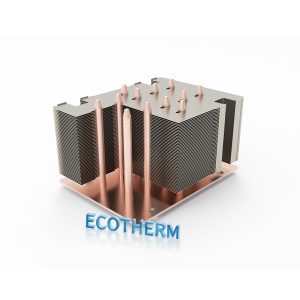
Active cooling methods, including TEC/Peltier modules, are often integrated into heat sink designs for precise temperature regulation. Liquid-cooled systems, utilizing the high heat capacity of water, are especially effective for handling power-dense configurations. Passive cooling options, such as high-density fin arrays, work well in less demanding environments where airflow can dissipate heat adequately.
| Material | Key Benefits |
|---|---|
| Oxygen-Free Copper (OFC) | High thermal conductivity, low electrical resistance |
| Aluminum Nitride (AlN) | Excellent CTE matching, high thermal stability |
| Nickel/Gold Plating | Corrosion resistance, improved durability |
High-power diode systems often require a combination of cooling methods to address challenges like heat flux density and compact packaging. By collaborating with manufacturers like Ecothermgroup, engineers can create custom solutions tailored to specific operational needs, ensuring reliability and top performance.
- Keep junction temperature (Tj) within safe limits
- Reduce thermal resistance (Rth) for better efficiency
- Maintain wavelength stability under varying conditions
- Enhance durability with advanced material coatings
Laser heat sinks are indispensable for achieving precise thermal management in demanding applications, supporting the long-term reliability and stability of high-power diode lasers.
Types of Laser Heat Sinks
Active vs. Passive Heat Sinks
The choice between active and passive laser heat sinks depends on the thermal needs of the laser system. Passive heat sinks use natural convection and conduction to dissipate heat. They are straightforward in design and cost-effective, making them ideal for low-power applications with minimal heat flux density. However, for high-power diode lasers, passive options often cannot handle the required heat dissipation.
Active heat sinks, on the other hand, include additional cooling mechanisms like fans, liquid coolants, or TEC/Peltier modules to manage higher thermal loads. For instance, a high-power fiber laser system producing substantial heat might benefit from a liquid-cooled active heat sink, which helps maintain stable junction temperatures (Tj) and ensures consistent performance. Ecothermgroup highlights that combining active cooling with precision CNC machining can further improve the efficiency and reliability of these heat sinks.
Liquid-Cooled vs. Air-Cooled Designs
Laser heat sinks can also be classified by their cooling medium: liquid or air. Air-cooled designs are common in lower-power systems due to their simplicity and lower maintenance needs. These systems often feature fin arrays to maximize airflow and heat dissipation, although their efficiency can be affected by ambient temperature and airflow rates.
Liquid-cooled heat sinks, such as microchannel coolers (MCC), are preferred for higher-power diode systems. These designs use fluids like water or specialized coolants to absorb and transfer heat away from the laser source. Microchannel cooling is especially effective in applications with high heat flux density, including medical aesthetic lasers or LiDAR systems. However, these systems require careful upkeep to prevent clogging and ensure long-term performance.
| Cooling Method | Advantages | Limitations |
|---|---|---|
| Air-Cooled | Cost-effective, simple design | Limited efficiency for high-power systems |
| Liquid-Cooled | Superior thermal management, ideal for high-power diodes | Higher complexity, potential clogging risks |
Material Considerations: Aluminum vs. Copper
The material used for laser heat sinks plays a key role in thermal conductivity, durability, and cost. Aluminum and copper are the two most popular choices. Aluminum offers a balance between cost and weight, making it a practical option for budget-sensitive projects or portable devices. However, its thermal conductivity is lower than copper, which limits its effectiveness in high-power systems.
Copper, by comparison, has excellent thermal conductivity and is often used in oxygen-free copper (OFC) heat sinks for high-power laser systems. Its ability to handle extreme heat loads makes it essential for applications like industrial fiber lasers or diode arrays. Ecothermgroup frequently integrates copper heat sinks with advanced technologies such as diamond turning and nickel/gold plating, which help reduce thermal resistance (Rth) and increase durability.
- Aluminum: Lightweight, cost-effective, suitable for low to medium power systems.
- Copper: High thermal conductivity, ideal for high-power systems, but more expensive and heavier.
In some cases, hybrid designs combine these materials to balance performance and cost. For example, aluminum fins paired with a copper baseplate can provide effective heat dissipation while minimizing weight and expense.
Custom Design Considerations
Tailoring for Specific Laser Applications
Designing custom laser heat sinks requires a thorough understanding of application-specific requirements. For high-power diode lasers, factors like heat flux density and wavelength stability are crucial. For instance, medical aesthetic lasers rely on precise temperature control to protect sensitive components, while LiDAR systems demand efficient thermal management for compact, high-frequency operation. Material selection is a key consideration. Oxygen-free copper (OFC) is often chosen for its outstanding thermal conductivity, particularly in applications requiring rapid heat dissipation. On the other hand, aluminum is a practical choice for reducing weight in portable systems, such as handheld laser devices.
Another important factor is the integration of components like TEC/Peltier modules or microchannel coolers (MCC). These advanced cooling solutions are particularly effective for systems that require strict control over junction temperature (Tj). Fiber laser systems, for example, benefit from MCC designs that minimize pressure drop while maximizing cooling efficiency. Additionally, surface treatments like nickel or gold plating can enhance thermal conductivity and corrosion resistance, ensuring durability in demanding conditions.
Thermal Simulation and Testing
Thermal simulation plays a vital role in custom laser heat sink design. Using computational fluid dynamics (CFD) tools, engineers can analyze heat dissipation patterns and pinpoint potential hotspots before moving to prototyping. For example, CFD analysis can identify the best placement for fins or microchannels to reduce thermal resistance (Rth). This approach improves performance while lowering development costs by reducing trial-and-error iterations.
Testing is equally critical for verifying the design. Ecothermgroup implements stringent testing protocols to ensure each heat sink meets industry standards. This includes assessing thermal resistance, material compatibility, and the durability of mounting features under real-world conditions. Precision manufacturing techniques like vacuum brazing and diamond turning are often used to achieve optimal alignment and surface flatness. These methods are especially valuable for high-power diode lasers, where even slight imperfections can impact performance.
| Testing Parameter | Purpose |
|---|---|
| Thermal Resistance (Rth) | Ensures efficient heat dissipation |
| Material Compatibility | Prevents thermal expansion mismatches |
| Surface Flatness | Improves contact with laser diodes |
Balancing Performance and Cost
Custom laser heat sink designs must balance performance and cost. Premium materials like Aluminum Nitride (AlN) submounts and gold-tin (AuSn) soldering offer excellent thermal properties but can be expensive for some applications. In such cases, alternatives like aluminum with advanced surface treatments provide a cost-effective solution without major compromises in performance. Precision CNC machining also allows for the creation of complex geometries at lower costs compared to traditional methods.
Ecothermgroup specializes in developing solutions that meet a variety of performance and budget needs. For systems with moderate heat loads, forced convection designs using heat pipes and fans are a practical choice. Meanwhile, applications with high thermal demands, such as industrial lasers, benefit from advanced cooling methods like MCC. By carefully assessing thermal requirements, engineers can recommend the most suitable features for each application.
- Choose OFC for maximum thermal conductivity in high-power systems.
- Consider aluminum for lightweight, portable applications.
- Use MCC for precise temperature control in compact configurations.
- Optimize surface treatments to enhance durability and performance.
Applications of Custom Laser Heat Sinks
Industrial Laser Systems
Custom laser heat sinks are essential in industrial laser systems, where precision and efficiency are critical. High-power diode lasers used in processes like cutting, welding, and engraving produce substantial heat during operation. Without effective thermal management, overheating can lead to diminished performance, shorter lifespans, or system failure. Materials such as oxygen-free copper (OFC) and Aluminum Nitride (AlN) submounts are often chosen for their high thermal conductivity and compatibility with extreme conditions. Ecothermgroup specializes in creating heat sinks tailored for industrial settings, integrating features like microchannel coolers (MCC) and vacuum brazing to maximize heat dissipation.
Liquid-cooled systems are particularly effective for managing the high heat flux density typical in industrial applications. These systems often include diamond-turned surfaces for improved thermal contact and nickel/gold plating to resist corrosion. Precision CNC machining ensures exact specifications for seamless integration into industrial equipment. By maintaining junction temperature (Tj) within safe limits, these heat sinks enable industrial lasers to perform consistently during extended operations.
| Feature | Benefit |
|---|---|
| Oxygen-free copper (OFC) | High thermal conductivity |
| Microchannel coolers (MCC) | Optimized heat dissipation |
| Vacuum brazing | Enhanced structural integrity |
Medical and Scientific Uses
Medical and scientific laser systems demand exceptional precision and reliability, making custom laser heat sinks vital. Devices like medical aesthetic lasers and fiber laser systems often need to operate within strict wavelength stability parameters. Heat sinks minimize thermal resistance (Rth) and ensure uniform cooling across the laser diode to meet these requirements. Materials like AlN submounts and gold-tin (AuSn) soldering are commonly used for precise thermal management. TEC/Peltier modules are also integrated to provide active cooling, further boosting system stability.
Ecothermgroup designs heat sinks for medical and research applications, incorporating features like microchannels to manage concentrated heat loads and nickel/gold plating for durability. These systems deliver higher accuracy and reliability for procedures ranging from dermatological treatments to laboratory experiments. By controlling junction temperature fluctuations, they also prevent wavelength drift, which is essential for applications requiring stable laser output.
- Gold-tin (AuSn) soldering for robust thermal connections
- TEC/Peltier modules for active cooling
- Microchannel designs for high heat flux density
Telecommunications and Defense
In telecommunications and defense, laser systems operate under demanding conditions where precision and durability are critical. LiDAR thermal management systems, for instance, depend on custom heat sinks to maintain performance in both static and dynamic environments. Heat sinks for these applications often feature vacuum brazing and diamond turning to ensure optimal thermal contact and structural reliability. Liquid cooling is frequently employed to handle the intense heat generated by high-power diode lasers in confined spaces.
Material selection is key in these scenarios, with OFC and lightweight aluminum being common choices for their thermal and mechanical properties. Ecothermgroup’s expertise in custom designs ensures these heat sinks meet stringent performance standards, providing reliable thermal management for mission-critical operations. By maintaining stable junction temperatures, these systems enhance the effectiveness of lasers used in targeting, communication, and surveillance technologies.
| Application | Recommended Feature |
|---|---|
| LiDAR systems | Vacuum brazing |
| High-power diode lasers | Liquid cooling |
| Defense systems | OFC materials |
Future Trends in Laser Heat Sink Technology
Advancements in Materials and Manufacturing
The development of laser heat sinks is advancing rapidly, driven by innovations in materials and manufacturing technologies. A significant trend is the growing use of high-performance materials like oxygen-free copper (OFC) and aluminum nitride (AlN) submounts. OFC delivers exceptional thermal conductivity, making it perfect for dispersing heat in high-power diode systems. Meanwhile, AlN submounts offer excellent electrical insulation and thermal stability, essential for maintaining wavelength precision in advanced laser applications.
Techniques such as diamond turning and precision CNC machining are enabling the production of highly tailored geometries that maximize thermal performance. These methods provide tighter tolerances, smoother surfaces, and enhanced heat transfer efficiency, which are particularly beneficial for applications like medical aesthetic lasers and LiDAR systems. Additionally, vacuum brazing and nickel/gold plating are being used to improve material compatibility and lower thermal resistance (Rth), ensuring reliable performance under high heat flux conditions.
| Material | Key Benefit |
|---|---|
| Oxygen-Free Copper (OFC) | High thermal conductivity for efficient heat dissipation |
| Aluminum Nitride (AlN) Submounts | Electrical insulation and thermal stability |
| Nickel/Gold Plating | Improved material compatibility and reduced thermal resistance |
Another exciting trend is the use of additive manufacturing techniques like Direct Metal Laser Sintering (DMLS). This technology enables the creation of intricate microchannel coolers (MCC) that boost cooling efficiency in compact designs, addressing the rising demand for portable high-power diode laser systems. As these methods become more cost-efficient, they are expected to play a key role in the future of custom heat sink production.
Integration with Smart Cooling Systems
Smart cooling systems are transforming how heat sinks function in high-power diode systems. By combining thermoelectric cooling (TEC) modules or Peltier modules with advanced sensors, manufacturers can actively monitor and control junction temperature (Tj) to prevent overheating and ensure wavelength stability. This is particularly vital for fiber laser systems, where precision is critical.
Two-phase cooling technologies, including passive heat pipes and active pumped systems, are becoming popular for their ability to manage extreme thermal loads while keeping the cooling setup compact. These solutions are ideal for high heat flux applications, such as industrial and medical lasers. Ecothermgroup has been a leader in implementing these systems, delivering reliable performance in a variety of environments.
- Thermoelectric Cooling (TEC) Modules: Active temperature control for precise thermal management
- Microchannel Coolers (MCC): Compact designs with high heat dissipation efficiency
- Two-Phase Cooling Systems: Enhanced heat transfer for high-power applications
Additionally, IoT-enabled cooling systems are set to redefine thermal management for laser heat sinks. These systems leverage real-time data and AI algorithms to predict thermal issues and optimize cooling, reducing the risk of failure. For instance, predictive maintenance powered by IoT can extend the lifespan of heat sinks and minimize downtime, making these systems invaluable for industries like aerospace and telecommunications.
As the demand for high-power diode lasers grows, the combination of advanced materials, innovative manufacturing techniques, and smart cooling technologies will drive the evolution of laser heat sinks, delivering unmatched precision and efficiency.
People Also Ask
What are laser heat sinks, and why are they important for high-power diode systems?
Laser heat sinks are components designed to manage and dissipate heat produced by high-power laser diodes. They play a critical role in maintaining the performance, efficiency, and lifespan of these systems by preventing overheating.
What types of laser heat sinks are available for high-power diode systems?
Types of laser heat sinks include air-cooled, liquid-cooled, and thermoelectric models. Each offers specific benefits based on the cooling needs and design requirements of the laser system.
What are the key considerations when designing custom laser heat sinks?
Key factors in custom design include thermal load, material choice, size limitations, and cooling method (e.g., liquid or air-cooled). Precision engineering ensures effective heat dissipation tailored to the system’s needs.
What materials are commonly used in custom laser heat sinks?
Materials such as aluminum and copper are commonly used because of their excellent thermal conductivity. Advanced designs may also use materials like graphite or composites for specialized purposes.
What are some common applications of custom laser heat sinks?
Custom laser heat sinks are used in applications such as industrial machining, medical lasers, optical communication, and defense systems. They provide reliable thermal management in high-performance settings.
How do liquid-cooled laser heat sinks differ from air-cooled ones?
Liquid-cooled heat sinks use circulating fluid to draw heat away from the diode, offering greater efficiency for demanding applications. Air-cooled systems rely on airflow and are better suited for lower thermal loads or compact designs.
What future trends are shaping laser heat sink technology?
Emerging trends include the use of advanced materials like graphene, 3D-printed designs for improved performance, and smarter systems with built-in sensors for real-time thermal monitoring.
How do I determine the right heat sink design for my laser diode system?
Choosing the right design depends on factors such as power output, cooling needs, and system dimensions. Working with thermal management experts or manufacturers like Ecothermgroup can help you find the ideal custom solution.