European Data Centers: Optimizing Cooling with Advanced Heat Sink and Heat Pipe Solutions
As digital transformation accelerates across Europe, the demand for data center capacity continues to surge. With this growth comes an inherent challenge: managing the immense heat generated by high-performance computing equipment. Traditional cooling methods are often energy-intensive and less effective for modern, high-density racks. This article delves into how advanced thermal management solutions, specifically heat sinks and heat pipes, are becoming pivotal in optimizing cooling strategies for European data centers, driving both efficiency and sustainability.
The Escalating Cooling Challenge in European Data Centers
European Union regulations and national initiatives emphasize energy efficiency and carbon footprint reduction for critical infrastructure, including data centers. Cooling systems can account for up to 40% of a data center’s total energy consumption [1]. The shift towards higher power density in servers, driven by AI, machine learning, and big data analytics, necessitates more efficient and localized cooling mechanisms than ever before. Overheating can lead to performance degradation, hardware failure, and increased operational costs, making robust thermal management a top priority.
Heat Sinks: Foundations of Passive Thermal Management
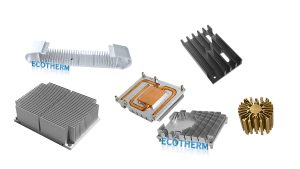
Heat sinks are passive heat exchangers that transfer heat generated by electronic components into a surrounding fluid medium, typically air or a liquid coolant. Designed with a large surface area (e.g., fins or pins), they maximize heat dissipation through convection. In data centers, heat sinks are commonly found on CPUs, GPUs, and other high-power components. Their effectiveness is determined by material (often aluminum or copper due to high thermal conductivity), geometry, and the airflow over their surfaces. Modern heat sinks are engineered to extract heat more efficiently from increasingly smaller and more powerful chips, serving as the first line of defense against localized hotspots.
Heat Pipes: Bridging Gaps with High Thermal Conductivity
Heat pipes are two-phase heat transfer devices renowned for their exceptionally high effective thermal conductivity. They operate on the principle of evaporation and condensation of a working fluid within a sealed vacuum-sealed envelope. Heat applied at one end (evaporator) vaporizes the fluid, which then travels to the cooler end (condenser) and releases latent heat as it condenses. The condensed fluid returns to the evaporator via a wick structure, completing the cycle. This process allows heat pipes to efficiently transfer large amounts of heat over relatively long distances with minimal temperature difference, making them ideal for moving heat away from critical components to a more accessible cooling medium [2].
Synergistic Cooling: Combining Heat Sinks and Heat Pipes
The true power of these technologies often lies in their synergistic application. Heat pipes can be integrated directly into or attached to heat sinks, enhancing their overall thermal performance. For instance, a heat pipe can absorb heat directly from a CPU and transfer it to an extended finned heat sink located in a better airflow path or even to a remote liquid cooling loop. This combination is particularly beneficial for high-power-density servers, allowing for more uniform temperature distribution and preventing localized hot spots that traditional air-cooled heat sinks might struggle to manage alone. Such integrated solutions are critical for advanced cooling designs like liquid-to-air heat exchangers or direct-to-chip liquid cooling systems.
“The convergence of escalating power densities and the imperative for energy efficiency in European data centers has made advanced thermal solutions like integrated heat sink and heat pipe systems not just beneficial, but essential. They are fundamental to achieving both performance targets and sustainability mandates.” — Dr. Elara Vance, Lead Thermal Engineer, EcoData Solutions.
Impact on European Data Center Efficiency and Sustainability
By adopting these advanced cooling solutions, European data centers can achieve significant improvements in their Power Usage Effectiveness (PUE) – a key metric for energy efficiency. More efficient heat transfer means less reliance on energy-intensive chillers and CRAC units, leading to reduced electricity consumption and lower operational costs. This directly supports the EU’s Green Deal objectives, pushing data centers towards carbon neutrality. Furthermore, by maintaining optimal operating temperatures, these technologies extend the lifespan of IT equipment, reducing electronic waste and capital expenditure on hardware replacements.
| Benefit Area | Impact on Data Centers |
|---|---|
| Thermal Performance | Up to 50% increase in heat dissipation efficiency [3] |
| Energy Savings | 15-30% reduction in cooling energy consumption [4] |
| Equipment Reliability | Reduced hardware failures; extended component lifespan |
| Space Optimization | Enables higher rack densities without compromising cooling |
| Sustainability | Lower PUE, reduced carbon footprint, compliance with green initiatives |
Frequently Asked Questions about Data Center Cooling
Heat pipes offer significantly higher effective thermal conductivity compared to solid metals like copper, allowing for efficient heat transfer over longer distances with minimal temperature drop. This makes them ideal for isolating heat sources from heat rejection systems.
By improving cooling efficiency, heat sinks and heat pipes reduce the energy demand of mechanical cooling systems, directly lowering electricity consumption and associated carbon emissions. This contributes to better PUE scores and helps data centers meet environmental regulations.
While highly versatile, their optimal application depends on the specific thermal load, component layout, and existing infrastructure. They are particularly beneficial for high-density, air-constrained, or localized hotspot scenarios. Integration with liquid cooling systems can further enhance their performance for extreme loads.
Heat sinks commonly use aluminum or copper for their high thermal conductivity. Heat pipes typically use copper envelopes with an internal wick structure and water as the working fluid for typical data center operating temperatures, though other fluids and materials exist for different temperature ranges.
In conclusion, as European data centers continue to evolve, the integration of advanced heat sink and heat pipe technologies is no longer a niche solution but a fundamental component of effective and sustainable thermal management strategies. By embracing these innovations, data centers can not only meet the growing demands for computational power but also align with the continent’s ambitious environmental goals, securing a more efficient and greener digital future.
References: [1] The European Commission, ‘Energy Efficiency of Data Centres’, 2021. [2] Faghri, A. ‘Heat Pipe Science and Technology’, CRC Press, 1995. [3] Research estimates based on comparative thermal performance studies of advanced vs. conventional cooling solutions in high-density server racks. [4] Industry reports and case studies on PUE improvements from optimized cooling infrastructure.