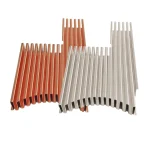
Advanced Cooling Solutions for Power Electronics: Custom Heat Sinks & Liquid Cold Plates
Effective power electronics cooling is essential for maintaining reliable performance and preventing overheating in high-power applications. As devices become smaller and more powerful, traditional cooling techniques may no longer suffice, making advanced solutions like custom heat sinks and liquid cold plates increasingly necessary. This article explores tailored thermal management components designed to address high-power heat dissipation challenges efficiently.
Introduction to Power Electronics Cooling
Power electronics cooling plays a crucial role in maintaining the performance and reliability of high-power devices. Advanced solutions, such as custom heat sinks and liquid cold plates, are designed to efficiently dissipate heat, preventing overheating and prolonging the lifespan of components. Ecothermgroup offers tailored thermal management solutions to meet the specific needs of industries like renewable energy, automotive, and AI hardware.
Why Effective Thermal Management is Crucial
Effective thermal management is vital to avoid performance degradation and component failure in power electronics. Devices like IGBT modules and inverters are increasingly handling higher power densities, which results in significant heat generation. Without proper cooling, these components may overheat, reducing efficiency and increasing maintenance costs. Advanced solutions, such as CNC-machined heat sinks and custom liquid cold plates, deliver precise thermal control to address these challenges.
Liquid cold plates excel in high-power applications by directly transferring heat to a circulating coolant, offering localized cooling that air-based systems cannot achieve. Aluminum and copper are commonly used for these components due to their excellent thermal conductivity, with copper being preferred for extreme heat loads. Custom designs, including optimized internal channels, further enhance performance by maximizing heat transfer efficiency.
| Cooling Solution | Best Applications |
|---|---|
| Custom Heat Sinks | Inverters, AI servers, renewable energy systems |
| Liquid Cold Plates | IGBT modules, high-power density devices |
Applications Requiring Advanced Cooling Solutions
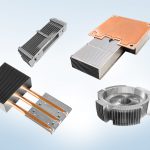
Advanced cooling solutions for power electronics are essential across various industries. For instance, AI servers rely on high-performance heat sinks to maintain optimal functionality during continuous operation. Similarly, inverters and IGBT modules used in renewable energy systems require custom cooling solutions to manage their compact designs and high heat dissipation needs. Ecothermgroup’s expertise in skived heat sinks, folded fin heat sinks, and custom liquid cold plates ensures tailored solutions for demanding applications.
- Thermal management for AI servers
- Cooling solutions for inverters
- IGBT module cooling
Choosing a reliable thermal management solutions provider like Ecothermgroup ensures access to free feasibility analyses and low MOQ production, making advanced cooling solutions accessible for diverse applications. For more details on customizable heat sink products, including skived, folded, and zippered fin designs, visit our custom heat sink products page.
Custom Heat Sinks: Design, Materials, and Applications
Material Options for Custom Heat Sinks
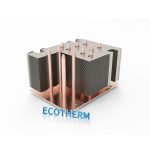
Material selection plays a key role in designing custom heat sinks for power electronics cooling. The two most commonly used materials are aluminum and copper, each offering distinct benefits. Aluminum is lightweight, cost-effective, and provides sufficient thermal conductivity for many applications. Copper, on the other hand, offers excellent thermal performance, making it suitable for high-power density applications, though it is heavier and more expensive. In some designs, hybrid approaches combining aluminum and copper are used to balance performance and cost.
| Material | Key Benefits | Common Applications |
|---|---|---|
| Aluminum | Lightweight, affordable, corrosion-resistant | General-purpose electronics, inverters |
| Copper | High thermal conductivity, durable | IGBT modules, high-density AI servers |
| Aluminum-Copper Hybrid | Performance-cost balance | Custom high-power solutions |
Manufacturing Processes: Skiving, Forging, CNC Machining
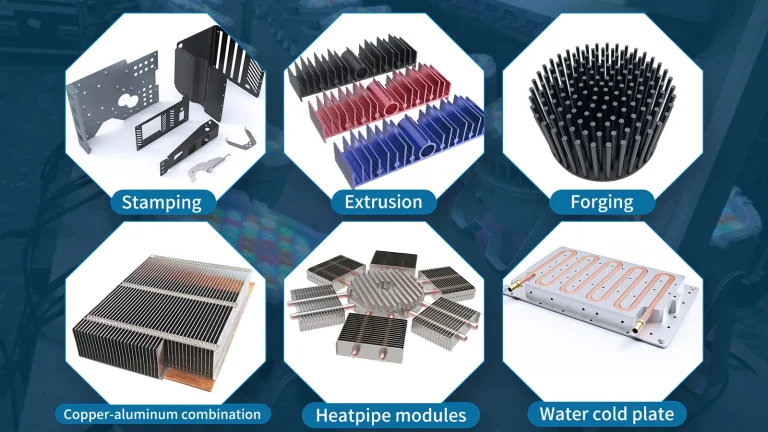
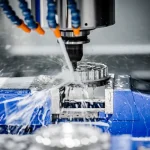
Several advanced manufacturing processes are used to create custom heat sinks for thermal management in power electronics. Skiving involves cutting thin fins from a single block of material, offering excellent thermal performance due to the absence of thermal resistance between the fins and the base. Forging compresses material into molds, creating durable, high-performance heat sinks. CNC machining provides precision and flexibility, enabling intricate designs tailored to specific cooling needs. The choice of method depends on the application, material, and required performance.
- Skiving: Ideal for high-density fin designs and compact applications.
- Forging: Delivers structural strength and thermal efficiency.
- CNC Machining: Allows for custom shapes and detailed specifications.
Applications: Inverters, AI Servers, and IGBT Modules
Custom heat sinks are essential in cooling solutions for applications such as inverters, AI servers, and IGBT modules. Inverters, commonly used in renewable energy systems, require efficient thermal management to ensure reliable operation. High-performance AI servers generate significant heat, necessitating precision-engineered heat sinks for effective thermal regulation. IGBT modules, widely used in industrial automation, benefit from custom designs that dissipate heat generated during high-power switching operations. Ecothermgroup provides tailored solutions to meet these specific cooling requirements.
For more information on the range of customizable heat sink products, including skived, folded, and zippered fin designs, visit our custom heat sink products page. Custom heat sinks are also critical for applications like inverters, where reliable thermal management can improve performance and longevity. Discover more about our inverter heat sink solutions.
Liquid Cold Plates: Precision Cooling Solutions
How Liquid Cold Plates Work
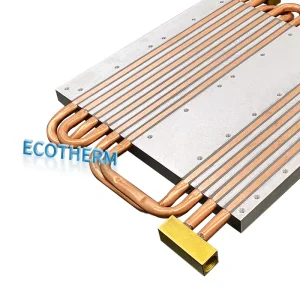
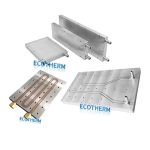
Liquid cold plates are advanced thermal management components designed to handle high heat loads in power electronics. They transfer heat from components, such as IGBTs, CPUs, and GPUs, to a liquid coolant circulating through internal channels. This process prevents overheating and ensures consistent performance in high-density applications where traditional air cooling is insufficient. Ecothermgroup specializes in custom liquid cold plate manufacturing, offering tailored designs to meet specific industry requirements.
Key advantages of liquid cold plates include their ability to provide localized cooling directly at the heat source and their adaptability to complex geometries. Materials like aluminum and copper are commonly used due to their excellent thermal conductivity and corrosion resistance, paired with coolants such as water/ethylene glycol mixtures for optimal performance and durability.
Design Considerations: Flow Rates, Pressure Drops, and Surface Flatness
Designing efficient liquid cold plates involves several critical factors:
- Flow Rates: Optimizing coolant flow paths ensures heat is evenly removed without flow instability.
- Pressure Drops: Minimizing pressure drops prevents excessive resistance and maintains overall system efficiency.
- Surface Flatness: Ensuring flatness across the cold plate surface maximizes contact with heat-generating components, improving thermal transfer.
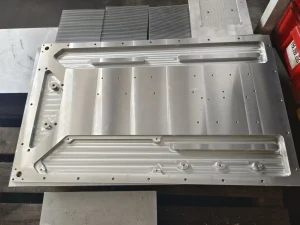
Precision CNC machining is crucial for achieving these design goals. Ecothermgroup provides expertise in manufacturing custom cold plates with stringent flatness tolerances and optimized internal channel designs. This ensures reliable cooling for applications such as AI servers and industrial automation systems.
Applications and Use Cases in Power Electronics
Liquid cold plates are essential for thermal management in high-performance power electronics. Their applications span industries such as renewable energy, automotive, and data centers. They are commonly used for cooling solutions in inverters, IGBT modules, and AI hardware, where efficient thermal management directly impacts system reliability and longevity.
Ecothermgroup’s custom solutions address specific requirements, from low MOQ prototyping to high-volume production. By offering free feasibility analysis and tailored designs, the company ensures its cold plates integrate seamlessly into diverse systems, enhancing cooling performance and energy efficiency.
| Design Factor | Importance |
|---|---|
| Flow Rate | Ensures uniform heat removal and prevents coolant instability |
| Pressure Drop | Maintains efficiency by reducing resistance in the system |
| Surface Flatness | Improves contact with heat sources for optimal thermal transfer |
Comparison: Heat Sinks vs. Liquid Cold Plates
Key Differences in Design and Performance
For power electronics cooling, heat sinks and liquid cold plates fulfill distinct needs depending on thermal performance requirements and system complexity. Heat sinks are passive devices that use airflow for heat dissipation, making them ideal for low to moderate power levels under 150W. Liquid cold plates, on the other hand, utilize active cooling by circulating liquid to manage high heat flux densities, often exceeding 30–50 W/cm², which is essential for advanced systems like inverters and AI servers.
Heat sinks are simpler to produce and more economical, particularly for applications with less stringent thermal demands. However, their higher thermal resistance (typically 0.5–3.0°C/W) limits their effectiveness in high-power-density electronics. Liquid cold plates, with thermal resistances as low as 0.01–0.10°C/W, deliver better cooling performance and more uniform temperatures, making them indispensable for demanding applications such as IGBT module cooling and industrial power conversion systems.
| Feature | Heat Sinks | Liquid Cold Plates |
|---|---|---|
| Cooling Mechanism | Passive (air convection) | Active (liquid circulation) |
| Thermal Resistance | 0.5–3.0°C/W | 0.01–0.10°C/W |
| Heat Flux Capacity | < 150W | 30–50 W/cm² or higher |
| Applications | Low to moderate power systems | High-power-density systems (e.g., AI servers, inverters) |
| Maintenance | Minimal | Requires regular upkeep |
When to Choose Heat Sinks vs. Cold Plates
Choosing between heat sinks and liquid cold plates depends on power density, cost considerations, and system limitations. Heat sinks are ideal for straightforward designs with sufficient airflow and moderate heat dissipation needs. Applications such as CNC-machined heat sinks for industrial equipment benefit from their simplicity and durability.
Liquid cold plates are suited for systems with tight space constraints, extreme heat loads, or high reliability requirements. Industries like AI hardware and renewable energy often rely on custom liquid cold plates for precise thermal management. However, they require added infrastructure, such as pumps and tubing, which can increase initial costs and maintenance demands.
- Use heat sinks for cost-sensitive, low-power systems with adequate ventilation.
- Select liquid cold plates for compact, high-power applications needing advanced cooling solutions.
Ecotherm offers customizable options, including skived heat sinks and custom liquid cold plates, to address unique challenges in power electronics cooling. For more information, visit our custom heat sink products.
Customization Benefits for High-Power Thermal Management
Effective power electronics cooling relies on tailored solutions to address the specific thermal challenges of high-power applications. Custom heat sinks and liquid cold plates offer significant advantages over standard designs by enhancing thermal performance, optimizing material selection, and incorporating precision engineering for specific use cases. Industries such as AI servers, inverters, and IGBT modules benefit from these advanced cooling solutions, ensuring reliable operation and extended component lifespan.
Custom heat sinks provide flexibility in design, including the use of materials like aluminum or copper, recognized for their excellent thermal conductivity. CNC machining enables intricate geometries that maximize surface area and improve heat transfer. Ecothermgroup specializes in skived and zippered fin heat sinks, delivering efficient cooling for compact, high-power electronics.
Liquid cold plates are ideal for applications requiring localized cooling. Customization allows for features such as multi-channel flow paths, turbulence optimization, and compatibility with single or double-sided cooling setups. These designs significantly lower thermal resistance and enhance heat dissipation, making them suitable for cooling solutions in inverters and renewable energy systems. Ecothermgroup’s liquid cold plates are manufactured with precision to meet demanding specifications, ensuring compatibility with pumps and heat exchangers in closed-loop systems.
| Customization Feature | Benefit |
|---|---|
| Material selection (e.g., aluminum, copper) | Enhanced thermal conductivity for specific applications |
| Precision CNC machining | Optimized geometries for maximum heat transfer |
| Multi-channel flow paths in cold plates | Efficient heat dissipation and reduced thermal resistance |
- Improved thermal management for high-power applications
- Extended operational reliability of electronics
- Compatibility with closed-loop cooling systems
Ecothermgroup offers free feasibility analyses and supports low MOQ production, ensuring engineering teams can access customized solutions tailored to their specific thermal management requirements. For more details, explore custom heat sink products.
People Also Ask
What is the importance of cooling in power electronics systems?
Effective cooling in power electronics is essential to prevent overheating, ensure reliable operation, and extend the lifespan of components. High-power devices generate significant heat, and advanced cooling solutions like custom heat sinks and liquid cold plates play a vital role in managing thermal loads.
What are the key design considerations for custom heat sinks in power electronics cooling?
Custom heat sink designs take into account factors such as material selection (e.g., aluminum or copper), thermal conductivity, airflow, and the specific heat dissipation requirements of the application. Proper design ensures optimal thermal management for high-power electronics.
How do liquid cold plates provide precision cooling for power electronics?
Liquid cold plates use a network of channels to circulate coolant over hot surfaces, delivering precise, localized cooling. This approach is ideal for managing the high heat densities often found in power electronics applications.
What are the primary differences between heat sinks and liquid cold plates?
Heat sinks rely on conductive and convective cooling, while liquid cold plates use liquid cooling for enhanced thermal performance. Liquid cold plates are better suited for high-power applications where traditional heat sinks may not be sufficient.
What are the benefits of customizing cooling solutions for high-power thermal management?
Customized cooling solutions are designed to meet specific thermal requirements, ensuring optimal performance and efficiency. This is particularly important for high-power electronics, where standard solutions may not meet the unique demands of the application.
What materials are commonly used in custom heat sinks and liquid cold plates?
Common materials include aluminum for its lightweight and cost-effectiveness, and copper for its superior thermal conductivity. The choice of material depends on the application’s thermal performance needs and budget.
What is the step-by-step manufacturing process for custom cooling components?
The process typically includes reviewing customer-provided drawings, conducting a feasibility analysis, selecting materials, precision machining or fabrication, and performing quality testing. Each step ensures the cooling component meets the thermal and dimensional specifications of the application.
What information is needed to request a quote for custom cooling solutions?
To request a quote, customers should provide detailed drawings, thermal requirements, and application details. This information helps manufacturers conduct a feasibility analysis and propose an optimized cooling solution.