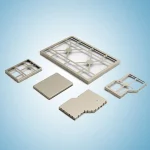
Enhancing Heat Dissipation with Custom Liquid Cold Plates
Industrial systems demand efficient thermal management as components become more powerful and compact. Custom liquid cold plates excel at transferring heat directly from critical components to a liquid coolant, ensuring reliable operation in high-performance environments.
What Are Liquid Cold Plates?
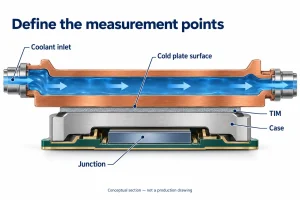
Liquid cold plates are thermal management components designed to dissipate heat from high-power electronics. Coolant circulates through internal channels in materials like aluminum or copper, absorbing heat directly at the source. This approach outperforms air cooling, enabling compact designs and quieter operation.
| Cooling Method | Efficiency | Applications |
|---|---|---|
| Air Cooling | Moderate | Low-power systems |
| Liquid Cooling | High | High-power industrial systems |
Applications of Liquid Cold Plates
Liquid cold plates are essential for high-performance cooling in power electronics, AI servers, and renewable energy systems. Their ability to dissipate concentrated heat loads ensures consistent operation in space-constrained and heat-intensive environments.
Custom solutions tailored to specific needs, such as thermal resistance and flow rates, are critical. Precision manufacturing techniques like CNC machining and vacuum brazing enhance performance and durability.
- High-power electronics cooling
- Compact designs with reduced noise
- Reliable thermal management for AI systems
- Cooling for renewable energy applications
Liquid Cooling vs. Air Cooling
| Cooling Type | Efficiency | Applications | Cost |
|---|---|---|---|
| Liquid Cooling | High | High-power, dense systems | Higher upfront, lower operating |
| Air Cooling | Moderate | Low-power systems | Lower upfront, higher operating |
Factors Influencing Liquid Cold Plate Performance
Several factors affect the efficiency of a liquid cold plate:
- Material: Aluminum offers lightweight, cost-effective cooling, while copper provides higher thermal conductivity for extreme heat loads.
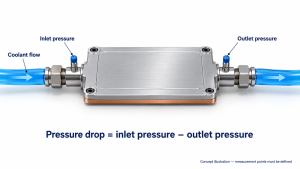
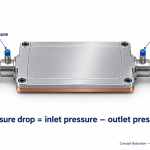
- Coolant Flow Rate: Higher flow rates improve cooling but may increase pressure drop.
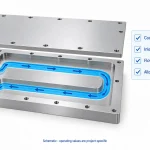
- Channel Design: Microchannels and optimized geometries maximize heat transfer.
Material and Manufacturing Options
Material Comparison
| Material | Benefits |
|---|---|
| Aluminum | Lightweight, corrosion-resistant, cost-effective |
| Copper | High thermal conductivity, ideal for high-power applications |
Manufacturing Techniques
Advanced manufacturing methods enhance performance and reliability:
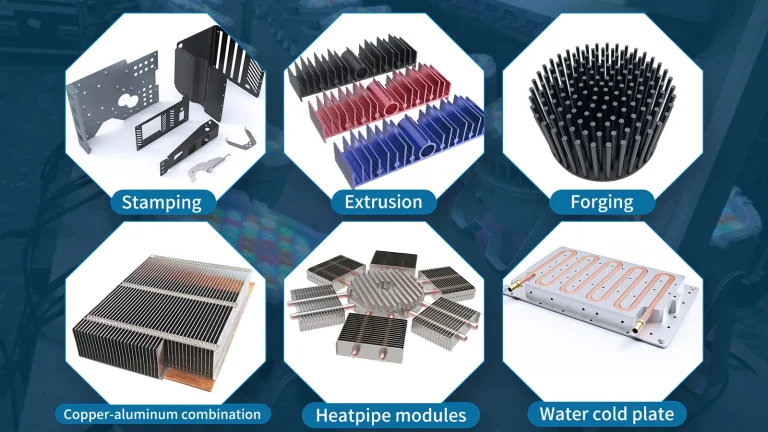
- CNC Machining: Enables intricate channel designs for optimal flow and heat transfer.
- Vacuum Brazing: Produces compact, leak-proof designs for high-power applications.
- Friction Stir Welding: Suitable for large-scale aluminum plates, balancing cost and durability.
Customization Considerations
Custom liquid cold plates are designed to meet specific operational needs. Key considerations include:
- Material Selection: Choose aluminum for weight and cost efficiency or copper for maximum heat dissipation.
- Channel Design: Optimize for thermal performance and manufacturability.
- Coolant Compatibility: Ensure materials and flow rates align with operational requirements.
| Feature | Aluminum Cold Plates | Copper Cold Plates |
|---|---|---|
| Thermal Conductivity | Moderate | High |
| Weight | Lightweight | Heavier |
| Cost | Lower | Higher |
Limitations of Liquid Cold Plates
While highly effective, liquid cold plates may not be ideal in all scenarios. Consider the following limitations:
- Upfront Costs: Higher initial investment compared to air cooling.
- Maintenance Requirements: Regular inspections for leaks and compatibility issues.
- Overengineering Risk: May be excessive for systems with moderate thermal demands.
| Scenario | Recommended Cooling Solution |
|---|---|
| High-power systems | Liquid cold plates |
| Cost-sensitive projects | Air cooling |
| Vibration-prone environments | Solid-state heat sinks |
People Also Ask
What are liquid cold plates?
Liquid cold plates are components that transfer heat from electronics to a liquid coolant through internal channels, ensuring efficient heat dissipation.
How do liquid cold plates improve thermal management?
They provide superior heat transfer compared to air cooling, enabling reliable operation in compact, high-power systems.
What materials are used for liquid cold plates?
Aluminum and copper are commonly used for their thermal conductivity and durability, chosen based on application needs.
What design factors are important for a liquid cold plate?
Key factors include material selection, channel optimization, and coolant compatibility to enhance thermal performance.
When are liquid cold plates not suitable?
They may not be ideal for low-power systems, cost-sensitive projects, or environments requiring minimal maintenance.