Skived Heat Sink Manufacturers: 6 Suppliers to Compare for Custom Projects
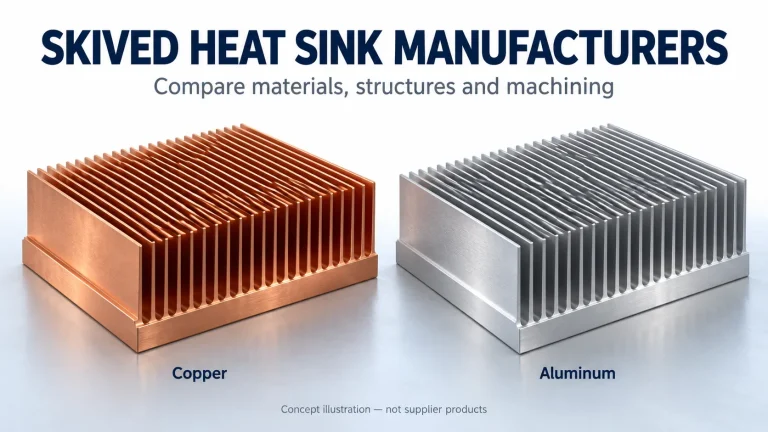
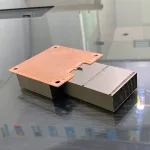
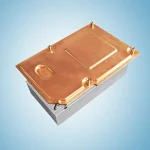
A search for skived heat sink manufacturers brings up catalog parts, custom fin blocks and complete cooling assemblies. Those are different purchasing options. A supplier with a suitable standard part may not need to redesign it; a project with unusual mounting features may need substantial machining after skiving.
This guide compares six suppliers through their published skived offerings, then explains what to check before selecting a configuration.
*Editorial note: Ecotherm publishes this guide and is included in the comparison. Suppliers appear alphabetically, not in order of quality or price. Public information was reviewed on October 23, 2026. This is not a factory audit or independent product test.*
Skived Heat Sink Suppliers at a Glance
Use this table to identify relevant product routes, not to approve a supplier. The reviewed pages describe different levels of detail; an option missing from a page is not proof that the supplier cannot provide it.
| Supplier | Published material scope | Product or customization route |
|---|---|---|
| Cofan Thermal | Copper and aluminum | Natural- and forced-convection families; fan-assembly family; custom machining |
| Eaton / Boyd Thermal | Copper and aluminum | Integral skived fins; geometry reviewed against forming constraints |
| Ecotherm | Copper and aluminum | Custom parts, wavy and double-sided options, heat-pipe integration |
| MyHeatSinks | Copper and aluminum | Skiving with CNC machining, finishing and hybrid integration |
| Sinda Thermal | Copper on the reviewed page | Custom-sized copper parts with skiving and CNC machining |
| Wakefield Thermal | Copper and aluminum | Standard SKV family and custom options with pin attachment |
The following profiles link to the underlying supplier pages and catalogs. Confirm the current configuration, manufacturing location and supply scope directly before placing an order.
Six Manufacturers and Their Published Skived Offerings
Cofan Thermal
Cofan’s catalog covers copper and aluminum skived heat sinks, with separate families for natural convection, forced convection and fan assemblies. It also describes custom machining and dimensional modifications. One useful detail: the fan-assembly table specifies that fans are ordered separately, rather than automatically included in the heat sink part number.
The dimensional table also notes that increased widths or flow lengths may use a hybrid friction stir welding process. For a large part, ask whether the proposed construction remains one piece or includes joined sections. These are configuration questions, not reasons to dismiss a supplier.
Eaton / Boyd Thermal
Eaton’s current thermal-management site describes skived heat sinks made from copper or aluminum, with fins raised from the base material. Its process overview identifies an important constraint: the force needed to form the fins depends on their thickness, flow length and height.
This makes the page useful for an early manufacturability discussion, rather than for selecting a part from a universal size range. Ask for review of the complete fin geometry and base arrangement before freezing the drawing. The offering is listed here as Eaton / Boyd Thermal, not as two separate suppliers.
Ecotherm
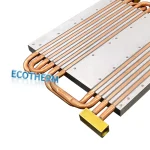
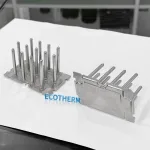
Ecotherm’s custom skived heat sink range includes copper and aluminum designs, wavy fins, double-sided configurations and skived bases combined with heat pipes. The page also discusses local fin removal for mounting clearance.
These are relevant starting points when a conventional fin block does not match the assembly layout. Confirm the material, fin pattern, remaining base thickness and mounting features together. Published maximum dimensions should not be treated as a guarantee that every fin height, pitch and material combination is feasible at that size. A proposed drawing still needs project-specific review.
MyHeatSinks
MyHeatSinks describes copper and aluminum skived parts with secondary CNC machining and finishing. Its page also covers integration with heat pipes or vapor chambers and gives specific guidance on fin removal around mounting features.
That level of detail helps buyers discuss the finished component, not just its external dimensions. For example, a part may fit inside the enclosure but still leave insufficient access for a screw head or installation tool. Ask the supplier to review those clearance areas and the intended assembly interfaces. Published integration options do not establish that every combination is available in every size.
Sinda Thermal
Sinda’s reviewed product page describes a copper skived-fin heat sink, custom dimensions, and skiving combined with CNC machining. It provides a specific starting point for a copper component with machined base or mounting features.
The scope of that page matters: it is not a complete statement of Sinda’s material range. Do not interpret this comparison’s copper entry as a claim that aluminum is unavailable. Ask for confirmation of the proposed material, geometry and material-appropriate surface treatment. A general catalog finish list should not replace a finish specification for the actual copper part.
Wakefield Thermal
Wakefield’s SKV product sheet presents copper and aluminum standard parts, alongside custom options using plastic pin attachment. It is a useful reference when a catalog envelope and board-level mounting arrangement are close to the intended design.
Check the attachment method, mounting-hole positions and available space before assuming that a standard family fits. The product sheet’s thermal values also belong to its stated test conditions; they are not a performance guarantee for another installation. For a larger industrial assembly or a different attachment method, request confirmation rather than extending the catalog family’s scope by assumption.
Compare Materials and Fin Structures
Compare proposed designs using the same envelope, material grade and operating conditions. Otherwise, an apparent supplier difference may simply be a difference in the parts being evaluated.
Skiving creates fins from the base material, but fin thickness, height and flow length are coupled manufacturing choices. Eaton’s overview specifically relates these dimensions to the forming force. Do not combine separate catalog maxima into a configuration that no supplier has reviewed.
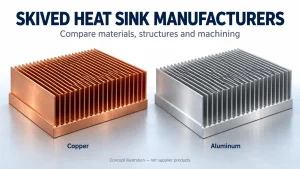
For copper versus aluminum, ask how the proposed material affects mass, mounting loads, finishing and the thermal target. A material name alone does not establish the performance of the assembled cooler.
Compare the structure separately:
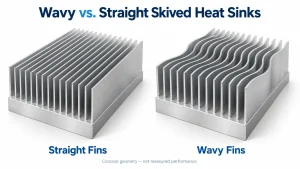
Straight or wavy fins: Ecotherm publishes wavy skived heat sinks, but the shape alone does not establish a performance advantage.
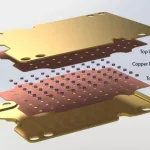
Single- or double-sided: Single-sided parts have fins on one face; double-sided skived designs have fins on both faces of a central base. Check where components attach and how both fin fields fit into the enclosure.
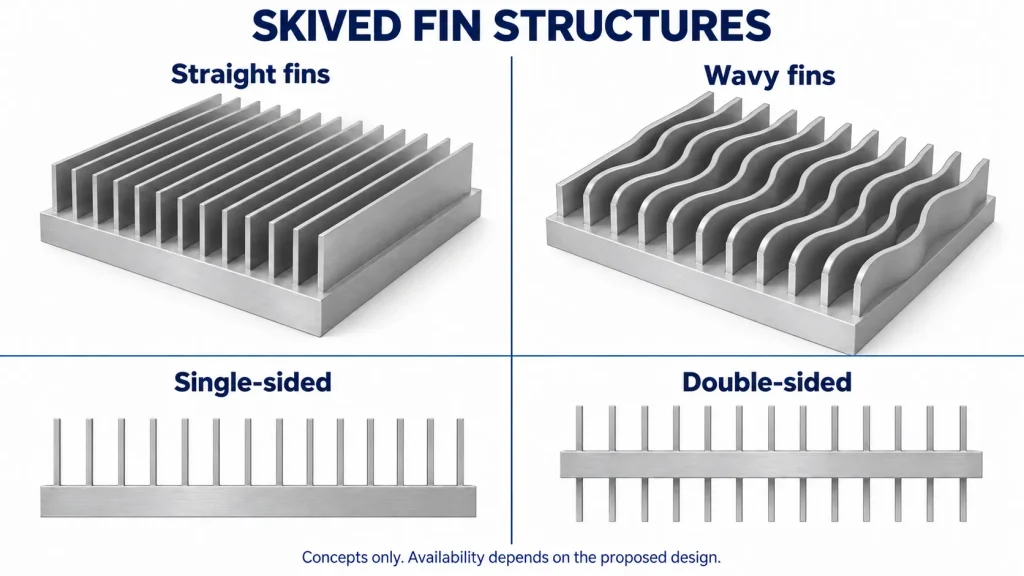
*Fin geometry concepts only. Material and manufacturing feasibility require review of the proposed design.*
For either option, request evaluation under the intended airflow and mounting conditions. Neither extra fin surface nor a more complex shape is a substitute for that evaluation.
Check Machining, Finishing and Assembly Options
A skived fin block may still need machining or assembly before it fits the system. Compare the finished part and its interfaces, not only the fin field.
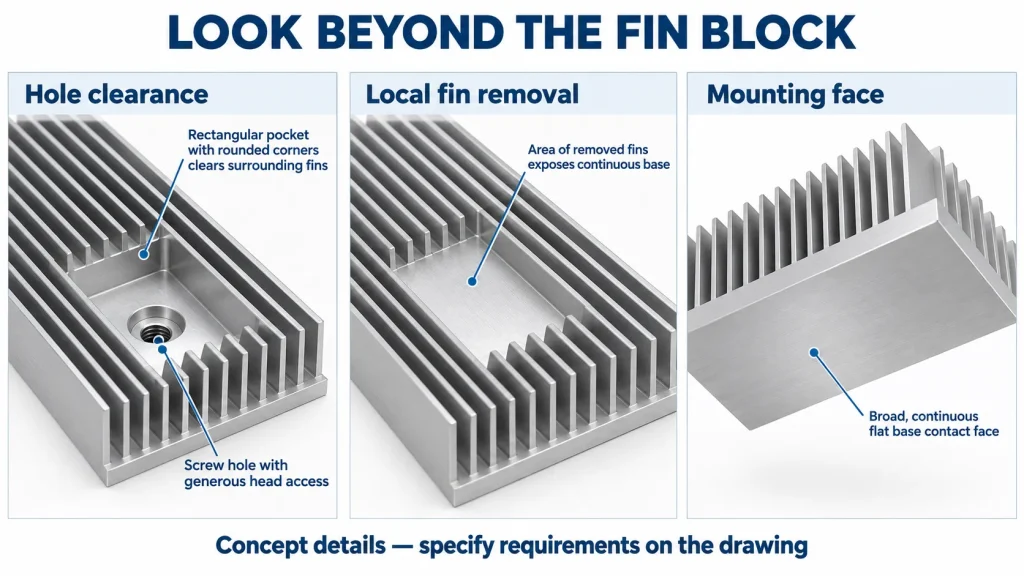
Define mounting access, fin keep-out areas and the contact face on the drawing. Illustrations are not manufacturing drawings.
Mounting access. Check clearance for screw heads, installation tools and nearby components. MyHeatSinks discusses rectangular fin-removal areas with radiused corners. Define the required keep-out region on the drawing, then agree on a machinable corner shape rather than assuming a perfectly sharp internal corner. MyHeatSinks design guidance
Contact face and finish. Identify the thermal contact face, machining requirements and any coating or plating exclusions. Ask which surfaces will be treated and how the contact face will be protected during subsequent handling. Specify the required finish; do not use color as a substitute for a surface-treatment requirement.
Hybrid assembly.For designs using heat-pipe cooling modules, clarify which components are supplied, joined and inspected as an assembly. The contact arrangement and joining interfaces should be clear before approval.
Fin protection. Thin fins require care during handling; Wakefield’s sheet recommends protective measures. Ask how the fin field will be supported during machining, packing and shipping. Wakefield handling guidance
A supplier response should address the features that make the part installable, not stop at “custom size available.”
Build a Shortlist Around the Finished Part
Separate suppliers into the routes your project actually needs.
If a standard part fits the envelope and attachment method, investigate that route first. If the fin block is suitable but mounting access is not, ask about a modified part with secondary machining. For wavy, double-sided or hybrid designs, request confirmation of the complete configuration rather than relying on a general capability label.
Keep supplier assumptions visible. An alternative alloy, joined base or changed mounting arrangement may be workable, but it should be an explicit proposal—not a change discovered after samples arrive. Record which features are confirmed and which still require a drawing review or sample check.
For an Ecotherm project discussion, send your drawing or available design to support@ecothermgroup.com. Highlight the mounting features and space or airflow constraints that cannot change. If the design is incomplete, identify the open questions so the discussion starts with the right manufacturing decisions.