Vapor Chambers and Heat Sinks: Heat Transfer vs Spreading
Effective thermal management is essential in modern electronics, where excessive heat can impact performance and shorten device lifespan. Deciding between vapor chambers and heat sinks can be difficult, as each provides distinct benefits for heat distribution and transfer. This article examines their differences to guide you in choosing the best solution for your cooling requirements.
Takeaway
- Vapor chambers are perfect for applications that need efficient heat distribution across larger surfaces, while heat sinks are better suited for moving heat away from specific localized sources.
- Vapor chambers use phase change technology to quickly spread heat, while heat sinks rely on conduction and convection to release heat into the surrounding air.
- The compact and lightweight design of vapor chambers makes them ideal for devices with limited space, whereas heat sinks are more affordable and simpler to use in less demanding thermal environments.
- Vapor chambers are widely used in high-performance electronics like GPUs and CPUs, while heat sinks are common in everyday devices such as power supplies and LED lighting.
- When deciding between vapor chambers and heat sinks, consider key factors like thermal demands, device dimensions, budget, and environmental conditions.
- Vapor chambers are better suited for applications with high heat flux and the need for even heat distribution, while heat sinks are often adequate for simpler cooling requirements.
- Combining vapor chambers with heat sinks can create hybrid cooling solutions for devices that need both efficient heat spreading and strong heat dissipation.
What Are Heat Sinks?
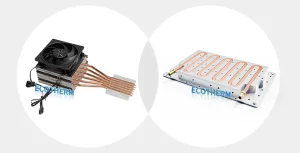
Heat sinks are passive cooling devices that transfer heat from a heat source, such as a processor or power module, to the surrounding air. Made from materials with high thermal conductivity, like copper or aluminum, they are widely used for their simplicity and effectiveness. Aluminum is common due to its lightweight and cost-efficient properties, while copper offers better heat transfer but is heavier and more expensive.
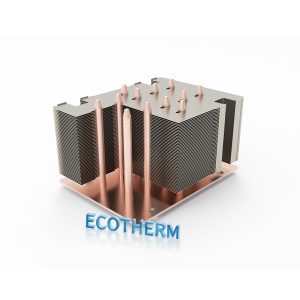
Heat sinks come in various configurations, such as skived fins, extruded bases, and designs with integrated heat pipes. While generally simpler and more affordable than vapor chambers, heat sinks are best suited for applications with lower thermal demands or localized cooling needs. For example, remote telecom base stations often use heat sinks because they provide reliable and cost-effective cooling.
Importance of Thermal Management
Choosing between vapor chambers and heat sinks depends on factors like thermal resistance, power density, and the balance of weight and performance. High-power-density systems, such as AI servers, benefit from vapor chambers due to their ability to spread heat evenly over large surfaces. In contrast, heat sinks are a practical choice for low-to-medium power applications where cost and simplicity are priorities.
| Characteristic | Vapor Chambers | Heat Sinks |
|---|---|---|
| Thermal Conductivity | High (up to 10x copper) | Moderate |
| Weight | Lightweight | Varies (aluminum is lighter) |
| Applications | High-power-density systems | General-purpose cooling |
| Cost | Higher | Lower |
| Hot Spot Elimination | Excellent | Moderate |
The decision should align with the specific thermal challenges of your application. For devices requiring maximum efficiency and compact designs, vapor chambers are a top choice. On the other hand, for simpler systems or budget-focused projects, heat sinks are a dependable and cost-effective option. Ecothermgroup offers advanced thermal solutions designed to meet a variety of needs, ensuring optimal performance across diverse applications.
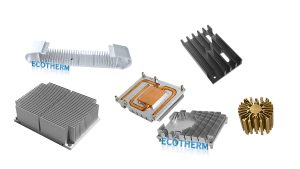
Introduction to Vapor Chambers and Heat Sinks
Effective thermal management is crucial in modern electronics, where increasing power demands and compact designs call for advanced cooling solutions. Vapor chambers and heat sinks are two popular technologies that help dissipate heat and maintain optimal device performance. Each has its own strengths, making them suitable for applications ranging from AI servers to aerospace electronics.
What Are Vapor Chambers?
Vapor chambers are flat, sealed devices that use phase-change cooling to deliver exceptional heat spreading efficiency. Inside, a working fluid evaporates at heat sources, absorbs thermal energy, and moves to cooler areas where it condenses, releasing the heat. This cycle repeats continuously within the sealed chamber, ensuring even temperature distribution across its surface. To enhance capillary action and thermal performance, the design typically includes sintered copper powder or a copper mesh wick.
Vapor chambers are ideal for applications requiring high thermal conductivity and uniform heat distribution, such as GPUs, CPUs, and IGBT cooling. Compared to traditional heat pipes, vapor chambers handle higher heat flux densities, making them a go-to solution for compact devices with multiple heat sources. Industries like aerospace and military electronics rely on vapor chambers for their durability and ability to eliminate hot spots in extreme conditions.
How Vapor Chambers and Heat Sinks Work
The Science Behind Vapor Chambers
Vapor chambers are advanced thermal management solutions that use phase-change cooling to dissipate heat efficiently. They feature a sealed, flat structure, usually made of copper, with internal wicking materials like sintered copper powder or copper mesh. These materials help move a working fluid—often water—within the chamber. When heat is applied, the fluid evaporates at the heat source, transferring thermal energy as vapor. The vapor spreads evenly across the chamber and condenses back into liquid in cooler areas, completing the cycle.
A key benefit of vapor chambers is their ability to maintain consistent temperatures across the surface, making them ideal for high heat flux density applications such as AI server cooling, aerospace electronics, and military-grade systems. Vapor chambers are particularly effective at managing concentrated hotspots and distributing heat evenly over flat surfaces, making them well-suited to compact, high-power devices.
Mechanisms of Heat Sinks
Heat sinks use conduction and convection to transfer heat away from electronic components. They typically consist of a base—commonly made of aluminum or skived copper—connected to a series of fins. These fins increase surface area, allowing airflow to cool the component more effectively. Unlike vapor chambers, heat sinks rely on direct thermal conduction from the heat source to the sink and then convective cooling through airflow.
Passive heat sinks are often used in cost-sensitive applications like remote telecom base stations and general-purpose electronics, where simplicity and durability are key. Active heat sinks, which include built-in fans, are better for environments requiring higher thermal performance, such as IGBT thermal management systems. Heat sinks offer a variety of material options and designs, allowing for weight-to-performance ratio optimization.
- Passive heat sinks: Best for low-power applications with minimal thermal loads.
- Active heat sinks: Ideal for high-power systems requiring forced airflow.

Key Differences in Functionality
Though both vapor chambers and heat sinks manage heat, they function differently. Vapor chambers excel at heat spreading, making them ideal for eliminating hotspots and evenly distributing heat in complex thermal designs. Heat sinks, on the other hand, are more focused on transferring heat from components to the environment, working well in systems with linear heat dissipation needs.
Cost is another distinction. Vapor chambers are typically more expensive to manufacture due to their sealed design and advanced materials. Heat sinks, with simpler designs and materials like aluminum, are more affordable but may not provide the precision cooling needed for high-performance electronics.
| Feature | Vapor Chambers | Heat Sinks |
|---|---|---|
| Cooling Method | Phase-change cooling | Conduction & convection |
| Ideal Applications | High-power CPUs, GPUs, compact electronics | Servers, telecom equipment, general electronics |
| Material | Copper with internal wick | Aluminum or copper fins |
| Cost | Higher | Lower |
| Heat Spreading Efficiency | Excellent | Moderate |
Ecothermgroup provides innovative solutions combining vapor chambers and heat sinks, helping manufacturers optimize thermal management for a wide range of applications. Understanding the mechanisms and differences between these technologies empowers engineers to design systems tailored to specific performance needs.
Advantages and Disadvantages
Benefits of Vapor Chambers
Vapor chambers provide exceptional heat spreading efficiency, making them ideal for applications that require consistent thermal management. Using phase-change cooling, they maintain isothermal properties across surfaces, which helps eliminate hotspots in high-performance electronics like GPUs, CPUs, and AI server cooling systems. Their capability to handle high heat flux density makes them a preferred choice for compact devices with limited space for thermal solutions.
Another key advantage is their low thermal resistance (Rth), enabling more effective heat transfer. This is especially beneficial for applications like IGBT thermal management in aerospace electronics and military-grade systems. Vapor chambers are typically made with advanced materials such as sintered copper powder or copper mesh wick to enhance capillary action, further boosting heat transfer efficiency.
Ecothermgroup’s vapor chamber solutions are often combined with skived fin or aluminum extrusion bases to maximize performance. This pairing ensures efficient heat dissipation, even in remote telecom base stations exposed to high thermal loads.
Benefits of Heat Sinks
Heat sinks are known for their cost-effectiveness and scalability, making them a reliable solution for a wide range of thermal management needs. They are particularly suitable for passive cooling systems in simpler applications where air-cooled solutions are sufficient. Aluminum is commonly used due to its affordability and moderate thermal conductivity.
The versatility of heat sinks allows for customization in various designs, such as pin-fin, plate-fin, or skived configurations. They can also be paired with active cooling methods, like fans, to effectively manage higher thermal loads. Ecothermgroup provides custom heat sink solutions tailored to meet specific TDP requirements while maintaining an optimal weight-to-performance ratio.
Heat sinks are also highly durable, making them ideal for industrial and mechanical applications requiring long-term reliability. Their straightforward design and ease of manufacturing help lower costs and simplify integration into existing systems.

Challenges and Limitations
Despite their advantages, both vapor chambers and heat sinks come with limitations that should be considered when choosing a solution. Vapor chambers, for example, are generally more expensive due to their complex manufacturing process, which includes hermetic sealing and the use of high-performance materials like sintered copper powder. This cost can be a barrier for budget-conscious projects.
Heat sinks, while more affordable, are less effective at managing concentrated heat sources. They lack the two-dimensional heat spreading capability of vapor chambers, which can lead to uneven temperature distribution and potential hotspots. Additionally, their bulkier design may not be suitable for compact or weight-sensitive applications, such as aerospace electronics.
For demanding situations, hybrid solutions that combine vapor chambers and heat sinks can offer a balanced approach. Vapor chambers efficiently spread heat from hotspots, while heat sinks dissipate that heat into the environment, creating a synergistic effect.
| Feature | Vapor Chambers | Heat Sinks |
|---|---|---|
| Heat Spreading Efficiency | High | Moderate |
| Cost | High | Low |
| Thermal Resistance (Rth) | Low | Moderate |
| Material | Sintered Copper Powder, Copper Mesh Wick | Aluminum, Copper |
| Compactness | Excellent | Limited |
| Manufacturing Complexity | High | Low |
- Vapor chambers are best for high-performance and compact designs.
- Heat sinks excel in cost-sensitive and durable applications.
- Hybrid designs can address limitations of both technologies.
Applications of Vapor Chambers and Heat Sinks
Use Cases for Vapor Chambers
Vapor chambers are highly effective for applications that need uniform heat distribution across flat surfaces with concentrated heat sources. Their ability to maintain consistent temperatures makes them ideal for managing high heat flux density in compact electronics such as GPUs, CPUs, and AI servers. These devices often generate hotspots that require precise thermal management to ensure performance and reliability. Vapor chambers address these hotspots through phase-change cooling, where the liquid inside evaporates and condenses to evenly spread heat.
In aerospace and military-grade electronics, where reliability under extreme conditions is critical, vapor chambers are favored for their durability and hermetic sealing. They are also widely used in IGBT thermal management for power electronics, ensuring stable operation under high thermal loads. Ecothermgroup enhances vapor chambers by integrating advanced sintered copper powder and copper mesh wick technologies, improving heat distribution efficiency while maintaining a favorable weight-to-performance ratio.
Use Cases for Heat Sinks
Heat sinks are commonly used in applications where cost-effectiveness and simplicity are key. They function through conduction and convection, dissipating heat into the surrounding air efficiently. Heat sinks are often found in remote telecom base stations, industrial machinery, and consumer electronics, where thermal design power (TDP) is moderate to high but does not demand the advanced heat spreading capabilities of vapor chambers.
Various types of heat sinks, such as those with aluminum extrusion bases or skived fin designs, offer flexible solutions for passive and active cooling. Passive cooling relies on natural convection, while active systems use fans or blowers to enhance heat dissipation. Heat sinks are often ideal for applications with larger surface areas, making them particularly suitable for scenarios where localized heat transfer is sufficient without the need for even heat distribution.
Choosing Based on Application
Choosing between vapor chambers and heat sinks depends on the application’s thermal management needs, space limitations, and budget. Vapor chambers are an excellent choice for high-power electronics with limited space and critical thermal performance requirements. For instance, AI servers with densely packed components benefit greatly from the high thermal conductivity and low thermal resistance (Rth) of vapor chambers.
By contrast, heat sinks are preferred for applications where cost-efficiency and simplicity are essential. In industrial settings or telecommunications, their durable design and ease of integration make them ideal for large-scale systems. Engineers often combine vapor chambers with heat sinks to optimize thermal management, utilizing the heat spreading capabilities of vapor chambers alongside the convective cooling of heat sinks.
| Feature | Vapor Chambers | Heat Sinks |
|---|---|---|
| Thermal Conductivity | High | Moderate |
| Heat Flux Density | Ideal for high-density | Suitable for lower density |
| Cost | Higher | Lower |
| Applications | GPUs, Aerospace, AI Servers | Industrial Machinery, Telecom |
- Vapor chambers are best for compact, high-performance systems.
- Heat sinks are preferred for cost-sensitive, larger-scale applications.
- Combining both technologies can maximize thermal management efficiency.
Choosing the Right Solution
Factors to Consider
Deciding between vapor chambers and heat sinks for thermal management depends on the specific needs of your application. Vapor chambers excel in situations requiring uniform heat distribution and compact designs. Their ability to handle high heat flux density and maintain isothermal properties makes them ideal for applications like AI server cooling, aerospace electronics, and high-performance gaming devices. Alternatively, heat sinks are better suited for systems with lower thermal loads or applications focused on cost-efficiency, such as LED lighting and consumer-grade electronics.
Material and manufacturing are also important considerations. Vapor chambers use advanced materials like sintered copper powder and copper mesh wicks, combined with hermetic sealing for durability. Heat sinks, on the other hand, often feature aluminum extrusion bases or skived fin designs, which are more economical but less efficient in spreading heat. Weight is another factor; vapor chambers are lighter, making them a good choice for weight-sensitive applications like drones and military-grade equipment.
Cost vs. Performance
The balance between cost and performance is crucial when choosing between vapor chambers and heat sinks. Vapor chambers are more expensive due to their complex design and advanced materials but deliver superior performance in high-power-density applications above 300 W/cm². They are particularly effective in eliminating hot spots in compact, high-performance devices. Meanwhile, traditional heat sinks are more affordable and provide adequate thermal resistance (Rth) for devices with lower TDP requirements, making them suitable for budget-conscious projects where extreme thermal management is unnecessary.
Hybrid solutions are also worth considering. Designers often combine vapor chambers and heat sinks to create balanced systems that leverage the strengths of both technologies. This approach is especially useful in industrial applications like IGBT thermal management and remote telecom base stations, where efficient heat dissipation is essential for reliable operation.
| Criteria | Vapor Chambers | Heat Sinks |
|---|---|---|
| Thermal Conductivity | High, ideal for uniform heat spreading | Moderate, relies on conduction and convection |
| Material | Sintered copper powder, copper mesh wick | Aluminum extrusion, skived fins |
| Applications | AI servers, military-grade electronics | Consumer electronics, LED lighting |
| Cost | Higher | Lower |
Future Trends in Thermal Management
As technology advances, the need for compact and efficient cooling solutions continues to grow. Vapor chambers are expected to lead high-power-density applications in industries like AI, aerospace, and automotive electronics. Their phase-change cooling mechanism and ability to maintain isothermal properties position them as a key solution for future thermal management challenges. Emerging innovations include thinner vapor chamber designs to accommodate ultra-slim devices like foldable phones and lightweight laptops.
Heat sinks are also evolving. Advances in materials and manufacturing methods, such as 3D printing and improved aluminum alloys, are enhancing their performance while keeping costs low. These developments ensure heat sinks remain a practical option for applications requiring reliable, cost-effective solutions for steady heat dissipation.
- Evaluate the device’s thermal design power (TDP) to determine heat dissipation needs.
- Consider space and weight constraints for your application.
- Assess long-term reliability requirements, especially for industrial or military-grade systems.
- Factor in budget limitations and material manufacturing costs.
By carefully analyzing these factors and understanding the strengths of both technologies, you can make an informed choice. Working with thermal experts like Ecothermgroup ensures tailored solutions that meet your specific needs, whether advanced vapor chambers or traditional heat sinks are required.
People Also Ask
What are the main differences between vapor chambers and heat sinks?
Vapor chambers distribute heat evenly over large surfaces, making them ideal for high-power electronics. Traditional heat sinks, on the other hand, use fins to dissipate heat into the air, which works well for less demanding applications.
How do vapor chambers work in dissipating heat?
Vapor chambers operate by using a liquid that evaporates at the heat source and spreads across the chamber. It then condenses back into liquid as it cools, enabling efficient heat distribution.
What are the advantages of using vapor chambers over traditional heat sinks?
Vapor chambers provide superior heat spreading, making them ideal for compact, high-power devices. They ensure even thermal management, unlike heat sinks, which may have less uniform heat distribution.
In what applications are vapor chambers preferred over heat sinks?
Vapor chambers are commonly used in high-power electronics like gaming laptops and servers, where effective and consistent heat management is essential for performance and reliability.
What factors should be considered when choosing between a vapor chamber and a heat sink?
Key considerations include the device’s power density, available space, and thermal performance needs. Vapor chambers suit high-power density applications, while heat sinks work well for lower power requirements.
Can vapor chambers replace heat sinks in all applications?
No, vapor chambers are not suited for every situation. They work best when efficient heat spreading is required, while heat sinks are sufficient for simpler thermal management tasks.
Are vapor chambers more expensive than traditional heat sinks?
Yes, vapor chambers are generally pricier due to their advanced design and efficiency. However, their performance benefits often make them worth the investment in demanding applications.
How does the size of a vapor chamber affect its performance?
The size of a vapor chamber influences its heat spreading ability. Larger chambers can cover bigger areas and manage heat more effectively, which is especially useful for devices with extensive heat sources.