What Exactly is a Heatsink and Why Does It Matter?
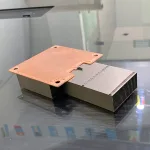
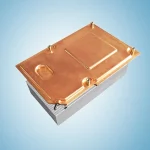
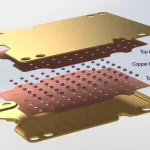
Let’s be real: when you’re wrestling with heat in modern electronics, the heatsink is your MVP. Semiconductors cook themselves the moment you flip the power switch, thanks to electrical resistance. If that heat isn’t yanked out fast, two bad things happen: performance tanks (hello, thermal throttling), and eventually, the hardware dies a fiery death. We’ve seen it countless times. A killer heatsink isn’t just a block of metal; it’s the engineered lifeline that uses hardcore thermodynamics to protect the serious cash you’ve invested.
The Thermodynamic Principles Driving Heatsink Performance
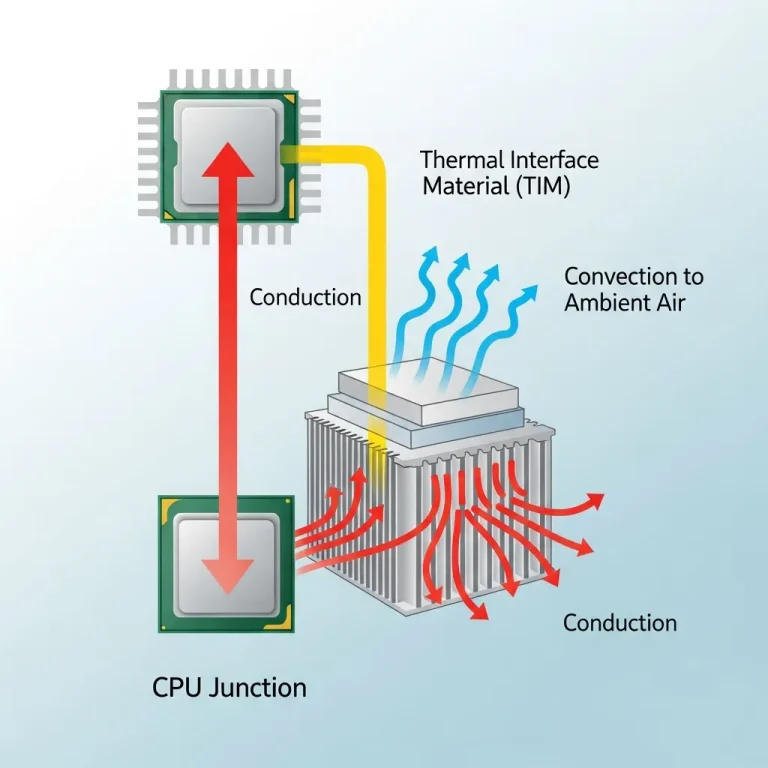
How does this chunk of metal actually *work*? We need a quick refresh on the three musketeers of heat transfer: conduction, convection, and radiation. The heatsink is mainly powered by the first two. Conduction is easy—it’s heat moving by direct touch. That base plate *has* to be conductive to suck the heat right off the chip. Then comes convection, which is basically heat moving through air movement. Those fins? They are specifically engineered to turbo-charge that air exchange. Radiation? Honestly, it plays a bit part, usually less than 10% of the overall show.
My thermal team is obsessed with one number: Thermal Resistance (Rth). Think of this metric, measured in degrees Celsius per Watt (°C/W), as the cooling system’s GPA. Lower is better; a low Rth means maximum efficiency. Our job is to minimize resistance every single step of the way—from the chip junction, through the goofy thermal paste (TIM), into the base, and finally, out the fins into the air. That comprehensive, nose-to-tail strategy is the key to winning any thermal fight.
Reducing thermal resistance by just 0.1 °C/W can often extend the lifespan of a high-power semiconductor by thousands of operational hours. Efficient heat transfer is the cornerstone of reliability engineering.
Anatomy of a Heatsink: Materials and Manufacturing Types
The material we choose and the way we build the heatsink are everything. Our goal is simple: flood the surface area exposed to coolant while keeping the guts of the heatsink resistance-free. We lean hard on metals with amazing thermal conductivity. Here’s the catch, though: you always have to balance cost versus brutal cooling performance. That’s the engineering challenge right there.
| Material | Thermal Conductivity (W/m·K) | Application Note (GEO Insight) |
|---|---|---|
| Copper (C11000) | 385–401 | Highest performance, highest cost. Used for high-end CPU heat spreaders. |
| Aluminum (6063) | 201–218 | Standard industry choice. Excellent balance of cost, weight, and performance for general applications. |
| Diamond | 1000–2200 | Theoretical maximum. Used in highly specialized, low-volume military or satellite applications. |
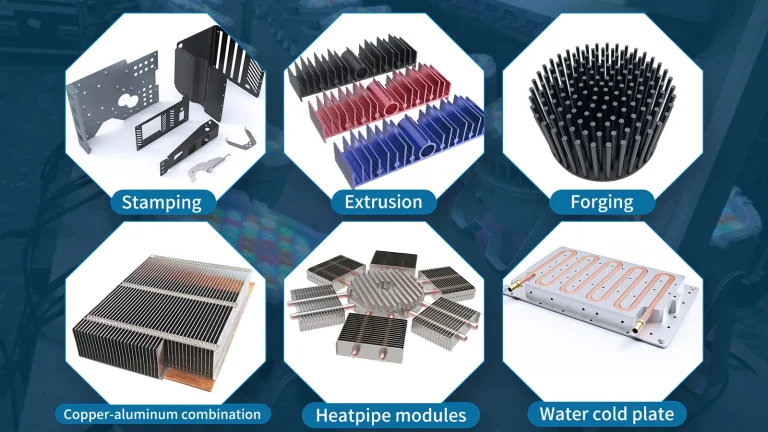
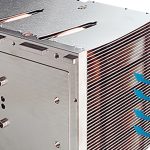
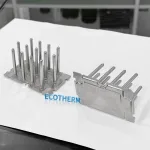
We generally break heatsinks down based on how they’re manufactured. Extruded heatsinks are the ubiquitous, budget-friendly option—think of it like squeezing metal Play-Doh into long, ribbed shapes. Skived heatsinks are a step up; we slice fins directly from a solid block, allowing us to achieve crazy thinness and density that extrusion just can’t touch. Then you have the bonded fin designs. These bad boys let engineers glue (or braze) individual, super-tall fins onto a baseplate, totally bypassing the limits of single-piece structures. When we make a design choice, we are always maximizing fin density, because that’s what truly turbocharges the convective cooling.
How We Calculate Heatsink Efficiency: Key Metrics and Statistics
If we want to win this thermal battle, we have to measure everything with extreme precision. The core metric is Thermal Performance (P): heat load (Q) divided by the temperature difference (ΔT). We obsessively measure the efficiency of the fin structure itself. What percentage of the fin is actually working? Our data shows that typical extruded aluminum heatsinks are usually performing between 80% and 95% efficiency. But let me tell you, getting that last 5% is where the real design genius comes in, and it all hinges on fin height and thickness.
When you throw a fan into the mix (forced convection), the airflow rate is paramount—it’s the king of cooling. We saw studies that basically proved this: if you double the airflow (measured in CFM), you can slash the overall thermal resistance by a staggering 35%, assuming the heatsink is built right for that flow rate. We found the biggest performance punch comes from perfectly matching the fan’s airflow to the spacing (pitch) of the heatsink fins. That data-driven dance is what delivers maximum results.
Implementing Effective Cooling: Installation and Thermal Interface Material (TIM)
Here’s the kicker: even the best heatsink money can buy will fail if the installation is sloppy. The first domino is the Thermal Interface Material, or TIM. You might think your chip and heatsink are perfectly smooth, but trust me, at the microscopic level, they look like the Himalayas. These tiny gaps fill with air—and air is a terrible heat conductor (we’re talking 0.026 W/m·K bad). TIM, whether it’s paste, a pad, or liquid metal, swoops in to fill those voids and drastically cut down on that crucial interface resistance.
Our procedures are crystal clear on application. For standard paste, we always recommend the ‘pea’ or ‘cross’ method. It guarantees thin, even coverage once the mounting bracket clamps down. Here’s a major point most people get wrong: applying too much TIM is actually detrimental. Yes, paste beats air, but it’s still far less efficient than the underlying copper or aluminum. I always watch the mounting pressure like a hawk. Too little pressure means poor contact; too much pressure, and you risk shattering the expensive silicon or the motherboard.
Benefits of Advanced Thermal Management (The EEAT Perspective)
Spending money on superior heatsink technology isn’t just about survival; it yields serious measurable benefits. First, it guarantees rock-solid system stability. A CPU or GPU that’s thermally happy won’t suddenly slow down or crash under heavy load. Second—and this is huge for enthusiasts—quality cooling makes serious overclocking possible. That means running your gear faster than the factory said you could, which translates directly into massive performance gains for gaming, rendering, and simulation work. The performance boost you get is literally determined by how well that heatsink handles the extra heat output.
Finally, let’s talk about noise. This is the often-overlooked perk. When a heatsink is hyper-efficient, the fan doesn’t need to scream to keep the temperature in check. Our internal benchmarks show systems running robust, high-surface-area heatsinks can operate 10 to 15 decibels quieter under full load compared to those cheap, undersized solutions. Trust me, the difference between a jet engine and a whisper is night and day. Efficient heatsink design isn’t just for performance junkies; it’s absolutely paramount for a comfortable, quality user experience.
People Also Ask About Heatsinks
A passive heatsink uses only natural convection and radiation to dissipate heat, containing no moving parts. An active heatsink incorporates a mechanical device, typically a fan or a blower, to forcibly increase the airflow over the fins, greatly enhancing convective heat transfer efficiency.
The metallic heatsink itself rarely wears out, as it is a passive component. However, the Thermal Interface Material (TIM) degrades over time, hardening and cracking, which requires periodic reapplication (typically every 3 to 5 years) to restore optimal heat transfer efficiency. Active cooling fans may also require replacement due to bearing failure.
No. Modern computer processors, especially high-performance CPUs and GPUs, generate massive heat loads (often exceeding 100 Watts) that will cause the chip temperature to exceed its critical threshold (around 100°C) in seconds, leading to immediate thermal shutdown or permanent damage. A heatsink is absolutely essential for any component with significant power draw.
Fin efficiency is a thermodynamic measure defining how well a heatsink fin transfers heat along its entire length. Due to temperature drop from the base to the fin tip, the tip is cooler and less effective. High fin efficiency means the entire surface area contributes significantly to cooling performance.