Custom PCB Heat Sinks: Thermal Simulation to Production
Effectively managing heat is a crucial challenge in modern electronics, where compact designs and high-performance components often increase the risk of overheating. Custom PCB heat sinks are essential for dissipating excess heat, helping to maintain reliability and efficiency. This article covers the process from thermal simulation to mass production, offering practical insights for creating tailored solutions that fit your designs.
Takeaway
- Custom PCB heat sinks play a crucial role in managing heat in high-performance electronic systems, enhancing reliability and extending their lifespan.
- Important design factors include material choice, thermal conductivity, size limitations, and seamless integration with PCB components to ensure efficient heat dissipation.
- Thermal simulation tools help predict heat distribution, pinpoint hotspots, and refine designs before moving to physical prototypes.
- Prototyping and testing are essential for verifying thermal performance, confirming the heat sink meets design goals, and validating real-world functionality.
- Scaling up production of custom PCB heat sinks involves balancing cost, manufacturing efficiency, and consistent thermal performance across all units.
- Working closely with manufacturers early in the design phase can simplify prototyping, reduce production time, and improve manufacturability.
- Ongoing evaluation and refinement of heat sink designs after production can address new thermal challenges in evolving electronic applications.
Introduction to PCB Heat Sink
What Are PCB Heat Sinks?
A PCB heat sink is a component designed to manage heat generated by electronic parts mounted on printed circuit boards (PCBs). As devices become smaller and more powerful, effective heat dissipation is essential to prevent hotspots and ensure long-term reliability. PCB heat sinks are commonly made from materials like aluminum or copper, which efficiently transfer heat away from components to maintain safe operating temperatures.
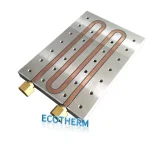
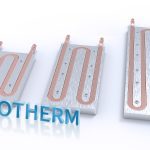
Custom designs, including skived fin heat sinks or embedded heat pipes, are often used to address specific thermal challenges. These solutions are tailored to the layout, power density, and operating conditions of the application. For example, vapor chambers can be used in high-performance systems to spread heat evenly. Thermal interface materials (TIMs), such as pads or pastes, are also applied between the PCB and the heat sink to improve heat transfer by filling air gaps.
PCB heat sinks come in active and passive cooling configurations. Active solutions, such as those with fans, are effective for high-power applications, while passive options rely on natural convection and are ideal for simpler, low-power devices.
Importance of Thermal Management in Electronics
Thermal management is critical in electronics to prevent overheating, which can cause performance issues, component failure, or safety risks. With rising power densities in modern PCBs, effective solutions like custom PCB heat sinks have become essential. Ecothermgroup, a leading manufacturer of heat sinks, specializes in creating custom designs to meet the unique thermal needs of today’s electronics.
Simulation tools, such as computational fluid dynamics (CFD) software, are key to optimizing heat sink designs. These tools help engineers model heat transfer and airflow to identify potential hotspots and refine designs before production. This process saves development time and reduces the risk of thermal issues in mass production. Rapid prototyping is also used to quickly test and validate designs against performance requirements.
| Cooling Method | Key Features |
|---|---|
| Active Cooling | Uses fans or blowers; suitable for high-power applications |
| Passive Cooling | Relies on natural convection; ideal for low-power devices |
Material selection plays a vital role in heat sink design. Aluminum is widely used for its lightweight and affordability, while copper offers superior thermal conductivity though it is heavier and more expensive. Surface treatments like anodizing can further enhance durability and thermal performance. By optimizing designs for manufacturability and using advanced production methods, manufacturers ensure that custom PCB heat sinks meet both performance and cost requirements.
PCB heat sinks are essential for modern electronics, enabling efficient heat dissipation and extending device lifespan. By using advanced materials, simulation tools, and innovative designs, manufacturers like Ecothermgroup deliver tailored thermal management solutions for a wide range of applications.
Design Considerations for Custom PCB Heat Sinks
Material Selection for Heat Sinks
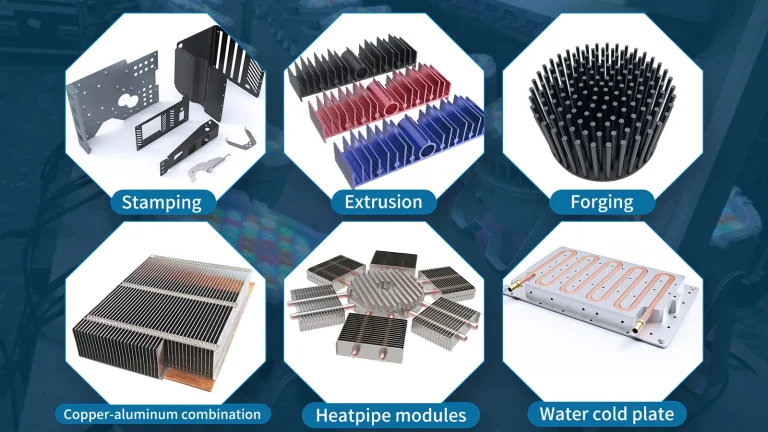
Choosing the right material is key to the performance of a PCB heat sink. Aluminum is widely used because it is affordable, lightweight, and offers excellent thermal conductivity, making it suitable for large-scale production. In contrast, copper is preferred for high-performance applications due to its superior thermal conductivity, though its higher cost and weight can be limiting for budget-sensitive designs. Custom aluminum extrusions are common for applications requiring complex designs, while skived fin heat sinks enhance heat dissipation through increased surface area.
Equally important is selecting an appropriate Thermal Interface Material (TIM). TIMs fill gaps between the heat sink and PCB components to reduce thermal resistance. Options include thermal pads, pastes, and phase-change materials, each offering different levels of thermal conductivity and application methods.
| Material | Key Benefits |
|---|---|
| Aluminum | Lightweight, affordable, ideal for mass production |
| Copper | Excellent thermal conductivity, great for high-performance uses |
| Custom Aluminum Extrusion | Supports intricate designs for better cooling |
| Skived Fin Heat Sink | Boosts surface area for improved heat dissipation |
Thermal Resistance and Heat Dissipation
Reducing thermal resistance is a key objective when designing custom PCB heat sinks. Factors such as material conductivity, surface area, and the contact quality between the heat sink and PCB influence thermal resistance. Engineers frequently use advanced thermal simulation tools like CFD software to predict temperature distribution and pinpoint hotspots. These insights inform decisions about heat sink geometry and TIM selection.
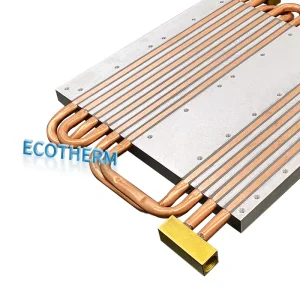
Innovative solutions like board-mounted vapor chambers and embedded heat pipes enhance heat dissipation. Vapor chambers distribute heat uniformly across the PCB, while heat pipes transfer heat away from hotspots to cooler areas. These technologies are especially useful for high-power electronics where traditional heat sinks may not suffice.
- Utilize wide, thin fins to maximize surface area for passive cooling.
- For high heat loads, consider active cooling techniques like integrated fans.
- Position thermal vias effectively to improve heat transfer through PCB layers.
Miniaturization and Space Constraints
With electronics becoming smaller, designing effective PCB heat sinks within tight spaces is increasingly challenging. Compact yet efficient thermal solutions are essential. Skived fin designs and custom aluminum extrusions are well-suited for confined spaces, providing excellent performance without adding unnecessary bulk. Rapid prototyping heat sinks allow engineers to test and refine designs quickly, ensuring they fit space-restricted layouts.
Design for Manufacturability (DFM) is critical when dealing with space constraints. Simplifying geometries reduces production complexity and cost while maintaining thermal efficiency. Partnering with a custom heat sink manufacturer like Ecothermgroup helps achieve a balance between performance and dimensional requirements.
By considering these factors, engineers can develop PCB heat sinks that effectively manage heat while meeting the demands of modern electronic designs.
Role of Thermal Simulation in Heat Sink Design
Importance of Simulation Tools
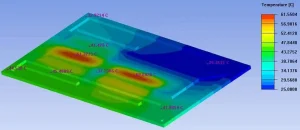
Thermal simulation tools are essential in designing a PCB heat sink. Using computational fluid dynamics (CFD) and thermal simulation software, engineers can predict temperature distribution across the PCB, identify hotspots, and assess the heat dissipation efficiency of custom heat sinks. This approach ensures the design meets performance requirements before prototyping or production. These tools are particularly valuable for refining advanced designs like skived fin heat sinks or embedded heat pipes, where thermal resistance and conductivity are critical.
For instance, in developing a board-mounted vapor chamber, simulation software can model airflow and determine whether passive or active cooling is more effective for a specific application. Ecothermgroup leverages these tools to create custom aluminum extrusions tailored to unique PCB layouts, achieving a balance between performance and manufacturability. Without simulation, this level of precision would require costly, time-consuming trial-and-error methods.
Steps in Thermal Analysis
Thermal analysis for a PCB heat sink involves a structured process to achieve effective thermal management:
- Define Objectives: Set thermal performance goals, such as maintaining target operating temperatures or reducing thermal resistance.
- Material Selection: Select materials like aluminum or copper based on thermal conductivity, cost, and weight. Aluminum is often favored in custom heat sink manufacturing for its balance of performance and affordability.
- Simulation Setup: Input PCB layout data along with parameters like heat sources, Thermal Interface Material (TIM) properties, and ambient conditions into the simulation software.
- Simulation Execution: Use CFD tools to analyze heat transfer, airflow, and temperature distribution, making adjustments to optimize design parameters.
- Validation: Compare simulation results with real-world conditions using rapid prototyping or experimental setups.
Following these steps ensures the final design optimizes thermal performance, cost-efficiency, and manufacturability, aligning with DFM principles.
Common Challenges in Simulation
While thermal simulation provides substantial benefits, it comes with challenges. One common issue is the accuracy of input data, such as TIM properties or the PCB’s thermal characteristics. Inaccurate inputs can lead to unreliable results, requiring further iterations. Another challenge involves modeling complex geometries like embedded heat pipes or custom aluminum extrusions, which demand high computational power and advanced software. Engineers also need to weigh the trade-offs between active and passive cooling solutions, as active systems like fans add complexity and cost.
Combining thermal simulation with physical testing is key to addressing these challenges. Ecothermgroup uses a hybrid approach, integrating simulation with rapid prototyping to verify designs. This ensures simulated results align with manufacturable, high-performance heat sinks that meet industry standards.
| Challenge | Solution |
|---|---|
| Inaccurate input data | Use reliable material property databases |
| Complex geometries | Utilize advanced CFD tools with sufficient computational resources |
| Active vs. passive cooling trade-offs | Conduct comparative simulations to find the best cost-performance balance |
Prototyping and Testing PCB Heat Sinks
Rapid Prototyping Techniques
Rapid prototyping is essential for developing efficient PCB heat sinks, bridging the gap between thermal simulations and full-scale production. Techniques like CNC machining, 3D printing, and custom aluminum extrusion are commonly used to create prototypes quickly and cost-effectively. These methods allow engineers to test complex geometries, such as skived fin designs or embedded heat pipes, which improve heat dissipation without taking up too much PCB space.
Custom aluminum extrusions are particularly popular because they offer a strong balance of thermal conductivity and cost-effectiveness. Skived fin heat sinks, for example, are valued for maximizing surface area for heat exchange while remaining lightweight. Ecothermgroup often employs these methods to deliver functional prototypes quickly, meeting even the most demanding project timelines.
By integrating thermal simulation tools like Computational Fluid Dynamics (CFD) with rapid prototyping, designs can be optimized for real-world performance before entering production. These simulations help predict critical metrics like thermal resistance and pinpoint potential hotspots, reducing the need for multiple design iterations.
Thermal Testing Methods
Simulations provide valuable insights, but physical testing is necessary to confirm the performance of PCB heat sinks. Thermal testing evaluates heat dissipation under controlled conditions, including varying airflow, ambient temperatures, and power loads. These tests measure key parameters like thermal resistance and the efficiency of thermal interface materials (TIMs).
Testing setups often include thermal chambers and infrared imaging, which help identify heat distribution and localized hotspots. For example, board-mounted vapor chambers and embedded heat pipes are tested to verify their ability to transfer heat away from high-power components. Pre-production testing may also simulate extreme conditions, such as high humidity or extreme temperatures, to ensure reliability in demanding environments like automotive electronics.
| Testing Parameter | Evaluation Focus |
|---|---|
| Thermal Resistance | Measures heat dissipation efficiency |
| Ambient Temperature Variability | Ensures performance in real-world conditions |
| Localized Hotspot Analysis | Identifies areas of excessive heat concentration |
| TIM Effectiveness | Validates interface material’s conductivity |
Iterative Design Improvements
Iterative design is key to refining PCB heat sink prototypes. Insights from simulations and physical testing guide adjustments like modifying fin spacing, optimizing TIM application, or introducing active cooling when passive solutions are insufficient. For instance, CFD analysis may suggest adding thermal vias or increasing copper layer thickness to improve heat transfer.
Working with a custom heat sink manufacturer like Ecothermgroup helps incorporate design-for-manufacturing (DFM) principles throughout the process, reducing production challenges. Techniques such as topology optimization and material upgrades (e.g., switching from standard aluminum to high-conductivity alloys) are often applied to enhance performance without significantly increasing costs.
- Use CFD tools to predict and optimize thermal performance.
- Test prototypes in diverse environmental conditions.
- Incorporate DFM principles for efficient mass production.
By combining advanced prototyping, thorough testing, and iterative improvements, engineers can create PCB heat sinks that meet both performance and cost targets, ensuring reliable thermal management for a wide range of applications.
Mass Production of Custom PCB Heat Sinks
Scaling from Prototype to Production
Moving from prototype to mass production of custom PCB heat sinks requires a structured approach to ensure consistent thermal performance and production efficiency. During prototyping, methods like CNC machining and 3D printing allow for quick iterations, enabling designs to be tested and refined based on thermal simulations using tools like CFD software. Prototypes help confirm factors such as thermal resistance, material compatibility, and heat dissipation efficiency, ensuring the design is ready for scaling.
In mass production, manufacturing techniques like aluminum extrusion, skived fin designs, or embedded heat pipes are chosen based on the heat sink design and the PCB’s thermal management needs. For example, skived fin heat sinks provide increased surface area and improved airflow, making them suitable for applications with significant thermal demands.
Design for manufacturability (DFM) principles play a key role at this stage, ensuring the heat sink design is both thermally efficient and cost-effective while compatible with production processes. Partnering with a manufacturer like Ecothermgroup can streamline this process, leveraging their expertise in scaling production while maintaining high quality.
Quality Assurance in Manufacturing
Quality assurance (QA) is essential for successful mass production of PCB heat sinks. Comprehensive testing ensures each unit meets thermal performance requirements. This includes checking thermal conductivity, verifying proper application of thermal interface materials (TIM), and identifying localized hotspots that could affect PCB functionality.
Post-production treatments, such as anodizing or coating, further improve durability and thermal performance. These processes protect against environmental factors like corrosion, which is especially important for heat sinks used in demanding or outdoor environments.
Ecothermgroup uses advanced QA measures, including automated inspections and batch testing, to ensure consistent quality and reliability in high-volume production. These protocols help minimize defects and confirm that each heat sink meets performance standards even under challenging conditions.
Cost-Efficiency and Sustainability
Cost-efficiency in mass production is achieved through strategic material selection and optimized processes. Aluminum is a popular choice due to its high thermal conductivity and affordability compared to copper. Manufacturing methods such as extrusion and stamping are favored for large-scale production as they reduce waste and save time.
Sustainability is increasingly important in the production of custom PCB heat sinks. Manufacturers are adopting eco-friendly practices, such as recycling scrap materials and using energy-efficient equipment, to lower environmental impact. These efforts align with regulatory standards and appeal to environmentally conscious customers.
By working with a manufacturer like Ecothermgroup, companies can benefit from sustainable practices that reduce costs without sacrificing quality. Leveraging advanced technologies like thermal simulation software during design also helps reduce material use while optimizing performance.
| Manufacturing Technique | Advantages |
|---|---|
| Custom Aluminum Extrusion | Cost-effective for high volumes, excellent thermal conductivity |
| Skived Fin Design | Enhanced surface area, superior heat dissipation efficiency |
| Embedded Heat Pipes | Effective for localized hotspots, improved thermal management |
- Test designs through rapid prototyping and CFD simulation
- Utilize DFM strategies for efficient mass production
- Implement QA protocols for consistent thermal performance
- Adopt sustainable practices for eco-friendly manufacturing
People Also Ask
What is a PCB heat sink and why is it necessary?
A PCB heat sink is a device used to disperse heat generated by electronic components on a printed circuit board (PCB). It helps prevent overheating, enhances reliability, and extends the lifespan of high-power electronics.
What are the key design considerations for custom PCB heat sinks?
Important design factors include the material’s thermal conductivity, the shape and size of the heat sink, airflow optimization, and compatibility with the PCB layout. These elements ensure proper heat dissipation and seamless integration into the design.
How does thermal simulation contribute to heat sink design?
Thermal simulation predicts heat transfer and distribution within a PCB heat sink, allowing designers to refine material choices, geometry, and thermal management strategies before physical prototyping. This approach minimizes trial-and-error and speeds up development.
What materials are commonly used for PCB heat sinks?
Aluminum is widely used for its cost-effectiveness, while copper is favored for its superior thermal conductivity. Advanced options like ceramic or metal core PCBs are employed for specialized applications.
What steps are involved in prototyping and testing custom PCB heat sinks?
Prototyping involves creating physical models based on design simulations, followed by tests to evaluate thermal performance, structural durability, and compatibility with the PCB. Adjustments are made based on test findings to refine the design.
How can heat sink design impact the performance of high-power electronics?
A well-crafted heat sink prevents overheating, enhances energy efficiency, and ensures stable performance in high-power electronics. It also reduces the likelihood of thermal failures, boosting overall reliability.
What challenges arise during mass production of custom PCB heat sinks?
Challenges include maintaining product consistency, optimizing costs, and ensuring quality control at scale. Techniques like skived and bonded fin designs can help overcome these challenges.
What are the latest trends in PCB heat sink technology?
Current trends include smaller designs, the use of advanced materials like metal core or ceramic PCBs, and the adoption of innovative heat sink styles such as folded and bonded fin designs for improved thermal performance and scalability.