Heat Pipe Cooler CPU: Custom Solutions for High-Performance CPU Cooling
Introduction: Why a Heat Pipe Cooler CPU is Essential for Modern Systems
Modern CPUs demand advanced thermal solutions to maintain performance and reliability. A heat pipe cooler cpu leverages efficient cooler pipes and heatpipe heatsink technology to rapidly transfer heat away from the processor, preventing overheating and thermal throttling. Unlike traditional air coolers, this design ensures consistent cooling even under high workloads.
For specialized applications, a custom heat sink tailored to your system’s size, material (e.g., copper heat pipe cpu cooler), and airflow needs can further optimize performance. Whether for gaming, servers, or industrial systems, a heat pipe cooler cpu is the foundation of reliable thermal management.
As server processors and high-end desktop CPUs push thermal design limits beyond 250W, solid metal heat sinks can no longer keep up. The integration of phase-change thermal superconductors is mandatory. As a direct B2B manufacturer, we engineer heat pipe CPU cooler solutions that provide near-zero thermal resistance. This guide breaks down the physics, structural innovations, and raw wattage capabilities of industrial-grade heat pipe assemblies.
How Do Heat Pipes Work in a CPU Cooler? (The Physics of Phase Change)
For engineers designing new systems, understanding how do heat pipes work cpu thermal dynamics is the first step. A heat pipe is a vacuum-sealed copper tube containing a wick structure and a small amount of working fluid (usually ultra-pure water).
Evaporation: The CPU generates massive localized heat. At the evaporator end (touching the CPU), the vacuum environment lowers the boiling point of the water. It absorbs the heat and instantly turns into vapor.
Vapor Travel: The high-pressure vapor travels at the speed of sound through the hollow center of the pipe to the cooler end (condenser).
Condensation: The vapor releases its latent heat into the aluminum fins and condenses back into a liquid.
Capillary Return: The wick structure pumps the liquid back to the heat source against gravity. Data Point: This phase-change cycle yields an effective thermal conductivity of 10,000 to 100,000 W/m·K—exponentially faster than solid copper (390 W/m·K).
Heatpipe CPU Heatsink Innovation: Direct Touch vs. Copper Base
A major heatpipe cpu heatsink innovation is how the pipes interface with the silicon. We manufacture two primary base configurations, each suited for different TDPs (Thermal Design Power).
Heatpipe Direct Touch (HDT): The heat pipes are milled flat and make direct contact with the CPU IHS (Integrated Heat Spreader). This eliminates the thermal resistance of an intermediate base plate. Data Point: HDT reduces base thermal resistance by approximately 0.02 °C/W, making it highly cost-effective and efficient for CPUs up to 150W.
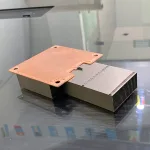
Solid Copper Base (Soldered): For high-density processors (like AMD EPYC or Intel Xeon exceeding 250W), HDT is insufficient because heat is highly concentrated. We solder the heat pipes between a pure copper base plate and an aluminum mounting block. The copper base spreads the concentrated heat horizontally, activating all heat pipes simultaneously rather than just the center ones.
Heat Pipe Fin Integrated Air Cooler: Capillary Structure Comparison
The reliability of a heat pipe fin integrated air cooler relies heavily on the internal capillary structure, especially in 1U/2U rack servers where orientation varies (anti-gravity performance).
| Capillary Wick Type | Manufacturing Cost | Anti-Gravity Performance | Max Heat Transfer (Qmax) | Best Use Case |
| Grooved | Low | Poor | High | Horizontal PC setups, budget consumer coolers. |
| Woven Mesh | Medium | Moderate | Medium | Standard industrial PCs with predictable orientation. |
| Sintered Powder | Premium | Excellent | Very High | High-end B2B servers, aerospace, multi-axis orientations. |
We strictly utilize Sintered Copper Powder in our B2B heat pipes to ensure zero performance degradation regardless of how the motherboard is mounted in the server rack.
Evaluating Prototype and Homemade Heat Pipe CPU Cooler Performance in Watts
Hardware engineers frequently test homemade heat pipe cpu cooler performance watts during the prototyping phase to determine the required thermal budget. To calculate the number of heat pipes your custom cooler needs, you must rely on the Qmax (maximum heat transfer capacity) of standard sintered copper heat pipes.
6mm Diameter Heat Pipe: Safely transports 40W to 55W of heat.
8mm Diameter Heat Pipe: Safely transports 70W to 85W of heat.
Data Application: If your enterprise CPU has a TDP of 250W, a prototype cooler requires a minimum of six 6mm heat pipes (6 x 45W = 270W capacity) soldered to a high-density zipper fin stack. Bending the pipes tighter than a 2x diameter radius will reduce this wattage capacity by 15% to 20%.
What is a Heat Pipe Cooler CPU?
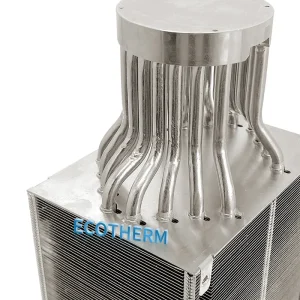
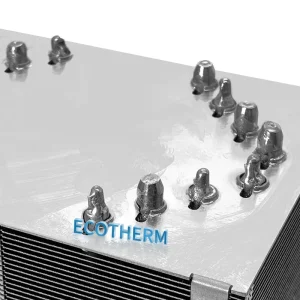
Heat Pipe Cooler CPU is a thermal management solution designed to efficiently dissipate heat from high-performance processors using advanced cooler heat pipe technology. At its core, this system relies on the principles of phase change (liquid-to-vapor and back) within sealed cooler pipes to transfer heat away from the CPU core to a heatsink, where it is expelled via airflow or liquid cooling.
Heat Pipes:
- These are hollow, sealed tubes filled with a working fluid (often water or ammonia) that absorbs heat at the evaporator section and releases it at the condenser.
- The cooler pipes in a Heat Pipe Cooler CPU are typically made of copper for optimal thermal conductivity.
Heatsink Base:
- A flat or micro-finned surface that interfaces directly with the CPU.
- The heatpipe heatsink base ensures even heat distribution across the cooler heat pipe array.
Thermal Interface Material (TIM):
- Applied between the CPU and heatsink to eliminate air gaps, enhancing heat transfer efficiency.
How a Heat Pipe Cooler CPU Works
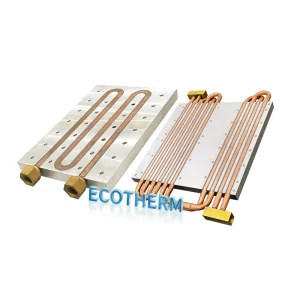
- Heat Absorption: The cooler heat pipe absorbs heat from the CPU, causing the internal fluid to vaporize.
- Heat Transfer: Vaporized fluid travels to the cooler’s condenser section, releasing latent heat to the heatsink fins.
- Cooling Cycle: Condensed fluid returns to the evaporator via capillary action, restarting the cycle
Understanding the Core Components of a Heat Pipe Cooler CPU
heat pipe cooler cpu system is built around three primary components: the cooler pipes, the heatpipe heatsink, and the thermal interface. Each plays a critical role in ensuring efficient heat dissipation, and understanding their design and material choices is key to optimizing thermal performance.
1. Cooler Pipes: The Heart of Heat Transfer
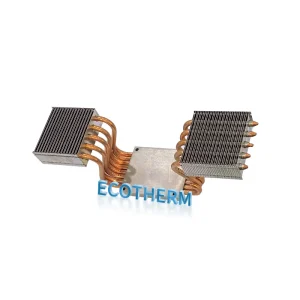
The cooler pipes (or heat pipes) are the backbone of a heat pipe cooler cpu system. These sealed, hollow tubes contain a working fluid (often water or ammonia) that undergoes phase changes to transfer heat.
- Material Choice: High-performance systems use copper heat pipe cpu cooler designs, as copper’s superior thermal conductivity (401 W/m·K) minimizes heat resistance.
- Internal Structure: Micro-grooves or wick structures inside the cooler pipes facilitate capillary action, ensuring the fluid returns to the evaporator end for continuous cooling.
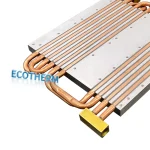
- Arrangement: Multiple cooler pipes (e.g., air cooler 8 heat pipes configurations) are often integrated into a single heatsink to maximize surface area and heat dissipation.
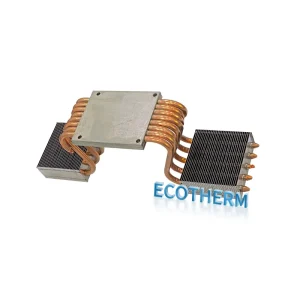
2. Heatpipe Heatsink: The Thermal Distribution Layer

The heatpipe heatsink is the component that interfaces with the CPU and distributes heat across a larger surface area.
- Base Design: A flat, thermally conductive base (often copper or aluminum) ensures even contact with the CPU. Custom heatpipe heatsink designs can be tailored to fit non-standard CPU layouts or compact builds.
- Fin Structure: Vertical or horizontal fins increase the surface area for airflow to carry away heat. The spacing and density of these fins are optimized based on application requirements.
- Compatibility: The heatpipe heatsink must align with the number and arrangement of cooler pipes to prevent thermal bottlenecks.
3. Thermal Interface Material (TIM): Bridging the Gap
The thermal interface between the CPU and heatpipe heatsink is critical for minimizing heat transfer resistance.
- Purpose: TIM fills microscopic gaps between the CPU and heatsink base, ensuring direct thermal contact. Common options include thermal paste, pads, or liquid metal.
- Performance Impact: High-quality TIM significantly reduces thermal resistance, enhancing the efficiency of the heat pipe cooler cpu system.
- Custom Solutions: For industrial or high-TDP applications, custom heat sink manufacturers may recommend specialized TIMs to meet specific thermal demands.
How a Heat Pipe Cooler CPU Enhances Thermal Performance
Heat Pipe Cooler CPU system is engineered to maximize thermal efficiency through advanced physics and material science. By leveraging phase-change technology and optimized design, it outperforms traditional cooling methods in both stability and responsiveness. Below are the key mechanisms that define its superior thermal performance:
1. Phase-Change Efficiency in Heat Transfer
The heat pipe cooler cpu utilizes the phase-change cycle (evaporation and condensation) within sealed cooler pipes to transfer heat with minimal resistance.
- Low Thermal Resistance: The vaporization of the working fluid inside the cooler heat pipe reduces heat transfer resistance by up to 90% compared to solid conductors like copper alone.
- Rapid Heat Distribution: Heat absorbed at the CPU base is instantly transported to the condenser section, ensuring even thermal distribution across the heatpipe heatsink.
- Scalability: Systems like air cooler 8 heat pipes configurations amplify surface area, enabling faster heat dissipation in high-TDP environments.
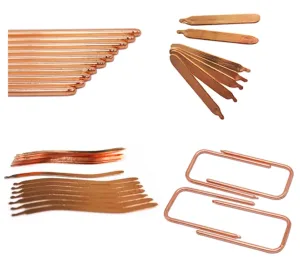
2. Material Advantages: Why Copper Matters
The choice of materials directly impacts the performance of a heat pipe cooler cpu.
- Copper Heat Pipe CPU Cooler: Copper’s thermal conductivity (401 W/m·K) ensures faster heat absorption and transfer compared to aluminum alternatives.
- Wick Structure Optimization: Advanced micro-groove or sintered wick structures in cooler pipes enhance capillary action, maintaining consistent fluid circulation under extreme loads.
- Durability: Copper’s resistance to thermal fatigue ensures long-term stability in industrial or overclocked systems
Choosing Between Air Cooler 8 Heat Pipes and Custom Configurations
When selecting a heat pipe cooler cpu solution, the choice between a standard air cooler 8 heat pipes design and a custom heat sink configuration depends on your system’s thermal demands, space constraints, and performance goals.
1. When to Opt for an Air Cooler 8 Heat Pipes
- Standard Performance Needs: The air cooler 8 heat pipes setup is ideal for high-TDP CPUs in gaming PCs or workstations where off-the-shelf cooling suffices.
- Cost Efficiency: Pre-engineered models offer a balance of affordability and thermal performance without the need for bespoke design.
- Plug-and-Play Compatibility: These coolers are often tailored for mainstream CPU sockets (e.g., Intel LGA 1700, AMD AM5).
2. When to Choose a Custom Heat Sink Configuration
- Unique Thermal Challenges: Systems with non-standard layouts (e.g., embedded devices, industrial servers) benefit from custom heat sink designs that adapt to irregular form factors.
- Extreme Performance Demands: High-power CPUs or overclocked systems may require specialized copper heat pipe cpu cooler solutions with optimized pipe count or fin density.
- Space Optimization: Compact builds (e.g., mini-ITX cases) demand custom heat sink configurations with reduced height or vertical fin arrangements.
The Advantages of Copper Heat Pipe CPU Coolers
copper heat pipe cpu cooler offers distinct thermal and mechanical advantages over alternative materials, making it the preferred choice for high-performance computing and industrial applications.
1. Superior Thermal Conductivity
Copper’s thermal conductivity (401 W/m·K) is significantly higher than aluminum (205 W/m·K), enabling faster heat transfer from the CPU to the heatpipe heatsink. This ensures lower operating temperatures and reduced thermal throttling in high-TDP environments.
2. Enhanced Longevity and Stability
Copper’s resistance to thermal fatigue and oxidation ensures long-term reliability, even under continuous high loads. Unlike aluminum, it maintains structural integrity in extreme conditions, making it ideal for copper heat pipe cpu cooler systems in servers or overclocked PCs.
3. Customization for Precision Cooling
Custom heat sink manufacturers leverage copper’s malleability to create tailored copper heat pipe cpu cooler solutions. This includes optimizing pipe diameters, fin spacing, and surface treatments to match specific thermal profiles and form factors.
4. Compatibility with High-Demand Applications
From gaming PCs using air cooler 8 heat pipes to industrial systems requiring passive cooling, copper heat pipe cpu cooler designs adapt seamlessly. Their ability to handle rapid heat cycles without degradation ensures consistent performance in mission-critical environments.
By integrating copper into heat pipe cooler cpu systems, engineers achieve unmatched thermal efficiency, durability, and scalability—key factors for advanced thermal management solutions.
Custom Heat Sink Design for Specialized Applications
In industries where standard cooling solutions fall short, custom heat sink design becomes essential. A tailored heatpipe heatsink or copper heat pipe cpu cooler can address unique thermal challenges in environments ranging from industrial automation to medical devices.
1. Precision for Industrial Applications
- High-Temperature Environments: Custom heat sink designs using copper heat pipe cpu cooler technology ensure stability in industrial servers or robotics, where sustained heat loads require rapid dissipation.
- Compact Integration: Miniaturized heatpipe heatsink layouts enable cooling in space-constrained systems like PLCs (Programmable Logic Controllers).
2. Medical Device Optimization
- Silent Operation: Passive heat pipe cooler cpu systems with cooler pipes eliminate noise, critical for MRI machines or patient monitors.
- Sterilization Compatibility: Custom materials and coatings ensure durability under repeated sterilization cycles.
3. Automotive and Embedded Systems
- Vibration Resistance: Reinforced custom heat sink structures withstand mechanical stress in automotive ECUs or autonomous vehicle processors.
- Thermal Uniformity: Optimized air cooler 8 heat pipes configurations manage heat distribution in compact PCB layouts.
By aligning custom heat sink design with application-specific constraints, engineers achieve optimal thermal performance, reliability, and compliance in demanding environments.
Building Efficiency Through Smart Thermal Choices
In today’s high-performance computing and industrial environments, choosing the right heat pipe cooler cpu solution isn’t just about cooling—it’s about ensuring long-term stability, efficiency, and adaptability. Whether you’re using a standard air cooler 8 heat pipes setup for gaming or a custom heat sink tailored for industrial automation, the right thermal design can make all the difference.
For systems requiring peak performance, copper heat pipe cpu cooler technology offers unmatched thermal conductivity, reducing temperatures and extending hardware lifespan. Meanwhile, custom heat sink designs empower engineers to address unique challenges, from compact embedded devices to high-temperature industrial servers. By understanding the principles of heatpipe heatsink integration and material science, you can strike the perfect balance between cost, space, and performance.
We hope this guide has provided clear insights to help you make informed decisions. Whether your goal is a whisper-quiet gaming rig or a mission-critical industrial system, remember: thermal management isn’t an afterthought—it’s the foundation of reliability.
Need help tailoring a solution? Feel free to reach out—we’re here to help!
Frequently Asked Questions (FAQ)
Over-bending crushes the internal capillary structure, drastically reducing cooling performance.
The bending radius of a heat pipe should never be less than 3 times its outer diameter. For example, a 6mm heat pipe needs a minimum bending radius of 18mm. Bending it tighter crushes the sintered powder wick, choking the return of condensed liquid. This leads to premature “dry-out” at the evaporator end, causing the CPU to overheat instantly.
Standard water-based heat pipes can freeze below 0°C, but they rarely crack.
Industrial heat pipes use a very small amount of ultra-pure water in a vacuum. While the water will freeze below 0°C (stopping the cooling function temporarily), the vacuum prevents the expansion from bursting the copper tube. Once the CPU powers on and generates heat, the ice quickly melts, and the phase-change cooling cycle resumes normally.
Not necessarily; it depends on the physical size of the CPU die. While an 8mm pipe carries more raw wattage (~80W vs ~50W), it has a larger footprint. On a smaller CPU, you might only fit three 8mm pipes, but you could fit five 6mm pipes. Five 6mm pipes (250W total) provide more surface area coverage across the CPU die than three 8mm pipes (240W total), often resulting in lower core temperatures.
One end will be burning hot, while the other end remains completely cold. If the internal vacuum seal is breached, the water boils away, or the capillary structure fails, the phase-change cycle stops. The heat pipe reverts to being just a hollow copper tube. You will notice your CPU hitting thermal throttling limits (95°C+), the base of the cooler will be untouchable, but the aluminum fins at the top will feel room temperature.
Yes, soldering provides significantly lower thermal resistance. Details: Press-fitting (or swaging) aluminum fins onto heat pipes leaves microscopic air gaps, which act as thermal insulators. Soldering the fins using a lead-free alloy (with a thermal conductivity around 50 W/m·K) completely fills these gaps. This creates a solid metallurgical bond, improving the heat transfer efficiency from the pipe to the fin array by 10% to 15%.
Vapor chambers are recommended when the localized heat flux is extremely high, typically beyond 300W.
Heat pipes are linear heat transporters. If a >300W chip (like an AI GPU) is very small, heat pipes cannot spread the heat outward fast enough, causing a bottleneck. A Vapor Chamber spreads heat in two dimensions (X and Y axis) instantly across a massive surface area, making it the mandatory choice for extreme power density components.