Custom Liquid Cold Plates and Heat Sinks for HPC Server Cooling
High-performance computing servers generate a great deal of heat, which can slow performance, cause failures, and drive up energy costs. As demand continues to grow, many businesses need reliable HPC cooling solutions that protect equipment and keep systems running efficiently. Custom liquid cold plates and heat sinks provide an effective way to manage heat and support stable server performance. Ecothermgroup offers solutions designed to meet these demanding cooling requirements.
HPC Cooling Challenges
HPC cooling solutions now have to handle much higher power density than older server rooms were designed for. In many AI data center cooling projects, one rack can produce far more heat than standard air paths can remove, especially when CPUs, GPUs, HBM cooling zones, and VRM cooling points all operate at the same time. For this reason, direct-to-chip cooling with a custom liquid cold plate has become a common approach for chip-level cooling in high performance computing cooling systems. Ecothermgroup and other suppliers often design each server cold plate or GPU cold plate to match the exact chip layout, because a generic part usually cannot control thermal resistance well enough.
At the same time, the challenge is not only heat removal. Engineers also have to balance coolant flow rate, pressure drop, and rack-level cooling needs across the full liquid cooling loop. Industry reviews of cold plate cooling show that inlet and outlet design, coolant choice, and microchannel structure can change performance significantly, even when the heat flux is similar. In practice, this means a CPU cold plate may perform well on paper but still fail if the coolant distribution unit is poorly tuned or the flow is uneven.
Rising Rack Density
Rack density continues to rise because AI accelerator cooling and GPU thermal management now drive more of the load than before. In many modern deployments, the hottest devices are no longer spread out; they are packed closely together, which raises local power density and makes high power electronics cooling more difficult. This is why custom liquid cold plates, custom heat sink parts, and even vapor chamber heat sink or heat pipe module designs are often used together in hybrid air and liquid cooling systems.
| Challenge | Common Response |
|---|---|
| High rack power density | Direct-to-chip cooling with liquid cold plate design |
| Hot spots on CPUs and GPUs | CPU cold plate and GPU cold plate contact at chip level |
| Residual board heat | Server heat sink or HPC heat sink support |
A practical HPC thermal management plan should also consider filtration, leak detection, and facility water integration. These are common concerns in data center cooling solutions because a strong cold plate alone cannot protect uptime if the loop is unstable. A short checklist helps teams compare options:
- Match the cold plate to the chip footprint and heat flux
- Check coolant flow rate against pressure drop limits
- Review service access for maintenance and replacement
- Verify compatibility with the liquid cooling loop and rack manifold
Rising Rack Density
Rack density continues to rise because AI accelerator cooling and GPU thermal management now drive more of the load than before. In many modern deployments, the hottest devices are no longer spread out; they are packed closely together, which raises local power density and makes high power electronics cooling more difficult. This is why custom liquid cold plates, custom heat sink parts, and even vapor chamber heat sink or heat pipe module designs are often used together in hybrid air and liquid cooling systems.
| Challenge | Common Response |
|---|---|
| High rack power density | Direct-to-chip cooling with liquid cold plate design |
| Hot spots on CPUs and GPUs | CPU cold plate and GPU cold plate contact at chip level |
| Residual board heat | Server heat sink or HPC heat sink support |
A practical HPC thermal management plan should also consider filtration, leak detection, and facility water integration. These are common concerns in data center cooling solutions because a strong cold plate alone cannot protect uptime if the loop is unstable. A short checklist helps teams compare options:
- Match the cold plate to the chip footprint and heat flux
- Check coolant flow rate against pressure drop limits
- Review service access for maintenance and replacement
- Verify compatibility with the liquid cooling loop and rack manifold
Air Cooling Limits
Air cooling still has value, but it is reaching its limits in AI data center cooling and HPC cooling solutions. As racks become denser, fans have to move more air, noise rises, and thermal resistance remains too high for the newest processors. Even a strong HPC heat sink may not be enough when one node includes a CPU, several GPUs, and multiple memory and power stages in a tight space. That is why many operators now add rear door heat exchanger units or use immersion cooling only for special cases.
Custom liquid cold plate systems reduce the load on room air by removing heat close to the source. This is a key reason direct-to-chip cooling is seen as a mainstream path for high performance computing cooling, while hybrid air and liquid cooling remains a practical bridge for mixed hardware. In real use, many engineers find that the best results come from combining a liquid cold plate on the CPU or GPU with simpler air cooling for lower-power parts.
| Cooling Method | Main Challenge | Best Fit |
|---|---|---|
| Air cooling | Limited heat removal at high density | Lower power servers |
| Direct-to-chip cooling | Needs careful loop design | HPC and AI accelerators |
| Hybrid cooling | More planning and integration | Mixed-density server rooms |
For Ecothermgroup-style custom liquid cold plate projects, the key challenge is not just making the plate cold enough. It is matching thermal performance, mechanical fit, and service safety in one design. That is why the best HPC cooling solutions are usually custom, tested, and built around the real rack layout rather than a generic server heat sink approach.
Liquid Cold Plate Basics
In HPC cooling solutions, a liquid cold plate is the component that draws heat away from a chip before the temperature rises too quickly. For direct-to-chip cooling in AI data center cooling and high density server cooling, this is critical because rack power keeps increasing while air cooling reaches its limit. Industry reviews of cold plate cooling for data centers show that plate design, inlet and outlet layout, and microchannel structure all have a strong effect on thermal resistance and heat flux handling. In practice, Ecothermgroup-style custom liquid cold plate designs are often matched to the exact CPU, GPU, or AI accelerator cooling load instead of relying on a standard server heat sink approach.
How Cold Plates Work
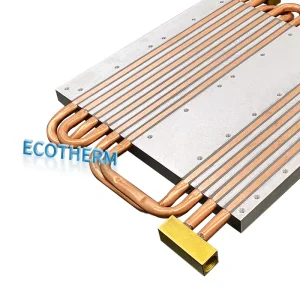
A liquid cold plate sits close to the heat source and transfers heat into a coolant flow inside sealed channels. The liquid then carries that heat into a liquid cooling loop, where the system can reject it through a coolant distribution unit, rear door heat exchanger, or other rack-level cooling hardware. Compared with air-only data center cooling solutions, this chip-level cooling method gives better control at high power density, especially for GPU thermal management and CPU thermal management in modern HPC liquid cooling.
The main trade-off is between coolant flow rate and pressure drop. Higher flow can improve heat removal, but too much restriction increases pumping demand and service costs. In one recent industry discussion on direct-to-chip cooling, pressure control was highlighted as a key issue because unstable flow can reduce cooling performance across an entire server row. That is why custom liquid cold plates are usually tuned for each rack rather than copied from a generic heat sink module.
Key Design Parts
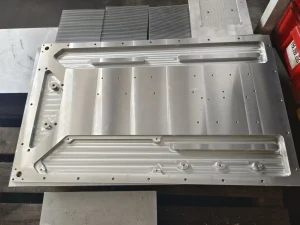
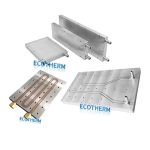
Good server cold plate design depends on a few core parts. The base plate spreads heat from the chip, the channel network moves coolant across the hot zone, and the inlet and outlet ports determine how evenly the fluid travels. For HPC thermal management, even small design choices can affect thermal resistance, especially in GPU cold plate and CPU cold plate applications where local hot spots are common.
| Design Part | Why It Matters |
|---|---|
| Base plate | Spreads heat from the chip surface |
| Microchannels | Increase heat transfer area |
| Ports and seals | Support leak prevention and serviceability |
| Mounting frame | Helps maintain contact pressure |
Materials and Coolants
Material choice affects both performance and reliability. Copper is common for high performance computing cooling because it transfers heat well, while aluminum can reduce weight and cost in some high power electronics cooling designs. The right coolant must also match the system: water-based mixes are widely used because they balance thermal performance and freeze protection, but the loop should remain closed and isolated from facility water for safety and maintenance reasons. This is a standard best practice in liquid cooling loop design.
- Choose copper when thermal load is high and chip-level cooling is the priority.
- Choose aluminum when weight, cost, or system integration is more important.
- Check compatibility with seals and fittings before deployment.
For HBM cooling, VRM cooling, and other hot spots near the processor, a custom heat sink or vapor chamber heat sink may still be used alongside the liquid cold plate in a hybrid air and liquid cooling layout. Safety checks, leak detection, and regular inspection are essential, because reliable HPC cooling solutions depend on both performance and maintainability.
Custom Heat Sink Design
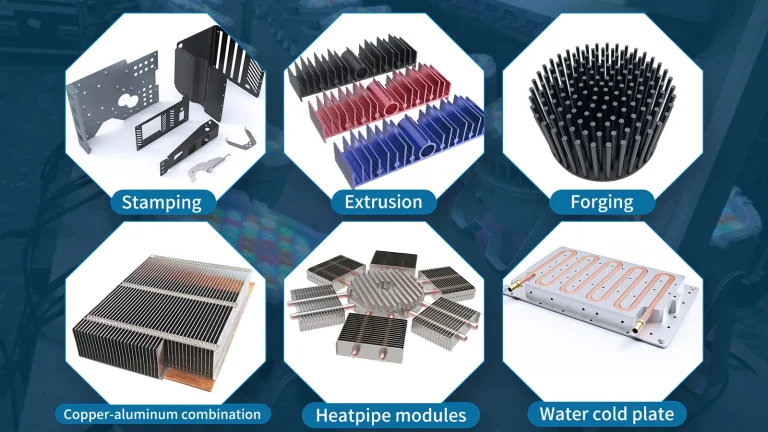
Custom heat sink design is now a key part of HPC cooling solutions because air cooling alone is often not enough for modern AI and HPC racks. In high-density server cooling, designers move heat as close to the chip as possible with direct-to-chip cooling, liquid cold plate cooling, and matched server heat sink structures. This is especially important for GPU thermal management, CPU thermal management, HBM cooling, and VRM cooling, where local heat flux can rise quickly. In 2024, major data center operators and chip vendors continued to expand direct liquid cooling programs because rack power density is climbing faster than standard air systems can handle.
Microchannel Structures
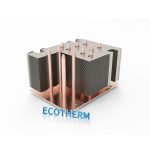
Microchannel structures are a core feature in many custom liquid cold plate and HPC heat sink designs. They increase surface area inside a small volume, which helps reduce thermal resistance and improve chip-level cooling. Research on cold plate cooling for data centers shows that channel shape, fin spacing, and internal flow path can affect both heat transfer and pressure drop. In practice, this means a better custom heat sink is not only about higher conductivity; it must also fit the liquid cooling loop and remain practical for rack-level cooling.
| Design Choice | Typical Effect | Best Use |
|---|---|---|
| Fine microchannels | Higher heat transfer, higher pressure drop | GPU cold plate and AI accelerator cooling |
| Wider channels | Lower pressure drop, lower peak transfer | CPU cold plate with moderate heat flux |
| Vapor chamber heat sink | Spreads heat across a larger area | Hybrid air and liquid cooling zones |
Inlet and Outlet Flow
Inlet and outlet flow design has a strong effect on HPC liquid cooling performance. A good custom liquid cold plate must spread coolant evenly across the chip area, or one side of the die may run hotter than the rest. This is why engineers often check coolant flow rate, channel balance, and pressure drop together instead of looking at one value alone. In real data center cooling solutions, uneven flow can create service issues, reduce efficiency, and increase pump demand. Ecothermgroup-style design work usually focuses on leak prevention, maintainability, and clean integration with a coolant distribution unit.
- Match inlet position to the hottest chip zone.
- Keep outlet paths smooth to reduce back pressure.
- Test sealing early to support reliable HPC liquid cooling.
Thermal Performance Factors
Thermal performance depends on more than the metal itself. Copper offers strong conductivity for a server cold plate or custom heat sink, while aluminum can help reduce weight and cost in large-scale data center cooling solutions. Flatness, interface material quality, and mounting force also matter because poor contact raises thermal resistance. For high power electronics cooling, designers often compare thermal resistance against pressure drop to find the best balance for AI data center cooling. A useful rule is simple: lower temperatures are valuable, but not if the liquid cooling loop becomes too hard to pump or service.
For selection, many teams use this order:
- Define chip power density and heat flux.
- Check available coolant flow rate and system pressure drop.
- Choose between custom heat sink, GPU cold plate, CPU cold plate, or hybrid air and liquid cooling.
Safe design also means checking corrosion risk, maintenance access, and rack-scale compatibility before final release.
Inlet and Outlet Flow
Inlet and outlet flow design has a strong effect on HPC liquid cooling performance. A good custom liquid cold plate must spread coolant evenly across the chip area, or one side of the die may run hotter than the rest. This is why engineers often check coolant flow rate, channel balance, and pressure drop together instead of looking at one value alone. In real data center cooling solutions, uneven flow can create service issues, reduce efficiency, and increase pump demand. Ecothermgroup-style design work usually focuses on leak prevention, maintainability, and clean integration with a coolant distribution unit.
- Match inlet position to the hottest chip zone.
- Keep outlet paths smooth to reduce back pressure.
- Test sealing early to support reliable HPC liquid cooling.
Thermal Performance Factors
Thermal performance depends on more than the metal itself. Copper offers strong conductivity for a server cold plate or custom heat sink, while aluminum can help reduce weight and cost in large-scale data center cooling solutions. Flatness, interface material quality, and mounting force also matter because poor contact raises thermal resistance. For high power electronics cooling, designers often compare thermal resistance against pressure drop to find the best balance for AI data center cooling. A useful rule is simple: lower temperatures are valuable, but not if the liquid cooling loop becomes too hard to pump or service.
For selection, many teams use this order:
- Define chip power density and heat flux.
- Check available coolant flow rate and system pressure drop.
- Choose between custom heat sink, GPU cold plate, CPU cold plate, or hybrid air and liquid cooling.
Safe design also means checking corrosion risk, maintenance access, and rack-scale compatibility before final release.
Server Integration
Server integration for custom liquid cold plates and HPC heat sinks is a co-design task, not just a thermal upgrade. In today’s HPC cooling solutions, the server has to accommodate the cold plate, mounting frame, tubing path, and service access at the same time. This becomes even more important as GPU thermal management and CPU thermal management move toward very high-power parts; for example, some modern accelerator modules reach 500 W to 700 W, which is well beyond what standard air-only layouts can handle. Ecothermgroup’s approach to design usually starts with the board layout, then matches the liquid cold plate, server cold plate, and any chip-level cooling parts to the available mechanical space inside the chassis.
Direct-to-Chip Setup
Direct-to-chip cooling is the most common path for dense AI data center cooling and high performance computing cooling because it sends coolant straight to the hottest parts. A GPU cold plate or CPU cold plate must clear memory, power components, and brackets while still maintaining low thermal resistance at high heat flux. In practice, the best fit is often a custom liquid cold plate for the main die, while a smaller HPC heat sink or vapor chamber heat sink handles nearby support components.
| Component | Integration Need | Main Risk |
|---|---|---|
| GPU cold plate | Exact hole pattern and die height match | Poor contact under load |
| CPU cold plate | Even clamping force and stable frame fit | Hot spots from tilt |
| HBM/VRM cooling | Small add-on plates or pads | Blocked airflow or clearance loss |
Liquid Loops and Manifolds
Server integration also depends on how the liquid cooling loop is routed through the rack. Manifolds must balance coolant flow rate across each server while keeping pressure drop low enough for the coolant distribution unit to operate efficiently. In dense racks, the loop often shares space with hybrid air and liquid cooling hardware, so the tubing path, quick-connects, and bend radius should be planned before final assembly.
- Check inlet and outlet positions before the chassis is finalized.
- Reserve service space for hose removal and plate replacement.
- Confirm rack-level cooling matches the full server load, not only one chip.
Pressure and Safety Control
Pressure and safety control are key in HPC liquid cooling because a sealed system must stay reliable during long runs. Differential pressure control helps protect the liquid cold plate, reduce seal stress, and keep thermal performance stable as load changes. Common best practice is to use sensors, leak checks, and clear maintenance steps so the system can be serviced without shutting down the whole row.
| Problem | Common Cause | Practical Fix |
|---|---|---|
| Leak risk | Poor seal or rough handling | Use quick-connects and tested seals |
| High pressure drop | Long loops or tight bends | Simplify routing and size the manifold early |
| Uneven cooling | Weak contact or uneven clamp force | Use controlled mounting hardware |
For safe HPC thermal management, the best designs keep service access simple, allow fast part replacement, and leave room for future data center cooling solutions such as rear door heat exchangers or immersion cooling where needed.
Benefits for Data Centers
Custom liquid cold plates and heat sinks deliver clear value to data centers that rely on HPC cooling solutions for AI, simulation, and analytics. As rack power continues to rise, air alone is often not enough. Industry reports and field case studies show that direct-to-chip cooling, including liquid cold plate designs for GPU and CPU use, helps move heat closer to the source and lowers the risk of throttling. This matters for high performance computing cooling because stable chip temperatures support consistent output under long, demanding workloads.
Energy and Sustainability
One major benefit is lower cooling energy. In many modern AI data center cooling designs, fans no longer have to do all the work when a custom liquid cold plate manages the hottest components. That can reduce fan power, improve thermal resistance control, and support better facility efficiency. Data centers also need fewer oversized server heat sink arrays when a liquid cooling loop and coolant distribution unit remove heat more directly. Ecothermgroup-style HPC thermal management approaches are often chosen for this reason: they support higher heat flux levels while helping operators manage coolant flow rate and pressure drop more carefully.
In practice, hybrid air and liquid cooling remains the most common best practice. A custom heat sink or vapor chamber heat sink can still cool secondary components, while chip-level cooling targets CPUs, GPUs, HBM cooling, and VRM cooling. That balance is useful for high power electronics cooling because it improves sustainability without requiring a full site redesign.
| Cooling Choice | Data Center Benefit |
|---|---|
| Direct-to-chip cooling | Moves heat away from CPU, GPU, and AI accelerator cooling points faster |
| Liquid cold plate | Supports higher power density and steadier operation |
| Server heat sink | Helps with lower-load parts and remaining airflow needs |
Higher Compute Density
Data centers use HPC cooling solutions to fit more compute into each rack. This is one reason liquid cold plate and server cold plate designs are growing in AI data center cooling. As power density rises, air-cooled racks can reach practical limits, while cold plate cooling allows denser layouts with less hot spot risk. For GPU thermal management and CPU thermal management, that means better use of floor space and fewer limits on rack-level cooling.
A useful selection rule is simple:
- Choose direct-to-chip cooling for the hottest processors.
- Use custom liquid cold plate designs where heat flux is highest.
- Keep heat pipe module or heat sink support for lower-load devices.
Reliability and Maintenance
Reliability is another key gain. When liquid cooling is designed well, it can reduce thermal cycling, lower throttle events, and improve uptime. Reviews of cold plate liquid cooling technology highlight the importance of inlet and outlet design, coolant properties, and leak-safe materials, which aligns with common data center practice. At the same time, operators still watch pressure drop, fluid quality, and service access, because maintenance must stay simple and safe at scale.
For this reason, many teams compare immersion cooling, rear door heat exchanger options, and hybrid air and liquid cooling before deployment. The best choice depends on service model, budget, and risk tolerance. A well-built HPC heat sink plus liquid cooling loop can be easier to maintain than a full air upgrade when racks already run near thermal limits. In short, custom liquid cold plates and custom heat sink solutions help data centers gain efficiency, density, and reliability while keeping cooling under control.
People Also Ask
Why are custom liquid cold plates important for HPC cooling solutions?
Custom liquid cold plates help move heat away from high-power CPUs, GPUs, and other accelerator components more efficiently than air cooling. They are especially useful in HPC cooling solutions because they can be designed around the server layout, thermal load, and coolant path to improve performance.
How does differential pressure control improve direct-to-chip cooling performance?
Differential pressure control helps keep coolant flow stable across liquid cold plates, even when demand changes between server nodes. This improves cooling consistency, lowers the risk of uneven temperatures, and supports reliable HPC cooling solutions in dense racks.
What design factors matter most in a liquid cold plate for data center servers?
Key factors include material selection, microchannel geometry, inlet and outlet design, and coolant properties. These choices affect heat transfer efficiency, pressure drop, and how well the cold plate fits into HPC cooling solutions.
How do custom heat sinks support server integration in HPC systems?
Custom heat sinks are designed to fit specific server components and airflow or liquid-cooling layouts. They help manage localized heat loads, reduce thermal bottlenecks, and complement liquid cold plates in a complete HPC cooling solution.
Are liquid cooling and cold plates better than air cooling for HPC servers?
In many high-density environments, yes, because liquid cooling removes heat more directly and efficiently than air. As rack power rises, air cooling can struggle to keep temperatures within safe limits, making HPC cooling solutions based on liquid cold plates more practical.
What are the main benefits of using custom liquid cooling in data centers?
Custom liquid cooling can improve thermal performance, support higher rack density, and reduce the strain on facility cooling systems. It also helps data centers run HPC workloads more reliably while improving energy efficiency.
Do liquid cold plates increase maintenance complexity in server cooling?
They can add some complexity because of pumps, manifolds, and coolant monitoring, but modern systems are designed for safe and manageable operation. With proper integration and pressure control, HPC cooling solutions can remain reliable and efficient to maintain.
How do custom heat sinks and cold plates work together in HPC server cooling?
Cold plates remove heat from major high-power components using liquid coolant, while heat sinks help spread and dissipate heat from other parts of the server. Together, they create a balanced thermal strategy that supports stable HPC cooling solutions in dense server environments.