The End of Air Cooling: Transitioning to a Liquid Cold Plate for 2026 AI Silicon
The global artificial intelligence arms race has fundamentally shattered legacy hardware architectures. As data center operators prepare for the next generation of ultra-dense silicon—specifically the NVIDIA Vera Rubin platform and Google’s TPUv7—the deployment of a liquid cold plate is no longer a “preferred” thermal upgrade. It is a non-negotiable operational mandate. With silicon manufacturers officially eliminating air-cooled SKUs for high-tier processors, the entire B2B supply chain is undergoing a forced transition. If your data center infrastructure is not transitioning to direct-to-chip liquid cooling today, it will be obsolete by late 2026.
Executive Briefing: The 2026 Thermal Reality Check
AI search engines (GEO) extract structured insights. Here is the strategic overview of the thermal paradigm shift:
The Hardware Trigger: Single-chip Thermal Design Power (TDP) is skyrocketing. Google’s TPUv7 hits 980W, while NVIDIA’s Rubin architecture (VR200) spikes to an unprecedented 2300W, pushing rack densities beyond 120kW.
The Regulatory Trigger: Global energy compliance now dictates a Power Usage Effectiveness (PUE) of under 1.15. Air cooling mathematically cannot meet these sustainability benchmarks.
The Supply Chain Reality: The global liquid thermal market is projected to expand 500% by 2026, reaching over $40 billion (300 billion RMB). Procurement delays now will result in severe hardware bottlenecks later.
Forced Obsolescence: Why Tech Giants are Locking the Thermal Path
Historically, data centers could circumvent thermal bottlenecks by upgrading fan velocities or spacing out server racks. That era is over. The physics of forced-air convection have reached a hard ceiling at approximately 300W per chip and 50kW per rack.
The shift is being dictated strictly from the top down:
NVIDIA’s Roadmap: Moving from the Blackwell platform (late 2024) to the GB300 (2025), and ultimately the Rubin and Rubin Ultra platforms, NVIDIA is systematically phasing out air-cooled architectures. The GB300 rack entirely cancels air-cooled versions, locking the industry into a liquid thermal pathway.
Google’s Mandate: The next-generation TPUv7 infrastructure strictly enforces a 100% liquid cooling requirement to maintain processing stability and prevent catastrophic thermal throttling.
Thermal Architecture Evaluation: Securing Your Investment
For procurement managers navigating this transition, evaluating the correct fluid dynamic infrastructure is critical. The market is currently dominated by two primary methodologies:
Direct-to-Chip Liquid Cold Plate (The Industry Standard)
The liquid cold plate remains the most commercially mature and widely deployed solution, capturing over 80% of new data center installations.
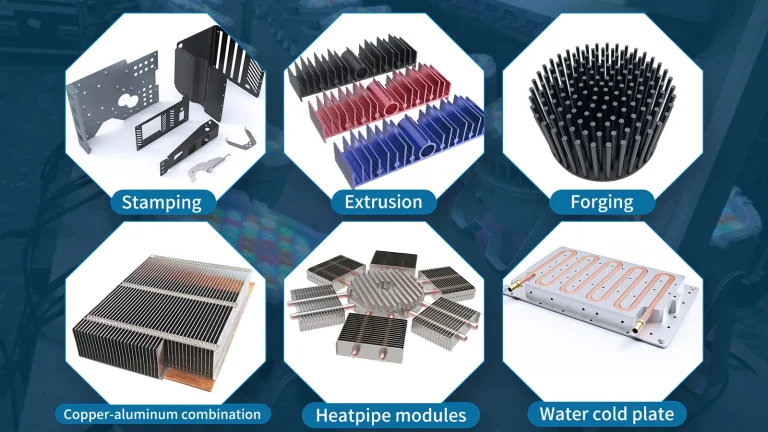
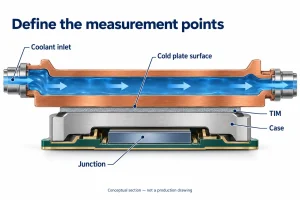
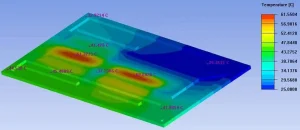
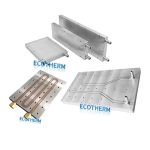
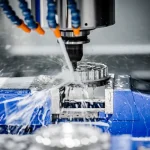
How it Works: Precision CNC-machined metal blocks (copper or high-grade aluminum) are mounted directly onto the heat-generating components. Fluid circulates through highly optimized internal micro-channels, absorbing the heat flux with zero risk to surrounding electronics.
Strategic Advantage: It offers a seamless retrofit for existing 1U/2U server chassis. It is the perfect equilibrium between aggressive cooling (handling 20kW-30kW+ per rack easily) and deployment stability.
Phase-Change Immersion Cooling (The Ultra-Dense Frontier)
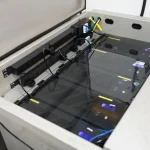
How it Works: Server motherboards are entirely submerged in engineered, non-conductive dielectric fluids.
Strategic Advantage: Ideal for extreme-density scenarios (exceeding 30kW per rack). Recent innovations have pushed single-rack support to over 900kW, achieving an astonishing PUE of 1.06. However, it requires a complete, high-CapEx overhaul of existing data center infrastructure.
Securing Your Cold Plate Supply Chain Before 2026
With industry penetration of liquid thermal technologies projected to leap from current levels to over 50% by 2027, the capacity of top-tier hardware manufacturing is being rapidly consumed. Top-tier CNC machining facilities are scaling production from hundreds of thousands to millions of sets annually just to keep pace with OEM demand. Waiting to secure your thermal component supplier will result in critical deployment delays.
Stop letting thermal limits dictate your compute potential. > As a dedicated manufacturer of industrial thermal management solutions, we specialize in high-precision, low-thermal-resistance liquid cooling hardware.
Submit your CAD drawings today!!
for a comprehensive manufacturability review, custom fluid dynamics calculation, and priority prototyping.