Vapor Chambers vs. Heat Pipes: Advanced Heat Sinks in PCB Design
Effective thermal management is a crucial aspect of modern PCB design, as increasing component densities can result in overheating and impact performance. Selecting the appropriate heat sink in PCB systems, such as vapor chambers or heat pipes, is essential for ensuring reliability and enhancing functionality. This article examines the key differences and benefits of these advanced heat dissipation solutions.
Takeaway
- Heat sinks play a crucial role in PCB design, helping manage thermal performance and maintain the reliability of electronic components.
- Heat pipes use phase-change technology to transfer heat efficiently, making them ideal for compact designs and targeted heat dissipation.
- Vapor chambers ensure even heat distribution across larger surfaces, making them well-suited for high-power-density applications with substantial heat loads.
- While vapor chambers offer better thermal conductivity than heat pipes, they may cost more and require additional space.
- When deciding between heat pipes and vapor chambers, consider factors such as thermal needs, available space, budget, and PCB design complexity.
- For localized hot spots, vapor chambers often outperform heat pipes due to their ability to spread heat evenly across the surface.
- A hybrid system combining heat pipes and vapor chambers can optimize thermal efficiency for complex or high-performance PCB designs.
Introduction to Heat Sinks in PCB Design
Importance of Thermal Management in PCBs
Effective thermal management is crucial in printed circuit board (PCB) design, especially as electronic devices become smaller and more powerful. Heat sinks are essential for dissipating heat generated by components like processors, power modules, and LEDs. Without proper thermal management, localized hotspots can reduce performance, shorten component lifespan, and even cause system failure. This is especially critical in applications with high power densities, such as AI servers or industrial equipment.
The thermal resistance of a PCB is a key factor to consider during design. Lower thermal resistance allows for more efficient heat dissipation, preventing heat from accumulating in sensitive areas. Advanced heat sink technologies, such as vapor chambers or embedded heat pipes, can greatly enhance heat management by spreading and transferring heat effectively, reducing the risks of overheating.
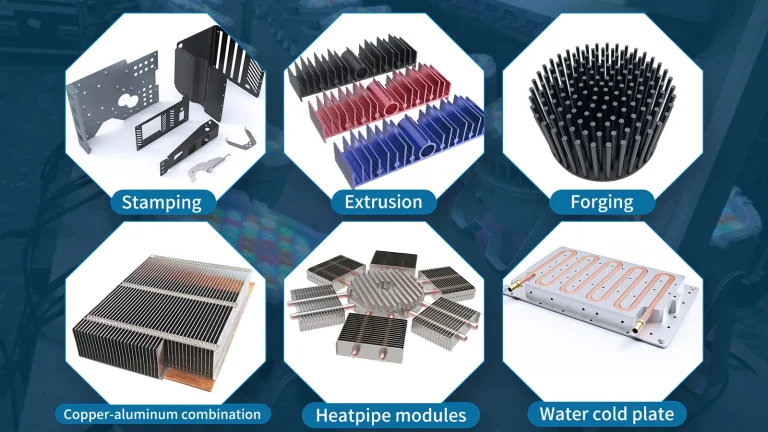
Modern PCB designs often use a combination of passive and active cooling techniques to achieve optimal performance. Passive solutions, such as custom aluminum extrusion heat sinks or skived fin heat sinks, rely on convection and radiation, while active methods, like forced air cooling, use external fans to improve heat dissipation. Advanced thermal simulation tools like CFD help engineers refine these designs to meet both performance and manufacturing requirements. Ecothermgroup provides tailored thermal management solutions that meet industry standards.
Overview of Heat Sink Technologies
Heat sinks come in various designs and technologies, each suited to specific applications and thermal needs. Traditional heat sinks, typically made from aluminum or copper, use their high thermal conductivity to transfer heat away from components. Innovations in heat sink design have introduced more advanced solutions, such as vapor chambers and heat pipes, which use phase-change technology for improved thermal performance.
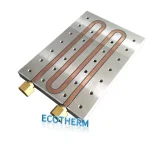
Vapor chambers are perfect for spreading heat across flat surfaces, making them ideal for applications requiring even temperature distribution. Heat pipes, on the other hand, are designed to transfer heat linearly to remote areas, enabling engineers to move heat away from densely packed components. Combining these technologies with conventional heat sinks often yields optimal results in high-performance systems.
| Technology | Key Features |
|---|---|
| Vapor Chambers | Uniform heat spreading, effective in compact spaces |
| Heat Pipes | Linear heat transfer, ideal for remote dissipation |
| Traditional Heat Sinks | Cost-effective, passive cooling via convection |
The choice of Thermal Interface Materials (TIMs) also impacts the efficiency of heat sinks. TIMs enhance the contact between heat-generating components and heat sinks, lowering thermal resistance. Engineers should prioritize DFM optimization and rapid prototyping for heat sinks to ensure smooth integration during manufacturing.
Ultimately, selecting the right heat sink technology depends on the specific thermal needs of a PCB. Whether it’s embedded heat pipes for compact designs or vapor chambers for high-density applications, each solution contributes to reliable performance. Ecothermgroup offers custom heat sink manufacturing services to help engineers achieve advanced thermal management in their designs.
- Use vapor chambers for uniform heat spreading.
- Choose heat pipes for linear heat transfer in constrained spaces.
- Combine technologies for optimal results in high-performance systems.
Understanding Heat Pipes
Principles of Operation
Heat pipes are a popular thermal management solution in PCB designs, valued for their efficiency in dissipating heat. They work through a two-phase mechanism where a working fluid evaporates at the heat source and condenses at the cooler end. This process allows rapid and efficient heat transfer. Factors like the thermal conductivity of the pipe material, the choice of working fluid, and the internal wicking structure, which returns the condensed liquid to the evaporation zone, impact the effectiveness of heat pipes.
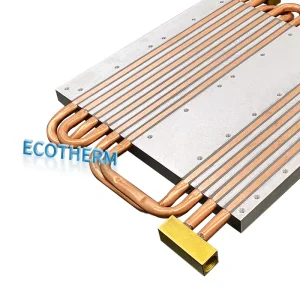
Compared to standard heat sinks, heat pipes excel at managing localized hotspots, making them ideal for high-power-density electronics. They are often integrated into custom aluminum extrusions or skived fin heat sinks for PCB applications to boost thermal performance. Tools such as thermal simulation software and CFD help refine the design and placement of heat pipes for optimal heat dissipation.
Applications in PCB Design
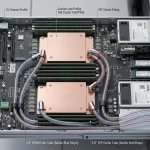
Heat pipes play a key role in PCB designs requiring effective thermal management. They are commonly used in board-level cooling systems for processors, GPUs, and other heat-prone components. By directing heat away from hotspots to remote heat sinks, they ensure stable operation in compact, high-performance devices.
They are also suitable for designs involving quick prototyping of heat sinks or comparing active and passive cooling solutions. Manufacturers like Ecothermgroup specialize in custom heat sink designs with embedded heat pipes tailored to specific board layouts. Such customized solutions are crucial for applications like AI servers and industrial electronics, where consistent heat dissipation is vital.
- Cooling high-power processors and GPUs
- Reducing thermal resistance in compact PCBs
- Supporting DFM optimization for thermal management
- Routing heat around obstacles in dense layouts
Advantages and Constraints
Heat pipes offer several benefits, though they come with some limitations. Their ability to transfer heat over long distances makes them highly effective in compact layouts. However, they are less suitable for large planar heat spreading compared to vapor chambers. Despite this, they are more cost-efficient than vapor chambers, making them a preferred choice for mid-range thermal management requirements.
| Advantages | Constraints |
|---|---|
| Cost-efficient for smaller designs | Limited planar heat spreading |
| Effective heat transfer over long distances | Performance influenced by orientation |
| Adaptable for custom designs | Lower thermal conductivity compared to vapor chambers |
Overall, heat pipes are an adaptable and reliable option for integrating a heat sink in PCB designs. Combined with tools like CFD simulations and expert manufacturers such as Ecothermgroup, they deliver efficient thermal management solutions tailored to varied applications.
Exploring Vapor Chambers
How Vapor Chambers Work
A vapor chamber is a flat, sealed component designed for efficient heat dissipation in PCB designs. It operates on the principle of two-phase heat transfer, using a liquid that evaporates at localized hotspots. The resulting vapor spreads across the chamber, transferring heat evenly, and condenses back into liquid at cooler areas. This cycle ensures consistent thermal conductivity and reduces temperature variations. Unlike embedded heat pipes, vapor chambers are well-suited for planar applications, making them ideal for heat sinks in PCB assemblies.
The internal structure includes a wick material that uses capillary action to redistribute the liquid to evaporation points. Vapor chambers are often paired with thermal interface materials (TIM) to improve heat transfer from the PCB to the chamber. Advanced simulation tools like CFD are commonly used in the design process, allowing engineers to optimize performance and integrate the chamber seamlessly into PCB layouts.
Use Cases in High-Performance Electronics
Vapor chambers are widely used in applications requiring uniform heat distribution across larger areas. High-power-density electronics, including GPUs, CPUs, and AI servers, benefit from their ability to manage hotspots effectively. For example, board-mounted vapor chambers have become essential for cooling next-generation semiconductors due to their advanced heat dissipation capabilities.
Compared to traditional skived fin heat sinks used in PCB designs, vapor chambers provide superior thermal resistance reduction in compact spaces. Custom aluminum extrusion designs often incorporate vapor chambers to boost cooling performance, particularly in devices that use active cooling mechanisms. Rapid prototyping heat sinks combined with vapor chambers enable manufacturers like Ecothermgroup to deliver tailored solutions for demanding applications.
| Use Case | Recommended Solution |
|---|---|
| GPU Cooling | Board-mounted vapor chamber with TIM |
| AI Servers | Custom vapor chamber integrated into PCB design |
| Compact Devices | Thin vapor chambers for passive cooling |
Key Benefits and Limitations
Vapor chambers are highly effective for applications requiring uniform heat dissipation, offering superior thermal conductivity compared to heat pipes. By eliminating hotspots, they enhance the reliability and lifespan of high-performance electronics. Their flat design works well with compact PCB layouts, ensuring compatibility with DFM optimization processes. Vapor chambers also perform well when used alongside active cooling solutions, amplifying airflow-driven heat dissipation.
Despite their advantages, vapor chambers have limitations. Their flat shape restricts their use in non-planar configurations, where heat pipes might be more practical. Additionally, vapor chambers are more expensive to manufacture than heat pipes, which can be a drawback for budget-conscious projects. However, their ability to handle high-power-density applications often makes them worth the investment.
- Benefit: Uniform heat distribution, reducing thermal gradients
- Benefit: Excellent compatibility with compact PCB designs
- Limitation: Higher manufacturing cost compared to heat pipes
- Limitation: Limited suitability for non-flat configurations
When choosing thermal management solutions, consider factors like power density, budget, space constraints, and design flexibility. Collaborating with a custom heat sink manufacturer like Ecothermgroup can ensure solutions that effectively address specific PCB design challenges.
Heat Pipes vs Vapor Chambers: Key Differences
Geometric and Structural Comparison
Heat pipes and vapor chambers differ in their geometric design and structural properties, which affect their suitability for various PCB applications. Heat pipes are cylindrical tubes that move heat through evaporation and condensation cycles in a closed-loop system. Their flexibility allows engineers to bend and shape them to fit tight and intricate PCB layouts, making them ideal for designs involving multiple layers or crowded components.
Vapor chambers, in contrast, are flat and planar structures designed to spread heat evenly across a surface. This makes them especially effective for high-power-density applications, such as GPUs and CPUs, where consistent thermal management over a large area is essential. Their thin profile also suits space-constrained PCB designs, providing efficient heat dissipation in compact devices.
| Feature | Heat Pipes | Vapor Chambers |
|---|---|---|
| Shape | Cylindrical | Flat planar |
| Flexibility | Can be bent | Rigid |
| Heat Transfer | Point-to-point | Uniform spreading |
| Ideal Applications | Complex PCB layouts | High-power-density devices |
Performance in Thermal Management
When comparing thermal management performance, vapor chambers provide superior heat dissipation for scenarios requiring even temperature distribution. Their high thermal conductivity reduces localized hotspots, ensuring stable operation for sensitive components. For example, vapor chambers are often used in board-mounted designs for AI servers, where maintaining consistent thermal profiles is critical.
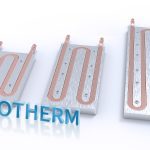
Heat pipes excel at transporting heat over longer distances, such as moving heat from a confined source to a remote heat sink. They work well in applications where the heat source is small but requires efficient removal to avoid thermal buildup. Embedded heat pipes are frequently integrated into custom aluminum extrusion designs to enhance heat dissipation in linear configurations.
Both technologies utilize phase-change heat transfer mechanisms. Engineers often rely on thermal simulation software to select the optimal solution based on heat source location, power density, and PCB layout constraints. Companies like Ecothermgroup specialize in DFM optimization and rapid prototyping of heat sinks, delivering tailored thermal management solutions for diverse PCB designs.
Cost Efficiency and Design Considerations
Cost plays a key role in choosing between heat pipes and vapor chambers. Heat pipes are typically more cost-effective, particularly for smaller power applications or designs that don’t require extensive heat spreading. Their simpler manufacturing process and material needs make them a budget-friendly option for standard PCBs.
Vapor chambers, while more expensive, offer better performance in advanced designs with high power density. They are often selected for critical applications where minimizing thermal resistance is essential to protect sensitive components. For instance, skived fin heat sinks for PCBs frequently include vapor chambers to improve heat dissipation efficiency.
- Heat pipes are ideal for cost-sensitive projects requiring point-to-point heat transfer.
- Vapor chambers are better suited for high-performance designs requiring uniform heat spreading.
- Using thermal simulation software can help achieve an optimal balance between performance and cost.
Ultimately, the choice between heat pipes and vapor chambers depends on design priorities, such as thermal conductivity requirements, space constraints, and budget. Collaborating with a custom heat sink manufacturer like Ecothermgroup ensures access to optimized solutions designed for specific PCB thermal management challenges.
Choosing the Right Heat Sink for Your PCB
Factors to Consider
Choosing the right heat sink for your PCB starts with understanding the thermal demands of your design. Vapor chambers and heat pipes are advanced solutions, but their performance depends on factors like power density, layout constraints, and cooling strategy. Vapor chambers are excellent for evenly distributing heat across flat surfaces, making them ideal for designs with multiple heat sources or localized hotspots. Heat pipes, on the other hand, are better for transferring heat over longer distances or navigating complex geometries.
Cost is another important factor. Vapor chambers tend to be more expensive due to their complex manufacturing process and are often used in high-performance applications like AI server PCBs or ultra-thin devices. Heat pipes offer a more cost-effective option for designs with moderate thermal requirements. For space-constrained designs, vapor chambers provide a thinner profile, while heat pipes offer flexibility in routing.
Thermal resistance and conductivity metrics should also influence your choice. Vapor chambers are ideal for applications requiring uniform temperature across the heat sink due to their efficient heat spreading capabilities. In contrast, heat pipes are better for designs needing effective heat dissipation in compact spaces. Working with custom heat sink manufacturers like Ecothermgroup can help you develop solutions tailored to your PCB’s specific needs.
| Heat Sink Type | Best Applications |
|---|---|
| Vapor Chamber | Flat heat sinks, high-power-density components |
| Heat Pipe | Long-distance heat transfer, constrained layouts |
Optimizing PCB Designs for Thermal Solutions
Integrating heat sinks effectively requires careful design optimization. Using thermal simulation software like CFD can help predict performance and identify potential hotspots early in the design process. DFM optimization ensures the heat sink integrates smoothly with other PCB components, reducing interference and improving assembly efficiency.
Material selection is also critical. Custom aluminum extrusions and skived fin heat sinks are popular choices for PCB designs because they balance cost and thermal conductivity. For higher performance, embedded heat pipes or board-mounted vapor chambers may be incorporated, depending on the cooling requirements.
- Conduct thermal analysis to pinpoint heat sources
- Select appropriate TIM to improve heat dissipation
- Use rapid prototyping to test heat sink designs
- Work with manufacturers like Ecothermgroup for custom solutions
Active cooling methods such as fans might be necessary for extreme cases, but passive solutions like vapor chambers or heat pipes are often sufficient for most PCB designs. By combining simulation tools and expert guidance, designers can achieve effective thermal management solutions for their boards.
People Also Ask
What is the role of a heat sink in PCB design?
A heat sink in PCB design helps dissipate heat generated by electronic components, preventing overheating and maintaining reliable performance. It is essential for managing thermal conditions, especially in high-power-density devices.
How do heat pipes work in thermal management for PCBs?
Heat pipes use a two-phase cooling process where liquid inside the pipe evaporates to absorb heat and condenses to release it. They efficiently transfer heat over long distances, making them ideal for compact PCB layouts.
What are vapor chambers, and how do they differ from heat pipes?
Vapor chambers are flat cooling devices that uniformly spread heat across their surface. Unlike heat pipes, they are better suited for high-power-density applications requiring even heat distribution over larger areas.
Which is better for compact PCB designs: vapor chambers or heat pipes?
Heat pipes are often preferred for compact designs due to their ability to transfer heat over longer distances with minimal space. Vapor chambers work best for applications that demand uniform heat dissipation across larger surfaces.
What factors should be considered when choosing a heat sink for PCB design?
Key considerations include power density, thermal conductivity needs, space constraints, and cost. Solutions like vapor chambers and heat pipes can be tailored to the specific demands of your PCB design.
Are vapor chambers more expensive than heat pipes?
Yes, vapor chambers typically cost more due to their intricate manufacturing process and higher performance capabilities. They are often reserved for applications where thermal efficiency outweighs budget concerns.
Can traditional heat sinks be used instead of heat pipes or vapor chambers?
Traditional heat sinks are suitable for low-power-density applications where advanced cooling isn’t required. For high-performance PCBs, heat pipes or vapor chambers deliver superior thermal management.
Why is thermal management important in AI server PCB designs?
AI server PCBs generate substantial heat due to their high power densities. Effective thermal management using heat sinks, heat pipes, or vapor chambers is crucial to avoid overheating, ensure reliability, and sustain optimal performance.