What Makes Liquid Cooling Plates Effective for Heat Management
You need good heat control for strong electronics and machines. Liquid cooling plates are special because they move heat away fast. They also work more quietly than air cooling. Many experts say they handle hard heat jobs well. They help save energy and can be made to fit different shapes.
They work quietly, so they are good for quiet places.
They use only 20% of the energy that air cooling uses.
They can remove up to 23 times more heat because water moves heat better.
Key Takeaways
Liquid cooling plates take away heat quicker than air cooling. This helps devices stay cool. It also helps them work for more years.
They use less power. This can save up to 80% energy compared to air cooling.
Cooling in certain spots stops hot areas from forming. This keeps important electronics safe from harm.
You need to check the coolant and how fast it moves often. This helps the system work its best.
Pick the right plate shape and materials for your cooling needs.
Why Liquid Cooling Plates Are Effective
Superior Heat Transfer
You need a way to move heat away from your devices fast. Liquid cooling plates are special because they use science to do this well. The table below explains how these ideas work together to move heat better:
Principle | Description |
|---|---|
Conduction | Heat goes straight from hot parts to the cold plate. |
Convection | Coolant moves inside the plate and takes in heat. |
High Heat Capacity | Water holds almost four times more heat than air. |
Higher Heat Absorption | Water can take in about 4,000 times more heat than air. |
Improved Thermal Conductivity | Liquids move heat better than gases. |
Direct Contact Cooling | Cold plates touch the hot parts for better heat movement. |
Forced Convection | Moving fluid keeps taking heat away from the system. |
Liquid cooling plates use direct contact and moving fluid. This helps your system handle more heat, like in strong computers. Water and other coolants carry heat away much better than air. Your devices stay cooler, even when you use them a lot.
Localized Cooling for Electronics
Sensitive electronics need to stay cool in certain spots. Liquid cooling plates cool these spots by taking heat right from the source. The cold plate sits on the part that gets hot. Heat moves into the metal plate. Then, coolant inside the plate takes the heat away. This cools the hottest spots and stops damage.
Tip: Localized cooling keeps hot spots from causing sudden problems in powerful devices.
A hybrid liquid cooling system, like direct-to-chip cooling, removes heat better than air. This works well in places with lots of electronics, like data centers. You get better cooling and use less energy. This is important for things like AI and strong computers.
The table below shows the good things about using localized liquid cooling plates:
Evidence Description | Details |
|---|---|
Improved Cooling Efficiency | The new TGP cools twice as well as old devices, so things work better. |
Lifespan Extension | Too much heat causes over half of device failures, so better cooling helps them last longer. |
Innovative Cooling Mechanism | The Direction-Free Thermal Ground Plane cools well no matter how it sits, so it is more reliable. |
Consistent Temperature Control
You want your electronics to stay at the same temperature, even when you use them more. Liquid cooling plates help by using smart designs. Microchannels inside the plates spread coolant evenly. This gives more space for heat to leave. Some plates change the coolant speed when your system gets hotter. Custom 3D-printed plates can make flow and temperature even better.
Keeps system pressure steady and protects the pump.
Handles changes in coolant size when it gets hotter or colder.
Stops pressure jumps when heat changes.
Makes the system more stable and easier to control.
You do not get sudden jumps in temperature. Your devices keep working well. This control is important for strong electronics, where even small changes can cause problems.
When you pick liquid cooling plates, you get good heat movement, cooling for important parts, and steady performance all the time.
Structure and Operation of Liquid Cooling Plates

Key Components and Materials
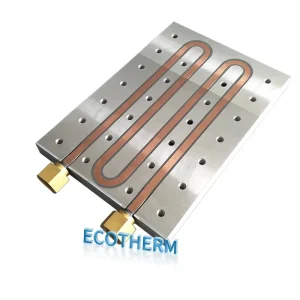
Liquid cooling plates use tough metals to move heat fast. Most plates are made from copper or aluminum. Copper pipes take heat away quickly. Aluminum fins spread heat over a bigger area. Some plates use special composite materials for certain jobs. Fans can blow air over the plate for extra cooling. Closed-loop systems keep the coolant moving and stop leaks.
Material | Thermal Conductivity (W/mK) |
|---|---|
Aluminium | 150-250 |
Copper | >380 |
Composites | 50-200 |
Tip: Copper moves heat best, but aluminum is lighter and costs less.
Inside the plate, channels guide the coolant through. More surface area helps the plate soak up more heat. Turbulent flow inside the channels helps move heat better.
How Coolant Circulates
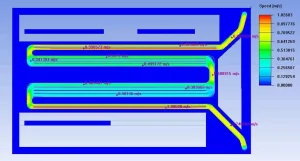
Coolant travels through the plate in a set path. It enters the plate and touches the hot part. The coolant takes in the heat. Then it leaves the plate and goes back to the pump. Most systems use between 1 and 5 liters per minute for each module. Higher flow rates make the temperature difference smaller across the plate.
Flow Rate (L/min) | Temperature Difference (°C) |
|---|---|
8 | 5.5 |
18 | 3.6 |
Immersion jet technology helps coolant move faster and spread heat evenly. This keeps your device cool and steady. If you make the jet distance shorter, the temperature difference goes up a little. But it still stays much lower than simple immersion systems.
Types of Liquid Cooling Plates
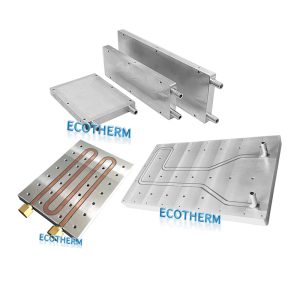
You can pick from different designs for your needs. Microchannel plates have tiny channels for strong heat transfer and even cooling. Serpentine plates have a simple path and work well for medium heat. Pin-fin plates have more surface area for better cooling, but need more coolant flow. Bio-inspired plates copy nature to spread heat and use less power.
Design Type | Advantages | Disadvantages |
|---|---|---|
Microchannel | Moves heat well, keeps temperature even | Hard to make, can clog |
Serpentine | Simple design, good for medium cooling | Not as good as microchannels for high heat |
Pin-fin | More surface area, good for lots of heat | Takes up more space, needs more coolant flow |
Bio-inspired | Spreads heat well, uses less power | Hard to design, may not work for everything |
Note: Pick the plate type that fits your cooling needs and system size.
Liquid cooling plates use smart shapes and strong metals to keep electronics cool and safe.
Advantages Over Other Cooling Methods
Efficiency vs. Air Cooling
You want your cooling system to save energy. Liquid cooling plates move heat away faster than air. Liquids can carry more heat than air can. This means you get cooler devices and use less power. In data centers, switching to liquid cooling drops power use by 10.2%. You also get over 15% better Total Utilization Efficiency. For batteries, the hottest cell stays about 3 °C cooler with liquid cooling. Devices run cooler and last longer. You also spend less money on energy.
Note: Liquids hold more heat than air, so they remove heat better.
Reliability and Longevity
You need a cooling system that lasts a long time. Liquid cooling plates are more reliable than other methods. They run quietly and need less fixing. If you seal the system well, it can last for years. The table below shows how liquid cooling plates compare to other cooling methods:
Feature | Liquid Cooling Plates | Other Cooling Methods |
|---|---|---|
Heat Dissipation | Superior | Moderate to Low |
Noise Level | Low | High |
Operational Lifespan | Long (if sealed) | Shorter |
Maintenance Requirements | Lower | Higher |
System Complexity | Moderate | High |
You get a system that is quiet, strong, and easy to care for.
Application Versatility
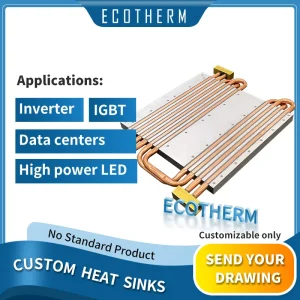
You can use liquid cooling plates in many places. They work well in computers, electric cars, machines, and energy systems. Data centers and gaming PCs need strong cooling for their processors. Electric cars use these plates to keep batteries cool. Factories use them to stop machines from getting too hot. Solar panels and wind turbines use them to work better and last longer.
High-performance computing: Keeps servers and gaming PCs cool.
Electric vehicles: Protects batteries and helps them work better.
Industrial machinery: Stops machines from overheating.
Renewable energy: Helps solar and wind systems last longer.
Many companies use liquid cooling plates in real projects. In Poland, a company made a special channel to cool batteries. In Hungary, a manufacturer used new welding to make plates stronger. In the Czech Republic, a company added coatings to protect plates from rust. These examples show you can trust liquid cooling plates for tough jobs.
Choosing and Using Liquid Cooling Plates
Selection Factors
You should think about a few things before picking a cooling plate. Every system needs something different. The table below lists what to check:
Factor | Description |
|---|---|
Make sure the plate can handle your system’s heat. | |
Manufacturing Cost | Choose a plate that fits your budget and cooling needs. |
Size and Weight | Lighter plates are better for cars or planes. |
Installation and Maintenance | Simple designs save time and work. |
Fluid Compatibility | The coolant must match the plate material. |
Operational Environment | Think about temperature, humidity, and chemicals nearby. |
Scalability and Future-Proofing | Pick a design that lets you upgrade later. |
Tip: Always use the right coolant for the plate material so it does not get damaged.
Installation and Maintenance
Putting in the cooling plate the right way helps it work well. Follow these steps to get good results:
Clean the plate and the hot part with isopropyl alcohol or acetone. Make sure both sides are flat.
Put on a thin layer of thermal interface material. This fills gaps and stops air bubbles.
Place the plate on the device. Tighten screws from the middle out to spread pressure.
Connect fluid lines with leak-tested fittings. Use tubing that matches the plate material.
Keep your system clean and check it often. The table below shows how often to do each job:
Task | Frequency | Recommended Action |
|---|---|---|
Clean cooling plate | Every 3-6 months | Flush and clean out dirt with chemical cleaners |
Monitor coolant quality | Monthly | Check pH and thickness of the fluid |
Check flow rate | Quarterly | Change pump speed if needed |
Common Challenges
You might have some problems with liquid cooling plates. Leaks can stop the system from working. Using the wrong material can make cooling worse. Some designs are hard to improve without spending more money. Water use can be a problem in dry places. Chemical leaks can hurt the environment.
Use alloys that resist rust, like 3xxx or 6xxx series aluminum.
Flush and refill the coolant with the right mix to stop rust.
Test for leaks with bubble tests or hydraulic tests.
Note: Checking your system often and using the right materials helps you avoid most problems.
You get good heat control with liquid cooling plates. These systems help in places like telecom, planes, and cars.
They use clever shapes and strong materials to keep things cool and quiet.
You use less energy and spend less money as time goes on.
Experts say you should check coolant temperature and flow often.
Future Trend | Benefit |
|---|---|
Nano-structured wicks | Moves heat better and works more often |
Hybrid architectures | Cools strong devices better |
You can count on this technology for tough cooling jobs.
FAQ
Liquid cooling plates remove heat quickly and reliably. They keep devices cooler than air cooling. This helps electronics last longer and work better.
No, only approved coolants should be used. Water with additives or special fluids work best. These coolants stop rust and buildup inside your system.
Check your system every three to six months. Clean the plate, look for leaks, and change coolant if needed. Regular checks keep your system safe.
Liquid cooling plates are quiet when running. They make less noise than air fans. This is good for quiet places like offices or homes.
You can use them in computers, electric cars, factories, and energy systems. They work well for many high-performance and industrial jobs.