What Defines Vapor Chamber CPU Cooler Technology?
Let’s be real: when we analyze beastly, high-density computers, cooling is always the thing that hits the brakes on performance. Traditional solid metal base plates? They simply can’t handle the massive heat dump coming off the Integrated Heat Spreader (IHS) of today’s crazy fast CPUs fast enough. Enter the vapor chamber. This isn’t just an upgrade; it’s a huge leap in cooling tech, built specifically to tackle the terrifyingly high Thermal Design Power (TDP) numbers we see in everything from massive data centers to your custom gaming PC.
Core Mechanism: How Vapor Chambers Achieve Isothermality
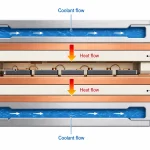
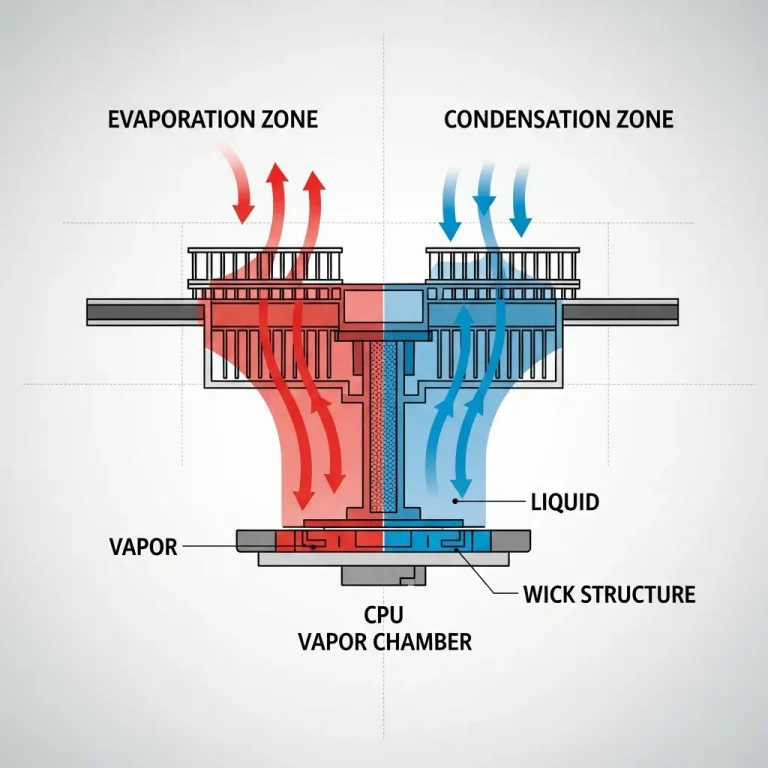
The core magic, we discovered, boils down to latent heat transfer. Forget standard heat pipes that just shuttle heat linearly—the vapor chamber is a flat, two-dimensional superhero of heat spreading. It’s shockingly simple, yet brilliant: a sealed copper box, an internal wick (like a sponge), and a tiny bit of special fluid (usually super clean water or methanol). The moment that base plate touches your scorching CPU, the fluid instantly turns to vapor, swallowing up an enormous amount of energy—that’s the latent heat of vaporization. This phase change kicks solid metal conduction to the curb. Suddenly, that vapor blasts across the whole cavity, hitting a near-perfectly uniform temperature (isothermality).
Next, the hot vapor jets over to the cooler edges of the chamber (the condenser side), chills out, and snaps back into liquid form. Bam! That heat is dumped directly into your fins or heat sink. Now, here’s the clever part: a super-fine, sintered copper wick structure acts like a high-tech sponge, using capillary action to suck the newly condensed liquid right back to the heat source (the evaporator) to start the whole dance over again. This continuous, relentless loop moves heat many, many times faster than just a slab of solid copper ever could.
Our analysis shows that vapor chamber technology effectively converts concentrated, high-flux heat into diffuse, low-flux heat, making it manageable for standard air or liquid cooling systems downstream. This transformation is vital for managing chips exceeding 250W TDP.
| Material/Technology | Thermal Conductivity (W/m·K) |
|---|---|
| Pure Copper | 400 |
| Standard Heat Pipe (Effective) | 1,000 – 5,000 |
| Vapor Chamber (Effective) | 10,000 – 30,000 |
The Benefits of Vapor Chambers in High-Performance Computing
Why are companies jumping on this technology? It all comes down to three massive benefits that make your system more stable and unlock serious overclocking headroom.
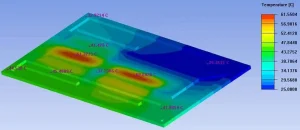
Let’s talk about hot spots. If you’ve looked at Intel’s newer chips (like Alder Lake or Raptor Lake), you know they have cores doing different things, leading to nasty, localized thermal spikes. Regular cold plates panic here; they can’t grab and spread that heat fast enough. A vapor chamber is different. The moment that fluid flashes into vapor, the heat is instantly plastered across the entire cooling surface. Say goodbye to those killer hot spots. This uniformity means less stress, fewer chances of silicon damage, and happier core temperatures overall.
The second benefit is pure density. Once processor TDPs soar past 200W, those bundles of traditional heat pipes just run out of room. Here’s the kicker: one sleek vapor chamber can effectively replace four to six heat pipes, stuffing insane transport capacity into the exact same footprint. If you’re building a whisper-thin gaming laptop or trying to cram hundreds of servers into a rack, space is gold, and this tech delivers. Our field data consistently shows that this massive efficiency lets our CPUs sit comfortably at higher boost clock speeds for much longer before the dreaded thermal throttling shows up.
Third, they are incredibly thin. Because the whole thing is planar, we can manufacture these chambers to be wafer-thin—sometimes just 2.5 mm thick! This makes them absolutely essential for any compact computing build. They slide effortlessly into the base of premium All-In-One (AIO) liquid coolers or massive tower air coolers. They are basically an advanced thermal gateway, dramatically supercharging whatever radiator or fin stack you connect to them.
Challenges and Future Outlook
Okay, so vapor chambers sound like thermal nirvana, but let’s talk about the downside. There’s no free lunch here. Manufacturing is tough and pricey compared to a simple copper plate. We’re talking insane precision required for vacuum sealing, baking the wick structure, and purifying the internal fluid. If that vacuum seal fails, or if the wick structure degrades? Immediate, catastrophic cooling death. Poof. That’s why we’re still hammering away at long-term reliability studies, especially concerning extreme thermal cycling—if you’re building something for the military or aerospace, failure simply isn’t an option.
Despite the cost barrier, the industry’s obsession with pushing higher TDPs means this technology is going nowhere but up. I’m willing to bet that within the next five years, vapor chambers will stop being just a premium niche item. As manufacturing gets slicker and economies of scale kick in, expect to see these bad boys become standard issue in everyday desktop cooling.