Zipper Fin Heat Sinks for AI Servers & Datacenters
As AI servers and datacenters manage growing workloads, effective thermal management has become a pressing challenge. Zipper fin heat sinks provide a high-performance cooling solution tailored to meet the needs of these advanced systems. This article examines how these innovative designs enhance heat dissipation, supporting reliability and optimal performance in today’s computing environments.
Takeaway
- Zipper fin heat sinks are designed to deliver high-performance cooling by combining a lightweight build with an expansive surface area for effective heat dissipation.
- The modular and customizable nature of zipper fin heat sinks allows seamless integration into AI servers and data centers, catering to diverse thermal management requirements.
- Zipper fins provide enhanced thermal efficiency compared to traditional air-cooled solutions, making them well-suited for managing the intense heat generated by modern AI processors and GPUs.
- In AI servers and data centers, zipper fin cooling boosts energy efficiency and lowers operational costs by maintaining optimal temperatures for essential hardware.
- Compared to alternatives like liquid cooling, zipper fin heat sinks are more affordable, easier to maintain, and adaptable to a broader range of applications.
- Emerging trends in data center cooling point toward hybrid systems that combine technologies like zipper fins with advanced liquid cooling and AI-driven thermal monitoring.
- Adopting advanced cooling solutions such as zipper fin heat sinks is vital for tackling the increasing power density and heat challenges in next-generation AI systems.
Introduction to Zipper Fin Heat Sinks
What Are Zipper Fin Heat Sinks?
Zipper fin heat sinks are innovative cooling solutions designed to handle the intense thermal demands of AI servers and data centers. These heat sinks use interlocking, high-aspect-ratio fins to maximize surface area for effective heat dissipation. Their compact design makes them ideal for environments with limited space and high-power cooling needs.
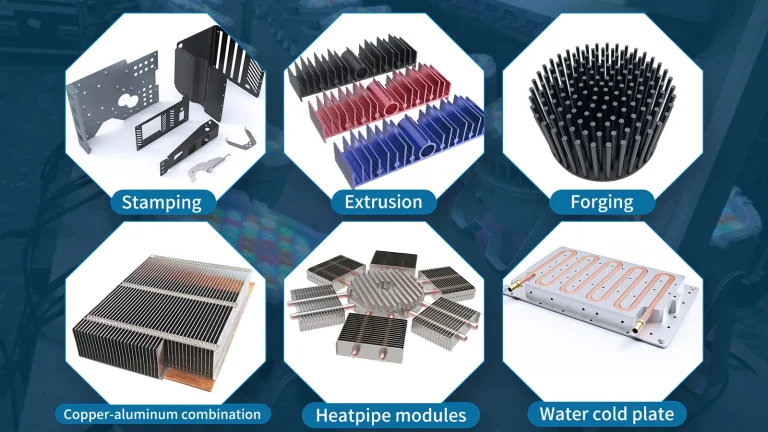
The manufacturing process involves stamping thin metal sheets, typically aluminum or copper, which are assembled into a lightweight structure. Copper bases are often combined with aluminum fins to balance thermal conductivity and weight, ensuring optimal performance without compromising reliability. Ecothermgroup specializes in creating tailored zipper fin heat sinks that meet specific thermal management requirements, including integration with heat pipes and vapor chamber bases.
A key advantage of zipper fin heat sinks is their customizability. Engineers can modify fin density, spacing, and material composition to achieve optimal cooling for various applications. These heat sinks are typically used with forced convection cooling systems, such as fans or blowers, to improve airflow and reduce thermal resistance. This adaptability makes them a popular choice for high-performance AI and GPU systems.
Why Thermal Management Is Critical for AI Servers
The rapid growth of AI workloads has significantly increased server density and power consumption. Without effective cooling, overheating can lead to system failures, reduced efficiency, and higher operational costs. Zipper fin heat sinks address these challenges by providing efficient, scalable cooling solutions. Their ability to handle high power loads while maintaining a compact profile makes them essential for modern data centers.
AI servers often run under continuous, high-demand conditions, generating substantial heat. Traditional cooling methods may struggle to keep up, making advanced solutions like zipper fin heat sinks crucial. Using stamped fin technology along with soldering or brazing techniques, these heat sinks deliver reliable thermal performance. Additionally, their compatibility with active cooling systems, such as hybrid liquid-air setups, further enhances their efficiency in dense server environments.
| Feature | Benefit |
|---|---|
| High Aspect Ratio Fins | Boosts surface area for efficient heat dissipation |
| Copper and Aluminum Materials | Achieves a balance between conductivity and weight |
| Customizable Fin Density | Optimizes cooling for specific needs |
| Integration with Heat Pipes | Improves heat transfer and reduces thermal resistance |
| Forced Convection Compatibility | Enhances airflow and cooling performance |
Ecothermgroup’s expertise in rapid prototyping and scalable production ensures zipper fin heat sinks are equipped to meet the evolving demands of AI servers. By leveraging cutting-edge thermal management technologies, these heat sinks deliver dependable solutions for minimizing downtime and enhancing system performance in critical environments.
Design and Advantages of Zipper Fin Heat Sinks
Unique Features of Zipper Fin Technology
Zipper fin heat sinks are made using interlocked sheets of metal, creating high-density fin structures that increase surface area for heat dissipation. This design, often using aluminum or copper, delivers excellent thermal performance while ensuring mechanical stability. The interlocking mechanism boosts the structural strength of the fins, making them resistant to vibration and wear, which is essential in demanding environments like AI servers and datacenters.
A key feature of zipper fin technology is its ability to produce high aspect ratio fins, significantly enhancing heat transfer by exposing more surface to airflow. Additionally, the manufacturing process allows precise control over fin density, enabling custom configurations for specific cooling needs. This adaptability is especially useful for compact server racks or GPU-heavy systems.
Ecothermgroup uses advanced stamping and soldering processes to create zipper fin heat sinks with integrated components such as heat pipes and vapor chamber bases. These features enhance heat distribution, ensuring reliable cooling even under intense thermal loads. By combining materials like copper bases with aluminum fins, manufacturers achieve a balance between thermal conductivity and weight, optimizing both performance and ease of installation.
| Feature | Benefit |
|---|---|
| High Aspect Ratio Fins | Boosts heat dissipation efficiency |
| Customizable Fin Density | Meets specific cooling requirements |
| Mixed Material Options | Balances conductivity and weight |
| Integrated Heat Pipes | Enhances heat transfer across the base |
| Durable Interlocked Structure | Resists vibration and wear |
Performance Benefits in High-Density Environments
Zipper fin heat sinks perform exceptionally well in high-density environments like AI servers and datacenters due to their efficient thermal management. Their compact design supports effective cooling in tight spaces, making them ideal for server racks with limited airflow. By enabling forced convection cooling, zipper fin heat sinks reduce thermal resistance, ensuring consistent performance in high-power systems.
A major advantage in datacenters is their compatibility with active cooling solutions. Paired with technologies like vapor chamber bases or heat pipes, zipper fin heat sinks effectively manage heat from CPUs, GPUs, and other high-power components. This prevents overheating, extends equipment lifespan, and cuts maintenance costs and downtime.
Ecothermgroup’s rapid prototyping capabilities make zipper fin heat sinks even more appealing. These capabilities allow quick design adjustments to meet evolving thermal demands in AI-driven applications. Additionally, the cost-efficient production process supports large-scale datacenter deployments, making zipper fin heat sinks a practical choice for businesses seeking scalability without sacrificing performance.
- Effective cooling for compact server racks
- Reduces thermal resistance in high-power systems
- Supports active cooling technologies like heat pipes
- Extends equipment lifespan and minimizes downtime
- Cost-efficient for large-scale applications
Applications in AI Servers and Data Centers
Cooling Challenges in AI and Machine Learning Workloads
AI servers and data centers are handling more complex machine learning workloads that demand high computational power. This increased processing generates substantial heat, especially from densely packed GPUs and CPUs. Traditional air cooling methods often struggle to efficiently dissipate heat in high-density setups. While liquid cooling systems, such as direct-to-chip and immersion cooling, offer targeted heat management, they come with higher costs for installation and maintenance. As a result, there is a growing demand for scalable and cost-effective thermal management solutions.
Zipper fin heat sinks, featuring high aspect ratio fins and advanced stamped fin designs, offer an efficient solution for space-constrained environments. Their ability to enhance heat dissipation while remaining compact makes them ideal for AI servers and data centers where space is a premium. According to Ecothermgroup, pairing zipper fin heat sinks with active cooling systems like forced convection further reduces thermal resistance, ensuring system stability during peak workloads.
How Zipper Fins Enhance GPU and CPU Performance
Zipper fin heat sinks are designed to meet the specific cooling needs of AI servers. Utilizing copper and aluminum materials, these heat sinks provide excellent thermal conductivity, effectively removing heat from key components such as GPUs and CPUs. The soldering and brazing techniques used in their construction ensure strong mechanical stability, enabling them to handle high-power heat dissipation without compromising performance.
A significant advantage of zipper fins is their customizable design, which allows manufacturers like Ecothermgroup to adjust fin density and dimensions to suit specific applications. For instance, high-density fins optimize cooling in compact server racks, while heat pipe assemblies and vapor chamber bases improve heat transfer in high-power configurations. This adaptability makes zipper fin heat sinks a top choice for modern data center thermal management.
These heat sinks also integrate effectively with active cooling systems, such as forced convection setups. By combining zipper fins with high-performance fans, data centers can significantly reduce thermal resistance, leading to better GPU and CPU performance. This combination ensures reliable operation of AI workloads, even under intense computational demands.
| Cooling Method | Key Features |
|---|---|
| Zipper Fin Heat Sinks | High aspect ratio fins, customizable fin density, copper and aluminum construction |
| Liquid Cooling | Direct-to-chip cooling, immersion cooling, scalability for high-density configurations |
| Forced Convection | Active cooling fans, reduced thermal resistance, compatibility with heat sink designs |
- Efficient heat dissipation for high-power AI servers
- Customizable designs for space-constrained environments
- Integration with active and liquid cooling systems
Comparison with Other Cooling Solutions
Zipper Fin Heat Sinks vs. Liquid Cooling Systems
Zipper fin heat sinks and liquid cooling systems are two prominent solutions for managing heat in AI servers and data centers. While both address the high thermal demands of GPU-intensive workloads, their mechanisms, efficiency, and costs differ significantly. Zipper fin heat sinks are ideal for passive or forced convection cooling, offering high thermal dissipation efficiency through increased surface area. In contrast, liquid cooling systems, such as direct-to-chip or immersion cooling, use fluids to absorb and transport heat away from components more effectively.
A key advantage of zipper fin heat sinks is their energy efficiency. Unlike liquid cooling, which relies on pumps, coolant, and additional infrastructure, zipper fins operate with minimal energy overhead, reducing operational costs. Additionally, these heat sinks can be customized with copper and aluminum materials to meet specific thermal management requirements, making them a flexible choice for diverse server configurations. Ecothermgroup specializes in creating such custom solutions, incorporating stamped fin technology and high aspect ratio fins for optimal performance.
However, liquid cooling systems excel in environments with extreme density and heat generation, such as AI factories with stacked GPU racks. Their ability to deliver consistent thermal performance under heavy loads makes them ideal for next-generation AI workloads. Combining the two solutions is also an option. Zipper fin heat sinks can be integrated with liquid cooling systems, such as vapor chamber bases or heat pipe assemblies, to further reduce thermal resistance.
| Feature | Zipper Fin Heat Sinks | Liquid Cooling Systems |
|---|---|---|
| Thermal Efficiency | High for air cooling; suitable for moderate heat loads | Very high; ideal for extreme heat loads |
| Energy Consumption | Low | Higher due to pumps and coolant systems |
| Cost | Lower initial and maintenance costs | Higher initial investment and operational costs |
| Integration | Can integrate with liquid cooling for hybrid solutions | Standalone or hybrid with heat sinks |
| Customization | Highly customizable with copper and aluminum options | Limited customization |
Zipper Fins vs. Traditional Heat Sink Designs
Traditional heat sink designs, such as extruded or skived fins, have long been used in data centers. However, zipper fin heat sinks offer several advantages. Their stamped fin technology enables higher fin density, resulting in a larger surface area for heat dissipation. This is particularly useful in high-power heat dissipation scenarios where airflow is constrained.
Another significant difference is material flexibility. While traditional designs often use a single material, zipper fins allow for copper and aluminum combinations, optimizing thermal and structural performance. The soldering and brazing processes used in their manufacturing ensure excellent thermal conductivity and mechanical stability, making them more reliable under heavy workloads.
Additionally, zipper fin heat sinks are lighter and more compact than traditional options, allowing for more efficient use of space in high-density server environments. For AI applications, where thermal management must align with compact hardware configurations, zipper fins are a superior choice.
- Higher thermal performance due to increased fin density
- Greater flexibility in material selection
- Lightweight and compact design for space-saving installations
- Enhanced durability with soldering and brazing processes
Future Trends in Data Center Thermal Management
Innovations in Cooling Technologies
As data centers advance to handle high-density computing driven by AI and HPC workloads, traditional cooling methods are struggling to keep up with the rising thermal design power (TDP) of modern chips and GPUs, which can surpass 1200W. Zipper fin heat sinks are becoming a critical solution in this space, offering effective heat dissipation and improved thermal resistance. These heat sinks use stamped fin technology and high aspect ratio fins to maximize surface area and airflow efficiency, which is essential for compact server racks.
Hybrid cooling systems that combine air cooling with advanced liquid cooling are gaining momentum. For example, forced convection cooling paired with vapor chamber bases in zipper fin designs provides targeted cooling for dense computing clusters. Advances in soldering and brazing techniques improve the durability of these assemblies, while rapid prototyping from custom zipper fin heat sink manufacturers like Ecothermgroup speeds up deployment. Direct-to-chip cooling using cold plates is also becoming more common, offering precise heat management for AI server racks.
| Cooling Technology | Key Features |
|---|---|
| Zipper Fin Heat Sinks | High aspect ratio fins, optimized airflow patterns, copper and aluminum options |
| Liquid Cooling Systems | Direct-to-chip cooling, reduced energy consumption, hybrid configurations |
| Vapor Chamber Bases | Enhanced thermal conductivity, paired with forced convection cooling |
Sustainability and Energy Efficiency in Thermal Solutions
The drive for sustainability in data center thermal management is leading to the adoption of more energy-efficient cooling solutions. Zipper fin heat sinks are engineered to lower thermal resistance, reducing the energy demands of active cooling systems. By increasing fin density and using advanced materials like copper and aluminum, these heat sinks help reduce operational costs and carbon emissions.
Liquid cooling systems further boost energy efficiency by directly targeting heat sources. This reduces dependence on large-scale air conditioning systems, which are less efficient in high-density setups. Additionally, incorporating heat pipe assemblies into zipper fin designs supports passive cooling, aligning with green initiatives. Companies like Ecothermgroup are leading the way in developing these sustainable solutions for modern data centers.
- Focus on reducing energy consumption through advanced cooling designs
- Integration of passive cooling to lower carbon footprints
- Use of recyclable materials in heat sink manufacturing
- Deployment of hybrid systems for optimal performance and sustainability
As efficiency standards rise, data centers are increasingly adopting predictive maintenance and AI-driven monitoring systems to optimize cooling performance. These innovations allow thermal solutions to adapt dynamically to workload changes, extending equipment lifespan while maintaining efficiency. By combining cutting-edge cooling technologies with sustainable practices, the future of data center thermal management promises exceptional performance and environmental responsibility.
People Also Ask
What are Zipper Fin Heat Sinks, and why are they important for AI servers and data centers?
Zipper Fin Heat Sinks are advanced cooling solutions made by stacking thin, interlocking metal fins to enhance heat dissipation. They are essential for AI servers and data centers as they effectively manage the thermal demands of high-density computing environments.
How do Zipper Fin Heat Sinks compare to traditional cooling solutions like plate fin or liquid cooling systems?
Zipper Fin Heat Sinks deliver better heat dissipation thanks to their unique design, which increases surface area and airflow. Unlike liquid cooling systems, they are lightweight, cost-efficient, and simpler to integrate, making them ideal for large-scale use in AI servers and data centers.
What are the advantages of Zipper Fin Heat Sink designs for high-density computing environments?
Zipper Fin designs offer improved thermal performance, scalability, and reduced weight compared to other cooling options. Their modular construction is perfect for compact AI servers and data centers, ensuring effective heat management in limited spaces.
What role do Zipper Fin Heat Sinks play in future trends for thermal management in data centers?
Zipper Fin Heat Sinks are poised to become vital for sustainable, high-performance cooling as data centers evolve to handle greater computing densities and demand energy-efficient solutions. Their design supports the need for scalable and durable thermal technologies.
What materials are commonly used to manufacture Zipper Fin Heat Sinks?
Zipper Fin Heat Sinks are usually made from aluminum or copper due to their excellent thermal conductivity and lightweight properties. These materials ensure efficient heat transfer and durability in demanding server and data center environments.
Are Zipper Fin Heat Sinks suitable for cooling GPUs in AI applications?
Yes, Zipper Fin Heat Sinks effectively cool GPUs in AI applications. Their design promotes efficient heat dissipation, which is crucial for sustaining GPU performance and reliability in high-compute-density AI servers.
How do Zipper Fin Heat Sinks handle airflow and thermal efficiency compared to other heat sinks?
Zipper Fin Heat Sinks improve airflow by creating narrow channels for air movement, boosting thermal efficiency. Their interlocking fin structure increases surface area, making them more effective at dissipating heat than conventional heat sinks.
Can Zipper Fin Heat Sinks be customized for specific server configurations?
Yes, Zipper Fin Heat Sinks can be tailored to meet specific cooling needs for unique server setups. Their modular design allows them to adapt to varying sizes, power densities, and thermal demands in AI servers and data centers.