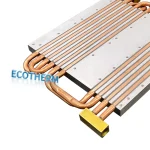
Copper vs Aluminum Zipper Fin Heat Sinks: A Comparison
When designing a zipper fin heat sink, choosing the right material is essential to balance performance, cost, and durability. Copper and aluminum are popular options, each offering unique benefits and trade-offs. This article examines their differences to guide you in selecting the best material for your custom heat sink needs.
Takeaway
- Zipper fin heat sinks provide efficient thermal management for compact, high-performance applications thanks to their lightweight and customizable design.
- Copper delivers excellent thermal conductivity compared to aluminum, making it ideal for applications demanding maximum heat dissipation, though it is heavier and more costly.
- Aluminum is a lightweight, budget-friendly alternative to copper, suitable for applications with moderate thermal needs or where minimizing weight is essential.
- Copper zipper fin heat sinks are ideal for high power density or extreme thermal load scenarios, while aluminum options are better suited for cost-sensitive designs or systems where weight is a priority.
- Material selection for zipper fin heat sinks should take into account factors like cost, manufacturing complexity, and compatibility with existing assembly processes.
- Optimizing design elements such as fin density and geometry can help enhance performance and address the limitations of both copper and aluminum heat sinks.
- The decision between copper and aluminum depends on specific application requirements, including thermal performance goals, budget considerations, and mechanical design needs.
Introduction to Zipper Fin Heat Sinks
What Are Zipper Fin Heat Sinks?
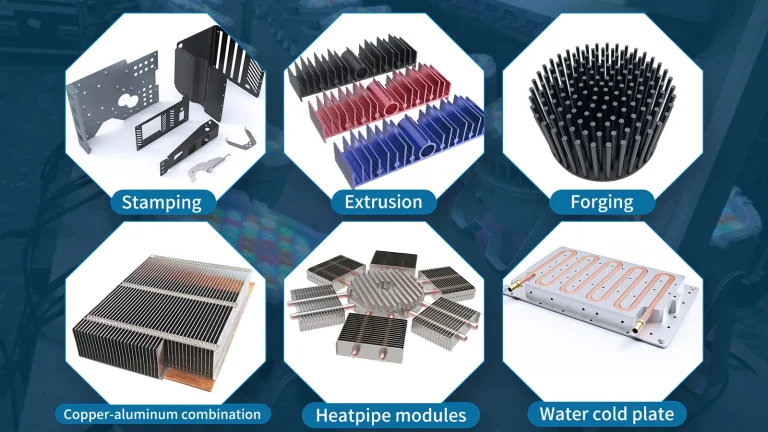
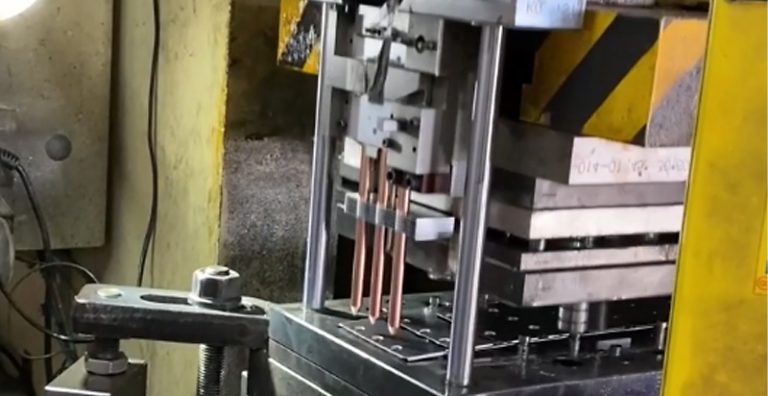
Zipper fin heat sinks are innovative cooling systems designed to manage thermal performance in high-power applications. They use stamped fin technology, where individual fins are produced separately and assembled to form a high aspect ratio structure. This design increases surface area, enabling effective heat dissipation even in compact spaces. The fins are typically soldered or brazed together for durability and optimal thermal conductivity.
The adaptability of zipper fin heat sinks makes them ideal for custom thermal management solutions. Manufacturers like Ecothermgroup can customize these heat sinks to meet specific needs, including fin density, material type, and size. This flexibility is especially useful for applications ranging from server CPUs to industrial machinery, where precision and rapid prototyping are essential.
A major benefit of zipper fin heat sinks is their compatibility with both copper and aluminum fins. These materials offer distinct advantages, helping engineers balance thermal conductivity, weight, and cost based on the application. For example, copper fins provide excellent heat dissipation, while aluminum fins are lightweight and more affordable, making them ideal for consumer electronics.
Importance of Material Choice in Heat Sink Design
Material choice is a crucial factor in zipper fin heat sink performance. Copper and aluminum are the most common options, each offering specific advantages depending on the application. Copper, with thermal conductivity of around 390–400 W/mK, is ideal for scenarios demanding maximum heat transfer efficiency, such as high-density electronics or advanced computing systems. However, its higher weight and cost can be drawbacks in certain designs.
In contrast, aluminum, with a thermal conductivity of about 200 W/mK, is preferred for lightweight and cost-sensitive solutions. It is also easier to manufacture, supporting the creation of complex and large-scale heat sinks, which makes it suitable for mass production. Aluminum zipper fin heat sinks work well in applications where larger cooling surfaces and optimized airflow can offset lower thermal conductivity.
| Material | Key Advantages |
|---|---|
| Copper | High thermal conductivity; ideal for compact, high-power-density applications |
| Aluminum | Lightweight, affordable, and suitable for large-scale production |
To achieve peak performance, manufacturers like Ecothermgroup carefully assess factors such as fin density, soldering or brazing techniques, and specific application requirements during production. For example, copper zipper fins may be recommended for advanced cooling systems in servers, while aluminum fins might be better suited for industrial equipment where weight is a concern.
- Use copper for applications requiring maximum heat dissipation.
- Opt for aluminum in lightweight and budget-friendly designs.
- Prioritize fin density and airflow optimization for better cooling performance.
By understanding the advantages of each material and their suitability for different conditions, engineers can make well-informed decisions when selecting custom zipper fin heat sinks for their projects.
Copper vs. Aluminum: Material Properties
Thermal Conductivity Comparison
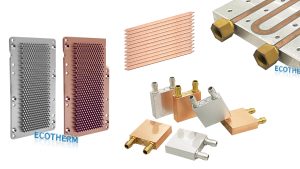
When selecting materials for a zipper fin heat sink, thermal conductivity is a key factor. Copper offers exceptional thermal conductivity at approximately 400 W/m·K, making it highly efficient for transferring heat from high-power electronics. This makes it ideal for applications like industrial servers, GPUs, and CPUs, where effective heat dissipation is essential. Aluminum, on the other hand, has a lower thermal conductivity of around 235 W/m·K. Despite this, aluminum can effectively handle thermal loads in consumer electronics and portable devices that don’t require extreme heat dissipation.
The soldering and brazing processes affect copper and aluminum fins differently. Copper zipper fins are often preferred in high aspect ratio designs due to their ability to handle greater thermal loads without warping. Aluminum, however, offers easier manufacturing and quicker prototyping, making it cost-effective for optimizing fin density and design. Manufacturers like Ecothermgroup frequently recommend hybrid designs that combine copper bases with aluminum fins for a balanced approach to performance.
| Material | Thermal Conductivity (W/m·K) |
|---|---|
| Copper | 400 |
| Aluminum | 235 |
Weight Considerations for Heat Sink Applications
Weight is another important aspect of heat sink design. Copper is much heavier than aluminum, which can be a drawback for applications requiring lightweight components. For example, portable devices like laptops or smartphones often use aluminum heat sinks because they reduce weight and integrate more easily into compact designs.
Aluminum also excels in high-volume production due to its ability to be extruded into complex shapes without losing durability. Copper, by contrast, requires more intensive machining, which increases its weight and manufacturing complexity. Despite this, copper’s superior thermal efficiency makes it invaluable for stationary applications like industrial equipment or high-performance computing systems.
- Aluminum is ideal for lightweight, portable devices.
- Copper is preferred in stationary, high-power systems.
- Hybrid designs balance weight and thermal efficiency.
Cost Implications of Copper and Aluminum
Cost differences between copper and aluminum are significant for manufacturers. Aluminum is generally more affordable, with lower material expenses and simpler machining processes. This makes aluminum zipper fins a practical choice for consumer electronics and high-volume production.
Copper, while more expensive, delivers unmatched thermal performance, justifying its use in applications that require superior heat dissipation. For example, in high-power systems, the higher cost of copper is offset by its ability to maintain reliable thermal management under demanding conditions. Manufacturers like Ecothermgroup often recommend copper for specialized applications, while aluminum is suggested for general-purpose designs.
| Material | Cost Implications |
|---|---|
| Copper | Higher cost, ideal for high-performance needs |
| Aluminum | Lower cost, suitable for mass production |
The choice between copper and aluminum zipper fins depends on the specific requirements of the application, including thermal performance, weight constraints, and budget. Partnering with a custom zipper fin heat sink manufacturer like Ecothermgroup ensures a solution tailored to both functional and financial needs.
Performance in Zipper Fin Heat Sink Applications
Heat Dissipation Efficiency
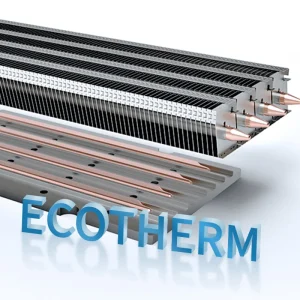
Evaluating the performance of copper and aluminum zipper fin heat sinks requires a close look at heat dissipation efficiency. Copper zipper fins are highly effective in applications needing superior thermal conductivity, with copper offering a thermal conductivity of approximately 400 W/m·K compared to aluminum’s 205 W/m·K. This makes copper an excellent choice for high-density electronics or devices with concentrated heat sources, such as CPUs and GPUs. Its ability to transfer heat quickly ensures efficient thermal management even under heavy workloads.
Aluminum zipper fins, meanwhile, are better suited for applications involving larger heat sources or broader heat distribution. With lower weight and cost than copper, aluminum zipper fin heat sinks are commonly used in automotive, industrial machinery, and consumer electronics. Though aluminum is less thermally conductive, advancements in stamped fin technology and soldering techniques enable aluminum zipper fins to achieve high fin density, enhancing overall heat dissipation.
Hybrid designs that combine both materials, such as aluminum fins paired with a copper base, strike a balance between performance and cost. These designs utilize copper’s conductivity to handle localized heat transfer while leveraging aluminum’s lightweight properties for structural efficiency. Manufacturers like Ecothermgroup often recommend hybrid solutions for applications that require both affordability and effective heat dissipation.
| Material | Thermal Conductivity (W/m·K) | Best Applications |
|---|---|---|
| Copper | 400 | High-density electronics, concentrated heat sources |
| Aluminum | 205 | Larger heat sources, cost-sensitive applications |
Durability Over Time
Durability is another key factor when choosing materials for zipper fin heat sinks. Copper provides excellent long-term durability due to its resistance to corrosion and oxidation, even in high-temperature environments. This makes copper zipper fins a reliable choice for applications requiring extended lifespans, such as aerospace and military equipment.
Aluminum, while less durable under extreme conditions, performs well in standard environments. Its natural oxide layer helps resist corrosion, and its lightweight nature reduces stress on mounting systems, extending the lifespan of devices in portable and weight-sensitive applications. Additionally, aluminum’s machinability and lower cost make it a practical option for rapid prototyping and mass production.
For applications exposed to harsh conditions or frequent thermal cycling, copper zipper fins may offer better reliability. Manufacturers like Ecothermgroup often advise engineers to carefully evaluate environmental factors, usage patterns, and maintenance needs when deciding between copper and aluminum.
- Copper is best for high-temperature and long-term applications.
- Aluminum works well in lightweight, cost-sensitive designs.
- Hybrid designs provide a balanced solution for durability and affordability.
Manufacturing and Design Considerations
Ease of Manufacturing
Zipper fin heat sinks provide notable benefits in manufacturing, particularly in achieving high aspect ratio fins and dense fin configurations. Aluminum zipper fins are simpler to produce compared to copper because of aluminum’s lower density and higher pliability. Progressive stamping is a common method for creating aluminum fins, enabling intricate designs without compromising durability. Copper fins, meanwhile, are more challenging due to their heavier weight and greater hardness, often requiring specialized equipment and processes.
Soldering and brazing are also important factors. Copper fins typically need higher temperatures during brazing to achieve proper bonding, increasing production time and costs. In contrast, aluminum fins require lower thermal conditions for soldering, making them ideal for rapid prototyping or mass production. Manufacturers like Ecothermgroup have developed advanced techniques to enhance production efficiency while ensuring consistent quality.
| Material | Ease of Manufacturing |
|---|---|
| Aluminum | Lightweight, easy stamping, lower soldering temperatures |
| Copper | More complex fabrication, higher brazing temperatures |
Customization Options for Zipper Fin Heat Sinks
The adaptability of zipper fin heat sinks is one of their most valuable features. Manufacturers can modify fin density, thickness, and height to meet specific thermal requirements. Copper zipper fins excel in applications demanding high thermal conductivity, such as industrial electronics requiring effective heat dissipation. However, their weight and cost may pose limitations for portable devices. Aluminum fins, being lighter and more affordable, are better suited for lightweight and budget-sensitive designs.
Hybrid designs that combine copper and aluminum are increasingly popular. For instance, a copper base paired with aluminum fins delivers strong thermal performance while reducing overall weight and material expenses. Manufacturers like Ecothermgroup specialize in customizing fin geometries to optimize cooling performance, ensuring efficient airflow and heat transfer. Key design considerations, such as fin spacing and structural stability, must align with the chosen material and application.
- Adjustable fin density for improved heat dissipation
- Material combinations (e.g., copper base with aluminum fins)
- Custom geometries to enhance airflow
- Precision manufacturing for demanding applications
Selecting the appropriate material and design for zipper fin heat sinks involves balancing performance, cost, and manufacturing practicality. By leveraging advanced techniques from trusted manufacturers like Ecothermgroup, businesses can implement effective thermal management solutions tailored to their specific needs.
Choosing the Right Material for Your Application
Factors to Consider Based on Use Case
When deciding between copper and aluminum zipper fins for a custom heat sink, understanding your application’s specific needs is essential. Copper zipper fins are ideal for high-power heat dissipation due to their excellent thermal conductivity of approximately 400 W/mK, nearly twice that of aluminum. However, this superior performance comes with trade-offs, such as increased weight and higher manufacturing costs. As a result, copper is often better suited for compact designs like server cooling systems or high-density electronics where heat transfer efficiency is critical.
In contrast, aluminum zipper fins are commonly chosen for applications where weight and cost are key considerations. With a thermal conductivity of around 200 W/mK, aluminum provides reliable performance for most general-purpose thermal management needs. Its lightweight nature makes it especially suitable for automotive and aerospace applications, where reducing mass is a priority. Recent advancements in stamped fin technology have also improved aluminum designs, enabling higher aspect ratio fins to offset its lower thermal conductivity compared to copper.
| Parameter | Copper | Aluminum |
|---|---|---|
| Thermal Conductivity | ~400 W/mK | ~200 W/mK |
| Weight | High | Low |
| Cost | Expensive | Affordable |
| Corrosion Resistance | Requires Plating | Forms Oxide Layer |
Balancing Performance and Cost
Finding the right balance between performance and cost is key. Copper zipper fins are often selected for applications requiring top-tier thermal performance, such as industrial equipment or advanced electronics with high heat output. However, their higher cost and the complexity of soldering and brazing can be limiting factors. For cost-sensitive applications, aluminum remains a popular choice, offering an economical solution without major performance sacrifices, especially when combined with design optimizations like increased fin density.
Hybrid designs can also provide a viable solution. These combine the strengths of both materials, with copper used in critical heat dissipation areas and aluminum employed for the overall structure to keep weight down. Partnering with an experienced custom zipper fin heat sink manufacturer, such as Ecothermgroup, can help you explore these options and achieve the best outcomes for your thermal management needs.
- Evaluate thermal requirements based on your application.
- Consider weight and cost constraints alongside performance needs.
- Explore hybrid designs for optimized solutions.
People Also Ask
What is a zipper fin heat sink and how does it differ from other types of heat sinks?
A zipper fin heat sink uses interlocking fins to increase surface area for effective heat dissipation. Compared to traditional extruded or skived fin heat sinks, it offers greater design flexibility and improved thermal performance in compact spaces.
Why is copper often considered for zipper fin heat sinks despite its higher cost?
Copper is frequently selected for zipper fin heat sinks due to its excellent thermal conductivity, which enhances heat transfer. Though heavier and costlier than aluminum, it is well-suited for applications needing high-performance cooling in limited spaces.
What are the main advantages of aluminum zipper fin heat sinks over copper ones?
Aluminum zipper fin heat sinks are lighter, more budget-friendly, and simpler to manufacture than copper. While its thermal conductivity is lower, aluminum’s affordability and adaptability make it a popular choice for various uses.
How do copper and aluminum compare in terms of long-term durability for heat sinks?
Copper resists corrosion effectively, making it a durable option for heat sinks in demanding environments. Aluminum, while less resistant to corrosion, can be anodized for added protection, ensuring consistent performance in most standard applications.
What factors should be considered when choosing between copper and aluminum for a custom zipper fin heat sink?
Thermal performance needs, budget, weight restrictions, and environmental conditions are key factors to consider. Copper is ideal for high-performance cooling, while aluminum is better for lightweight and cost-sensitive designs.
Can zipper fin heat sinks be customized for specific applications?
Yes, zipper fin heat sinks can be customized to meet unique thermal and mechanical requirements. Their modular structure allows adjustments in fin density, height, and material to optimize performance for specific applications.
How does manufacturing complexity differ between copper and aluminum zipper fin heat sinks?
Manufacturing copper zipper fin heat sinks is more complex due to copper’s hardness and density, which require specialized processes. Aluminum, being softer and lighter, is easier to work with, making it suitable for intricate or high-volume production.
What types of applications benefit most from copper zipper fin heat sinks?
High-performance computing, advanced electronics, and industrial systems benefit greatly from copper zipper fin heat sinks. Copper’s excellent heat transfer capabilities make it ideal for applications with demanding cooling requirements.