Custom Zipper Fin Heat Sinks: Engineered for High-Density Thermal Loads
Handling high-density thermal loads in compact electronic systems presents a significant challenge for engineers. Zipper fin heat sinks provide an innovative solution, offering efficient heat dissipation and adaptable designs to suit specific performance needs. This article examines how these advanced heat sinks are designed to address demanding thermal management situations.
Takeaway
- Zipper fin heat sinks are engineered to handle high-density thermal loads effectively, utilizing interlocking, thin metal fins to enhance heat dissipation.
- They work by increasing surface area and optimizing airflow channels, making them suitable for compact spaces or demanding thermal conditions.
- Key benefits include lightweight construction, cost-efficient production for intricate designs, and compatibility with materials such as aluminum and copper for improved performance.
- Zipper fin heat sinks are widely used in industries like electronics, telecommunications, automotive, and aerospace, where efficient thermal management in compact designs is essential.
- Custom solutions can be developed to meet specific thermal and spatial needs, with factors like fin geometry, material choice, and airflow dynamics playing a significant role.
- Collaborating with engineering teams and conducting thorough thermal analysis are critical steps in designing custom zipper fin heat sinks to ensure optimal functionality and cost-effectiveness.
- The adaptability and scalability of zipper fin heat sinks make them a reliable choice for modern applications demanding high-performance cooling systems.
Introduction to Zipper Fin Heat Sinks
What Are Zipper Fin Heat Sinks?
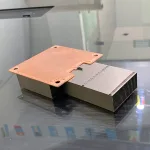
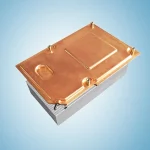
Zipper fin heat sinks are advanced thermal solutions designed to efficiently manage high-density heat loads. They feature interlocking metal fins—typically made from aluminum or copper—that maximize surface area to enhance heat dissipation. This innovative design delivers effective cooling in compact spaces, making them ideal for applications such as power electronics and high-performance computing. Custom zipper fin heat sinks can be paired with heat pipes or vapor chambers to boost thermal conductivity and handle extreme conditions. Ecothermgroup offers tailored solutions for these demanding needs, ensuring reliable performance and flexibility.
The Growing Demand for High-Density Thermal Solutions
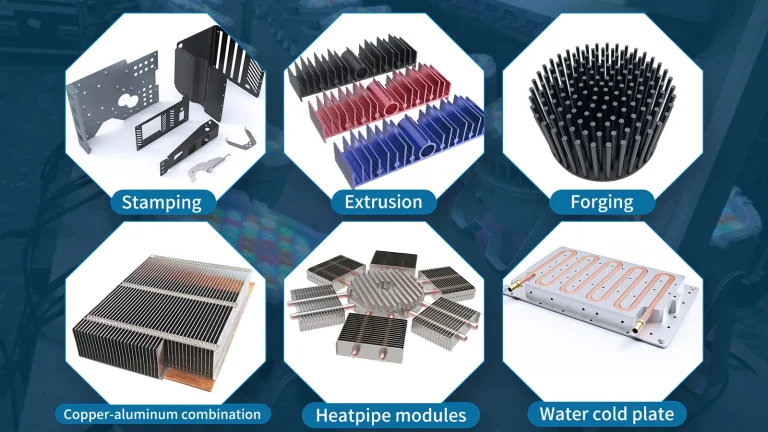
As power densities in modern electronics continue to rise, the need for efficient thermal management has become critical. Zipper fin heat sinks provide a scalable, cost-effective solution for industries requiring custom designs and rapid prototyping. Their manufacturing process, which uses stamped and interlocking fins, allows for versatile configurations of fin geometry and density. This flexibility supports various cooling strategies, including forced convection systems where fans or blowers improve airflow. Compared to conventional heat sinks, zipper fin designs deliver superior heat dissipation, making them a top choice for high-power applications.
| Material | Key Advantage |
|---|---|
| Aluminum | Lightweight & Affordable |
| Copper | Excellent Thermal Conductivity |
- Enhances cooling in compact spaces
- Customizable for specific thermal needs
How Zipper Fin Heat Sinks Work
Interlocking Fin Design for Improved Heat Dissipation
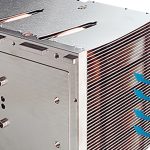
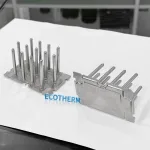
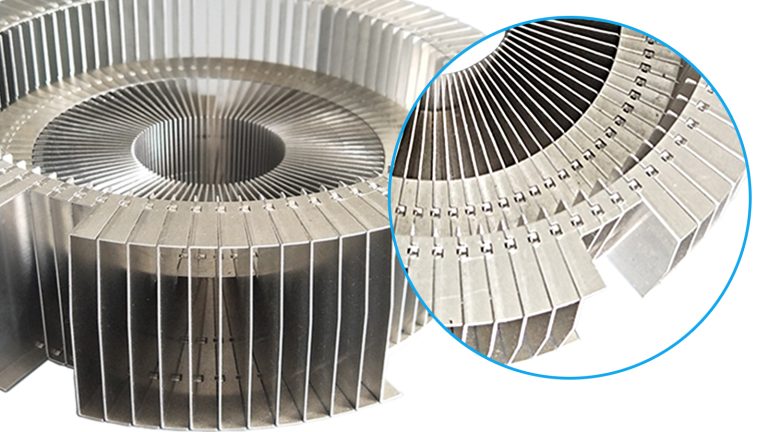
Zipper fin heat sinks feature an interlocking fin design that enhances thermal performance in high-density applications. These fins are precision-stamped and assembled into a compact structure, increasing the surface area for heat transfer. By optimizing airflow pathways, this design improves heat dissipation, effectively transferring thermal energy away from critical components. Manufacturers like Ecothermgroup often customize these designs for specific applications, such as high-power electronics or densely packed server environments with demanding cooling needs.
One significant advantage of the interlocking fin structure is its modularity. The fins can be adjusted for specific densities and spacing, allowing engineers to achieve the ideal balance between heat dissipation and airflow resistance. For instance, higher fin densities increase surface area but require careful spacing to ensure smooth airflow and avoid stagnation, a common challenge in thermal management. Combined with active cooling systems like fans or blowers, zipper fin heat sinks provide a dependable solution for managing high-power heat loads.
Material Choices: Balancing Thermal Conductivity and Durability
Material selection is crucial for the performance and longevity of zipper fin heat sinks. Aluminum and copper are the most popular choices due to their excellent thermal properties and cost-effectiveness. Aluminum is lightweight and affordable, making it ideal for applications where weight is a factor. Copper, however, offers superior thermal conductivity, making it suitable for systems handling intense heat loads.
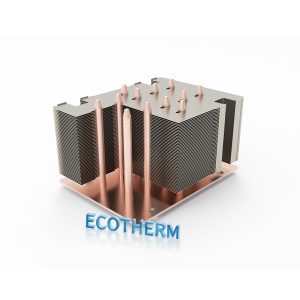
Manufacturers like Ecothermgroup often use hybrid designs that combine these materials. For example, a copper base can be paired with aluminum fins to take advantage of copper’s conductivity while keeping weight and costs manageable. This approach ensures durability and optimal performance, particularly in high-density thermal environments such as data centers or industrial machinery. Rapid prototyping allows testing of different material combinations to ensure the final product meets specific thermal management needs.
| Material | Key Advantage |
|---|---|
| Aluminum | Lightweight and cost-effective |
| Copper | Superior thermal conductivity |
| Hybrid (Copper + Aluminum) | Balanced performance and affordability |
Custom Configurations for Specific Applications
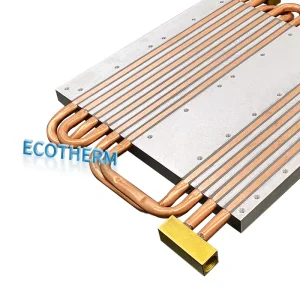
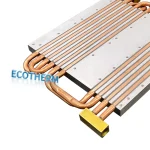
Each application comes with unique thermal management requirements, and zipper fin heat sinks can be customized to meet these needs. Tailored configurations allow manufacturers to include features like heat pipes or integral ducts that boost cooling efficiency. These enhancements are especially useful for active cooling systems, where airflow can be directed over the fins to maximize heat dissipation.
Applications such as telecommunications equipment, automotive electronics, and high-density server racks often benefit from compact designs that handle intense thermal loads. Ecothermgroup specializes in creating custom zipper fin heat sinks tailored to specific operational requirements. Rapid prototyping ensures these designs can be tested and refined quickly, reducing production times and enhancing reliability.
- Integration of heat pipes for improved thermal performance
- Custom fin densities for specific cooling demands
- Integral ducts for precise airflow direction
Using advanced manufacturing techniques, custom zipper fin heat sinks offer exceptional cooling solutions for industries requiring high-performance thermal management systems. Their adaptable design and optimized materials make them indispensable for managing high-density heat loads effectively.
Advantages of Zipper Fin Heat Sinks
Enhanced Cooling for High-Density Applications
Zipper fin heat sinks are designed to manage high-density thermal loads, making them ideal for compact, high-power electronic systems like servers, telecom equipment, and 5G base stations. Their high fin density increases the surface area for heat dissipation, ensuring effective thermal management even in tight spaces. The interlocking ‘zipper’ design allows for precise customization of fin geometry, spacing, and materials, enabling manufacturers such as Ecothermgroup to create solutions tailored to specific thermal needs.
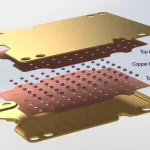
For advanced thermal management, zipper fin heat sinks can include features like heat pipes or vapor chambers. These additions enhance heat transfer and perform exceptionally well in systems with active airflow. Compared to bonded or skived fin designs, zipper fins offer greater flexibility and performance in high-density applications.
Lightweight and Compact Designs
A major benefit of zipper fin heat sinks is their ability to combine lightweight construction with excellent thermal conductivity. By using a hybrid material approach—often aluminum for lower weight and copper for superior thermal performance—these heat sinks strike an ideal balance. This makes them an excellent choice for industries where weight and efficiency are critical, such as aerospace and portable electronics.
The compact design of zipper fin heat sinks allows them to fit into smaller devices without compromising cooling efficiency. This is particularly advantageous in modern applications where reducing size and weight is essential. Ecothermgroup utilizes this flexibility to deliver custom solutions that meet demanding space and performance requirements.
| Feature | Advantage |
|---|---|
| High Fin Density | Increased surface area for better heat dissipation |
| Hybrid Materials | Lightweight and efficient thermal performance |
| Customizable Design | Precise tailoring for specific applications |
Cost Efficiency in High-Volume Production
One of the key advantages of zipper fin heat sinks is their cost-effectiveness in mass production. The manufacturing process, which involves stamping and interlocking thin metal sheets, is highly scalable and minimizes material waste. This makes them a cost-efficient choice for high-volume applications compared to bonded or skived fin alternatives.
Additionally, their modular design simplifies assembly, reducing production timelines and overall manufacturing costs. Rapid prototyping services, offered by manufacturers like Ecothermgroup, enable quick iterations and testing, ensuring the final product meets performance standards without delays.
- Lower material costs through efficient manufacturing
- Faster production cycles due to modular design
- Reduced assembly complexity for large-scale projects
By combining performance, versatility, and cost efficiency, zipper fin heat sinks are a reliable solution for managing high-power heat dissipation across various industries.
Applications of Zipper Fin Heat Sinks
Electronics and Semiconductor Cooling
Zipper fin heat sinks effectively manage the thermal loads of electronic and semiconductor devices, where compact designs and high power densities are common. Their high fin density maximizes surface area, making them ideal for cooling processors, GPUs, and power modules in high-performance computing systems. The modular design allows custom zipper fin heat sinks to be tailored for specific airflow requirements in tight spaces, which is essential for miniaturized electronics.
Ecothermgroup, a leader in thermal management, provides rapid prototyping services to create solutions for emerging technologies such as 5G infrastructure and Internet of Things (IoT) devices. By integrating technologies like vapor chambers or heat pipes, zipper fin heat sinks can dissipate heat more efficiently, ensuring sensitive components perform reliably under high-power conditions.
| Device Type | Thermal Challenge |
|---|---|
| Processors | High power density |
| GPUs | Intensive heat generation |
| IoT Devices | Compact form factor |
Automotive and Aerospace Systems
In automotive and aerospace applications, zipper fin heat sinks are widely used to cool high-power electronic systems such as electric vehicle (EV) batteries, inverters, and avionics. These applications require lightweight materials and reliable thermal management to ensure efficiency and safety under extreme conditions. Combining aluminum fins with copper bases is a common approach, balancing thermal conductivity and weight reduction.
Ecothermgroup specializes in custom zipper fin heat sink manufacturing, delivering precise engineering to meet specific industry requirements. For example, the brand designs solutions that withstand high vibration environments typical in aerospace applications. Additionally, the progressive punching and interlocking manufacturing process supports scalability for mass production, making it a cost-effective option for automotive manufacturers seeking advanced thermal management systems for large fleets.
- EV Batteries: Efficient heat dissipation extends lifespan
- Inverters: Handle fluctuating power loads
- Avionics: Require lightweight and durable cooling solutions
Telecommunications and Data Centers
Telecommunications equipment and data centers face challenges with high-density thermal loads due to continuous operation and compact configurations. Zipper fin heat sinks play a vital role in cooling power amplifiers, servers, and network switches, where forced convection is often necessary. Their customizable design ensures optimal airflow management, even in space-constrained setups.
Data centers, which house thousands of servers, benefit from the scalability of zipper fin heat sinks for rapid deployment across multiple units. Ecothermgroup enhances these applications by offering tailored solutions that integrate technologies like liquid cooling systems for maximum efficiency. These innovations are critical for maintaining uptime and preventing overheating in mission-critical operations.
| Application | Cooling Requirement |
|---|---|
| Power Amplifiers | Continuous operation at high power |
| Servers | Compact configurations with high heat output |
| Network Switches | Forced convection in limited spaces |
Design Considerations for Custom Zipper Fin Heat Sinks
Thermal Load Requirements
Custom zipper fin heat sinks are designed to manage high-density thermal loads, making them ideal for demanding applications like high-performance computing, LED lighting, and telecommunications equipment. A key aspect of thermal management design involves accurately assessing the system’s heat dissipation needs. Factors to consider include the components’ power output, operating conditions, and required thermal resistance. The high fin density in zipper fin heat sinks increases surface area, which is crucial for efficient heat dissipation in environments with limited airflow.
Common materials include aluminum and copper, chosen for their excellent thermal conductivity. Aluminum is lightweight and budget-friendly, while copper provides better thermal performance for extreme heat flux scenarios. Ecothermgroup highlights the importance of choosing materials that balance thermal performance with system requirements. Incorporating heat pipes or vapor chambers can enhance heat distribution, especially in systems with uneven thermal loads.
Size Constraints and Installation Factors
The physical size and installation requirements are central to zipper fin heat sink design. Compact electronics often demand customized solutions that fit tight spaces without compromising performance. Designers need to account for dimensions such as fin height, thickness, and spacing to ensure the heat sink matches the device’s form factor.
Mounting methods, including clips, screws, or adhesive solutions, should be selected based on installation simplicity and durability. High-vibration environments might require reinforced mounting systems to avoid displacement. Pre-tooled profiles, as noted by Boyd Corporation, offer a cost-effective way to reduce design time and engineering expenses while maintaining customization flexibility. The table below outlines key size and installation considerations for zipper fin heat sinks:
| Design Factor | Recommendation |
|---|---|
| Fin Height | Optimize for airflow clearance and thermal performance |
| Fin Spacing | Balance airflow resistance with heat dissipation |
| Mounting Mechanism | Choose based on vibration and durability requirements |
Prototyping and Testing for Optimized Performance
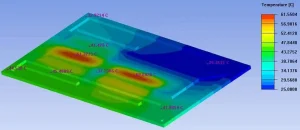
Prototyping plays a vital role in creating custom zipper fin heat sinks. Rapid prototyping enables manufacturers like Ecothermgroup to refine designs and validate performance through thermal testing. This ensures the final product meets both thermal and mechanical specifications. Advanced simulation tools are often employed during the design phase to predict heat distribution and identify bottlenecks, reducing the need for extensive physical iterations.
Testing involves evaluating thermal resistance, pressure drop, and airflow performance under realistic conditions. For example, forced convection setups benefit from higher fin density, but testing ensures airflow isn’t overly restricted. Combining simulation results with practical tests enables manufacturers to deliver reliable solutions tailored to specific needs.
- Use CFD (Computational Fluid Dynamics) tools for initial thermal modeling.
- Perform real-world thermal resistance tests to confirm design accuracy.
- Refine heat sink geometry based on test outcomes.
Careful attention to thermal loads, size constraints, and thorough prototyping ensures custom zipper fin heat sinks provide effective thermal management for high-power systems. Ecothermgroup’s focus on precision engineering and testing highlights the value of collaboration between manufacturers and clients to achieve the best results.
Conclusion
Summary of Key Benefits
Custom zipper fin heat sinks have transformed thermal management in high-density applications, delivering exceptional cooling efficiency through advanced design and material innovation. Featuring densely packed fins with high aspect ratios, these heat sinks ensure optimal heat dissipation even in constrained spaces. This makes them well-suited for industries like electronics, telecommunications, and automotive, where managing space and thermal loads are critical challenges.
Brands like Ecothermgroup specialize in crafting customized solutions that use materials such as copper bases for excellent thermal conductivity and aluminum fins for lightweight strength. These modular heat sinks not only offer superior thermal performance but also streamline assembly, helping to reduce production costs in large-scale applications. The integration of features like heat pipes or airflow ducts further enhances their versatility to address a wide range of cooling requirements.
| Feature | Benefit |
|---|---|
| High Aspect Ratio Fins | Enhanced heat dissipation in compact spaces |
| Material Combinations | Balanced conductivity and reduced weight |
| Modular Design | Scalable and cost-effective for mass production |
| Custom Integration | Improved airflow and cooling efficiency |
Additionally, the durability and reliability of zipper fin heat sinks make them ideal for demanding environments where overheating could compromise electronics. Their robust design reduces the risk of thermal fatigue, helping to extend the lifespan of critical components.
Future Trends in Heat Sink Technology
As technology advances, the need for efficient thermal management is expected to grow. A key trend on the horizon is the adoption of advanced manufacturing techniques, such as 3D printing, to refine the design and production of custom zipper fin heat sinks. These methods could enable intricate fin geometries, further improving heat transfer without increasing size.
Another emerging development is the use of smart materials and sensor technology in heat sinks. These innovations could allow for real-time monitoring of thermal performance, leading to predictive maintenance and adaptive cooling approaches. For industries managing high-power heat loads, such technologies could greatly enhance efficiency and reliability.
- Expanded use of 3D printing for innovative designs
- Integration of smart sensors for performance tracking
- Development of sustainable materials to promote eco-friendliness
Companies like Ecothermgroup are leading these advancements, utilizing rapid prototyping and state-of-the-art technology to meet the evolving demands of thermal management. As industries continue to push for greater performance and efficiency, custom zipper fin heat sinks will remain a key component in achieving these objectives.
People Also Ask
What are zipper fin heat sinks, and how are they different from traditional heat sinks?
Zipper fin heat sinks are advanced cooling solutions that use interlocking metal fins to expand surface area and enhance heat dissipation. Unlike traditional heat sinks, they are suited for high-density thermal loads and offer more flexibility in size, shape, and performance.
How do zipper fin heat sinks work to manage high-density thermal loads?
Zipper fin heat sinks operate by increasing surface area for heat transfer through their interlocking fin design. This structure promotes efficient airflow and effective heat dissipation, making them ideal for cooling high-performance electronic systems.
What are the main advantages of using zipper fin heat sinks?
Zipper fin heat sinks deliver excellent thermal performance, flexibility in design, and scalability for large-scale production. Their ability to handle high-density thermal loads makes them a cost-efficient choice for demanding applications.
In what industries or applications are zipper fin heat sinks commonly used?
Zipper fin heat sinks are frequently used in industries like telecommunications, data centers, automotive electronics, and high-performance computing. They are especially effective in applications requiring efficient cooling in compact spaces.
Why are custom zipper fin heat sinks important for thermal management?
Custom zipper fin heat sinks are tailored to meet specific system needs, ensuring optimal thermal performance for unique designs and high-density cooling requirements. Customization is essential to maximize efficiency and reliability in specialized applications.
What materials are typically used to manufacture zipper fin heat sinks?
Zipper fin heat sinks are commonly made from aluminum or copper due to their excellent thermal conductivity and lightweight properties. Material selection depends on the specific thermal and structural requirements of the application.
What factors should be considered when designing custom zipper fin heat sinks?
Important design factors include thermal load capacity, airflow requirements, material choice, and mechanical constraints. A well-designed heat sink ensures optimal performance while integrating smoothly with the overall system.
How do zipper fin heat sinks compare to other advanced cooling solutions?
Zipper fin heat sinks combine high thermal efficiency, design versatility, and cost-effectiveness. While solutions like vapor chambers or liquid cooling can achieve comparable results, zipper fins are often preferred due to their simplicity and manufacturing scalability.