Advanced Zipper Fin Assemblies: Integrating Heat Pipes & Vapor Chambers
Effective thermal management is a key challenge in modern electronics, as increasing power densities call for innovative cooling solutions. This article highlights how advanced zipper fin heat sink designs, combined with heat pipes and vapor chambers, deliver exceptional performance by enhancing heat dissipation and ensuring reliability in high-performance systems.
Takeaway
- Zipper fin heat sinks are expertly designed components that provide efficient thermal management for compact electronic systems.
- Heat pipes and vapor chambers are passive thermal solutions that use phase-change technology to transfer heat efficiently between components.
- Combining heat pipes and vapor chambers with zipper fin assemblies boosts heat dissipation, making them ideal for demanding applications like data centers and gaming systems.
- Advanced zipper fin assemblies enhance thermal conductivity and uniformity, minimizing hotspots and improving the reliability of electronic devices.
- The modular design of zipper fin assemblies allows for tailored cooling solutions, offering flexibility across various industries.
- Future advancements in thermal management focus on miniaturization, improved energy efficiency, and integrating AI-driven optimization for cooling systems.
- Adopting advanced zipper fin assemblies ensures scalability and durability for next-generation electronics, meeting the growing need for higher computational performance.
Introduction to Zipper Fin Heat Sinks
What Are Zipper Fin Heat Sinks?
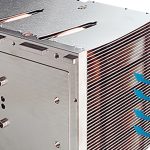
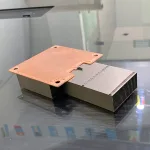
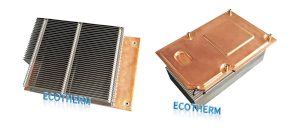
Zipper fin heat sinks are sophisticated cooling solutions designed to enhance thermal management in electronic systems. These assemblies feature interlocked, high-density fins engineered to optimize heat dissipation. Typically made from lightweight materials such as aluminum or copper, zipper fin designs are ideal for applications that demand efficient cooling with minimal added weight. The interlocking structure allows for higher aspect ratios, improving airflow and increasing the surface area for heat transfer.
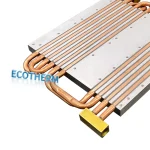
Zipper fin heat sinks are often paired with heat pipes or vapor chambers to boost their performance. Heat pipes use phase change technology to transfer heat effectively between the source and the fin array, while vapor chambers serve as a base to distribute heat evenly across densely packed fins. This combination lowers thermal resistance and ensures reliable cooling, making zipper fin heat sinks a popular choice for compact, high-power devices.
Ecothermgroup specializes in producing custom zipper fin heat sinks tailored to specific system needs. Their expertise in manufacturing techniques ensures durable and efficient solutions for OEM applications.
Suggested Content: “Struggling with high-density thermal loads?
Upload your CAD drawing today for a FREE 24-hour DFM review by Ecotherm engineers!
Click Here to Get Started>>> support@ecothermgroup.com
Key Benefits of Zipper Fin Designs
Zipper fin heat sinks offer several advantages over traditional cooling methods. Their lightweight construction reduces overall assembly weight, while the high-density fin arrangement improves heat dissipation. Additionally, they work effectively with forced convection systems, making them ideal for active cooling setups where airflow can be controlled.
When vapor chambers are integrated into zipper fin assemblies, heat spreads evenly across the base, reducing temperature variations and supporting high-performance demands. Similarly, heat pipes enable efficient heat transport, particularly in systems with concentrated hotspots. These features are essential for ensuring reliability and preventing thermal issues in modern electronics.
Below is a comparison of key features and benefits:
| Feature | Benefit |
|---|---|
| High-density fin structure | Improves heat dissipation |
| Lightweight materials | Reduces assembly weight |
| Heat pipe integration | Enhances heat transport |
| Vapor chamber base | Distributes heat evenly |
Applications requiring efficient cooling, such as servers, GPUs, and compact industrial devices, benefit greatly from zipper fin heat sink designs. Their ability to combine passive and active cooling elements makes them versatile and suitable for various industries.
- Enhanced thermal performance for high-power devices
- Lower weight compared to traditional copper designs
- Improved airflow compatibility for forced convection setups
Ecothermgroup’s zipper fin heat sinks are valued for their reliability and adaptability, making them a trusted choice for demanding thermal management needs.
Understanding Heat Pipes and Vapor Chambers
How Heat Pipes Work
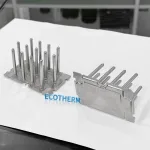
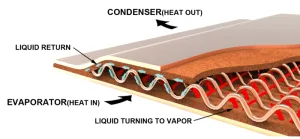
Heat pipes are a key component of modern thermal management systems, especially in zipper fin heat sink designs. These devices use phase change to transfer heat efficiently from one point to another. A heat pipe is a sealed tube containing a working fluid, such as water, that evaporates when exposed to heat at the base (evaporator). The vaporized fluid moves to the cooler end (condenser), releases the heat, and condenses back into liquid form. This cycle repeats continuously, enabling fast heat transfer.
In zipper fin assemblies, heat pipes are integrated into the fin stack to distribute heat evenly. This significantly improves heat dissipation, making them essential for active cooling in high-performance applications like telecom systems and industrial equipment. Companies such as Ecothermgroup specialize in optimizing heat pipe assemblies for various needs, ensuring low thermal resistance and high efficiency.
Introduction to Vapor Chambers
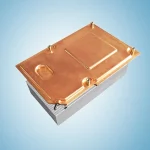
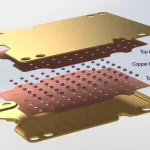
Vapor chambers are advanced thermal management solutions that work similarly to heat pipes but on a larger scale. These flat, hollow structures are designed to distribute heat uniformly across their surface, minimizing hotspots. Inside a vapor chamber, a wick structure helps move the working fluid, maintaining consistent thermal performance under different conditions.
In zipper fin heat sink setups, a vapor chamber base can replace traditional heat pipes to achieve better heat distribution. This is especially valuable in compact, high-density electronics like CPUs and GPUs, where space is limited but effective cooling is critical. By providing uniform heat spreading, vapor chambers ensure reliability and performance even during heavy use.
Comparing Heat Pipes and Vapor Chambers
While both heat pipes and vapor chambers improve thermal performance, their strengths vary depending on design needs. Heat pipes are best for linear heat transfer, making them ideal for applications with defined heat source and sink locations. Vapor chambers, on the other hand, excel at spreading heat across larger areas, making them effective for eliminating hotspots in high-power electronics.
| Feature | Heat Pipes | Vapor Chambers |
|---|---|---|
| Heat Transfer Mechanism | Linear transfer | Uniform spreading |
| Best Use Case | Localized heat sources | High-density electronics |
| Thermal Resistance | Moderate | Low |
| Design Complexity | Simple | Complex |
For optimal performance, zipper fin heat sinks often combine both technologies. Heat pipes channel heat from the source to the fins, while vapor chambers ensure even heat distribution across the base. This hybrid design is a proven method for lowering thermal resistance and improving forced convection cooling, a priority for manufacturers like Ecothermgroup.
- Heat pipes are lightweight and suitable for compact designs.
- Vapor chambers are ideal for high-power applications with tight thermal budgets.
- Proper integration methods, such as soldering or welding, are crucial for performance.
The choice between heat pipes and vapor chambers ultimately depends on the thermal demands of the application. By understanding their specific advantages, engineers can select the best solution for advanced zipper fin assemblies.
Integration of Heat Pipes and Vapor Chambers in Zipper Fin Assemblies
Design Challenges and Solutions
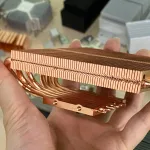
Integrating heat pipes and vapor chambers into zipper fin heat sink assemblies comes with unique design challenges. A key issue is ensuring effective thermal conductivity between components. For instance, bonding aluminum fins to a copper vapor chamber base can create mechanical stress over time due to differing thermal expansion rates. Techniques like brazing or epoxy bonding are commonly used to provide strong thermal and structural connections while minimizing performance loss.
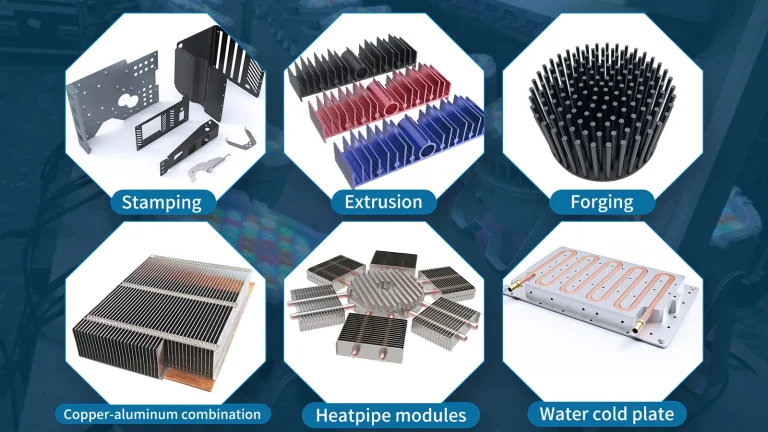
The compact design of zipper fin assemblies also means space is limited. Embedding heat pipes within the fin stack requires precise placement to optimize heat transfer without adding bulk. Advanced manufacturing techniques, such as CNC machining and precision stamping, enable intricate fin geometries that embed heat pipes efficiently while maximizing surface area for forced convection cooling.
Brands like Ecothermgroup highlight the importance of customization in addressing these challenges. Tailored solutions, such as varying fin thickness or using hybrid materials, ensure each assembly is optimized for specific thermal and mechanical requirements.
Optimizing Heat Transfer Efficiency
Combining heat pipes and vapor chambers in zipper fin assemblies enhances heat transfer efficiency by utilizing their complementary properties. Heat pipes are excellent for transferring heat over long distances, while vapor chambers provide uniform heat spreading at the base. Together, they ensure even heat distribution across the fin stack, reducing thermal resistance and improving performance.
In forced convection setups, the dense fin arrangement of zipper fin heat sinks increases airflow turbulence, which boosts thermal dissipation. However, achieving peak efficiency requires careful attention to design parameters such as fin pitch, fin height, and assembly dimensions. For example, decreasing fin spacing improves heat dissipation but also increases airflow resistance, requiring a balance between performance and pressure drop.
The table below outlines the roles of heat pipes and vapor chambers in zipper fin assemblies:
| Component | Primary Function |
|---|---|
| Heat Pipes | Directional heat transfer from the heat source to the fins |
| Vapor Chambers | Isotropic heat spreading across the base for uniform fin utilization |
Applications in High-Density Thermal Systems
Zipper fin heat sink assemblies with integrated heat pipes and vapor chambers are ideal for high-density thermal systems. These systems, found in servers, telecommunications equipment, and high-performance GPUs, generate significant heat in compact spaces. The ability to manage high thermal loads without increasing size makes these assemblies a preferred choice for manufacturers balancing performance and space constraints.
Active cooling solutions, like fans, are often paired with zipper fin heat sinks to enhance thermal performance. This combination of forced convection cooling and advanced thermal components lowers operating temperatures, improving the longevity and reliability of critical electronic parts.
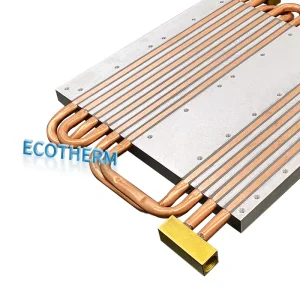
For example, in server environments where space is limited, Ecothermgroup offers customized zipper fin solutions that combine lightweight aluminum fins with embedded copper heat pipes. This hybrid design provides an optimal balance of weight, thermal performance, and manufacturability, meeting the specific requirements of data centers and other high-density applications.
- Telecommunications: Efficient cooling for compact base station components
- Data Centers: High-performance solutions for rack-mounted servers
- Consumer Electronics: Cooling systems for gaming laptops and GPUs
By tackling design challenges and leveraging the strengths of heat pipes and vapor chambers, zipper fin heat sink assemblies continue to lead the way in advanced thermal management for demanding applications.
Advantages of Advanced Zipper Fin Assemblies
Enhanced Thermal Performance
Advanced zipper fin assemblies are recognized for their excellent thermal performance, especially when paired with heat pipes or vapor chambers. These assemblies efficiently transfer heat by evenly distributing thermal energy across the fins, minimizing hot spots and improving overall cooling efficiency. The use of high-density fins maximizes the surface area for heat dissipation, making them ideal for high-power applications like telecommunications and data centers.
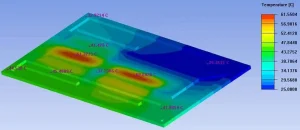
With forced convection cooling, zipper fin heat sinks enhance airflow and maintain low thermal resistance. For instance, Ecothermgroup has shown that incorporating vapor chamber bases into these assemblies can lower temperature gradients by up to 30%, ensuring reliable performance under demanding thermal conditions.
Compact and Lightweight Design
The compact and lightweight design of zipper fin heat sinks makes them highly suitable for applications with space and weight constraints. Using materials such as aluminum for fins and copper or vapor chambers for the base, these assemblies strike a balance between high thermal conductivity and reduced weight. This is particularly advantageous for portable devices or weight-sensitive equipment like aerospace and mobile electronics.
For example, an advanced zipper fin assembly typically weighs 20–30% less than traditional heat sinks with comparable performance. Additionally, the interlocking fin structure eliminates the need for adhesives or soldering, simplifying the manufacturing process while ensuring durability and precision.
Scalability for OEM Applications
Advanced zipper fin assemblies are highly customizable to meet OEM requirements, thanks to their modular design and efficient production methods. The interlocking fin structure allows adjustments to size, fin density, and material composition to address specific thermal management needs. Ecothermgroup provides tailored solutions for industries ranging from high-performance computing to automotive electronics.
Mass production is another benefit, as the precise assembly process minimizes material waste and reduces costs. When combined with heat pipes or vapor chambers, these assemblies can handle higher heat fluxes, offering OEMs an ideal balance between performance, cost, and efficiency in thermal management.
| Feature | Benefit |
|---|---|
| High-Density Fins | Increased surface area for better heat dissipation |
| Integration with Heat Pipes | Enhanced thermal conductivity and uniform heat distribution |
| Lightweight Materials | Reduced load for weight-sensitive applications |
| Modular Design | Customizable for various OEM requirements |
- Improves cooling efficiency with forced convection
- Reduces thermal resistance by up to 30%
- Scalable for high-power electronics and compact systems
Future Trends in Thermal Management Solutions
Innovations in Zipper Fin Technology
Zipper fin heat sinks are becoming a key component in advanced thermal management systems. The integration of heat pipes and vapor chambers into these designs is enhancing both cooling performance and efficiency. Heat pipes enable rapid heat transfer, while vapor chambers improve thermal distribution. Together, they allow zipper fin designs to optimize heat dissipation while maintaining a compact footprint. This makes them well-suited for high-power density applications, such as data centers and high-performance computing devices. Ecothermgroup is leading these innovations, providing custom solutions designed to meet challenging thermal demands.
One notable advancement is the use of high-density fin arrays, which increase surface area without adding significant weight. When combined with forced convection cooling methods, these assemblies achieve lower thermal resistance, ensuring reliable performance under demanding conditions. Computational fluid dynamics (CFD) modeling is another key trend, enabling precise optimization of airflow and heat transfer. This approach ensures that zipper fin assemblies meet the growing complexity of modern electronics.
Emerging Materials for Heat Sinks
Material selection plays a vital role in improving zipper fin heat sink performance. Aluminum fins remain a popular choice due to their lightweight properties and affordability, while copper bases are favored for their excellent thermal conductivity. A growing trend involves combining these materials, such as pairing aluminum fins with copper vapor chamber bases, to balance performance, weight, and cost. This hybrid approach ensures effective heat spreading while maintaining structural reliability.
Additionally, advanced manufacturing methods are enabling the use of novel materials like graphite composites and phase-change alloys. These materials are particularly effective in passive two-phase cooling systems, which are gaining popularity as sustainable, energy-efficient solutions. By adopting these material innovations, companies like Ecothermgroup are driving the development of more robust and versatile thermal management technologies.
| Material | Key Advantage |
|---|---|
| Aluminum | Lightweight and cost-effective |
| Copper | Superior thermal conductivity |
| Graphite composites | High thermal performance with reduced weight |
| Phase-change alloys | Enhanced passive cooling capability |
- Increased use of CFD modeling for design optimization
- Growing adoption of hybrid material combinations
- Focus on energy efficiency and sustainability in cooling designs
People Also Ask
What is a zipper fin heat sink and how does it work?
A zipper fin heat sink is a high-density fin assembly designed to improve heat dissipation in compact spaces. It uses interlocked fins to create a large surface area for thermal transfer, making it ideal for applications that require efficient cooling.
How do heat pipes and vapor chambers enhance the performance of zipper fin heat sinks?
Heat pipes and vapor chambers boost thermal conductivity by transferring heat from hotter areas to cooler regions. When combined with zipper fin heat sinks, they ensure faster and more uniform heat dissipation, improving overall cooling performance.
What are the advantages of integrating heat pipes into zipper fin assemblies?
Adding heat pipes to zipper fin assemblies enables targeted heat transfer, reduces thermal resistance, and increases cooling efficiency. This approach is especially beneficial for high-power applications where maintaining optimal temperatures is essential.
What industries commonly use advanced zipper fin heat sinks with heat pipes and vapor chambers?
Industries such as electronics, automotive, telecommunications, and data centers commonly use advanced zipper fin heat sinks. These systems are ideal for cooling high-performance processors, GPUs, and other components that demand efficient thermal management.
How does the integration of vapor chambers differ from heat pipes in zipper fin assemblies?
Vapor chambers provide two-dimensional heat spreading, making them suitable for distributing heat evenly across large surfaces. Heat pipes focus on one-dimensional heat transfer along their length. Both are used in zipper fin assemblies to optimize cooling performance.
What are the future trends in thermal management solutions for zipper fin heat sinks?
Future advancements include the use of materials like graphene for better thermal conductivity, AI-driven cooling technologies, and compact designs tailored for smaller, high-performance devices. Zipper fin heat sinks will continue to evolve to meet these demands.
Why are zipper fin heat sinks preferred over other types of heat sinks?
Zipper fin heat sinks are favored for their high-density fin design, which maximizes surface area for heat dissipation. They are lightweight, customizable, and effective in applications with limited space or high thermal loads.
Can zipper fin heat sinks be customized for specific applications?
Yes, zipper fin heat sinks can be tailored in terms of fin height, thickness, and spacing to meet specific thermal and spatial requirements. This adaptability makes them suitable for a wide range of applications across various industries.