Aluminum Extrusion vs. Die Casting for LED Heat Sinks
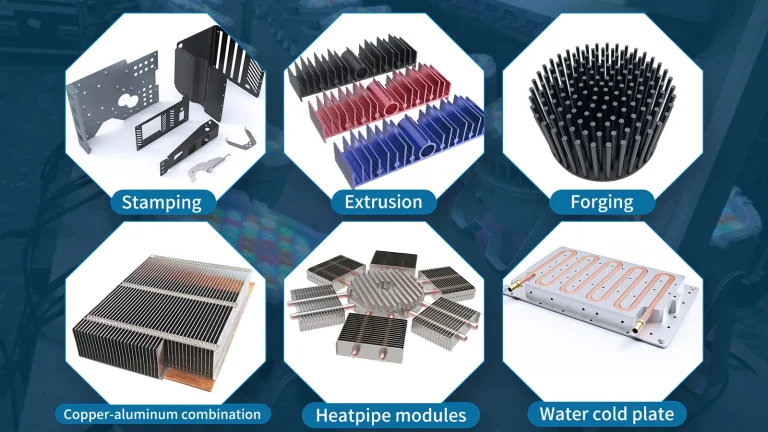
Choosing the right cooling solution is essential for LED performance and long-term reliability, but deciding between aluminum extrusion and die casting can feel overwhelming. This article explains how each method impacts thermal management, helping you determine which aluminum heat sink LED design, including solutions from Ecothermgroup, best fits your specific requirements.
Takeaway
- Aluminum extrusion enables custom, elongated LED heat sink profiles, providing design flexibility and easier scalability for linear LED setups.
- Die casting offers complex geometries and integrated features within a single mold, making it ideal for compact LED assemblies with detailed cooling channels.
- Extruded heat sinks generally feature superior thermal conductivity along the fins due to their continuous grain structure, improving heat dissipation efficiency.
- Die-cast heat sinks allow for more intricate surface area enhancements, but may have slightly lower thermal performance compared to extruded profiles.
- Choosing between extrusion and die casting depends on project priorities: extrusion is better for high thermal efficiency and simple shapes, while die casting is suited for complex designs and space-limited applications.
- Cost considerations differ: extrusion is often more economical for small to medium production runs, while die casting is more cost-effective for large-scale manufacturing despite higher initial tooling costs.
- Factors like material thickness, fin density, and surface finish are crucial to LED heat sink performance, regardless of the manufacturing method used.
Introduction to LED Heat Sinks
Efficient heat management is essential in LED lighting systems, as excessive heat can significantly affect LED performance. Overheating may lower efficiency, shorten lifespan, and even cause LED system failure. To prevent this, LED heat sinks are used to dissipate the heat generated by the light source. These heat sinks are manufactured using different materials and methods, with aluminum extrusion and die casting being two of the most common approaches. Understanding the options for LED heat sink designs and how they impact thermal management is key to selecting the right solution, such as those offered by Ecothermgroup.
Importance of Heat Management in LED Systems
LEDs are highly efficient light sources, but they still generate heat that needs to be managed to maintain peak performance. Most of the heat comes from the junction between the LED chip and its housing. Heat buildup at this junction increases the LED’s temperature, which can reduce brightness and shorten lifespan. Managing this heat is crucial for maintaining optimal LED function.
The efficiency of a heat sink directly affects the LED’s thermal resistance and junction temperature. Low thermal resistance ensures heat is transferred efficiently from the LED chip to the heat sink, which then disperses it into the surrounding air. Choosing the right heat sink material and manufacturing process plays a major role in the LED system’s overall thermal performance.
Aluminum heat sinks are commonly used in LED applications because of their excellent thermal conductivity, light weight, and cost-effective production. However, not all aluminum heat sinks perform equally, and the choice between aluminum extrusion and die casting depends on design needs such as thermal efficiency, shape complexity, and production volume.
Common Materials for LED Heat Sinks
When designing LED heat sinks, selecting a material with high thermal conductivity is critical for efficient heat transfer. Aluminum stands out due to its excellent thermal properties, corrosion resistance, and ease of fabrication. Specific alloys, such as 6063-T5 aluminum, are preferred for their strength, durability, and thermal performance.
6063-T5 aluminum alloy is well-suited for heat sink applications because it balances thermal conductivity, mechanical strength, and formability. It is often used in aluminum extrusion, allowing precise shaping into complex profiles. Extruded profiles, especially finned designs, increase surface area for heat dissipation, making them ideal for passive natural convection cooling in LED systems.
While aluminum is the main material, copper and copper alloys may be used when higher thermal conductivity is required. Copper offers superior heat transfer but is heavier and more expensive, making it less common unless the application demands higher cooling performance.
| Material | Thermal Conductivity | Weight | Cost | Durability |
|---|---|---|---|---|
| 6063-T5 Aluminum Alloy | 200 W/mK | Light | Low | High |
| Copper | 398 W/mK | Heavy | High | Very High |
| Aluminum Alloy (general) | 150 W/mK | Light | Low | Medium |
Understanding these material properties is essential for designing effective heat sinks. Although copper has higher thermal conductivity, its weight and cost often make it impractical. As a result, 6063-T5 aluminum alloy is the preferred choice in many cases, offering a balance of cost, weight, and thermal efficiency.
Surface treatment is another important factor. Anodizing is commonly applied to aluminum to enhance corrosion resistance and improve thermal performance. Anodized surfaces increase the heat sink’s effective surface area, improving heat dissipation while protecting it from moisture and chemicals that could reduce long-term performance.
Comparing Aluminum Extrusion vs. Die Casting for LED Heat Sinks
Aluminum extrusion and die casting are two widely used methods for manufacturing LED heat sinks, each suited to different design and production needs.
Aluminum extrusion is often preferred for standard LED heat sink designs due to its simplicity, cost-effectiveness, and ability to produce uniform profiles at high volumes. In extrusion, aluminum is heated and forced through a die to form continuous profiles, which are then cut to the required length. This method allows straight fin designs, which maximize airflow and thermal dissipation. Extrusion also offers lower tooling costs and faster turnaround, making it ideal for high-volume production of simple shapes.
Die casting is used when complex geometries are needed, such as integrated mounting brackets or intricate cooling fins. Molten aluminum is injected into steel molds under high pressure, enabling more complex shapes and features. Die casting produces denser material, which can slightly reduce thermal performance, but it is valuable for custom, low-volume production where design complexity is essential.
| Manufacturing Method | Key Advantages | Limitations |
|---|---|---|
| Aluminum Extrusion | Cost-effective, high thermal conductivity, high-volume production | Limited to simpler shapes |
| Die Casting | Complex shapes, integrated features, design flexibility | Higher cost, lower thermal conductivity |
Choosing between aluminum extrusion and die casting depends on heat sink complexity, required thermal performance, and production scale. For standard applications emphasizing thermal efficiency and cost, aluminum extrusion is often the best choice. For custom designs with integrated features, die casting may be more suitable despite its higher cost and slightly lower thermal efficiency. Ecothermgroup provides a range of solutions tailored to these needs, helping designers select the optimal aluminum heat sink for their LED systems.
Aluminum Extrusion Process for LED Heat Sinks
Extrusion Process Overview
The aluminum extrusion process is commonly used to manufacture aluminum heat sink LED solutions due to its ability to create long, continuous profiles with uniform cross-sections. 6063-T5 Aluminum Alloy is a popular choice for LED heat sinks because it offers excellent thermal conductivity, corrosion resistance, and ease of machining. During the extrusion process, a heated aluminum billet is pushed through a precision die to form the desired heat sink profile. This method allows manufacturers, including Ecothermgroup, to create intricate fin structures that maximize surface area and improve passive natural convection cooling.
One of the main benefits of extrusion over die casting is the ability to produce thinner, more uniform fins. While die casting can introduce porosity and limit fin density due to mold constraints, extruded aluminum heat sinks maintain consistent thermal performance across their entire length. Extrusion also provides better control over fin geometry, helping designers optimize junction temperature and thermal resistance in COB LED cooling and high bay lighting enclosures.
After extrusion, heat sinks typically undergo an anodized surface treatment, enhancing both appearance and emissivity, which aids in heat dissipation. Additional operations, such as cutting, drilling, or machining, may be applied to meet specific installation needs or integrate seamlessly with lighting systems.
Thermal Performance of Extruded Aluminum Heat Sinks
Thermal performance is crucial in LED applications, and aluminum extrusion offers several key benefits. The continuous fin structure allows for high fin density, which directly improves thermal resistance. Industry data and studies show that extruded heat sinks made from 6063-T5 aluminum achieve thermal conductivity around 200 W/m·K, compared to the 160–180 W/m·K typically seen in die-cast components. This higher thermal conductivity helps maintain lower junction temperatures, prolonging LED lifespan and improving luminous efficiency.
When comparing skived fin to extruded fin heat sinks, extrusion is typically more cost-effective for linear profiles. Skiving may yield slightly higher surface area but requires additional manufacturing steps. In practice, extruded heat sinks perform better in passive natural convection scenarios, where air moves freely between fins without forced cooling.
| Feature | Extruded Aluminum |
|---|---|
| Fin Density & Geometry | High density, uniform fins optimized for thermal performance |
| Thermal Conductivity | ~200 W/m·K for 6063-T5 alloy |
| Surface Treatment | Anodized for improved emissivity and corrosion resistance |
| Mechanical Strength | Consistent along the length, minimal defects |
For high-power LED systems, like high bay lighting enclosures, proper fin design is vital to ensure efficient heat dissipation from the junction. Engineers often calculate thermal resistance based on fin geometry, base thickness, and airflow characteristics. Using extruded profiles ensures predictable and consistent performance, which is essential for scalable production.
- Maximizing fin height and surface area to enhance passive cooling
- Maintaining uniform spacing to prevent airflow restriction
- Applying anodized coatings to improve thermal emissivity
By optimizing these factors, extruded heat sinks strike a balance between low thermal resistance and manageable size, making them a practical choice for both COB LED cooling and larger commercial lighting systems.
Cost and Scalability of Extrusion
Extrusion is not only thermally efficient but also cost-effective for many LED heat sink applications. Tooling for standard aluminum extrusion profiles is relatively inexpensive and can be produced quickly, enabling high-volume manufacturing. In contrast to die casting, which requires costly molds and often multiple finishing steps, extrusion offers a lower initial investment while maintaining consistent product quality.
Scalability is another advantage. Once a die is created, Ecothermgroup can produce heat sinks in continuous lengths, which can later be cut to size for different lighting applications. This flexibility is ideal for industries that require slightly varying heat sink dimensions for different LED modules. Furthermore, the predictable mechanical properties of extruded aluminum ensure minimal variation between batches, reducing the need for additional quality control measures.
- Design the extrusion die according to the required profile and fin geometry.
- Heat and press the aluminum billet through the die to form the continuous profile.
- Apply anodized surface treatment and perform any necessary machining operations.
- Cut to length and assemble with LED modules.
Despite its many advantages, extrusion does have some limitations. Highly complex three-dimensional shapes, such as intricate mounting features or integrated brackets, may require secondary machining or hybrid methods. In such cases, die casting could provide a more integrated solution, though at a higher cost and with potential thermal performance trade-offs. Overall, extrusion remains the preferred method for aluminum heat sinks in LED applications where linear, high-performance fins, cost efficiency, and scalability are top priorities.
Die Casting Process for LED Heat Sinks
Die Casting Process Overview
The die casting process is a manufacturing technique where molten aluminum is injected into a high-precision steel mold under high pressure. For LED applications, alloys such as 6063-T5 Aluminum Alloy are commonly used due to their combination of excellent thermal conductivity and mechanical strength. Unlike aluminum extrusion, which produces continuous profiles, die casting allows for complex, three-dimensional shapes with thin walls, intricate fins, and integrated mounting features.
The process starts with preheating the die to an optimal temperature, typically between 150°C and 200°C, to reduce thermal shock and ensure smooth flow of the aluminum. The molten material is then injected at pressures ranging from 700 to 1,500 bar, quickly filling all cavities of the mold. After cooling, the part is ejected, trimmed of excess material, and often undergoes secondary treatments such as anodizing to improve corrosion resistance and emissivity, enhancing passive natural convection in COB LED cooling and high bay lighting enclosures.
Die casting is especially suited for heat sinks requiring precise fin density and geometry. While extrusion limits fin design due to linear material flow, die casting allows fins to be oriented in multiple directions and made thinner, increasing the surface area for thermal dissipation. Ecothermgroup leverages die casting to create LED heat sinks with integrated airflow channels, enhancing junction temperature control and lowering thermal resistance.
Thermal Performance of Die-Cast Aluminum Heat Sinks
Die-cast aluminum heat sinks offer strong thermal performance thanks to material properties and design flexibility. The thermal conductivity of 6063-T5 Aluminum Alloy typically ranges from 200 to 220 W/m·K, slightly lower than pure aluminum but sufficient for most LED applications. Designers can use the die casting process to optimize fin density and shape, tailoring arrangements for specific COB LED cooling requirements.
Die casting ensures consistent wall thickness and fin spacing, reducing thermal bottlenecks. Unlike extruded profiles, which may require additional machining for complex shapes, die casting produces fully formed fins in a single step, minimizing assembly efforts and potential thermal interface issues.
Comparison of typical heat dissipation performance between die-cast and extruded heat sinks:
| Feature | Die Casting |
|---|---|
| Thermal Resistance | 0.45 – 0.65 °C/W for compact designs |
| Maximum Fin Density | Up to 20 fins per cm |
| Junction Temperature Reduction | Up to 10°C lower vs extruded fins with the same volume |
These features make die-cast heat sinks ideal for applications with tight thermal requirements, such as high-power LED modules or high bay lighting fixtures. They also support passive natural convection designs without relying on forced airflow, reducing system complexity and energy use.
- Thin, intricate fins increase heat dissipation surface area
- Integrated mounting features reduce assembly thermal resistance
- Anodized surface treatment improves emissivity for passive cooling
Cost and Scalability of Die Casting
Die casting provides enhanced design flexibility and thermal performance, though it involves higher initial tooling costs compared to aluminum extrusion. Steel molds can range from $5,000 to $50,000 depending on complexity, making die casting more suitable for medium- to high-volume production. Once tooling is in place, production is fast, with cycle times of 30 to 90 seconds per part, allowing efficient mass production.
Cost considerations are balanced against thermal performance. For projects needing highly customized heat sink geometries, die casting can be more economical over time due to reduced machining and assembly requirements. Aluminum extrusion may be better for simpler profiles or shorter runs where tooling costs must remain low.
Practical tips for maximizing cost-effectiveness of die-cast LED heat sinks include:
- Optimize die design to minimize material waste and reduce cycle time
- Use modular mold inserts to vary fin geometry without creating entirely new dies
- Combine die-cast baseplates with skived or extruded fins for hybrid designs balancing cost and performance
Typical production scenario comparisons highlight trade-offs:
| Aspect | Die Casting |
|---|---|
| Tooling Cost | $10,000 – $50,000 per mold |
| Production Speed | 30 – 90 seconds per heat sink |
| Best Fit Volume | High-volume production (>5,000 units) |
| Design Complexity | Supports intricate fins, integrated channels, thin walls |
Die casting is a strategic choice for LED heat sinks where thermal performance, fin complexity, and junction temperature control outweigh initial tooling costs. Ecothermgroup has shown that well-designed die-cast heat sinks can reduce thermal resistance by up to 20% compared to standard extruded designs, making them advantageous for high bay lighting and COB LED cooling. The process also allows integration of mounting features, reducing the need for extra components and improving long-term LED reliability.
Comparing Thermal Management in Extrusion vs Die Casting
When choosing the best method for producing LED heat sinks, thermal management is a key factor. Both aluminum extrusion and die casting are commonly used for manufacturing aluminum heat sinks, but their thermal performance varies. The heat dissipation efficiency, surface area optimization, and mechanical stability of the final product are all influenced by the manufacturing technique. Let’s explore how these two methods compare in terms of thermal management for LED heat sinks.
Heat Dissipation Efficiency
Heat dissipation efficiency is crucial in LED heat sink design. Effective heat dissipation helps keep the LED at a lower temperature, improving its lifespan and performance. Aluminum extrusion is generally superior in this area due to its ability to create continuous, smooth profiles that facilitate better heat transfer. The extrusion process results in a uniform material structure, which maximizes thermal conductivity and reduces the risk of heat hotspots.
Die casting, while capable of producing complex shapes, tends to have lower thermal conductivity. The slower cooling rate during the die casting process can lead to imperfections in the metal’s grain structure, which affects the material’s heat dissipation efficiency. As a result, extruded aluminum heat sinks are often preferred when thermal performance is a priority, such as in high-power COB LED cooling systems and high bay lighting enclosures.
| Method | Heat Dissipation Efficiency |
|---|---|
| Aluminum Extrusion | Superior, due to uniform material structure and higher thermal conductivity |
| Die Casting | Generally lower, due to slower cooling rate and potential material imperfections |
Surface Area Optimization
Surface area plays a vital role in heat dissipation, as it affects how efficiently heat is transferred away from the LED. Aluminum extrusion offers greater flexibility in surface area design, allowing manufacturers to customize profiles and fin densities to enhance heat transfer. This ability to fine-tune fin density and geometry is crucial in applications like COB LED cooling and high-efficiency LED lights, where maximizing surface area is essential for effective thermal management.
Die casting, on the other hand, offers less flexibility in terms of surface area design. While it can create complex shapes, the ability to optimize surface area for thermal efficiency is limited. Additionally, the rough surface finish typical of die-cast components can reduce heat transfer efficiency. While die casting is useful for mass-producing simple heat sinks, it often falls short when it comes to optimizing surface area for specialized thermal management needs.
| Method | Surface Area Optimization |
|---|---|
| Aluminum Extrusion | Highly customizable, enabling precise control over fin density and geometry for optimal heat transfer |
| Die Casting | Less flexible, with limited ability to optimize surface area for thermal efficiency |
Mechanical Stability and Weight Considerations
Mechanical stability and weight are key factors in LED heat sink design, especially for applications where the heat sink is exposed to vibrations or external stresses. Aluminum extrusion is known for its strength and rigidity. The extrusion process ensures a consistent material structure, contributing to the stability and durability of the heat sink. Additionally, extruded heat sinks are generally lighter than die-cast options, making them ideal for applications where weight is a critical factor, such as outdoor LED lighting or high-bay systems.
Die casting tends to result in heavier heat sinks due to the thicker material walls often required in the casting process. While die-cast heat sinks can offer advantages in terms of complex shapes and detailed features, they may be more prone to cracks and deformations under stress. For high-performance LED systems, the weight of the heat sink is an important consideration, and in these cases, extruded aluminum is often the better choice, offering a balance of strength and lightweight properties.
- Extruded aluminum heat sinks offer superior mechanical stability due to their uniform material structure.
- Die-cast heat sinks are heavier and more likely to crack under stress.
- Extrusion provides the best balance between strength and weight, making it ideal for performance-critical applications.
In summary, when it comes to thermal management for LED heat sinks, aluminum extrusion typically outperforms die casting in heat dissipation efficiency, surface area optimization, and mechanical stability. Extrusion allows for more customization of the heat sink’s design to meet specific thermal needs, making it the preferred option for high-performance LED applications. However, die casting remains a viable choice for simpler designs and large-scale production where intricate shapes are required at a lower cost. Understanding these differences is essential for engineers and designers when choosing the right method for their LED heat sink requirements.
Choosing the Best Method for Your LED Project
Factors to Consider for LED Heat Sink Design
Choosing the right aluminum heat sink led solution involves balancing thermal performance, manufacturability, and long-term reliability. Both aluminum extrusion profiles and die casting methods can meet LED cooling requirements, but their effectiveness depends on design factors like heat flow, geometry, and operating conditions.
Thermal conductivity is a critical factor. Extruded heat sinks made from 6063-T5 Aluminum Alloy typically offer conductivity around 200–220 W/m·K, promoting efficient heat transfer. Industry tests show that well-designed extruded fins can lower junction temperature by 10–15°C compared to poorly optimized cast designs in similar power ranges (50–150W LEDs). This is particularly crucial for COB LED cooling and high bay lighting enclosures where heat loads are high.
- Fin density & geometry: A higher fin density increases surface area but may restrict airflow in passive natural convection systems
- Thermal resistance: Lower values improve heat transfer and extend LED lifespan
- Anodized surface treatment: Improves corrosion resistance and slightly enhances radiation heat transfer
- Weight and structure: Die casting offers thicker, more rigid forms for compact fixtures
From an engineering standpoint, extrusion is often preferred for linear lighting or large fixtures, as it allows for long, continuous profiles with uniform fin structures. On the other hand, die casting is better suited for compact luminaires with complex shapes or integrated mounting features.
| Design Factor | Extrusion | Die Casting |
|---|---|---|
| Thermal Conductivity | High (continuous grain) | Moderate (possible porosity) |
| Fin Geometry | Simple, uniform | Complex, detailed |
| Surface Treatment | Easy anodizing | Requires extra finishing |
| Best Application | Linear and high-power LEDs | Compact designs |
Safety reminder: Always validate thermal resistance and airflow under real operating conditions. Lab results may differ from field installations, especially in enclosed fixtures.
Cost-Benefit Analysis of Extrusion vs Die Casting
Cost is often a major factor when choosing between extrusion and die casting. According to manufacturing data from the Aluminum Association (2023), extrusion tooling costs are typically 30–50% lower than die casting molds, particularly for medium-complexity profiles. This makes extrusion more appealing for large production runs.
However, die casting can streamline assembly by integrating multiple components into one part. For example, a die-cast housing might include mounting brackets and internal channels, cutting labor costs by up to 20% in some lighting assemblies.
- Extrusion advantages: lower tooling cost, faster lead times, better scalability
- Die casting advantages: complex shapes, reduced part count, high structural strength
- Production volume impact: extrusion becomes more economical above 5,000–10,000 units
Industry feedback from LED manufacturers suggests that most high-power lighting systems use extruded aluminum heat sinks due to their cost-effectiveness and thermal reliability. Meanwhile, consumer lighting products with aesthetic requirements often use die casting for design flexibility.
| Cost Element | Extrusion | Die Casting |
|---|---|---|
| Tooling Cost | Low | High |
| Unit Cost (High Volume) | Low | Moderate |
| Complexity Cost | Higher for complex shapes | Lower for complex shapes |
| Production Speed | Fast continuous process | Slower cycle-based |
Brands like Ecothermgroup often recommend extrusion for industrial lighting due to its reliable performance and lower lifecycle cost, while suggesting die casting only when structural integration or compact design is essential.
Future Trends and Innovations in Aluminum Heat Sink Manufacturing
The aluminum heat sink led market is evolving quickly, with new manufacturing technologies enhancing both extrusion and die casting processes. According to a 2024 market analysis by Grand View Research, the global LED lighting market is expected to grow at over 11% CAGR through 2030, driving the demand for advanced thermal solutions.
A key trend is the development of hybrid designs combining skived fin and extruded fin technologies. Skived fins can achieve extremely high fin density, reducing thermal resistance by up to 20% compared to traditional extrusion in high-power applications above 200W.
- Advanced extrusion: improved die design allows thinner fins and better airflow
- Vacuum die casting: reduces porosity and enhances thermal conductivity
- Surface innovations: nano-coatings boost heat radiation efficiency
- Integrated designs: combining heat sinks with enclosures for compact LED systems
Another innovation is simulation-driven design. Engineers now use CFD tools to optimize fin geometry and airflow before production. This minimizes trial-and-error costs and ensures better performance in passive natural convection environments.
From an industry perspective, experts agree that extrusion will remain the preferred choice for most applications due to its cost and performance balance. However, die casting will continue to grow in niche markets like smart lighting and architectural fixtures where design complexity is important.
Final practical advice: always match the manufacturing method to your project’s scale, thermal load, and design complexity. Overengineering can raise costs without improving performance, while underestimating heat dissipation can shorten LED lifespan and compromise safety.
People Also Ask
What are the main differences between aluminum extrusion and die casting for LED heat sinks?
Aluminum extrusion creates heat sinks with long, continuous profiles and excellent thermal conductivity, while die casting allows for more complex shapes but may have slightly lower thermal performance. Extrusion works well for high-volume, linear designs, whereas die casting is better suited for intricate geometries and integrated components. Ecothermgroup offers both options depending on design requirements.
How does thermal management compare between extruded and die-cast aluminum heat sinks?
Extruded aluminum heat sinks generally provide better heat dissipation due to higher purity aluminum and more efficient surface area designs. Die-cast heat sinks can achieve adequate thermal performance but may be slightly less efficient because of potential porosity and lower thermal conductivity. Ecothermgroup designs optimize both methods for LED cooling needs.
Which manufacturing method is more cost-effective for LED heat sinks?
Extrusion tends to be more cost-effective for simple, high-volume designs because of lower tooling costs. Die casting involves higher initial tooling expenses but can reduce costs for complex shapes in large production runs. Choosing the right method depends on design complexity and production volume, and Ecothermgroup can guide the selection process.
Can die-cast aluminum heat sinks support more intricate designs than extruded ones?
Yes, die casting allows for complex geometries such as integrated mounting features and curved surfaces that extrusion cannot easily achieve. This flexibility makes die casting ideal for customized LED assemblies where design constraints are tight, a capability Ecothermgroup leverages in its solutions.
Why is aluminum commonly used for LED heat sinks?
Aluminum is lightweight, corrosion-resistant, and has excellent thermal conductivity, making it efficient at transferring heat away from LEDs. It also supports both extrusion and die casting methods, enabling a wide range of heat sink designs. Ecothermgroup uses aluminum to balance performance and versatility.
How does the shape of a heat sink affect LED cooling?
The shape determines the surface area exposed to air, directly affecting heat dissipation. Fins produced through extrusion maximize airflow, while die-cast shapes allow for compact designs suitable for specialized LED applications. Ecothermgroup tailors heat sink shapes to optimize cooling for each project.
Are there size limitations for extruded LED heat sinks?
Extrusion is best suited for long, linear profiles and can be limited in thickness or complex three-dimensional shapes. For designs requiring compact or intricate forms, die casting offers greater flexibility. Ecothermgroup provides options for both approaches to meet size and design constraints.
What factors should I consider when choosing between extrusion and die casting for LED heat sinks?
Consider thermal performance, design complexity, production volume, and cost. Extrusion is ideal for high-performance, linear heat sinks, while die casting works better for complex, compact designs or integrated components. Ecothermgroup can help determine the most suitable method based on these factors.