The Ultimate Guide to PCB Heat Sinks: Types, Materials, and Thermal Design
Managing heat effectively is essential for maintaining the performance and durability of electronic devices. However, selecting the appropriate PCB heat sinks can be a challenge for many engineers. This guide covers the key types, materials, and thermal design principles of PCB heat sinks, offering practical advice to enhance efficiency and prevent overheating.
Takeaway
- PCB heat sinks play a vital role in managing heat dissipation and enhancing the reliability of electronic components, particularly in high-power applications.
- Different types of PCB heat sinks, such as passive, active, bonded-fin, and liquid-cooled designs, cater to various thermal and design needs.
- Common materials used for heat sinks include aluminum, copper, and composites, selected for their thermal efficiency and affordability.
- A good thermal design involves optimizing heat sink placement, ensuring adequate airflow, and calculating thermal resistance for effective heat management.
- Selecting the right heat sink depends on factors like power density, PCB layout, operating conditions, and budget considerations.
- Advanced simulations and modeling tools can improve PCB heat sink designs by predicting heat distribution and performance in real-world scenarios.
- Routine maintenance and testing of heat sinks help prevent thermal problems and extend the lifespan of electronic devices.
Introduction to PCB Heat Sinks
What Are PCB Heat Sinks?
PCB heat sinks are crucial components used to manage heat dissipation in electronic circuits. They absorb heat generated by electronic components and release it into the surrounding environment, preventing overheating and ensuring stable performance. Typically, heat sinks are made from materials with high thermal conductivity, such as aluminum, copper, or graphite, to efficiently transfer and dissipate heat.
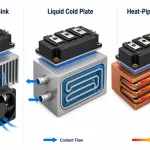
Heat sinks are available in various types, including passive and active designs. Passive heat sinks rely on natural convection, with fins increasing the surface area to improve heat dissipation. Active heat sinks, on the other hand, use fans or other mechanical systems to actively cool high-power electronics. Both types are widely used in applications ranging from consumer electronics to industrial equipment, where effective thermal management is essential for system reliability and longevity.
Advanced materials, like copper-diamond composite heat sinks, are becoming popular for their exceptional thermal conductivity. These innovative solutions are particularly effective in high-performance devices, utilizing bioinspired designs such as capillary mechanisms to enhance thermal regulation. Ecothermgroup, a leader in thermal management solutions, offers a wide range of cutting-edge heat sink options to meet the demands of modern PCB designs.
Importance of Thermal Management in Electronics
Effective thermal management is critical in electronics as devices become more compact and powerful. Poor heat dissipation can result in reduced performance, shorter component lifespan, and system failures. PCB heat sinks help address these challenges by maintaining optimal operating temperatures and reducing thermal resistance.
When designing PCBs, factors such as material selection, airflow optimization, and thermal simulations are key to achieving efficient heat dissipation. For example, aluminum heat sinks are favored for their cost-effectiveness and high thermal conductivity (~237 W/m·K), while copper provides even higher conductivity (~400 W/m·K) but comes with greater cost and weight. Understanding these trade-offs is crucial for choosing the right heat sink for specific needs.
Thermal interface materials, like pads and pastes, further improve heat sink performance by enhancing contact and boosting thermal conductivity. These materials fill gaps between the heat sink and the component, minimizing thermal resistance. Additionally, tools such as Computational Fluid Dynamics (CFD) simulations enable engineers to identify and address potential overheating issues during design, ensuring a reliable thermal profile for the final product.
| Material | Thermal Conductivity (W/m·K) |
|---|---|
| Aluminum | ~237 |
| Copper | ~400 |
| Graphite | 150-500 (depending on grade) |
- Ensure proper airflow around the heat sink to maximize cooling efficiency.
- Use thermal interface materials to reduce thermal resistance.
- Select heat sink materials based on application and budget constraints.
Types of PCB Heat Sinks
Passive vs. Active Heat Sinks
PCB heat sinks fall into two main categories: passive and active designs, each suited to specific cooling needs. Passive heat sinks rely on natural convection to disperse heat. These designs often feature extended surface areas, like fins or protrusions, to improve heat dissipation. They are a great choice for low-power electronics or situations where space constraints make moving parts impractical. Aluminum is a popular choice for passive heat sinks due to its lightweight and cost-effective properties.
Active heat sinks, by contrast, use external components such as fans or blowers to boost heat dissipation through forced convection. These are ideal for high-powered electronics where natural convection isn’t sufficient to manage the heat load. Copper is frequently used in active designs because of its excellent thermal conductivity, ensuring efficient heat transfer even in challenging scenarios. However, active heat sinks do require additional energy and maintenance, factors that must be considered during their integration.
| Type | Key Features |
|---|---|
| Passive Heat Sinks | Natural convection, lightweight materials, low maintenance |
| Active Heat Sinks | Forced convection, superior cooling performance, requires external components |
Custom and Specialized Heat Sink Designs
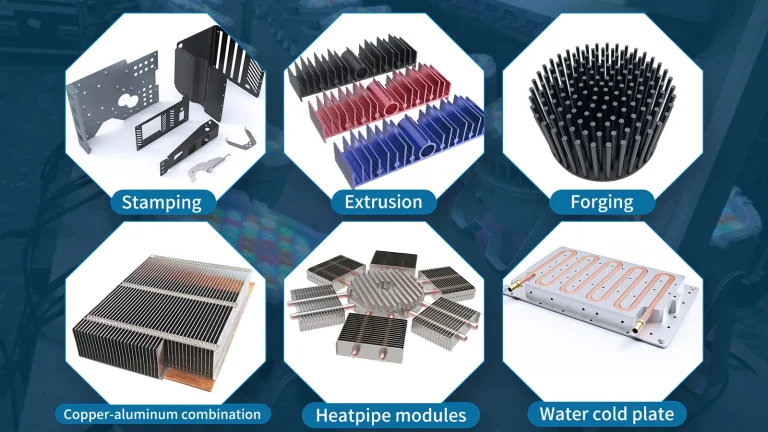
For applications with unique thermal demands, custom and specialized heat sink designs offer tailored solutions. Custom heat sinks are engineered to align with specific PCB layouts and thermal needs. These designs often incorporate advanced techniques like skived fins to increase surface area and improve heat dissipation without adding unnecessary bulk.
Specialized heat sinks, such as those made from Cu-diamond composites, provide exceptional thermal conductivity for high-performance applications like power electronics and aerospace systems. Inspired by natural mechanisms, such as the capillary structures found in plants, these designs enhance heat transfer through bioinspired engineering. Ecothermgroup delivers innovative solutions utilizing advanced materials and structures to meet complex thermal management challenges.
To further reduce thermal resistance, advanced thermal interface materials like thermal pads and paste are often paired with custom heat sinks. These materials improve the connection between the heat sink and heat-generating components, ensuring efficient heat transfer. Choosing the right combination of design, materials, and interface is critical for achieving reliable and optimal performance.
- Custom extrusions for complex PCB layouts
- Skived fins for enhanced surface area
- Cu-diamond composites for high-performance applications
- Thermal pads and paste for minimizing thermal resistance
Materials Used in PCB Heat Sinks
Traditional Materials: Aluminum and Copper
Aluminum and copper are two of the most widely used materials for PCB heat sinks, each offering specific benefits for thermal management. Aluminum is popular due to its affordability, lightweight properties, and moderate thermal conductivity of about 237 W/m·K. These qualities make it a practical choice for consumer electronics and industrial applications where cost and weight are important considerations. Additionally, aluminum supports various manufacturing methods, such as extrusion and skiving, enabling the creation of intricate heat sink designs for improved heat dissipation.
Copper, by contrast, is preferred for high-performance thermal designs because of its superior thermal conductivity of approximately 400 W/m·K. This makes copper heat sinks well-suited for handling more intense thermal demands, ensuring efficient heat dissipation in high-power electronics like servers, GPUs, and advanced telecommunications equipment. However, copper is heavier and more expensive than aluminum, which can pose challenges in terms of cost and mechanical design. Manufacturers like Ecothermgroup often use copper in specialized applications where performance takes priority over budget constraints.
| Material | Thermal Conductivity (W/m·K) | Advantages | Drawbacks |
|---|---|---|---|
| Aluminum | ~237 | Lightweight, Cost-effective | Lower thermal conductivity compared to copper |
| Copper | ~400 | Superior thermal performance | Expensive, Heavy |
Advanced Materials: Cu-Diamond and Ceramic
For applications requiring advanced thermal management and exceptional durability, materials like Cu-diamond composites and ceramics are becoming increasingly popular. Cu-diamond composites represent a major advancement in heat sink technology. These materials combine copper’s excellent thermal conductivity with diamond particles, which have ultrahigh thermal conductivity, reaching up to 2000 W/m·K. This combination delivers outstanding heat dissipation, making Cu-diamond heat sinks ideal for aerospace, defense, and high-frequency power electronics. Innovative designs, such as capillary structures, further improve heat transfer efficiency.
Ceramic heat sinks are another advanced option, particularly suited for scenarios where electrical insulation and thermal management are both essential. Ceramic materials, such as aluminum oxide (Al₂O₃) and aluminum nitride (AlN), offer strong thermal conductivity (up to 170 W/m·K for AlN) while remaining electrically non-conductive. This makes them ideal for applications in medical devices, LED lighting, and high-voltage electronics. In addition, ceramics are lightweight and resistant to corrosion, ensuring reliable performance in challenging environments.
- Cu-Diamond composites: Outstanding thermal conductivity, suitable for high-performance electronics.
- Ceramics: Lightweight, corrosion-resistant, ideal for insulated applications.
Choosing the right material for PCB heat sinks involves balancing performance needs, cost factors, and environmental conditions. Manufacturers like Ecothermgroup provide customized solutions using both traditional and advanced materials to meet diverse application requirements.
Thermal Design Principles for PCBs
Heat Dissipation Techniques
Effective heat dissipation is essential for maintaining the performance and reliability of PCBs, particularly in high-power applications. Heat sinks are one of the most common thermal management solutions, increasing surface area to facilitate heat transfer from components to the surrounding environment. To enhance their performance, they are often combined with thermal interface materials such as thermal pads or paste, which improve conductivity between the PCB and the heat sink. Additional techniques include using copper pours or planes to distribute heat across the board and thermal vias to transfer heat from the top layer to inner or bottom layers for better dissipation.
Material selection also plays a critical role in heat management. Aluminum and ceramic PCBs, with their high thermal conductivity, are well-suited for applications that generate significant heat. FR-4, a widely used PCB material, can be improved by adding thicker copper layers or metal cores (MCPCBs) to enhance thermal performance. Cooling fans can also be integrated into designs to boost convection, especially in systems with limited airflow.
| Technique | Key Benefits |
|---|---|
| Heat Sink with Thermal Pads | Improves heat transfer efficiency and reduces thermal resistance |
| Copper Pours | Distributes heat evenly across the PCB |
| Thermal Vias | Transfers heat to other layers, enhancing dissipation |
| Aluminum or Ceramic PCBs | High thermal conductivity for effective heat management |
CFD Simulation for Optimized Cooling
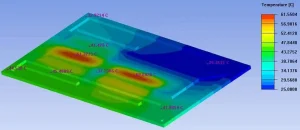
Computational Fluid Dynamics (CFD) simulations are invaluable for designing PCBs with optimized cooling solutions. Using tools like OpenFOAM, engineers can model airflow patterns and thermal profiles, identifying potential hotspots and inefficiencies in heat dissipation. This process helps determine the precise placement and sizing of heat sinks, thermal vias, and cooling fans based on simulation results.
CFD simulations also enable engineers to test different materials and configurations without building physical prototypes, reducing development time and costs. For instance, simulations can assess how a Cu-diamond composite heat sink performs under specific thermal loads, offering insights into its high thermal conductivity and ability to handle demanding heat conditions. By integrating CFD into the design process, manufacturers like Ecothermgroup can create products that meet high performance standards while remaining cost-effective.
Best Practices for Power Electronics
Power electronics require strong thermal design to ensure reliability and prevent overheating. Best practices include distributing high-power components, such as ICs and MOSFETs, evenly across the PCB to minimize localized heat buildup. Components should also be arranged to allow sufficient airflow or direct contact with heat sinks and cooling systems.
Using materials with high thermal conductivity, such as aluminum or metal-core PCBs, is critical for applications that generate substantial heat. Increasing copper thickness improves heat conduction and reduces the board’s thermal resistance. Applying thermal interface materials, such as pads or paste, minimizes resistance between components and heat sinks.
- Distribute high-power components evenly to prevent hotspots
- Use materials like aluminum or ceramic for improved thermal conductivity
- Increase copper thickness to enhance heat conduction
- Apply thermal interface materials to reduce resistance
- Incorporate CFD simulations for precise thermal optimization
Finally, safety is crucial. All thermal management systems should be properly installed and thoroughly tested to prevent overheating or component failure. By following these practices, manufacturers like Ecothermgroup can deliver dependable PCB solutions tailored to power electronics applications.
Choosing the Right Heat Sink for Your PCB
Factors to Consider: Power, Size, and Material
When selecting pcb heat sinks, several key factors should be taken into account, including power requirements, size constraints, and material choices. Effective thermal management is essential for maintaining the reliability and performance of electronic components. Power dictates the amount of heat generated, requiring heat sinks with adequate dissipation capabilities. High-power applications often need heat sinks with lower thermal resistance and higher thermal conductivity, such as copper, which has a thermal conductivity of about 400 W/m·K. Size is also critical, particularly in compact designs where space is limited. The heat sink must fit within the physical dimensions of the PCB while effectively managing heat.
Material selection significantly impacts thermal performance. Aluminum is a common choice due to its combination of good thermal conductivity (~239 W/m·K), lightweight properties, and affordability. However, for applications with extreme thermal demands, copper-diamond composite heat sinks, as highlighted in recent studies, provide exceptional cooling performance with bioinspired designs. Ecothermgroup offers innovative solutions tailored to different power densities and environmental conditions, ensuring efficient heat dissipation.
Matching PCB Materials with Heat Sink Types
The compatibility between PCB materials and heat sink types is key to achieving effective heat dissipation. FR-4, a widely used PCB material, has moderate thermal conductivity, making it suitable for general applications with aluminum heat sinks. For high-power electronics, metal core PCBs combined with copper heat sinks are recommended for their superior thermal performance. Polyimide PCBs, known for their flexibility and durability, can benefit from custom-designed heat sinks that address their unique characteristics.
Advanced designs include capillary architecture heat sinks, which improve thermal management through innovative surface engineering. These designs, inspired by natural mechanisms, enhance heat flow and help maintain stable thermal conditions. Using thermal interface materials (TIMs) such as thermal pads or paste further enhances thermal conductivity by minimizing air gaps between components and heat sinks.
| PCB Material | Recommended Heat Sink Type |
|---|---|
| FR-4 | Aluminum |
| Metal Core | Copper |
| Polyimide | Custom Design |
Selecting the right heat sink requires a careful balance of power needs, size constraints, and material compatibility. By understanding these factors, you can choose a heat sink that enhances your PCB’s thermal performance, ensuring reliable operation and efficient heat dissipation.
People Also Ask
What is a PCB heat sink, and why is it important?
A PCB heat sink is a component that dissipates heat generated by electronic parts on a printed circuit board (PCB). It helps prevent overheating, ensuring reliable performance and extending the lifespan of high-power electronics.
What are the different types of PCB heat sinks?
PCB heat sinks come in various types, including extruded heat sinks, skived fins, bonded fins, and Cu-diamond composite heat sinks. Each type offers specific thermal performance, suited to different applications based on power density and cooling requirements.
Which materials are commonly used in PCB heat sinks?
PCB heat sinks are often made from materials like aluminum, copper, and advanced composites such as Cu-diamond. These materials are highly conductive, lightweight, and durable, making them ideal for heat management.
How does thermal design impact PCB performance?
Thermal design ensures effective heat management and dissipation for electronic components. A well-designed thermal setup prevents overheating, enhances reliability, and boosts the efficiency of high-power circuit boards.
What factors should I consider when choosing a PCB heat sink?
Important factors include thermal conductivity, compatibility with PCB materials, size, airflow conditions, and the power density of the components. Advanced solutions like Cu-diamond composites offer exceptional thermal performance for demanding applications.
What is a Cu-diamond composite heat sink, and how does it work?
A Cu-diamond composite heat sink combines copper and diamond to achieve ultrahigh thermal conductivity. Its capillary architecture enhances heat dissipation, making it a top choice for cooling high-power electronics efficiently.
What are the advantages of using thermal pads with PCB heat sinks?
Thermal pads improve heat transfer between heat sinks and electronic components by reducing air gaps. They are easy to apply and help maximize cooling performance, especially in compact PCB designs.
Can CFD simulations help optimize PCB heat sink designs?
CFD (Computational Fluid Dynamics) simulations model airflow and heat dissipation around PCB heat sinks. Engineers use these simulations to refine designs, improving cooling efficiency and thermal management in complex systems.