How to Choose the Right Heat Sink for High-Density PCBs
Designing high-density PCBs presents the challenge of effectively managing heat, as crowded components can lead to overheating and performance issues. Selecting the right heat sink in PCB designs is essential for maintaining proper thermal management and protecting sensitive electronics. This article outlines the key factors to consider when choosing an ideal heat sink for your high-density PCB.
Takeaway
- Recognize the vital role heat sinks play in preventing overheating and ensuring consistent performance in high-density PCBs.
- Evaluate factors like thermal conductivity, size limitations, airflow, and compatibility with PCB design when choosing a heat sink.
- Enhance heat sink efficiency by balancing thermal resistance, selecting the right materials, and positioning it effectively to manage hotspots in dense PCB layouts.
- Consider advanced materials such as graphene, vapor chambers, and modern aluminum alloys to improve heat dissipation in contemporary PCB designs.
- Use simulation tools to analyze heat dissipation and confirm the heat sink’s effectiveness before finalizing your design.
- Ensure proper integration by applying thermal interface materials (TIMs) and securely attaching the heat sink to minimize mechanical stress on PCB components.
- Work with manufacturers to design custom heat sinks tailored for unique high-density PCB layouts, achieving optimal performance in tight spaces.
Introduction to Heat Sinks in PCB Design
Why Heat Dissipation is Crucial for PCBs
High-density PCBs often experience localized hotspots due to increased power density. Effective heat dissipation is essential to prevent thermal damage, maintain reliability, and extend the board’s lifespan. Without proper thermal management, overheating can lead to component failure, reduced performance, and permanent damage to circuitry.
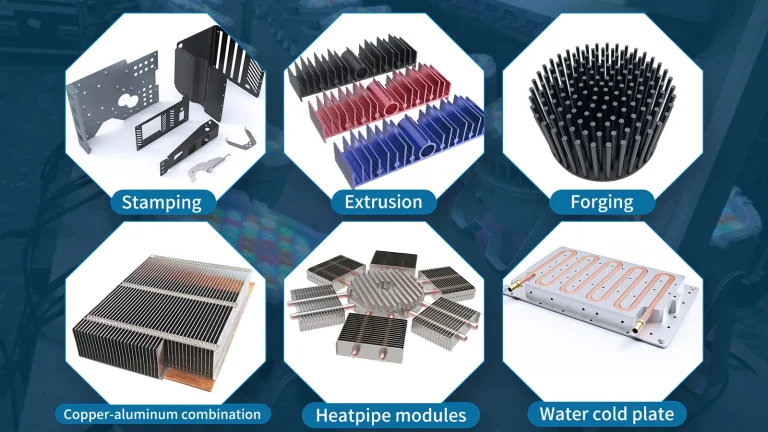
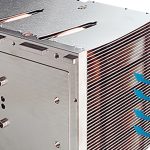
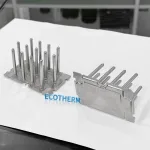
Heat sinks are key to addressing these issues by improving heat dissipation. Common materials like aluminum and copper are used for their high thermal conductivity, with copper offering better performance but at a higher cost. Designers must also consider thermal resistance, which influences the efficiency of heat sinks in PCB designs. For example, a skived fin heat sink provides greater surface area, enhancing heat transfer in compact layouts.
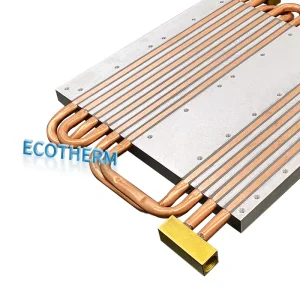
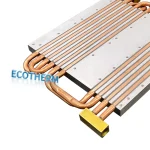
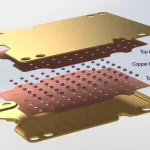
Advanced methods, such as embedding heat pipes or using board-mounted vapor chambers, are becoming popular for managing heat in dense environments. These solutions, combined with thermal interface materials (TIM), help reduce resistance between heat sinks and PCB components, ensuring efficient heat flow. Brands like Ecothermgrou[p offer custom heat sink solutions tailored to specific thermal management needs.
Role of Heat Sinks in High-Density PCB Layouts
As PCB designs integrate more functionality into smaller spaces, heat sinks play an increasingly important role. High-density layouts demand specific thermal management solutions to address the cooling needs of compact designs. Heat sinks are categorized into active and passive types. Active heat sinks use fans for improved cooling in high-power applications, while passive designs rely on natural convection.
Choosing the right heat sink involves factors like power dissipation, component placement, and airflow. Tools such as computational fluid dynamics (CFD) and thermal simulation software are commonly used during the design phase to optimize heat sink performance. These tools analyze airflow and thermal resistance, ensuring the selected heat sink meets the PCB’s requirements.
| Heat Sink Type | Best Application |
|---|---|
| Passive Heat Sink | Low-power, quiet environments |
| Active Heat Sink | High-power, high-density designs |
| Skived Fin Heat Sink | Compact layouts requiring increased surface area |
| Embedded Heat Pipes | PCBs with critical localized hotspots |
Design for Manufacturing (DFM) optimization is also critical when integrating heat sinks into PCB layouts. Rapid prototyping of heat sinks allows engineers to test different configurations and validate performance before mass production. By balancing thermal conductivity, surface area, and airflow, designers can achieve effective heat dissipation without compromising structural integrity.
- Assess power density and thermal resistance requirements.
- Select suitable materials like aluminum or copper.
- Use simulation tools to refine designs.
- Decide between active and passive cooling based on application needs.
Key Factors When Choosing a Heat Sink for PCBs
Material Selection: Metals vs. Composites
Choosing the right material for a heat sink in PCB design is crucial for efficient thermal management. Metals like aluminum and copper are widely used due to their excellent thermal conductivity. Aluminum is lightweight, affordable, and ideal for applications where weight and cost are key considerations, while copper provides superior thermal conductivity, making it suitable for managing high heat loads in dense PCB layouts. Advanced composites are also becoming popular, offering a balance of conductivity, weight reduction, and better compatibility with specific thermal interface materials (TIMs).
For instance, high-density PCBs with localized hotspots often benefit from copper heat sinks paired with thermal pads for effective heat dissipation. Designers can also explore custom aluminum extrusions or skived fin heat sinks, which improve heat dissipation by increasing surface area for convection.
| Material | Key Advantages |
|---|---|
| Aluminum | Lightweight, cost-effective, easy to manufacture |
| Copper | High thermal conductivity, ideal for dense PCBs |
| Composites | Balanced conductivity, reduced weight, TIM-friendly |
Heat Sink Size and Shape Considerations
The size and shape of a heat sink play a major role in its ability to manage heat dissipation. Designers need to ensure the heat sink fits within the available PCB space while offering enough surface area for convection. Finned designs, such as skived fin heat sinks, are especially useful for high-density PCBs as they maximize surface area without taking up much space. Embedded heat pipes or board-mounted vapor chambers can also be used to target specific hotspots efficiently.
Thermal simulation software, such as Computational Fluid Dynamics (CFD), is a valuable tool for fine-tuning heat sink size and shape. By simulating airflow and heat transfer, designers can confirm that the selected heat sink meets performance requirements without disrupting the PCB layout. Prototyping heat sinks enables physical testing and adjustments during the design process, ensuring optimal compatibility and efficiency.
- Choose designs with fins or textured surfaces to improve convection.
- Use CFD tools to assess thermal performance before production.
- Consider embedded heat pipes for localized hotspots.
Mounting Techniques and Compatibility
Proper mounting of heat sinks is key to effective thermal transfer and mechanical stability. Designers should ensure the heat sink is compatible with the PCB layout and components. Common mounting methods include clips, screws, and adhesives, each suited to different applications and performance needs.
For high-density PCBs, adhesive mounting with TIMs is often preferred due to limited space and the need for precise thermal contact. Active cooling solutions, such as heat sinks with fans, may require stronger mounting methods to remain stable under airflow. Custom heat sink manufacturers like Ecothermgroup can create designs tailored to specific applications, simplifying mounting while maximizing performance.
| Mounting Method | Best Use Case |
|---|---|
| Clips | Quick installation, suitable for passive cooling |
| Screws | High stability, ideal for active cooling setups |
| Adhesives | Compact designs, optimal for space-limited PCBs |
By combining the right material, size, shape, and mounting techniques, designers can improve the thermal management of high-density PCBs, ensuring reliability and durability in modern electronics.
Optimizing Heat Sink Performance in Dense PCBs
Thermal Conductivity and Heat Transfer Basics
Effective thermal conductivity is crucial when choosing a heat sink for PCB applications. High-density PCBs, filled with components, create localized hotspots due to their compact layouts. Materials like aluminum and copper are commonly used in heat sinks because of their excellent thermal conductivity. Aluminum is lightweight and affordable, making it ideal for consumer electronics, while copper provides superior conductivity for demanding uses, such as industrial or automotive systems.
Heat sinks transfer heat away from components through conduction and dissipate it via convection or radiation. In dense PCBs, optimizing heat transfer efficiency involves careful attention to factors like fin geometry, surface area, and airflow. Skived fin heat sinks and custom aluminum extrusions are widely used as they maximize surface area while maintaining a compact design.
Thermal interface materials (TIMs) are essential for minimizing thermal resistance between the heat sink and components. TIMs, such as thermal grease or phase-change materials, ensure proper contact and improve heat dissipation. Ecothermgrou[p provides advanced TIM solutions designed for high-density PCB applications, delivering enhanced performance and reliability.
| Material | Thermal Conductivity (W/m·K) |
|---|---|
| Aluminum | 205 |
| Copper | 385 |
Simulation Tools for Thermal Design
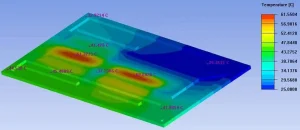
Thermal simulation software is essential for optimizing heat sink performance in dense PCBs. Computational Fluid Dynamics (CFD) tools help engineers model heat dissipation, airflow, and temperature distribution across board-level cooling systems. These tools allow precise adjustments to heat sink designs before physical prototyping, saving time and resources.
Simulations can determine whether passive cooling methods like embedded heat pipes or board-mounted vapor chambers are sufficient, or if active cooling solutions, such as fan-assisted heat sinks, are needed. Rapid prototyping based on simulation results speeds up the design process, ensuring solutions meet DFM optimization requirements.
Ecothermgrou[p uses advanced simulation tools to create custom heat sink designs tailored to client needs. By factoring in real-world conditions like power density, component layout, and environmental factors, their thermal management solutions deliver outstanding performance in compact PCB designs.
- Use thermal simulations to analyze heat distribution.
- Select the appropriate heat sink type based on simulation insights.
- Incorporate active cooling for high-power boards that exceed passive cooling limits.
- Validate designs with rapid prototyping before mass production.
Innovations in Heat Sink Materials for Modern PCBs
Emerging Alloys and Composites
Advancements in heat sink materials are transforming thermal management for high-density PCBs. Traditional materials like aluminum and copper remain widely used due to their excellent thermal conductivity and cost-effectiveness. Aluminum, valued for its lightweight nature, works well in compact PCB designs, while copper is ideal for high-performance applications requiring superior heat dissipation.
Recently, new alloys and composites have emerged, providing improved thermal conductivity and reduced weight. Materials such as carbon nanotubes and graphene outperform traditional metals in heat dissipation but face challenges in scalability and cost. Diamond composites, known for their outstanding thermal conductivity, are becoming more prominent in specialized industries, though their high expense limits broader adoption.
A key example of innovation is the skived fin heat sink for PCBs, which uses precision-cut fins to increase surface area for heat transfer. Similarly, embedded heat pipes and board-mounted vapor chambers are gaining traction for effectively addressing localized hotspots. These solutions are especially valuable in situations where passive cooling methods are insufficient.
| Material | Thermal Conductivity (W/mK) |
|---|---|
| Aluminum | 205 |
| Copper | 400 |
| Graphene | 1000–5000 |
| Diamond Composites | 2000 |
For engineers, choosing the right material involves balancing thermal efficiency with cost and manufacturability. Brands like Ecothermgroup offer custom aluminum extrusion heat sinks designed for modern PCB layouts, providing both affordability and optimized performance.
Environmental and Cost Considerations
While performance is crucial, environmental impact and cost are increasingly influencing heat sink design. Aluminum remains the most eco-friendly option among traditional metals due to its recyclability and lower energy requirements during production. Copper, while highly effective, has higher extraction and processing costs, making it less sustainable.
Advanced materials like graphene and diamond composites offer environmental benefits but are often too expensive for large-scale PCB production. Engineers must carefully balance performance and budget when considering these advanced solutions. Simulation tools such as CFD and thermal analysis software are essential for predicting real-world performance and finding cost-effective alternatives.
- Focus on lightweight, recyclable materials for sustainable designs.
- Use rapid prototyping to efficiently test heat sink configurations.
- Work with custom heat sink manufacturers for tailored solutions.
Environmental considerations also extend to manufacturing practices. DFM optimization minimizes waste during production, supporting sustainability goals. Companies like Ecothermgroup specialize in delivering customized thermal management solutions that balance innovation, cost, and environmental responsibility.
Innovations in heat sink materials are advancing PCB thermal management, presenting opportunities to improve efficiency while addressing environmental and budget constraints. Engineers must evaluate emerging materials and use advanced tools to select the best heat sink for high-density PCB designs.
Practical Tips for Effective Heat Sink Integration
Optimizing Airflow and Component Placement
Proper airflow and strategic component placement are crucial for effective heat sink integration in PCBs. Begin by identifying heat-generating components like processors, power transistors, and LEDs. Place heat sinks directly on or near these components to maximize heat dissipation. Additionally, consider the airflow path: align components with the airflow direction, especially when using forced-air cooling systems such as fans.
Adequate spacing between components is equally important. Crowding heat-producing elements can create localized hotspots, reducing thermal management efficiency. Use thermal simulation tools, such as CFD software, to model airflow and identify potential problem areas. This is particularly useful for high-density layouts where space is limited.
Thermal vias can further improve heat dissipation by transferring heat from the top layer to other PCB layers. Arrays of small thermal vias placed beneath heat-producing components significantly enhance thermal performance. For instance, in a PCB with a custom aluminum extrusion heat sink, thermal vias help distribute heat evenly, preventing overheating in specific areas.
Common Mistakes and How to Avoid Them
Several common mistakes can reduce the effectiveness of heat sink integration. One frequent issue is neglecting the thermal interface material (TIM). Without proper TIM, such as thermal pads or paste, tiny air gaps between the heat sink and the component create thermal resistance, lowering heat transfer efficiency. Always use high-quality TIM to ensure maximum thermal conductivity.
Another common mistake is choosing the wrong heat sink type for the application. For example, using a passive heat sink in areas with poor airflow can lead to overheating. In such cases, active cooling solutions, such as embedded heat pipes or board-mounted vapor chambers, may be more effective. It’s also important to select the right heat sink material. Aluminum is lightweight and cost-effective, but copper might be a better choice for applications that require higher thermal conductivity.
Failure to consider manufacturability is another common error. Work with a custom heat sink manufacturer early in the design process to optimize for manufacturability. Companies like Ecothermgroup specialize in creating rapid prototyping heat sinks tailored to specific designs, helping to minimize delays and reduce production costs.
| Common Mistake | Solution |
|---|---|
| Neglecting thermal interface material | Use high-quality TIM to fill air gaps |
| Wrong heat sink type | Choose between active and passive cooling based on airflow |
| Ignoring manufacturability | Collaborate with a custom heat sink manufacturer |
By avoiding these common mistakes, you can greatly improve the heat dissipation efficiency of your PCB design. Combining proper airflow, optimal component placement, and carefully chosen materials ensures reliable thermal performance, even in high-density layouts.
People Also Ask
What is the role of a heat sink in PCB design?
A heat sink in PCB design dissipates excess heat generated by components, keeping the circuit within safe temperature limits. This ensures reliability and prevents thermal damage, especially in high-density PCBs.
What factors should I consider when choosing a heat sink for a high-density PCB?
Important factors include the thermal conductivity of the heat sink material, size constraints, airflow availability, and mounting methods. These ensure the heat sink is effective and compatible with your compact PCB layout.
How can I optimize heat sink performance in a compact PCB design?
To maximize performance, place the heat sink near high-heat components, use thermal interface materials to improve conductivity, and design for sufficient airflow around the heat sink. Simulation tools can also help validate thermal performance.
What are the latest innovations in heat sink materials for modern PCBs?
Recent advancements include the use of advanced alloys, composite materials, and graphene-based heat sinks. These materials offer enhanced thermal conductivity and lighter weight, making them ideal for high-power applications in tight spaces.
Why is thermal management important for high-density PCBs?
Thermal management is vital because high-density PCBs generate significant heat, which can lead to component failure and reduced lifespan. Effective heat sinks help maintain safe temperatures and improve overall reliability.
What is the best material for heat sinks used in PCBs?
Aluminum and copper are widely used for their high thermal conductivity and cost-effectiveness. Copper has better conductivity, while aluminum is lighter and more affordable, so the choice depends on the application.
How do I ensure proper heat sink integration into my PCB design?
Securely mount the heat sink near heat-critical components, use thermal interface materials to enhance heat transfer, and design for airflow during PCB layout. Proper integration boosts thermal efficiency and prevents overheating.
Can simulation tools help in selecting the right heat sink for a PCB?
Yes, thermal simulation tools can model heat distribution and evaluate the performance of various heat sink designs. This helps you choose the most effective option for your PCB before production.