
Custom Gun-Drilled Liquid Cold Plate
High-performance, flux-free thermal management for extreme heat flux applications.
Free Custom Design
Free Thermal Analysis
Best Price Guaranteed
24 Hours Feedback
Types of liquid cold plate manufacturing processes
Other heat sink cooling solutions
Gun-Drilled Liquid Cold Plates
Gun-drilled cold plates are manufactured by CNC deep-hole drilling fluid channels directly into a solid block of extruded aluminum or copper. By cross-drilling straight pathways and sealing the perimeter with heavy-duty threaded plugs or welded caps, we create a monolithic cooling plate with zero internal bonded joints.
Technical Characteristics & Design Parameters
Monolithic Structure: Eliminates the horizontal bonding planes found in brazed or welded plates, relying entirely on the parent material’s strength.
Flow Path Geometry: Internal fluid routing is restricted to straight-line (X and Y axis) intersections. It does not support complex 3D micro-channels.
Material Thickness: Requires a thicker base plate geometry to accommodate the drill bit diameters and the depth of the sealing plugs.
Why Choose Gun Drilling for Your Custom Liquid Cold Plate?
Gun drilling (deep hole drilling) is a specialized mechanical process used to create internal coolant channels within a solid metal block. For high-power industrial and defense applications, this technology offers several critical advantages over brazed or welded solutions:
Monolithic Structural Integrity: Machined from a single block of 6061-T6 aluminum or copper. The absence of bonded or welded seams ensures maximum structural strength and the highest burst pressure resistance for high-voltage power electronics.
Flux-Free & Ultra-Clean Channels: A 100% mechanical process that eliminates chemical residues or soldering flux. This prevents pump corrosion and channel clogging in sensitive systems like military radar, laser diodes, and aerospace optics.
Superior Leak-Proof Reliability: Ideal for systems requiring long-term hermetic sealing under extreme operating conditions. Without thermal joining interfaces, the risk of material fatigue or internal leakage is virtually eliminated.
Size Scalability: Not restricted by vacuum furnace dimensions. Gun drilling is highly efficient for large-format custom liquid cold plates (exceeding 1500mm) used in power grids, railway traction modules, and energy storage systems (ESS).
Cost-Effective for Prototyping & Mid-Volume: Offers a faster, more economical route for custom liquid cold plate projects compared to vacuum brazing, with significantly lower upfront tooling costs for specialized industrial equipment.
Liquid Cold Plate Technology Comparison: Gun Drilling vs. FSW vs. Vacuum Brazing
Selecting the optimal manufacturing process for a custom liquid cold plate depends on thermal density requirements, mechanical constraints, and production volume. Below is a technical comparison of the three primary technologies used in industrial and defense cooling:
| Feature | Gun Drilling (Deep Hole) | Friction Stir Welding (FSW) | Vacuum Brazing |
| Construction | Monolithic (Solid Block) | Multi-piece (Solid-State Join) | Multi-piece (Furnace Bonded) |
| Internal Geometry | Straight Channels (Simple) | Structured Channels (Medium) | Complex Fins (High Surface Area) |
| Thermal Density | Moderate | High | Ultra-High |
| Leak Reliability | Excellent (Seamless) | Very High (Forged-like Joint) | Excellent (Hermetic Seal) |
| Size Capacity | Up to 1500mm+ | Up to 2000mm+ | Limited by Furnace Size |
| Tooling Cost | Low | Moderate | High |
| Best For | Radar, Power Grids, ESS | Industrial Inverters, Energy Storage | Aerospace, Medical, AI Servers |
Applications for Gun-Drilled Cold Plates
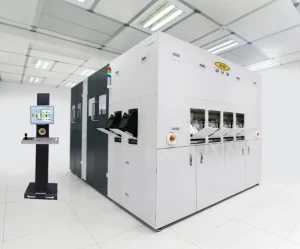
Semiconductor Fabrication Equipment
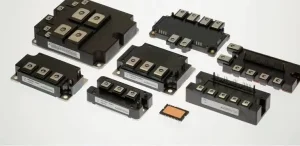
Heavy-Duty Power Electronics (IGBTs)
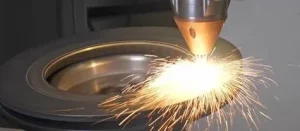
High-Power Industrial Lasers

Defense & Aerospace Radar Systems
Frequently Asked Questions about Gun-Drilled Cold Plate
The primary advantage is absolute structural integrity. A gun-drilled plate is machined from a single, solid block of aluminum or copper. Because there are no internal welded or brazed seams, it completely eliminates the risk of joint failure, thermal cracking, and internal leakage, making it capable of handling extreme burst pressures.
Yes. Unlike the intricate 3D micro-channels possible with vacuum brazing, gun-drilling restricts the fluid routing to straight lines along the X and Y axes. The channels are cross-drilled to intersect, and the unused entry points are permanently sealed with heavy-duty threaded plugs or welded caps to form the continuous coolant loop.
Because the internal channels consist of straight, smooth-bored holes intersecting at 90-degree angles, the pressure drop characteristics are different from curved tube-in-plate designs. Our thermal engineers calculate the exact diameter and length of the drilled holes to optimize the flow rate and minimize turbulence, ensuring the pressure drop remains within your pump’s required limits.
Lorem ipsum dolor sit amet, consectetur adipisicing elit. Optio, neque qui velit. Magni dolorum quidem ipsam eligendi, totam, facilis laudantium cum accusamus ullam voluptatibus commodi numquam, error, est. Ea, consequatur.