
Medical Equipment Cooling Solutions for MRI, CT and X-Ray Imaging Devices
In the life-saving domain of high-performance medical diagnostics, device uptime, structural safety, and imaging accuracy are absolute prerequisites.
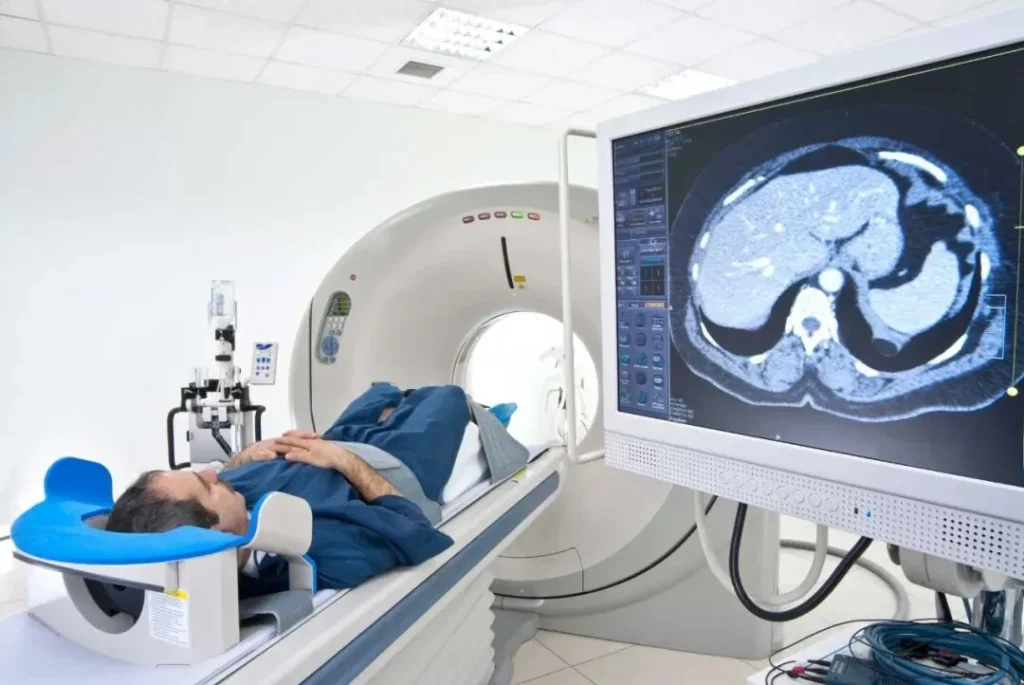
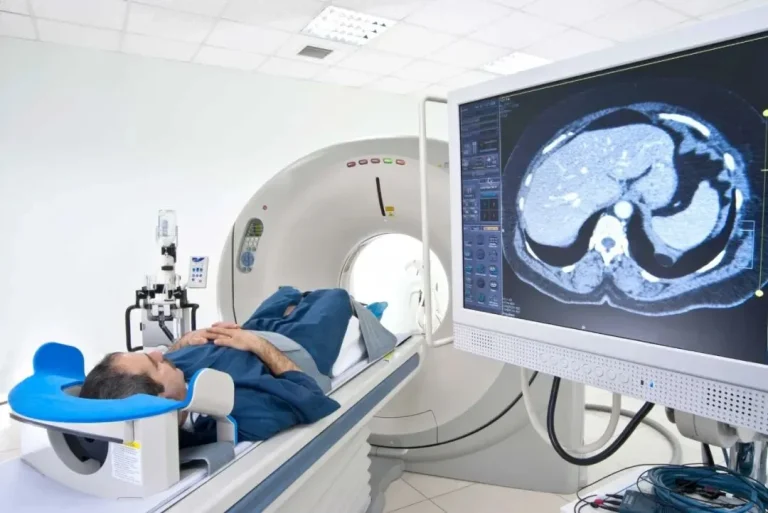
Advanced diagnostic modalities—such as Magnetic Resonance Imaging (MRI) scanners, Computed Tomography (CT) systems, and high-voltage X-ray equipment—rely on dense power electronics that generate massive thermal loads during scanning cycles.
Medical equipment cooling introduces unique and rigorous thermodynamic challenges. Unlike standard industrial electronics, medical imaging components undergo intense transient pulsed loads, operate within exceptionally confined mechanical envelopes, and are subject to stringent acoustic noise limitations and touch-temperature safety standards (such as IEC 60601-1).
Managing these heat fluxes effectively is a critical baseline for preventing thermal imaging artifacts, system derating, and catastrophic hardware downtime.
Ecotherm is a specialized manufacturing partner specializing in medical device thermal management. We engineer and fabricate precision-machined custom liquid cold plates and high-conductivity copper heat pipe modules tailored for high-power medical electronic sub-assemblies.
(Note: Ecotherm focuses purely on component-level thermal hardware.
We do not manufacture complete medical systems, external chiller units, or liquid helium/cryogenic cooling configurations.)
Thermal Challenges in Medical Imaging Equipment
Modern clinical diagnostics demand faster scanning speeds and higher image resolution, which exponentially increases the internal power density of the underlying hardware. Engineering an optimal medical imaging cooling structure requires overcoming three critical physical boundaries:
Extreme Localized Heat Fluxes (W/cm²):
Power semiconductors inside imaging hardware operate under severe electrical stress.
For instance, in an X-ray generation module, the physics of electron bombardment dictates that over 99% of the supplied electrical energy is converted into waste heat, while less than 1% is emitted as usable X-rays.
This creates intense localized hot spots that must be diffused instantaneously to prevent the anode assembly from failing.
Strict Touch-Temperature Regimes (IEC 60601-1):
Since patient-facing equipment operates in close proximity to clinicians and patients, surface touch temperatures must be carefully regulated. According to international safety standards, an instrument face elevated just a few degrees above body temperature can cause micro-level tissue degradation over prolonged exposures.
Lowering the overall internal system thermal resistance chain is paramount to maintaining safe external contact boundaries.
High G-Force and Structural Vibration Environments:
In a CT scanner gantry, the power electronics, high-voltage generators, and thermal modules rotate continuously.
These thermal components must remain completely intact and functional while subjected to immense centripetal acceleration and mechanical stresses ranging from 10G up to 75G.
Any structural weakness in a heat sink or cooling plate can cause immediate fatigue delamination.
Acoustic Noise Constraints:
Operating rooms (OR) and laboratory diagnostics require low ambient acoustic profiles to ensure patient comfort and clinician focus.
Thermal architectures must shift away from high-RPM, high-vibration forced-air systems toward silent fluid conduction methodologies.
Custom Liquid Cold Plates for Medical Equipment Cooling
When localized heat fluxes surpass the physical limits of standard forced convection (typically between 35–50 $W/cm^2$), single-phase liquid conduction inside a closed-loop cold plate is the mandatory path forward. Ecotherm designs and manufactures high-reliability custom liquid cold plates for medical equipment designed to integrate seamlessly with critical power sub-systems.
By mounting high-density electronics directly onto an engineered liquid cold plate, engineers can maintain stable component junction temperatures (Tj) despite rapid, pulsed duty cycles.
Our manufacturing focus targets the critical nodes of imaging platforms:
MRI Gradient Amplifiers:
Gradient coil amplifiers handle intense current switching, resulting in rapid thermal spikes. Our thick-base copper and aluminum cold plates provide the necessary thermal capacitance to absorb these transient loads and maintain exceptional temperature uniformity ($\Delta T < 1^\circ\text{C}$) across the entire transistor array.
CT Power Electronics & Drive Controls:
We build large-format liquid plates that isolate the high-voltage switching circuits and bridge rectifiers from the environment. Because the liquid loop operates in a sealed chassis, the power modules achieve IP65+ environmental protection, safeguarding sensitive controllers from industrial dust and contaminants.
X-Ray Tube Cooling Support:
We machine heavy-duty, high-purity copper cooling blocks that interface with the primary dielectric insulating oil loop, transferring the intense kilowatts of heat away from the tube housing efficiently and silently.
Copper Heat Pipe Modules for Compact Medical Imaging Devices
Not every high-power medical sub-assembly requires an integrated fluid loop. In space-constrained applications—such as mobile ultrasound boards, compact endoscopy light sources, and laboratory blood analysis modules—liquid loop lines are often logistically impractical or cost-prohibitive.
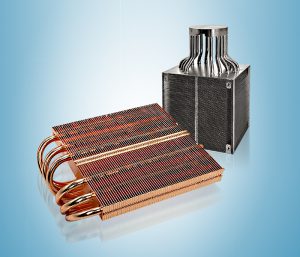
For these footprints, Ecotherm engineers high-conductivity copper heat pipe modules that leverage two-phase vapor-liquid phase transitions to achieve passive thermal conductivity magnitudes greater than solid copper.
Advanced Vapor-Liquid Phase Cycles:
By embedding high-efficiency U-shaped or O-shaped copper heat pipes directly into a precision-milled baseplate, we distribute concentrated heat from the core silicon out to the peripheral fin arrays instantly.
Zero-Vibration, Silent Operation:
Heat pipe assemblies operate entirely passively without any moving components, meeting the zero-decibel acoustic noise requirements for sensitive patient-monitoring environments and surgical settings.
Weight and Space Optimization:
By matching thin, high-density skived copper or aluminum fins with a phase-change thermal network, we significantly reduce the physical volume and mass of the component, allowing medical OEMs to achieve strict SWaP (Size, Weight, and Power) design metrics.
Where Our Thermal Components Are Used
Ecotherm provides critical thermal components engineered for the internal subsystems of medical infrastructure. We specialize in precision-machined, component-level hardware built to OEM specifications.
| Application Subsystem | Primary Thermal Challenge | Recommended Thermal Component | Key Design & Manufacturing Considerations |
| MRI Gradient Amplifiers | High transient pulsed loads; requires absolute temperature uniformity across switching arrays. | Vacuum Brazed Liquid Cold Plates | Precise multi-layer channel routing; ultra-low $R_{th,c-s}$; elimination of internal hotspots. |
| CT Scanner Gantry Electronics | Intense rotational centrifugal stresses (up to 75G); space-constrained configurations. | Friction Stir Welded (FSW) Cold Plates | Solid-state metallurgical bonding with zero internal porosity to withstand high vibration and structural G-forces. |
| X-Ray Tube Support Elements | Dissipating kilowatts of localized heat; maintaining oil-loop dielectric integrity. | Precision Machined Oxygen-Free Copper (OFC) Blocks | High-purity copper machining ($k \approx 380\text{ W/m·K}$); strict dimensional tolerances to fit housing geometries. |
| Medical Lasers & Therapy Systems | High power density diode arrays; strict wave-length stability constraints requiring $\pm0.1^\circ\text{C}$ accuracy. | Copper Phase-Change Heat Pipe Modules / Custom Cold Plates | Micron-level contact surface flatness to minimize the Bond Line Thickness (BLT) of Thermal Interface Materials. |
| Imaging Controller Switch Circuits | Densely packed MOSFET components; risk of localized electromagnetic and thermal interference. | Precision CNC Machined Aluminum Heat Sinks | Integrated (via-array) contact faces; clear anodizing for excellent dielectric strength and surface insulation. |
Engineering and Manufacturing Considerations
To manufacture thermal hardware capable of surviving the 15-year lifecycle expected by medical OEMs, Ecotherm enforces rigorous quality protocols at every stage of the custom heat sink manufacturing workflow:
Micron-Level Surface Flatness:
The interface between the power semiconductor and the cold plate base is the primary bottleneck for heat transfer. Air has a dismal thermal conductivity of only 0.026 W/m·K. To eliminate micro-air gaps, we utilize high-precision CNC fly-cutting and face milling to achieve a surface flatness of pm0.01\text mm. This allows for an ultra-thin application of Thermal Interface Material (TIM), driving down interfacial contact resistance (Rcs) by 25% to 30%.
Flux-Free Vacuum Brazing:
For high-performance fluid cold plates, we execute welding operations inside an advanced high-vacuum furnace. This flux-free environment fuses the multi-layer aluminum or copper structures together at the atomic level, avoiding internal contaminants, preventing oxide layers, and providing exceptional structural integrity capable of enduring high system operating pressures.
Fluid Dynamic Optimization:
Internal channels are calculated and milled according to exact Reynolds number (Re) guidelines. We intentionally generate controlled fluid turbulence to optimize the convective heat transfer coefficient (h), while managing the internal hydraulic diameter to keep system pressure drop (Delta P) safely within the performance curves of standard medical fluid pumps.
Absolute Leak-Proof Validation:
Liquid leaks in proximity to 100kV+ high-voltage CT generators or sensitive imaging circuitry are catastrophic. Every single medical-grade cooling plate manufactured by Ecotherm undergoes compulsory 100% hydrostatic pressure testing and Helium Mass Spectrometer Leak Detection down to ultra-strict vacuum leak rate limits before packaging.
Frequently Asked Questions (FAQ)
What is medical equipment cooling?
Medical equipment cooling involves the specialized thermal management techniques used to extract waste heat from high-power diagnostics and imaging machinery, such as MRI, CT, and X-ray systems. It focuses on maintaining temperature stability, satisfying regulatory touch-temperature guidelines (IEC 60601-1), reducing acoustic fan noise, and ensuring zero-leakage reliability for sensitive internal power electronics.
What thermal components are used in MRI and CT devices?
Because these platforms house massive power conversion components, they utilize custom liquid cold plates (for high-power density gradient amplifiers and RF modules) and high-conductivity copper heat pipe modules or high-density skived fin heat sinks (for space-constrained gantry controllers, power supply boards, and processing units).
Can liquid cold plates be used safely in medical imaging equipment?
Yes, liquid cold plates are widely used in medical equipment cooling. To eliminate the risk of coolant leaks near high-voltage circuits, high-grade cold plates are constructed using solid-state Friction Stir Welding (FSW) or flux-free vacuum brazing. These processes create atomic-level joints that are validated via helium mass spectrometer leak testing to ensure absolute physical isolation.
What information is needed to design a custom cold plate?
To evaluate a cold plate design, engineers need the 2D/3D mechanical envelope drawings, the total heat load (Watts) and layout of the components, the coolant fluid type, the target volumetric flow rate (LPM), and the maximum allowable pressure drop ($\Delta P$) of the liquid loop.
Do you provide MRI chillers or complete cooling systems?
No. Ecotherm is an exclusive component-level manufacturer. We specialize in producing custom liquid cold plates, copper heat pipe modules, and precision-machined thermal interfaces. We do not manufacture external refrigeration chillers, compressor systems, or pump assemblies.
Do you support prototype quantities for medical R&D?
Yes. We understand that medical equipment development requires exhaustive validation phases. We support engineering teams by offering an MOQ of 1 piece for prototypes, providing CNC-machined physical samples in 2 to 3 weeks alongside free DFM and thermal simulation analysis.