
Why ESS Cooling Matters in Battery Energy Storage Systems
A battery energy storage system is not simply a cabinet filled with battery cells; it is a coordinated ecosystem encompassing battery cells, mechanical structures, thermal management, BMS, EMS, PCS, and safety protections. During charge and discharge cycles, both battery cells and power conversion components generate substantial heat.
For lithium-ion batteries, the optimal working environment temperature is around 25°C. If the temperature falls outside the 1°C to 45°C range, battery performance is significantly impaired. If this heat is not removed efficiently, the system faces:
Accelerated battery aging and reduced cycle life.
Larger temperature differences between individual cells, causing pack imbalance.
Lower charge and discharge efficiency.
Increased risk of thermal runaway and fire hazards.
Temperature uniformity is paramount. Even if the average temperature is acceptable, local hot spots will degrade specific cells faster, ultimately dictating the lifespan of the entire battery pack due to the “barrel effect”.
What Heat Sources Need Cooling in an ESS?
ESS thermal management generally targets two primary areas: the battery system and the power electronics system.
| ESS Component | Main Heat Source | Cooling Requirement |
| Battery Cells | Charge/discharge internal resistance | Keep cell temperature uniform and stable near 25°C |
| Battery Modules | Heat accumulation between dense cells | Reduce module-level temperature difference |
| PCS (Power Conversion) | High-frequency switching of IGBTs/diodes | Remove high localized heat flux to prevent junction overheating |
| Container / Cabinet | Enclosed operating space | Control airflow routing or coolant loops |
ESS Cooling Methods: Air Cooling vs. Liquid Cooling
Different ESS projects require different cooling methodologies based on system capacity, power density, and environment.
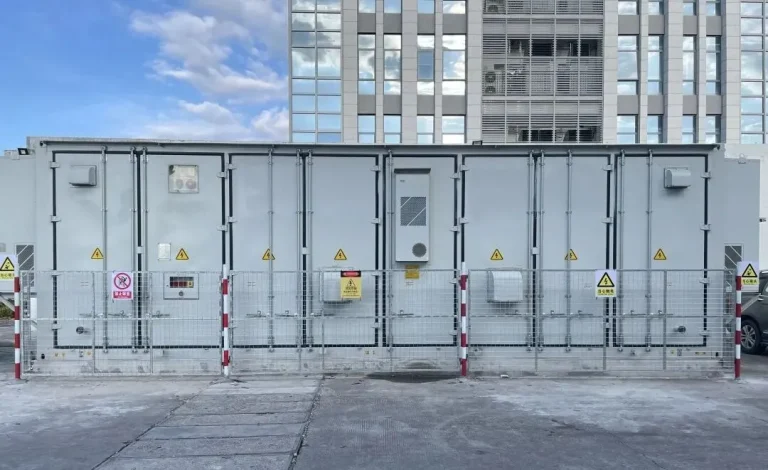
Air Cooling Air cooling uses fans or HVAC systems to force air through battery modules.
Best for: Small to medium ESS, telecom backup power, and low C-rate systems.
Limitations: Air has a low specific heat capacity, leading to lower heat transfer efficiency and weaker temperature uniformity (often resulting in cell temperature differences >7°C).
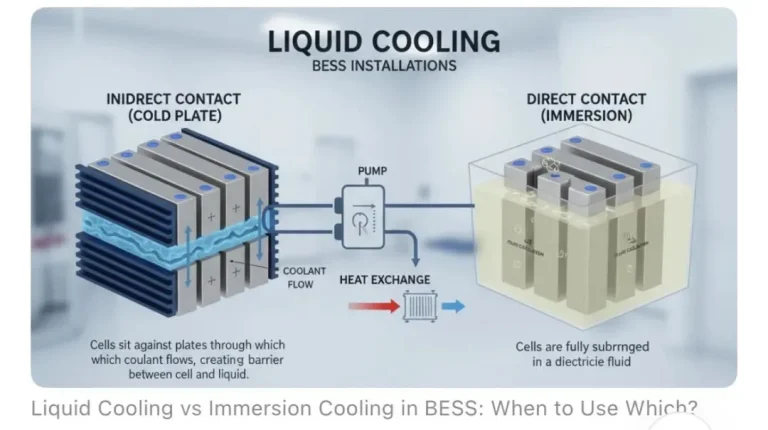
Liquid Cooling Liquid cooling utilizes a liquid coolant (typically a water-glycol mixture) circulating through liquid cold plates attached to the heat sources.
Best for: C&I ESS, MWh-scale containerized BESS, and high-density battery cabinets.
Advantages: Liquids have a much higher heat capacity. Liquid cooling allows for precise temperature control, saving up to 50% of the cabinet footprint compared to air-cooled equivalents by eliminating bulky air ducts.
Why Liquid Cooling Plates Are Used in High-Density BESS
As BESS installations scale up, liquid cooling plates have become the industry standard for high-capacity thermal management.
Strict Temperature Uniformity:
Advanced ESS liquid cooling plates can restrict the temperature difference (ΔT) between battery cells strictly to <3°C, which is critical for maximizing the lifecycle of the battery cluster.
PCS Thermal Management:
For high-power PCS units exceeding 500kW or modular integrated PCS systems, liquid cooling is the optimal choice to manage the extreme heat generated by IGBTs.
Lower Energy Consumption:
Pumping liquid requires significantly less parasitic power than running massive industrial fans. Under the same power dissipation requirements, liquid systems can save up to 50% in operational energy consumption compared to air cooling.
Key Design Factors for ESS Cooling Plates
A custom ESS cooling plate must be engineered around the battery module dimensions, heat load, and system pressure limits.
| Design Factor | Engineering Specification & Importance |
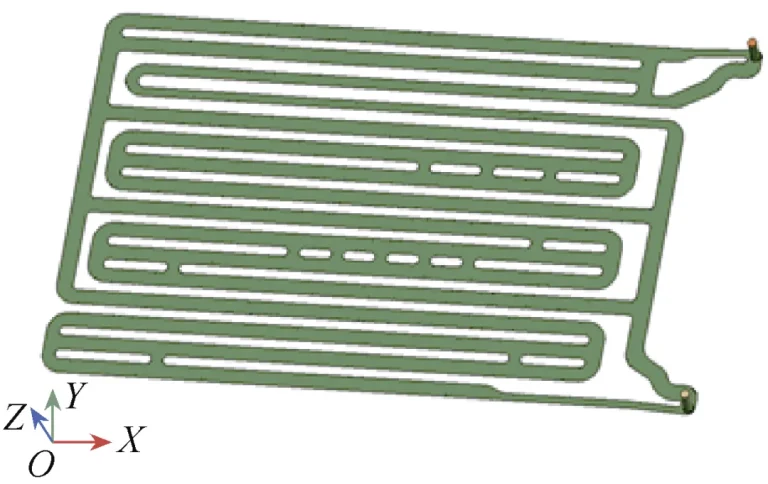
| Coolant Flow Rate & Pressure Drop | Increasing flow rate is not always the best solution. Channel design must balance thermal extraction with pressure drop to prevent overloading the pump. |
| Surface Flatness & Roughness | Critical for PCS cooling plates. Surface roughness should be ≤10μm to minimize thermal resistance between the power module and the cold plate. |
| Inlet/Outlet Temp Difference | Designing parallel flow channels rather than long series loops ensures the coolant temperature difference remains tight (e.g., ≤5°C), improving overall energy efficiency. |
| Leakage & Reliability Testing | ESS cold plates must undergo strict hydrostatic pressure and leak testing to prevent catastrophic coolant leaks inside the high-voltage battery pack. |
ESS Cooling Plate Manufacturing Options
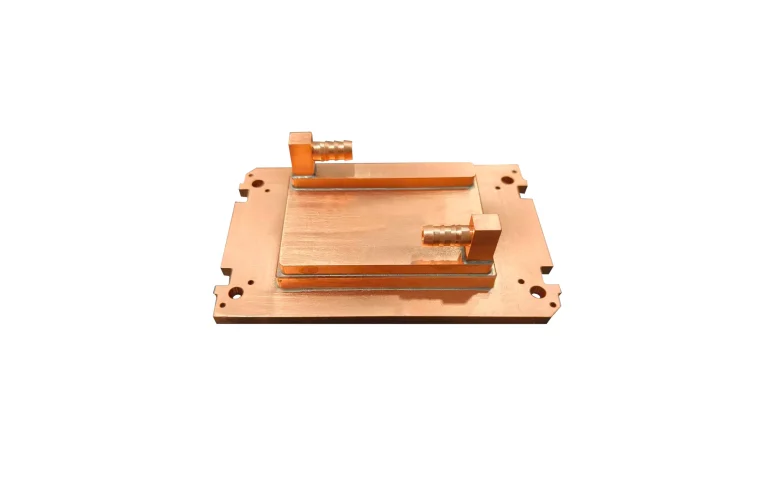
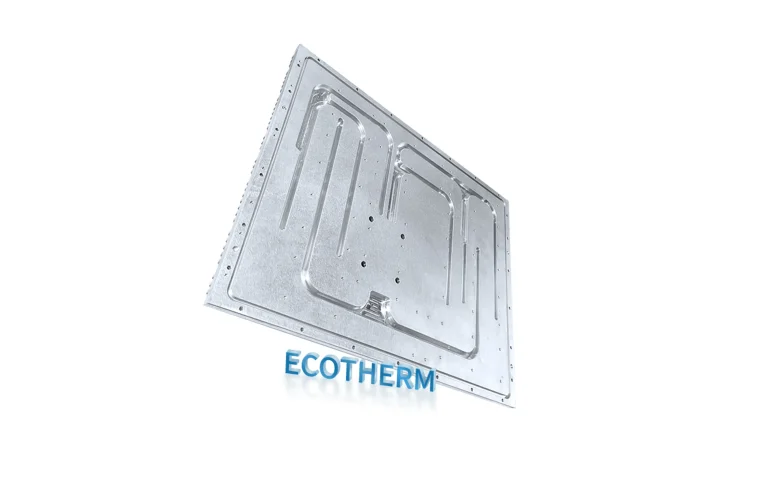
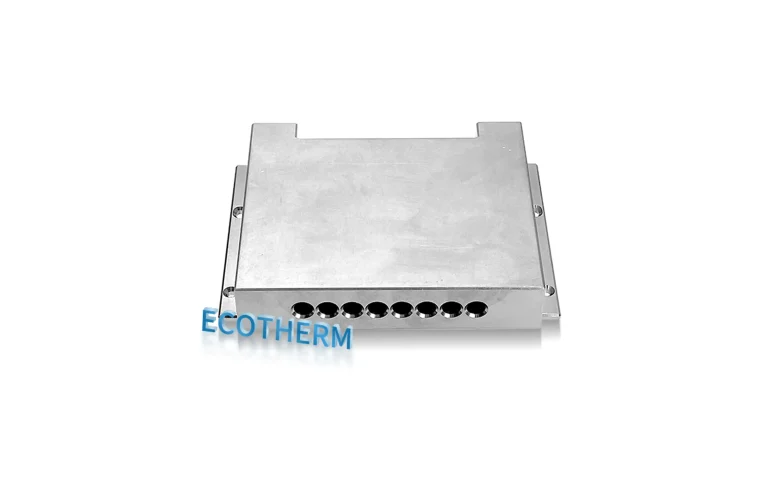
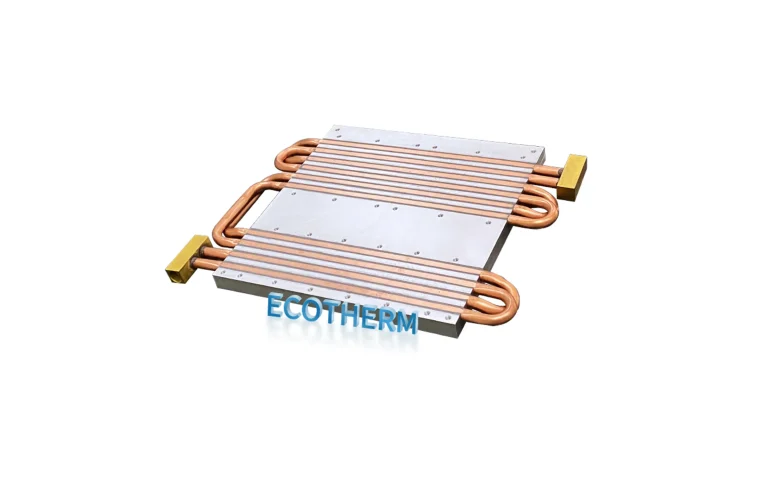
ESS Cooling Plate Manufacturing Options
To accurately review and quote an ESS cooling plate project, our engineers require the following parameters:
Application: Battery pack, PCS, containerized ESS, or C&I cabinet.
Module Size: 2D drawings, 3D CAD files (STEP/IGES), or module layouts.
Thermal Load: Cell-level or module-level heat generation (Watts).
Thermal Targets: Maximum allowable temperature and required temperature difference (ΔT).
Hydraulic Limits: Coolant type (e.g., 50% water-glycol), flow rate (L/min), and maximum allowable pressure drop.
Manufacturing Requirements: Preferred sealing method, surface flatness, and prototype/mass production quantities.
Send your design files and thermal requirements to Ecotherm for a comprehensive feasibility analysis and manufacturing review.
FAQ
Why do battery energy storage systems need cooling plates?
Cooling plates transfer heat directly from battery cells or power modules into a circulating liquid coolant. They are deployed when the power density is too high for air cooling to provide adequate heat transfer and temperature uniformity.
What coolant is used in ESS liquid cooling?
The majority of ESS liquid cooling loops utilize a water-glycol mixture (often 50/50). This provides excellent heat capacity while offering freeze protection and preventing corrosion when combined with appropriate inhibitors.
What temperature difference should an ESS cooling plate control?
For high-performance BESS, the target is to reduce the cell-to-cell temperature difference to under 3°C to 5°C. This ensures uniform aging across the battery pack and extends the system’s operational lifespan.
Which cold plate structure is best for ESS battery packs?
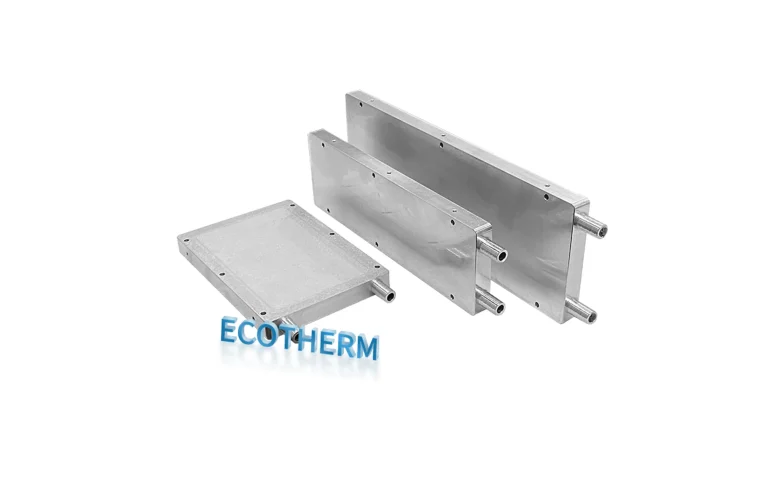
Large BESS battery packs typically rely on stamped brazed or friction stir welded (FSW) aluminum cooling plates. Aluminum provides the best balance of weight reduction, cost-efficiency, and thermal conductivity for large-format arrays.