Custom Cold Plates for High-Density Server Cooling
The growing demand for high-performance computing has made high-density server cooling a major challenge for data centers. Traditional air cooling methods often struggle to handle the intense heat produced by densely packed servers. Custom cold plates provide an effective solution, managing these thermal demands while improving energy efficiency.
Introduction to High-Density Server Cooling
High-density server cooling plays a vital role in modern data centers as computing demands grow with AI, HPC, and enterprise workloads. Traditional air cooling systems often struggle to handle increased rack power densities, leading to risks of overheating and reduced performance. Liquid cooling solutions, especially custom cold plates, have become an efficient alternative for managing thermal loads. These systems transfer heat directly from CPUs, GPUs, and other components to liquid coolants, ensuring reliable performance for high-powered servers.
Challenges in High-Density Server Environments
High-density server environments come with specific challenges, including localized heat hotspots, higher processor power densities, and the limitations of traditional cooling methods. Tightly packed racks make it difficult for air cooling to dissipate heat effectively, leading to uneven thermal management. Direct-to-chip cooling with custom liquid cold plates addresses these issues by targeting critical components like GPUs and CPUs, reducing thermal bottlenecks.
| Challenge | Solution |
|---|---|
| Hotspots in servers | Custom cold plates with microchannel designs |
| Limited airflow in dense racks | Direct liquid cooling |
| High power density | Enhanced thermal materials like copper |
Why Cooling Efficiency is Critical
Efficient cooling influences server performance, energy usage, and overall operational stability. Liquid cold plates enable superior thermal management, helping data centers reduce Power Usage Effectiveness (PUE) and meet sustainability goals. Compared to air cooling, liquid cooling provides up to 4,000 times greater heat transfer capacity, making it the preferred choice for high-density setups. Ecothermgroup offers custom cold plates designed to optimize thermal performance and meet the unique requirements of server architectures.
- Better energy efficiency
- Prolonged component lifespan
- Scalable for future server upgrades
The Role of Custom Cold Plates in Server Cooling
What Are Custom Cold Plates?
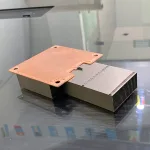
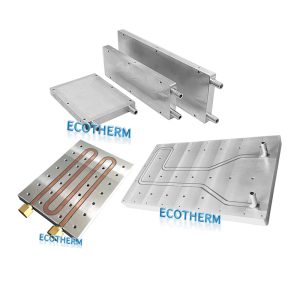
Custom cold plates are advanced thermal solutions designed to manage heat from high-density server components like CPUs, GPUs, and other hardware that generate significant heat. Unlike standard options, custom liquid cold plates are tailored to meet the specific needs of data centers, addressing factors like space constraints, heat load variations, and compatibility with direct liquid cooling systems. They are typically made from high-performance materials such as copper and aluminum to ensure efficient heat transfer and durability.
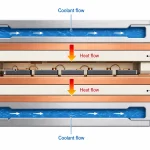
These cold plates often feature microchannel or pin-fin designs to enhance thermal performance. By increasing the surface area, these structures enable faster heat absorption by the coolant. This capability is essential for ensuring stable operations in high-density server setups, particularly as rack power density rises with AI and high-performance computing (HPC) deployments.
Companies like Ecothermgroup specialize in crafting custom thermal solutions to meet unique server cooling demands. Their designs are optimized for efficient heat dissipation, addressing the challenges posed by high-powered components like NVIDIA GPUs, which generate substantial heat under heavy workloads.
How Custom Cold Plates Improve Thermal Performance
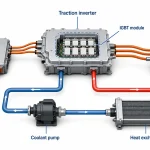
Custom cold plates enhance thermal performance by overcoming the limitations of air cooling and standard heat sinks. As server density increases, air cooling struggles to handle the heat produced by compact, high-powered components. In contrast, liquid cold plates deliver direct-to-chip cooling, transferring heat from components to a liquid coolant, which then dissipates heat through a heat exchanger.
A key strength of custom cold plates is their ability to achieve lower thermal resistance. By designing them to align with specific chip architectures, such as CPU or GPU configurations, engineers can optimize heat transfer pathways. This approach reduces hot spots and ensures even cooling, improving both efficiency and reliability in server environments.
Beyond performance, custom cold plates also support data centers’ sustainability efforts. By improving cooling efficiency, they help reduce Power Usage Effectiveness (PUE) ratings, cutting energy consumption and operational costs. This makes them a valuable part of hybrid cooling systems that combine air and liquid cooling for optimal results.
| Cooling Method | Key Features |
|---|---|
| Custom Cold Plates | Direct-to-chip cooling, optimized thermal design, high heat flux management |
| Air Cooling | Lower upfront cost, limited cooling capacity, high power density challenges |
| Immersion Cooling | Complete submersion in dielectric fluid, high efficiency, complex implementation |
When evaluating cold plate vs heat sink solutions, custom cold plates stand out for their scalability and flexibility. They are especially effective in high-density server cooling scenarios where traditional methods fall short. Partnering with experts like Ecothermgroup allows data centers to deploy tailored cooling solutions that align with performance and sustainability objectives.
Design Considerations for High-Density Server Cooling
Material Selection for Thermal Efficiency
Choosing the right material is a key factor in optimizing the performance of custom cold plates for high-density server cooling. Copper is well-known for its excellent thermal conductivity, making it ideal for handling high heat flux in applications like direct-to-chip cooling for GPUs and CPUs. However, its higher cost can be a challenge for budget-sensitive designs. Aluminum, by contrast, is a more affordable option that provides sufficient thermal performance for less demanding server setups. The choice between these materials depends on the specific cooling needs and budget of the project.
Beyond thermal conductivity, compatibility with the coolant is crucial to avoid problems like corrosion or scaling. For example, deionized water, often used in liquid cooling systems, can react with certain metals, necessitating corrosion inhibitors or specialized coatings. Ensuring the cold plate material and coolant work well together is essential for maintaining efficiency and reliability over time.
| Material | Key Features |
|---|---|
| Copper | High thermal conductivity, ideal for high heat flux, more expensive |
| Aluminum | Cost-effective, moderate thermal conductivity, lightweight |
Designing for Specific Components (e.g., NVIDIA Chips)
Custom cold plates need to be precisely designed to match the thermal and physical characteristics of specific server components. For example, NVIDIA GPUs, widely used in AI and high-performance computing environments, require tailored cold plate designs to handle the significant heat produced during operation. Direct-to-chip cold plates are highly effective as they position flow channels directly over the chip’s hottest areas, like cores and memory modules, for efficient heat transfer.
Advanced tools such as Computational Fluid Dynamics (CFD) are instrumental in optimizing the internal flow channel geometry. Patterns like microchannels or serpentine designs maximize heat exchange surface area, promote uniform coolant distribution, and reduce thermal hotspots. Engineers must also balance heat dissipation with hydraulic performance to minimize pressure drops, which can otherwise increase energy usage and wear on pumps.
- Use CFD tools to simulate coolant flow and identify potential dead zones.
- Incorporate modular designs for flexibility with future component upgrades.
- Factor in the thermal output of both GPUs and CPUs when creating hybrid cooling systems.
Scalability and Adaptability in Custom Designs
As data centers adapt to higher rack power densities, scalability and adaptability are vital in custom cold plate designs. Scalable solutions allow for seamless integration of additional cooling infrastructure as server loads grow, while adaptable designs ensure compatibility with various hardware configurations. For example, a liquid cold plate should support both current and next-generation processors, minimizing the need for frequent redesigns.
Hybrid cooling systems, which combine liquid cooling with air cooling, offer a practical solution for facilities transitioning to high-density cooling. These systems address the limitations of air cooling, such as insufficient heat dissipation in densely packed racks, while providing a cost-effective way to enhance server cooling efficiency without requiring a complete infrastructure overhaul. Ecothermgroup specializes in creating custom liquid cold plates that meet these scalability and adaptability demands, ensuring long-term operational efficiency.
Advantages of Liquid Cooling in Data Centers
Efficiency Compared to Air Cooling
Traditional air cooling systems have limitations when it comes to managing the thermal loads required for high-density server cooling. As server racks reach power densities of 10-15 kW, air cooling struggles to remove heat effectively, which can lead to performance issues. Liquid cooling, particularly with custom cold plates, offers significantly better thermal management by directly transferring heat away from key components like CPUs and GPUs.
Custom liquid cold plates, such as those provided by Ecothermgroup, make direct contact with high-heat components, enabling efficient heat transfer and thermal stability. This direct-to-chip approach surpasses the performance of conventional heat sinks and air-based systems. Liquid cooling solutions can handle racks exceeding 50 kW, making them ideal for demanding applications like AI and high-performance computing (HPC).
| Cooling Method | Max Power Density |
|---|---|
| Air Cooling | 10-15 kW per rack |
| Liquid Cooling | 50+ kW per rack |
Reduced Energy Consumption and Costs
Liquid cooling stands out for its ability to reduce energy consumption and operating costs in data centers. Air-cooled systems rely on energy-intensive air conditioning and large fans to manage heat. In contrast, cold plate liquid cooling systems require much less energy input, improving overall Power Usage Effectiveness (PUE).
Advanced cold plate designs efficiently dissipate heat through liquid coolants, which have far better thermal conductivity than air. This reduces the need for external cooling infrastructure, cutting electricity costs while supporting sustainability goals by lowering the carbon footprint of data centers. Industry estimates suggest that switching to liquid cooling can deliver up to 30% energy savings, depending on the system’s scale and configuration.
- Reduced reliance on air conditioning units
- Enhanced cooling efficiency with direct heat transfer
- Long-term savings on operational costs
Impact on AI and HPC Workloads
AI and HPC workloads require exceptional thermal performance due to their high computational demands. Powerful GPUs and CPUs generate substantial heat, which can affect performance if not properly managed. Custom server cold plates address this issue by delivering cooling solutions tailored to the specific needs of these workloads.
Direct-to-chip cold plates can be fine-tuned for high-density GPU setups used in AI training models. Similarly, CPU cold plates ensure consistent thermal performance for HPC tasks, improving reliability and efficiency. By keeping temperatures stable under heavy loads, liquid cooling supports data centers in meeting the rising computational demands of AI-driven technologies.
Hybrid cooling systems, which combine liquid cooling with limited air cooling, offer additional flexibility for mixed-use data centers. This approach balances efficiency with scalability, making it a preferred solution for modern high-density server environments.
Case Studies and Applications
Custom Cold Plates in AI and HPC Servers
High-density server cooling is a critical concern in AI and High-Performance Computing (HPC) environments, where increasing power densities require advanced thermal management solutions. Custom cold plates play a key role in direct-to-chip cooling systems, providing precise thermal control for CPUs, GPUs, and memory modules. Unlike traditional air-cooled systems, which face challenges dissipating heat in compact server setups, liquid cold plates excel by directly targeting heat sources.
For example, in AI servers using NVIDIA GPUs, custom liquid cold plates are designed with intricate microchannel structures to efficiently distribute coolant across high-heat components. This approach minimizes thermal resistance and ensures peak performance during heavy computational tasks. Engineers often use Computational Fluid Dynamics (CFD) modeling to fine-tune these designs, optimizing flow rates, material compatibility, and pressure drops before production. This process enhances cooling efficiency while reducing design iterations, saving both time and costs.
Hybrid cooling solutions, which combine cold plates and heat sinks, are becoming more popular in situations where air cooling falls short. These systems use cold plates for high-heat components like processors while relying on air cooling for less thermally demanding areas. This approach provides a scalable solution for data centers transitioning to liquid cooling while remaining compatible with existing infrastructure.
Real-World Examples from Data Centers
Several advanced data centers have adopted custom cold plate designs to tackle high-density server cooling challenges. For instance, a leading tech company collaborated with Ecothermgroup to implement direct-to-chip cold plates in its AI-focused data centers. This resulted in a 30% boost in cooling efficiency and a noticeable reduction in Power Usage Effectiveness (PUE), showcasing the economic and environmental benefits of liquid cooling systems.
In another case, a hyperscale data center upgraded from air cooling to custom cold plate thermal designs. By incorporating single-phase liquid cooling for CPU and GPU workloads, the facility achieved a 20% decrease in energy consumption compared to its prior air-cooled setup. Additionally, the adoption of closed-loop cooling systems eliminated the need for extensive HVAC upgrades, lowering overall deployment costs.
The following table highlights a comparison of cooling methods:
| Cooling Method | Key Advantages |
|---|---|
| Liquid Cold Plates | High thermal efficiency, scalable for high-density configurations, reduced energy consumption |
| Air Cooling | Lower upfront cost, simpler installation, widely available |
| Hybrid Cooling | Combines strengths of both methods, gradual infrastructure transition |
These examples highlight the flexibility and effectiveness of liquid cold plates in managing the complex thermal demands of modern data centers. By working with experts like Ecothermgroup, organizations can develop customized solutions tailored to their specific heat management needs and operational objectives.
- Custom cold plates improve server cooling by addressing high-heat components directly.
- CFD modeling and design refinement enhance thermal performance and reduce costs.
- Real-world applications demonstrate significant energy savings and adaptability.
Future Trends in High-Density Server Cooling
Innovations in Liquid Cooling Technologies
As high-density server cooling needs grow, liquid cooling technologies are advancing rapidly to tackle the thermal challenges of modern CPUs, GPUs, and other high-performance components. Direct-to-chip cooling, which uses custom liquid cold plates, is becoming a key solution in data center thermal management. These cold plates, designed specifically for processors like CPUs and GPUs, ensure effective heat transfer by making direct contact with the chip’s surface.
A prominent trend is the development of advanced microchannel designs within cold plates. These designs enhance thermal dissipation by increasing surface area and optimizing coolant flow paths, which is crucial for handling higher Thermal Design Power (TDP) processors. For example, cold plates engineered for NVIDIA’s AI chips are built to manage extreme heat loads, delivering improved performance in high-density setups.
Additionally, hybrid cooling solutions that combine liquid cooling with traditional air cooling are becoming increasingly popular. This method addresses the limitations of air cooling by using liquid cooling for hotspots while retaining air systems for broader thermal management. Innovations like coolant distribution units (CDUs) and heat recovery systems further improve energy efficiency and contribute to lower Power Usage Effectiveness (PUE) scores.
| Cooling Technology | Key Benefit |
|---|---|
| Direct-to-Chip Cold Plates | Efficient heat transfer for high TDP components |
| Microchannel Cold Plates | Enhanced thermal dissipation via improved flow paths |
| Hybrid Cooling | Combines liquid and air cooling for optimized solutions |
The Role of Sustainability in Cooling Solutions
Sustainability is becoming a key focus in high-density server cooling as organizations aim to lower energy consumption and reduce their carbon footprint. Liquid cooling systems, including custom liquid cold plates, require less energy compared to traditional air cooling, making them a more environmentally friendly choice.
Heat recovery systems are increasingly being integrated into liquid cooling setups. These systems capture waste heat and repurpose it for facility heating or other energy needs, boosting overall efficiency. The use of eco-friendly coolants in custom cold plates also supports industry-wide sustainability objectives.
- Lower energy consumption with liquid cooling compared to air cooling
- Incorporation of heat recovery systems for greener operations
- Use of environmentally friendly coolants in custom cold plate designs
Brands like Ecothermgroup are leading these advancements, providing customized solutions that balance performance and sustainability. As rack power density continues to rise, the adoption of liquid cold plates and other high-density cooling technologies is set to shape the market in the years ahead.
People Also Ask
What is high-density server cooling, and why is it important?
High-density server cooling refers to solutions designed to manage the heat generated by servers with high computational demands, commonly found in AI, HPC, and enterprise data centers. Proper cooling prevents overheating, maintains performance, and extends hardware lifespan.
How do custom cold plates function in high-density server cooling?
Custom cold plates work by transferring heat from high-power components, like CPUs and GPUs, through liquid cooling. They provide direct contact with hardware, offering better heat dissipation and efficiency compared to air cooling systems.
What design factors should be considered when creating cold plates for server cooling?
Important design factors include the server’s thermal output, the type of liquid coolant, compatibility with hardware, and the scalability of the system for dense environments. Custom designs ensure optimal performance tailored to specific needs.
What are the advantages of liquid cooling systems in data centers?
Liquid cooling is more efficient than air cooling due to the higher thermal conductivity of liquids. It helps handle greater heat loads, reduces energy use, and supports compact, high-density server setups.
Are custom cold plates suitable for cooling AI and HPC servers?
Yes, custom cold plates are ideal for AI and HPC servers because these systems produce significant heat. Custom designs can cater to components like NVIDIA GPUs, ensuring efficient heat management for demanding workloads.
What challenges are associated with cooling high-density servers?
Challenges include managing the high heat output of densely packed hardware, ensuring consistent cooling across components, and maintaining energy efficiency. Liquid cooling, including custom cold plates, effectively addresses these issues.
Can custom cold plates reduce operational costs in data centers?
Yes, custom cold plates enhance cooling efficiency, lowering energy consumption and operational costs. They also reduce the risk of hardware failure, cutting maintenance and replacement expenses.
What future trends are expected in high-density server cooling technologies?
Trends include broader use of liquid cooling, advancements in cold plate materials and designs, and AI-driven tools for precise thermal management. These innovations aim to support higher server densities while minimizing environmental impact.