Direct-to-Chip Cooling for High-Density Servers: Cold Plate Design Guide
As data centers become more advanced, managing heat in high-density server cooling systems is an increasingly critical task. This article provides a practical guide to designing efficient systems using direct-to-chip cooling with cold plates, tailored for today’s demanding server environments.
Introduction to High-Density Server Cooling
The rapid growth of data-intensive applications like artificial intelligence (AI), high-performance computing (HPC), and cloud services has driven the demand for high-density servers. These systems, equipped with powerful CPUs and GPUs, produce substantial heat, making efficient thermal management essential. Traditional air cooling methods, while once effective, are now struggling to meet the thermal demands of servers with increasing power densities. As a result, advanced technologies like direct-to-chip cooling have become vital solutions for high density server cooling. This section examines the challenges of managing thermal performance in these environments and explains why liquid cooling is shaping the future of server cooling.
The Challenges of High-Density Servers
High-density server environments bring specific challenges when it comes to thermal management. The compact design of these servers makes it harder for heat generated by components like processors to dissipate effectively. Additionally, as data centers aim for higher rack densities to maximize space, the thermal load per square foot increases significantly. Air cooling systems, though widely used, have limitations in addressing these issues for several reasons:
- Decreased efficiency at higher power densities
- Higher energy consumption for fans and air conditioning
- Difficulty targeting hotspots within the server chassis
One prominent challenge is the increasing power consumption of processors, with modern CPUs and GPUs often exceeding 300 watts per chip. This level of heat output requires highly efficient and localized cooling solutions to maintain performance and prevent hardware failures. Ecothermgroup, a leader in thermal management solutions, points out that traditional air cooling systems frequently fall short of these requirements without significant trade-offs in energy efficiency and operating costs.
Why Liquid Cooling is the Future
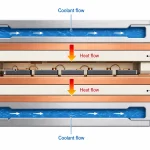
Direct-to-chip liquid cooling has revolutionized high density server cooling. Unlike air cooling, which depends on fans and airflow, liquid cooling systems use cold plates to draw heat directly from processors. These cold plates, typically made from thermally conductive materials like copper or aluminum, feature microchannels for effective heat transfer. The liquid coolant absorbs heat from the processors and transports it to an external heat exchanger, ensuring reliable thermal management even in the most demanding setups.
Liquid cooling offers several key advantages over air cooling:
| Feature | Air Cooling | Liquid Cooling |
|---|---|---|
| Cooling Efficiency | Limited at high densities | High, even in dense setups |
| Energy Consumption | Higher due to fans and HVAC systems | Lower with optimized liquid loops |
| Hotspot Management | Challenging | Precise and localized |
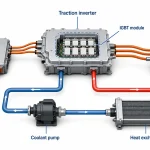
Direct-to-chip systems often use a dual-loop configuration. The primary loop removes heat from the data center using facility water, while the secondary loop circulates coolant within the server. This setup ensures efficient heat transfer away from processors and disperses it outside the server environment. Experts predict that as data centers continue adopting AI and HPC workloads, liquid cooling systems will become increasingly popular, reinforcing their position as the go-to solution for high density server cooling.
Beyond efficiency, liquid cooling delivers long-term benefits. By reducing dependence on energy-intensive air conditioning systems, data centers can cut operational costs and enhance sustainability. Additionally, innovations like custom liquid cold plates and GPU cold plates enable tailored solutions to meet the specific cooling needs of modern servers. With companies like Ecothermgroup driving innovation, liquid cooling is poised to become the standard for thermal management in high-performance data centers.
Understanding Direct-to-Chip Cooling
How Direct-to-Chip Cooling Works
Direct-to-chip cooling is a sophisticated thermal management solution designed to address the significant heat output of high-density servers. Unlike traditional air cooling, this method employs liquid coolant to absorb heat directly from components like CPUs and GPUs using a cold plate. Made from thermally conductive materials such as copper or aluminum, the cold plate interfaces with the chip surface to optimize heat transfer.
The coolant flows through microchannels in the cold plate, carrying heat away from the server components. It is then directed to a centralized cooling distribution unit (CDU), where it is cooled and recirculated. This approach minimizes thermal resistance and ensures precise temperature control, making it ideal for high-heat-density workloads like AI training and HPC applications.
Companies like Ecothermgroup offer custom liquid cold plates tailored to specific server configurations, ensuring compatibility with various chip architectures and thermal requirements. Customizing cold plate designs, such as adjusting microchannel patterns or material selection, is crucial for achieving optimal performance and reliability in demanding environments.
Single-Phase vs. Two-Phase Cooling
Direct-to-chip cooling systems are categorized as single-phase or two-phase based on how the coolant absorbs and dissipates heat. Understanding these methods is key to selecting the most effective solution for high-density server cooling.
| Cooling Type | Key Features |
|---|---|
| Single-Phase Cooling | The coolant remains in liquid form throughout the cooling cycle. This straightforward method offers consistent thermal performance and is commonly used in data centers prioritizing reliability and ease of maintenance. |
| Two-Phase Cooling | The coolant transitions from liquid to vapor as it absorbs heat. This approach provides higher thermal efficiency and is ideal for managing extreme heat loads but involves more complex system designs and precise controls. |
Single-phase systems are often preferred for their simplicity and compatibility with existing infrastructure. Conversely, two-phase cooling is better suited for applications requiring maximum efficiency, such as intensive GPU workloads. Industry data indicates that two-phase systems can deliver up to 30% greater thermal efficiency compared to single-phase setups, making them a strong choice for advanced data centers.
Practical Tips for Effective Direct-to-Chip Cooling
- Use cold plates made from high-conductivity materials like copper to enhance heat transfer.
- Ensure the CDU is properly sized to meet thermal load and flow rate demands.
- Incorporate leak prevention measures, such as durable seals and fail-safes, to maintain system reliability.
- Explore hybrid cooling strategies to balance energy efficiency and scalability for future expansions.
By integrating direct-to-chip cooling with custom cold plate designs, operators can achieve exceptional thermal performance and energy efficiency for high-density servers. Whether implementing single-phase or two-phase cooling, success lies in tailoring the solution to the data center’s specific needs. With innovations from leaders like Ecothermgroup, businesses are well-equipped to meet the growing demands of AI and HPC workloads.
Cold Plate Design Essentials
Key Components of a Cold Plate
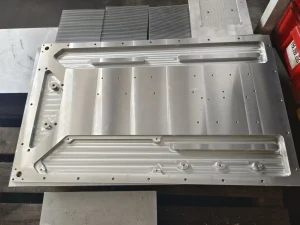
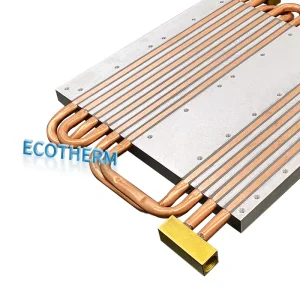
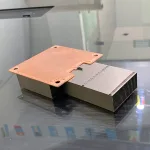
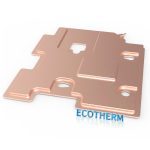
Cold plates are a cornerstone of high density server cooling systems, especially in direct-to-chip cooling setups. Designed to sit directly over heat sources like CPUs and GPUs, they transfer heat efficiently into a liquid coolant. The main components of a cold plate include the base plate for thermal transfer, internal microchannels to guide coolant flow, and inlet/outlet ports for fluid movement. Each element must be carefully designed to maximize thermal performance and ensure compatibility with server hardware.
For high-performance applications, custom liquid cold plates are often required to handle the unique thermal demands of CPUs or GPUs. These designs use detailed microchannel patterns to increase surface area, improving heat exchange while maintaining smooth coolant flow to prevent bottlenecks. Effective hydraulic design, such as reducing pressure drops, is essential for maintaining efficiency and avoiding turbulence that could harm internal components.
Materials and Thermal Conductivity Considerations
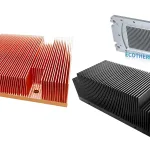
The choice of material plays a crucial role in the performance of a cold plate. Copper and aluminum are the most commonly used materials due to their excellent thermal properties. Copper offers superior thermal conductivity, making it ideal for extreme heat loads in high density servers. Aluminum, on the other hand, is favored for its lightweight nature and cost-effectiveness, particularly in less demanding scenarios.
Material selection must also account for compatibility with the coolant. For instance, glycol-based coolants are popular for their anti-corrosion properties, but their interaction with copper and aluminum can vary. To prevent long-term damage, manufacturers like Ecothermgroup recommend using corrosion inhibitors and ensuring all materials in contact with the coolant are compatible. The table below highlights the key properties of copper and aluminum for cold plate applications:
| Material | Thermal Conductivity (W/m·K) | Key Advantages | Primary Applications |
|---|---|---|---|
| Copper | 400 | High thermal efficiency | High-performance servers, GPUs |
| Aluminum | 205 | Lightweight, cost-effective | Standard cooling solutions |
Designing for Reliability and Maintenance
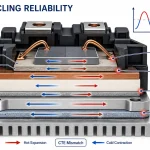
Reliability and maintenance are crucial in cold plate design. High density servers require consistent performance, making leak prevention essential. Using high-quality seals, precision welding, and dielectric coolants helps minimize risks. Additionally, advanced leak detection systems can provide real-time alerts, reducing downtime in the event of a failure.
Maintenance should also focus on ease of disassembly and cleaning. Over time, deposits or blockages in microchannels can reduce the efficiency of liquid cold plates. Designing plates with accessible ports and removable covers enables technicians to inspect and clean internal pathways without major disruptions.
- Maintain proper flow rates to prevent erosion within microchannels.
- Implement monitoring systems for pressure drops and temperature changes.
- Opt for modular designs to simplify replacement of worn components.
By following these best practices, organizations can enhance the durability and performance of their direct-to-chip cooling systems while lowering total cost of ownership.
Implementing Direct-to-Chip Cooling in Data Centers
Flow Control and Heat Dissipation Strategies
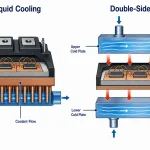
Effective flow control and heat dissipation are essential for high density server cooling systems using direct-to-chip cooling solutions. Cold plates play a crucial role, as they are mounted directly onto heat-generating components like CPUs and GPUs. Liquid coolants pass through microchannels in the cold plates, absorbing heat and transferring it to a coolant distribution unit (CDU). This ensures localized cooling efficiency, especially in data centers managing demanding workloads such as AI and HPC.
Single-phase cooling systems circulate liquid coolant without phase change, providing reliable and consistent thermal management. Two-phase systems, on the other hand, use the latent heat from coolant evaporation to improve temperature uniformity and support higher-density setups. The choice between these systems depends on rack density and workload demands.
Optimizing cold plate design involves refining microchannel configurations for better heat transfer, adjusting flow paths to reduce pressure drops, and ensuring material compatibility to prevent corrosion. Companies like Ecothermgroup focus on precision in cold plate thermal design to deliver long-term performance and scalability.
| Cooling System | Key Features |
|---|---|
| Single-Phase | Reliable, consistent temperature control |
| Two-Phase | Enhanced efficiency via coolant evaporation |
Integration with Existing Infrastructure
Integrating direct-to-chip cooling into existing data center infrastructure requires careful planning. Compatibility with current server designs is critical, as retrofitting may require replacing air-cooled components with liquid-cooled cold plates. Coolant distribution units must also align with the facility’s water supply systems for smooth operation.
Operators should evaluate the impact on Power Usage Effectiveness (PUE). Direct liquid cooling can lower energy consumption by using warm water cooling and reducing reliance on chillers. In favorable climates, free cooling can further boost efficiency.
- Assess existing server configurations for compatibility.
- Ensure proper installation of coolant distribution units.
- Enhance PUE through warm water cooling techniques.
Scalability and Future-Proofing
Scalability is a critical factor when implementing direct-to-chip cooling systems in data centers. High-density server cooling solutions must support future expansions without sacrificing performance. Modular cold plate designs, such as those provided by Ecothermgroup, allow for easy upgrades to meet increasing workloads.
To future-proof these systems, operators should prioritize leak prevention, material durability, and advanced monitoring tools for coolant quality. Investing in scalable infrastructure ensures readiness for evolving technologies, including higher-density GPU and CPU configurations.
By addressing these factors, data centers can effectively manage thermal challenges and meet growing computational demands.
Benefits and Trade-Offs of Liquid Cooling
Energy Efficiency Gains
Liquid cooling, especially direct-to-chip cooling, stands out for its impressive energy efficiency. In high-density server cooling, these systems can achieve Power Usage Effectiveness (PUE) values as low as 1.1, far surpassing traditional air-cooling methods. Liquids like water or dielectric fluids are approximately 1,000 times more effective at conducting heat than air, enabling efficient heat absorption and transfer. By directly cooling CPUs, GPUs, and other heat-intensive components with a cold plate, systems developed by Ecothermgroup significantly reduce dependency on energy-heavy air circulation systems.
Direct-to-chip liquid cooling also eliminates the need for oversized air-conditioning capacity, often required to handle hotspots in high-density server setups. This enhanced thermal management lowers operational costs and helps extend the lifespan of critical components by maintaining stable thermal conditions.
Cost Considerations for High-Density Server Cooling
While liquid cooling delivers significant energy savings, it does involve higher upfront expenses. Installing a direct-to-chip liquid cooling system, which includes custom liquid cold plates and infrastructure like Coolant Distribution Units (CDUs), requires a substantial initial outlay. These costs are further influenced by the need for precision-engineered components, such as microchannel cold plates optimized for CPUs and GPUs.
However, the long-term return on investment (ROI) is often compelling. Facilities using liquid cooling frequently report annual energy savings of 20-30%, especially in areas with high energy costs. Additionally, lower failure rates in liquid-cooled servers translate to reduced maintenance expenses over time.
| Cost Factor | Impact |
|---|---|
| Upfront Installation | High |
| Energy Savings | 20-30% annually |
| Maintenance Costs | Lower over time |
Environmental Impact and Sustainability
Direct-to-chip cooling systems help reduce the environmental footprint of high-density data centers. By adopting liquid cooling, facilities can significantly cut energy consumption associated with traditional air cooling, leading to lower carbon emissions. Additionally, the ability to operate servers at higher temperatures while maintaining effective cooling reduces both water and energy usage during heat rejection.
The sustainability benefits, however, depend on the coolant used. Water-based solutions are common but require careful management to avoid issues like corrosion or scaling. Dielectric fluids, while reducing the risk of leaks, are more expensive and may have environmental trade-offs depending on their production process. Ecothermgroup emphasizes selecting the right coolants and materials to balance sustainability with operational efficiency.
- Reduced carbon emissions from lower energy use
- Minimized water consumption in heat rejection systems
- Careful selection of materials and coolants for sustainability
Adopting liquid cooling for high-density servers offers unmatched energy efficiency and sustainability benefits. However, operators must balance these advantages with upfront costs and system complexity to ensure a smooth implementation.
People Also Ask
What is direct-to-chip cooling, and how does it work in high-density server environments?
Direct-to-chip cooling is a liquid cooling method where coolant flows directly to cold plates attached to processors and other heat-generating components. This method effectively removes heat from high-density servers, offering better thermal management compared to air cooling.
Why is cold plate design critical for high-density server cooling?
Cold plate design is vital because it determines how efficiently heat is transferred from the processor to the coolant. Poorly designed cold plates can cause uneven cooling, hotspots, and decreased performance in high-density server setups.
What are the key trade-offs between single-phase and two-phase direct-to-chip cooling systems?
Single-phase cooling uses a liquid coolant that remains in its liquid state, providing simpler operation and easier maintenance. Two-phase cooling, which involves a liquid-to-vapor phase change, enhances heat transfer but requires more complex management and higher upfront costs.
How can data centers implement direct-to-chip cooling for high-density servers?
Data centers can adopt direct-to-chip cooling by retrofitting systems with liquid cooling components like pump systems, sealed coolant loops, and cold plates. Careful planning and ensuring compatibility with existing server designs are key to successful implementation.
What are the main advantages of direct-to-chip cooling for high-density servers?
Direct-to-chip cooling delivers efficient thermal management, lowers energy consumption, and supports the high computational demands of workloads like AI and HPC. It also enables greater server density within data centers.
Is liquid cooling more reliable than air cooling for high-density servers?
Liquid cooling is often more reliable for high-density servers due to its efficient and steady heat removal. However, reliability depends on factors like proper system design, regular maintenance, and effective leak prevention.
What are the common challenges associated with direct-to-chip cooling in data centers?
Challenges include creating leak-proof systems, maintaining coolant quality, managing retrofits, and optimizing cold plate designs for specific server configurations. Thorough planning and monitoring are essential to overcoming these challenges.
How does direct-to-chip cooling impact data center energy efficiency?
Direct-to-chip cooling improves energy efficiency by reducing reliance on traditional air conditioning systems. By removing heat directly from components, it reduces cooling energy use and supports higher server densities.