Server Immersion Cooling vs Cold Plate Cooling
As data centers continue to expand, keeping servers cool has become more costly and challenging. This article compares server immersion cooling with cold plate liquid cooling in terms of cost, maintenance, and deployment, helping businesses and teams like Ecothermgroup choose the right solution for stronger performance and improved energy efficiency.
Takeaway
- Server immersion cooling offers greater energy efficiency and supports higher server densities than cold plate liquid cooling, making it a strong choice for large-scale or high-performance deployments.
- Cold plate liquid cooling delivers targeted thermal management and is easier to retrofit into existing rack infrastructure, making it well suited for gradual upgrades and mixed environments.
- Upfront costs for server immersion cooling are usually higher because of specialized tanks and dielectric fluids, while cold plate systems often come with lower initial costs but can add operational complexity over time.
- Maintaining immersion cooling systems involves managing fluid quality and ensuring component compatibility, while cold plate systems require regular monitoring for leak risks and stable coolant circulation.
- Immersion cooling works best in greenfield data centers or environments with high heat output workloads, while cold plate cooling is often a better fit for phased adoption strategies and hybrid infrastructure setups.
- The energy savings from server immersion cooling can help offset higher capital costs over time, especially in dense computing environments, while cold plate systems provide moderate efficiency improvements with less complex infrastructure.
- Choosing between these cooling methods depends on balancing performance requirements, available space, long-term operating costs, maintenance capabilities, and overall infrastructure goals, including solutions offered by Ecothermgroup.
Cooling Technologies Overview
How Server Immersion Cooling Works
Server immersion cooling submerges IT hardware directly in a non-conductive liquid that absorbs heat from CPUs, GPUs, memory, and power components. In many AI and high-performance computing facilities, server immersion cooling supports rack densities above 100 kW, far higher than typical air-cooled environments. Industry reports from 2024 indicate that advanced liquid systems can cut cooling energy use by 30% to 50% compared with traditional air cooling in large data centers.
Most immersion systems use single-phase or two-phase dielectric fluids. The liquid carries heat away from the hardware and transfers it through a heat exchanger. Unlike direct-to-chip cooling, immersion systems don’t need separate GPU or CPU cold plates attached to every processor. This reduces fan usage and can lower the risk of mechanical failure over time.
- High rack density for AI workloads
- Lower fan power consumption
- Reduced airborne dust inside servers
While immersion requires specialized tanks, direct-to-chip systems rely on the absolute precision of the hardware. Custom component manufacturers like Ecothermgroup focus on advanced sealing technologies—such as friction stir welding (FSW) and vacuum brazing—to deliver leak-proof liquid cold plates that handle extreme GPU heat without requiring full facility overhauls.

How Cold Plate Liquid Cooling Works
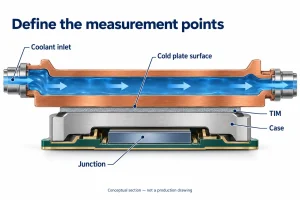
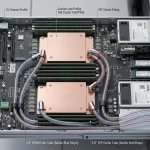
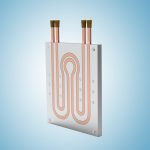
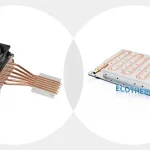
Cold plate liquid cooling removes heat through metal plates attached directly to processors and accelerators. A direct-to-chip cold plate transfers heat from a CPU or GPU into circulating coolant through internal flow channels. This approach is common in modern AI clusters because it lets operators maintain existing rack layouts while improving thermal efficiency.
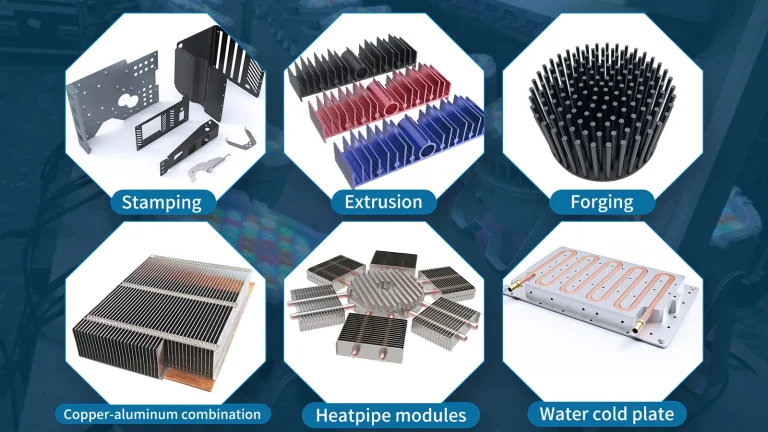
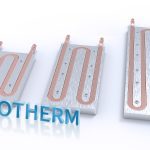
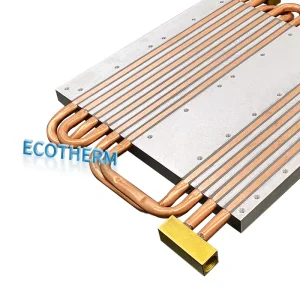
Manufacturers offer several cold plate designs, including microchannel, tube-embedded, brazed, vacuum-brazed, friction-stir welded, and gun-drilled systems. Material choice affects both thermal resistance and cost. Copper cold plates generally provide better heat transfer, while aluminum plates reduce weight and manufacturing expense.
| Cooling Type | Main Deployment Benefit |
|---|---|
| Immersion cooling | Supports very high-density AI racks |
| Server cold plate cooling | Easier retrofit into existing facilities |
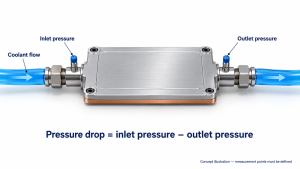
Cold plate performance depends on coolant flow rate, pressure drop, and machining precision. Engineers typically balance thermal performance with pump energy use because high coolant flow can increase operating costs. TLP diffusion-bonded cold plate systems are gaining attention for improved durability in high-pressure enterprise environments.
Performance and Energy Efficiency
Heat Removal Capacity
Server immersion cooling provides high heat removal capacity by submerging entire servers in dielectric fluids, enabling even heat extraction from CPUs, GPUs, and memory modules. According to recent industry data, immersion systems can support up to 50–60 kW per rack, compared to the 15–20 kW typically handled by traditional air-cooled racks. By comparison, direct-to-chip cold plate systems, whether using a custom liquid cold plate, microchannel cold plate, or tube embedded cold plate, focus cooling on specific components. This targeted approach helps reduce thermal hotspots but requires careful internal flow channel design to avoid uneven coolant distribution and pressure drop issues.
Material selection also affects heat transfer efficiency. Copper cold plates generally provide lower thermal resistance than aluminum cold plates, while advanced brazed or TLP diffusion bonded cold plates improve structural stability under high flow rates. Ecothermgroup recommends matching the cold plate type, including brazed, vacuum brazed, or friction stir welded options, with expected server workloads to improve thermal performance without unnecessarily increasing pump power.
| Cooling Method | Maximum Rack Heat Load |
|---|---|
| Immersion Cooling | 50–60 kW |
| Direct-to-Chip Cold Plate | 15–30 kW |
Power Usage Effectiveness
Power Usage Effectiveness (PUE) is a key measure of energy efficiency in data centers. Server immersion cooling can often reduce PUE to between 1.05 and 1.2 by removing the need for large air-conditioning systems, while cold plate systems may improve PUE by 10–20% compared to air cooling alone. Efficient coolant flow design, leak testing, and controlled pressure drop in liquid cooling cold plates directly influence PUE by reducing pump energy use. High-density AI clusters often benefit the most from immersion systems because lower coolant temperatures and reduced thermal resistance help prevent throttling, which can otherwise increase overall power consumption.
At the same time, well-designed server cold plate installations, including CPU cold plate and GPU cold plate configurations, can deliver comparable energy efficiency when paired with modern chiller systems. Microchannel and gun-drilled cold plates increase surface contact area, improving heat transfer and lowering the need for oversized pumps. This makes them a practical option for retrofitted data centers where full immersion is not practical or cost-effective.
Support for High-Density AI Workloads
High-density AI servers generate concentrated heat that challenges both immersion and cold plate cooling strategies. Server immersion cooling stands out for maintaining even temperature control and reducing hotspots across large clusters. In comparison, custom liquid cold plates, especially tube embedded or vacuum brazed designs, provide targeted cooling for high-TDP GPUs and CPUs, making them well suited for hybrid deployments. Choosing the right internal flow channels and maintaining CNC machining precision helps ensure consistent coolant distribution, which is critical for reliability during sustained AI workloads.
- Evaluate server TDP and component layout to determine the most suitable cold plate type, including aluminum vs copper and brazed vs gun-drilled designs.
- Confirm pressure drop and coolant flow rate specifications to avoid pump overload and maintain stable cooling performance.
- Carry out regular leak testing and maintenance to preserve thermal performance over time.
In practice, many operators combine immersion cooling for dense racks with direct-to-chip cold plates on high-priority nodes. This hybrid approach increases heat removal capacity, improves PUE, and maintains flexibility for AI-focused workloads. The decision between immersion and cold plate solutions should account for installation costs, long-term maintenance needs, and workload requirements to achieve strong energy efficiency without sacrificing performance. Ecothermgroup supports this approach by helping operators align cooling methods with real-world infrastructure demands.
Cost and Infrastructure Requirements
Initial Deployment Costs
When comparing server immersion cooling with direct-to-chip cooling, the first major difference is the upfront investment. Immersion systems usually require sealed immersion tanks, dielectric coolant, fluid distribution units, and server designs that are compatible with tank-based operation. According to several data center infrastructure studies published between 2023 and 2025, immersion cooling projects can raise upfront deployment costs by 20% to 40% compared with traditional air-cooled racks, especially in AI clusters with rack densities above 80 kW.
Cold plate systems often cost less during the first installation because many facilities can keep their existing rack layouts and power systems. A direct-to-chip cold plate setup mainly adds liquid loops, manifolds, pumps, and custom liquid cold plates for high-power processors. GPU cold plate and CPU cold plate designs are commonly made from copper cold plate or aluminum cold plate materials because both offer a practical balance of thermal resistance, durability, and manufacturing cost.
| Cooling Method | Main Infrastructure Cost Drivers |
|---|---|
| Server immersion cooling | Immersion tanks, dielectric fluid, tank-ready servers |
| Direct-to-chip cooling | Server cold plate, CDU units, facility piping |
Industry engineers also point out that manufacturing quality has a direct effect on deployment budgets. A microchannel cold plate or vacuum brazed cold plate may provide better heat transfer, but CNC machining complexity, leak testing, and overall manufacturing capability can increase production costs. Ecothermgroup and similar suppliers often recommend balancing coolant flow rate and pressure drop rather than automatically choosing the most advanced design on paper.
Facility Retrofitting Needs
Facility retrofitting is another major cost factor. Many older data centers were built for air cooling loads below 20 kW per rack. Modern AI servers can exceed 100 kW, making liquid cooling almost necessary in high-density environments. Direct-to-chip cooling is generally easier to retrofit because operators can add liquid cooling cold plate systems while keeping most existing white space layouts, rack positions, and service access paths.
- Tube embedded cold plate systems are often used in moderate-density retrofits.
- Friction stir welded cold plate and brazed cold plate designs are common in high-density GPU clusters.
- TLP diffusion bonded cold plate units are usually selected for advanced HPC applications.
Immersion deployments usually need stronger floor loading support, fluid handling safety controls, and modified maintenance procedures. Some operators also need updated fire suppression reviews because dielectric fluids behave differently from traditional air cooling environments. Industry reports from 2024 showed that modular immersion systems reduced retrofit time compared with earlier large-scale tank systems, but the process still tends to be more disruptive than adding a direct-to-chip cold plate network.
Long-Term Operating Expenses
Long-term operating costs depend on energy efficiency, maintenance labor, and hardware lifespan. Several studies on AI-focused facilities reported PUE values near 1.03 to 1.10 for immersion systems, while well-designed cold plate deployments often operate between 1.1 and 1.2. Lower PUE can reduce electricity costs significantly in large hyperscale sites, especially where power pricing and cooling loads are major operating concerns.
Maintenance needs are less straightforward. Many operators prefer server cold plate systems because technicians can replace a cold plate heat sink, connector, or pump without removing entire servers from fluid tanks. Supporters of server immersion cooling argue that fewer server fans, lower vibration, and more stable temperatures may reduce hardware failure rates over time.
- Monitor internal flow channels regularly for contamination.
- Verify coolant chemistry every 6 to 12 months.
- Track thermal resistance changes to detect early blockages.
Cold plate systems also require careful attention to coolant flow rate and connector sealing. Gun-drilled cold plate and microchannel cold plate designs can improve thermal performance, but higher pressure drop may increase pump energy use. Most industry experts recommend matching the cooling architecture to rack density, expansion plans, maintenance staffing, and facility constraints instead of focusing only on the initial equipment price.
Maintenance and Operational Challenges
Hardware Access and Serviceability
Maintenance is one of the main differences between server immersion cooling and cold plate systems. In immersion tanks, servers are fully submerged in dielectric fluid, so technicians must remove and drain the hardware before replacing memory, drives, or power units. Operators at large AI data centers report that this process can extend service times compared to air cooling, especially during the early stages of deployment. At the same time, immersion systems reduce dust buildup and thermal cycling, which can help lower hardware failure rates over the long term.
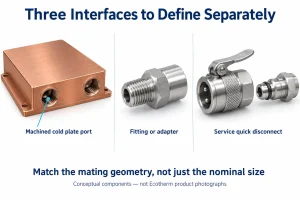
Cold plate systems provide easier hardware access because the server cold plate and direct-to-chip cold plate only cover major heat-generating components such as CPUs and GPUs. Technicians can often service storage or networking hardware without draining the cooling loop. Many operators prefer this approach in facilities with frequent maintenance demands. A GPU cold plate or CPU cold plate can usually be disconnected with quick-release fittings, although proper leak testing is still necessary after servicing.
| Maintenance Area | Immersion Cooling | Cold Plate Cooling |
|---|---|---|
| Hardware access | Slower due to fluid handling | Faster component replacement |
| Dust control | Very strong | Moderate |
| Leak risk | Low external leak exposure | Requires regular inspection |
| Retrofit difficulty | Higher | Lower for existing racks |
Manufacturing quality also plays a major role in long-term serviceability. A poorly designed microchannel cold plate or brazed cold plate can create excessive pressure drop and uneven coolant flow. Data center engineers often recommend copper cold plate designs for high-performance AI clusters because copper offers lower thermal resistance than aluminum cold plate models, while aluminum versions help reduce weight and cost. Suppliers such as Ecothermgroup also highlight CNC machining precision and stable internal flow channels to improve long-term reliability.
Fluid Management and Reliability
Fluid management introduces different operational risks for each cooling method. Server immersion cooling depends on dielectric fluids that require regular monitoring for contamination, oxidation, and moisture levels. According to industry studies published in 2023 and 2024, fluid replacement costs can become substantial in large-scale deployments exceeding 100 kW per rack. Operators also need spill control procedures and trained staff to handle fluids safely.
Cold plate systems place more focus on coolant circulation reliability. A liquid cooling cold plate network may include tube embedded cold plate, gun-drilled cold plate, or vacuum brazed cold plate assemblies connected through manifolds and pumps. If coolant flow drops, thermal resistance can rise quickly and increase the risk of hotspots.
- Check coolant chemistry every 3 to 6 months
- Perform pressure and leak testing during maintenance cycles
- Monitor pump vibration and pressure drop continuously
- Inspect fittings around CPU cold plate and GPU cold plate connections
Industry experts generally consider TLP diffusion bonded cold plate and friction stir welded cold plate designs more durable for high-density computing because they reduce weld weak points and improve sealing strength. Even so, no cooling method is completely maintenance free. Most data center teams weigh service complexity, deployment cost, and long-term reliability before selecting between immersion and cold plate architectures.
Deployment Strategies and Use Cases
Best Fit for New Data Centers
For new data center construction, server immersion cooling offers a practical and streamlined deployment path. Because racks and supporting infrastructure can be designed from the ground up, full-immersion tanks or modular immersion units can be integrated with fewer compromises around piping, coolant routing, and equipment layout. Industry reports suggest that AI-focused facilities using immersion cooling can achieve up to 40% lower PUE (Power Usage Effectiveness) compared with traditional air-cooled designs. Alongside immersion systems, custom liquid cold plate solutions, including direct-to-chip CPU cold plates and GPU cold plates, provide precise thermal control for high-density racks. New builds also make it easier to choose between aluminum cold plates, copper cold plates, and advanced microchannel cold plates based on thermal resistance, durability, coolant compatibility, and long-term operating needs, without the limitations that come with retrofitting older facilities.
Ecothermgroup highlights that choosing between immersion cooling and cold plate cooling during the planning stage helps data centers optimize coolant flow rates, internal flow channels, and pressure drop, all of which have a direct effect on operating efficiency. For example, vacuum brazed cold plates and tube embedded cold plates can help reduce leak risks, improve structural reliability, and simplify maintenance schedules in high-performance racks where uptime and predictable cooling performance are critical.
Retrofitting Existing Facilities
Retrofitting older facilities often makes cold plate solutions the more practical option because they are modular and can be installed locally at the component level. Installing server cold plates, TLP diffusion bonded cold plates, or friction stir welded cold plates directly on CPUs and GPUs enables targeted cooling without requiring major changes to the existing building, rack layout, or power distribution system. Immersion cooling retrofits are possible, but they often require floor reinforcement, tank installation, coolant handling planning, and electrical adjustments. These added requirements can raise initial project costs by 25–35%, depending on the condition of the facility and the scale of the upgrade.
In retrofit projects, teams should carefully review leak testing requirements, thermal resistance targets, and CNC machining capabilities to ensure the selected cold plates meet manufacturing and performance standards. Table 1 summarizes the main deployment differences between immersion and cold plate cooling for retrofit projects.
| Deployment Aspect | Immersion vs Cold Plate |
|---|---|
| Installation Complexity | High for immersion, moderate for cold plates |
| Infrastructure Changes | Requires tanks and floor reinforcement for immersion, minimal changes for cold plates |
| Scalability | Moderate and modular for immersion, incremental for cold plates |
| Maintenance Disruption | Higher for immersion, lower for cold plates |
Choosing Between Immersion and Cold Plate Cooling
The right choice depends on workload density, maintenance capacity, available space, and cost tolerance. Immersion systems perform well in AI-heavy, GPU-dense environments because they can reduce energy use and support higher rack density. Cold plates, especially custom liquid cold plates and gun-drilled or brazed cold plates, are often better suited for facilities that need precise direct-to-chip cooling without large-scale infrastructure changes. Pressure drop, internal flow channels, coolant compatibility, sealing methods, and material selection should all be evaluated early to support system reliability and long-term thermal performance.
- Assess workload type: GPUs and high-performance CPUs often benefit from immersion in new builds, while CPUs in moderate-density racks may be better suited to cold plates.
- Evaluate existing infrastructure: Retrofit projects usually favor server cold plates or liquid cooling cold plates because they require fewer changes to the facility.
- Estimate maintenance capacity: Immersion systems require access to tanks and coolant handling processes, while cold plates allow more direct component-level replacement.
In many cases, a hybrid approach can provide the best balance. Immersion cooling may be used for dense GPU racks, while liquid cooling cold plates manage critical CPU workloads or specific high-heat components. Ecothermgroup’s experience suggests that addressing thermal resistance, microchannel cold plate selection, CNC machining precision, and coolant routing early in deployment planning can improve long-term efficiency, reduce operational disruptions, and help data centers choose a cooling architecture that fits both current workloads and future expansion plans.
Ready to upgrade your server thermal management?
Whether you are designing a high-density AI cluster or retrofitting an existing data center, the right cold plate design is critical. Send your heat load specifications and 3D CAD drawings to Ecothermgroup today for a fast feasibility review and custom cold plate manufacturing proposal.
People Also Ask
What is the main difference between server immersion cooling and cold plate liquid cooling?
Server immersion cooling fully submerges servers in a non-conductive liquid, while cold plate cooling removes heat through liquid-cooled plates attached to key components such as CPUs and GPUs. Server immersion cooling manages higher heat loads more evenly, while cold plate systems are often simpler to integrate into existing data center environments.
Which cooling method offers better energy efficiency for AI and high-density workloads?
Server immersion cooling generally delivers lower PUE values and more effective heat removal for dense AI workloads because it reduces reliance on traditional air cooling. Cold plate cooling is also highly energy efficient, but some deployments may still require supplemental air cooling for certain components.
Is immersion cooling more difficult to maintain than cold plate liquid cooling?
Immersion cooling can make hardware access and servicing more involved because components must be removed from dielectric fluid before maintenance. Cold plate systems usually allow easier component replacement, although they also require leak management and ongoing coolant distribution maintenance.
Can existing data centers retrofit immersion cooling systems?
Yes, but retrofitting for server immersion cooling often requires significant infrastructure updates, including specialized tanks and fluid management systems. Cold plate liquid cooling is typically easier to retrofit because it can work with existing rack layouts and facility designs.
Does server immersion cooling reduce electricity costs?
Yes, server immersion cooling can reduce electricity costs by lowering dependence on power-intensive air conditioning and improving overall thermal performance. Companies such as Ecothermgroup focus on advanced cooling solutions that help data centers improve efficiency, especially in high-density computing environments with continuous workloads.
Which cooling method has a lower upfront deployment cost?
Cold plate liquid cooling usually comes with a lower initial deployment cost because it supports more traditional server designs and infrastructure. Server immersion cooling often requires specialized equipment and facility modifications, which can lead to a higher upfront investment.
Are immersion-cooled servers compatible with standard data center hardware?
Many standard servers can be adapted for server immersion cooling, although some components may require modifications or testing to ensure fluid compatibility. Cold plate cooling generally supports more conventional server configurations with fewer hardware adjustments.
When should a data center choose immersion cooling over cold plate cooling?
Server immersion cooling is often the better option for ultra-high-density AI, HPC, and cryptocurrency workloads where maximum heat removal and energy efficiency are top priorities. Cold plate cooling may be a better fit for organizations that want easier deployment, gradual infrastructure upgrades, and stronger compatibility with existing data center environments.