AI Server Liquid Cooling: Cold Plate Design for GPU and CPU Cooling
As AI servers grow more powerful, managing the heat produced by high-performance GPUs and CPUs has become a significant challenge. AI server liquid cooling, especially through advanced cold plate designs, provides an efficient way to prevent overheating and enhance performance. This article examines how cutting-edge cold plate technology is reshaping thermal management for AI server hardware.
Introduction to AI Server Liquid Cooling
Why Liquid Cooling is Essential for AI Servers
AI server liquid cooling is a key solution for managing heat in modern data centers and high-performance computing (HPC) environments. Unlike traditional air cooling, liquid cooling uses the superior thermal conductivity of liquids to effectively dissipate heat from high-power GPUs and CPUs. AI workloads often exceed 1,000W Thermal Design Power (TDP), making air cooling inadequate for maintaining consistent performance and reliability. Liquid cooling, especially direct-to-chip (D2C) systems, provides precise temperature control, preventing throttling and hardware damage.
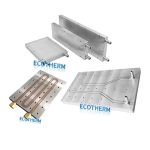
One major benefit of liquid cooling is its ability to support high-density server setups. AI servers equipped with multiple GPUs and CPUs require compact designs and advanced cooling solutions like liquid cold plates. These plates transfer heat directly from components to a circulating coolant, ensuring efficient thermal distribution. Ecothermgroup designs custom cold plates specifically for AI servers, addressing the needs of advanced hardware while promoting energy efficiency and sustainability.
Overview of Cold Plate Technology
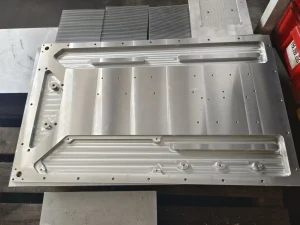
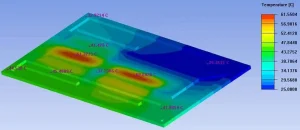
Cold plate technology plays a crucial role in AI server liquid cooling systems. Typically made from copper or aluminum, cold plates feature detailed microchannels that maximize surface area for heat transfer. Coolant flows through these microchannels, drawing heat away from the GPU or CPU. Engineers carefully design the geometry of cold plates to ensure uniform flow, eliminating hotspots that could affect performance.
An advanced cold plate design developed by Asetek and Fabric8Labs uses cutting-edge 3D printing and AI simulation techniques. This improves fluid dynamics and boosts thermal efficiency for high-power workloads. Modular cold plate designs are also becoming popular, offering flexible solutions that can adapt to new hardware without requiring complete system replacements.
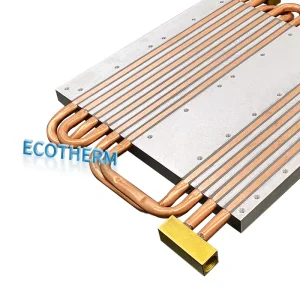
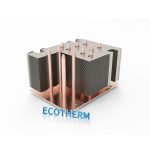
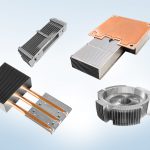
Material selection is a key factor in cold plate design. Copper cold plates provide excellent thermal conductivity, while aluminum options offer a lighter, more cost-effective alternative. Ecothermgroup integrates these materials into its custom heat sinks and server cold plates with precision engineering, ensuring compatibility with AI servers and data center systems.
| Component | Cold Plate Material |
|---|---|
| High-Power GPU | Copper |
| Standard CPU | Aluminum |
- Reduces PUE for sustainable data center operations
- Prevents overheating and performance throttling
- Supports high-density server configurations
The Role of Cold Plate Design in AI Server Cooling
AI server liquid cooling plays a key role in maintaining efficient performance and reliability. Understanding its principles and best practices can lead to more effective solutions.
Several factors come into play when implementing AI server liquid cooling. First, having a solid grasp of the basics is crucial. Second, using practical and proven strategies can significantly enhance outcomes.
How Cold Plates Manage Thermal Loads
Cold plates are essential for managing thermal loads in AI server systems. Knowing how they work can help you make informed decisions and optimize cooling performance.
Benefits of Cold Plates for GPU and CPU Cooling
Cold plates offer several advantages for GPU and CPU cooling. By leveraging these benefits, you can enhance system efficiency and extend hardware lifespan.
Technological Advances in Liquid Cold Plates
Micro-Channel Liquid Cold Plate (MLCP) Design
Micro-channel liquid cold plates (MLCPs) mark a major advancement in thermal management for AI server liquid cooling. These designs use densely packed microchannels to increase the surface area available for heat transfer. By optimizing fluid flow through these channels, MLCPs provide exceptional heat dissipation for demanding workloads like AI training and inference. This technology effectively addresses the thermal demands of modern GPUs and CPUs, which generate significant heat during extended operations.
For instance, Ecothermgroup has adopted MLCP designs to enhance cooling performance in AI data centers, ensuring efficient heat management for GPUs and CPUs with varying power requirements. Testing by industry leaders such as NVIDIA has demonstrated the superior thermal efficiency of MLCPs in direct-to-chip cooling setups, especially in high-performance computing (HPC) environments.
Another key benefit of MLCPs is their ability to support precise customization. Engineers can adjust channel dimensions, spacing, and materials to match specific server configurations, creating tailored solutions for AI server heat sinks and other thermal components. This flexibility makes MLCPs a preferred choice for both new installations and retrofitted systems in AI server setups.
| Feature | Benefit |
|---|---|
| Micro-channel structures | Improved heat dissipation with increased surface area |
| Customizable designs | Optimized cooling for specific GPU and CPU setups |
| Compact size | Perfect for high-density server cooling in limited spaces |
3D Printing and AI Simulation in Cold Plate Development
Recent innovations have introduced 3D printing and AI simulation technologies to liquid cold plate design. These tools allow manufacturers to prototype, test, and refine designs more efficiently than traditional methods. For example, Ecothermgroup and other leaders are using 3D printing to create complex geometries, such as intricate microchannels and integrated flow guides, tailored for specific GPU and CPU layouts.
AI simulation enhances this process by predicting fluid dynamics and thermal performance under various conditions. This modeling helps engineers identify potential inefficiencies and bottlenecks before production, saving time and resources. Asetek’s collaboration with Fabric8Labs highlights the benefits of combining these technologies; their AI-optimized cold plate design improved cooling performance for high-power AI workloads.
These advancements also align with industry trends like modularity and scalability. By incorporating real-time monitoring sensors and IoT capabilities, manufacturers enable data-driven adjustments to cooling systems, ensuring peak performance for AI workloads across diverse environments.
- 3D printing supports rapid prototyping and complex designs.
- AI simulation predicts thermal and fluid dynamics for better optimization.
- IoT-enabled cold plates provide real-time performance monitoring.
Real-World Applications of AI Server Liquid Cooling
Case Study: NVIDIA’s Use of Liquid Cooling
NVIDIA, a global leader in AI and GPU technologies, leads the way in using advanced liquid cooling solutions for high-performance servers. Their adoption of direct-to-chip liquid cooling systems, including liquid cold plates, has greatly improved thermal management for GPUs and CPUs. These cold plates, designed with microchannel structures, efficiently transfer heat from processors to the liquid coolant.
For instance, NVIDIA’s use of custom liquid cold plates in their AI data centers has boosted cooling efficiency while reducing energy consumption. In a trial reported by ToneCooling, systems with microchannel cold plates achieved up to a 30% drop in operating temperatures compared to traditional air cooling. This not only extends the lifespan of critical components but also supports the high-density setups needed for AI workloads.
Additionally, NVIDIA’s partnership with innovators like Asetek has advanced cold plate thermal design. Asetek’s AI-optimized cold plate, developed using 3D printing and AI-driven simulations, enhances fluid dynamics and boosts cooling performance for GPU-heavy tasks. These efforts showcase the importance of custom thermal components in creating sustainable and scalable AI server cooling solutions.
Performance Optimization for High-Power Workloads
AI workloads, especially in high-performance computing (HPC) environments, require effective cooling systems to manage the heat generated by GPUs and CPUs. Liquid cooling cold plates provide a robust solution for maintaining performance under these conditions. By addressing the thermal output of high-power processors directly, these systems prevent throttling and ensure consistent computational efficiency.
Direct-to-chip cooling systems are particularly effective for managing the thermal densities found in AI accelerators. For example, microchannel cold plates handle the intense heat of AI GPUs and CPUs, ensuring even thermal distribution. This is crucial for tasks like neural network training and real-time data analysis, where overheating can’t be allowed to impact performance.
Beyond performance, liquid cooling systems with server cold plates contribute to sustainability. Many data centers report improved Power Usage Effectiveness (PUE) when switching from air cooling to liquid cooling. Retrofitting air-cooled systems with liquid cold plates and coolant distribution units (CDUs) can cut energy use by as much as 40%, helping align operations with environmental goals.
| Cooling Solution | Key Benefits |
|---|---|
| Microchannel Cold Plates | Improved heat dissipation and even thermal distribution |
| Direct-to-Chip Cooling | Prevents overheating and supports AI workload performance |
| Liquid Cold Plates | Reduces energy use and improves PUE |
| Custom Liquid Cold Plates | Tailored for specific GPUs and CPUs to maximize efficiency |
The modular nature of liquid cooling systems makes them ideal for AI data centers aiming to scale efficiently. Brands like Ecothermgroup design custom heat sinks and cold plates tailored to specific server needs, ensuring compatibility with unique thermal management requirements. This flexibility helps organizations future-proof their infrastructure for evolving AI technologies.
Liquid cooling solutions, including advanced cold plate designs, are transforming how AI servers manage high-power workloads. Real-world implementations like NVIDIA’s and ongoing innovations are setting new standards in performance, efficiency, and scalability for AI server cooling.
Performance Optimization for High-Power Workloads
AI workloads, especially in high-performance computing (HPC) environments, require effective cooling systems to manage the heat generated by GPUs and CPUs. Liquid cooling cold plates provide a robust solution for maintaining performance under these conditions. By addressing the thermal output of high-power processors directly, these systems prevent throttling and ensure consistent computational efficiency.
Direct-to-chip cooling systems are particularly effective for managing the thermal densities found in AI accelerators. For example, microchannel cold plates handle the intense heat of AI GPUs and CPUs, ensuring even thermal distribution. This is crucial for tasks like neural network training and real-time data analysis, where overheating can’t be allowed to impact performance.
Beyond performance, liquid cooling systems with server cold plates contribute to sustainability. Many data centers report improved Power Usage Effectiveness (PUE) when switching from air cooling to liquid cooling. Retrofitting air-cooled systems with liquid cold plates and coolant distribution units (CDUs) can cut energy use by as much as 40%, helping align operations with environmental goals.
| Cooling Solution | Key Benefits |
|---|---|
| Microchannel Cold Plates | Improved heat dissipation and even thermal distribution |
| Direct-to-Chip Cooling | Prevents overheating and supports AI workload performance |
| Liquid Cold Plates | Reduces energy use and improves PUE |
| Custom Liquid Cold Plates | Tailored for specific GPUs and CPUs to maximize efficiency |
The modular nature of liquid cooling systems makes them ideal for AI data centers aiming to scale efficiently. Brands like Ecothermgroup design custom heat sinks and cold plates tailored to specific server needs, ensuring compatibility with unique thermal management requirements. This flexibility helps organizations future-proof their infrastructure for evolving AI technologies.
Liquid cooling solutions, including advanced cold plate designs, are transforming how AI servers manage high-power workloads. Real-world implementations like NVIDIA’s and ongoing innovations are setting new standards in performance, efficiency, and scalability for AI server cooling.
Challenges and Future Directions
Current Limitations of Cold Plate Technology
As AI server liquid cooling becomes the standard for high-density workloads, challenges remain in the design and implementation of cold plate technology. One key issue is maintaining consistent coolant flow across the liquid cold plate to avoid hot spots. Uneven flow can lead to thermal throttling and lower performance of GPUs and CPUs, particularly in AI workloads with high thermal design power (TDP). Advanced microchannel cold plates, such as those tested by NVIDIA, improve coolant pathways, but achieving flawless fluid dynamics remains complex and expensive.
Material compatibility is another major concern. Galvanic corrosion occurs when different metals interact within the cooling system, wearing down thermal management components over time. Copper cold plates are popular for their excellent thermal conductivity, but adding corrosion inhibitors to coolants or developing hybrid materials is essential for long-term reliability. Additionally, the upfront cost and retrofitting challenges associated with direct-to-chip liquid cooling in existing facilities hinder widespread adoption. Hybrid liquid-air cooling often serves as a practical compromise.
Scalability also poses a challenge. As AI workloads grow more demanding, traditional server cold plate designs struggle to keep up. Custom liquid cold plates designed for high-power GPUs and CPUs provide a solution, but their production, especially for microchannel designs, remains costly and time-consuming.
Potential Innovations in AI Server Cooling
Recent advancements in cold plate technology offer promising future solutions. For example, the AI-optimized cold plate developed by Asetek and Fabric8Labs uses 3D printing and AI simulation to improve fluid dynamics. This innovation could lead to more efficient and high-performance thermal designs tailored for AI workloads. Additionally, modular and scalable cold plate designs are gaining popularity, enabling data centers to adapt more effectively to changing computational needs.
Material innovation is another critical area. Developing alloys or composite materials with enhanced thermal and corrosion resistance could significantly improve the durability of liquid cooling cold plates. Similarly, advancements in thermal interface materials (TIMs) are boosting the heat transfer efficiency between cold plates and hardware, reducing overall thermal resistance.
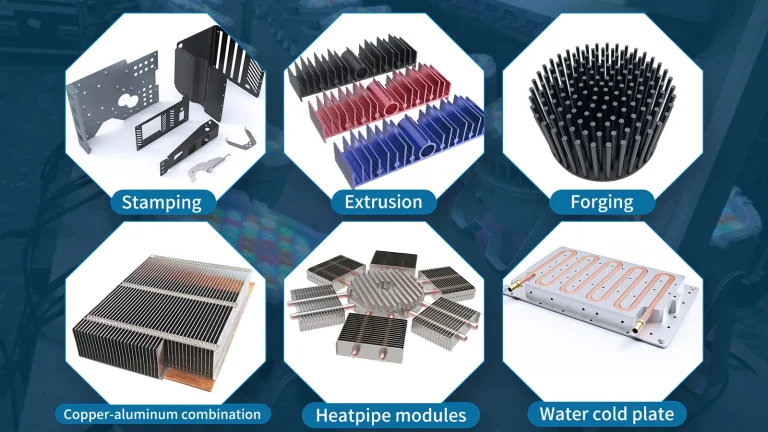
Hybrid cooling systems that incorporate heat pipe cooling modules, vapor chamber heat sinks, and skived heat sinks alongside liquid cooling are being explored to balance cost and performance. These systems address thermal hotspots without requiring a complete overhaul of current infrastructure. Brands like Ecothermgroup are leading the effort to develop custom thermal components aligned with these emerging trends.
| Challenge | Proposed Solution |
|---|---|
| Uneven coolant flow | Optimized microchannel designs |
| Material compatibility issues | Use of corrosion inhibitors and hybrid materials |
| Scalability limitations | Modular and AI-optimized cold plate designs |
- Focus on advanced microchannel technology for improved fluid dynamics.
- Explore hybrid cooling systems for cost-effective retrofitting.
- Invest in material innovation for enhanced durability and efficiency.
Conclusion
AI server liquid cooling has emerged as a critical component in managing the thermal demands of modern data centers, especially for high-performance computing and AI workloads. By leveraging advanced cold plate designs, such as direct-to-chip cooling and microchannel technologies, operators can achieve superior heat dissipation for GPUs and CPUs. These solutions are not only efficient but also scalable to meet the growing power densities in AI servers, ensuring optimal performance and reliability.
Recent innovations, like the AI-optimized cold plate developed by Asetek and Fabric8Labs, highlight the industry’s shift towards 3D-printed custom liquid cold plates. These designs improve fluid dynamics, enhancing thermal efficiency for heavy workloads like AI data processing. Furthermore, the adoption of direct-to-chip liquid cooling systems has demonstrated measurable results in reducing energy costs while maintaining peak performance. For example, NVIDIA’s tests with microchannel cold plates confirm their capability to handle the intense thermal loads of AI accelerators effectively.
When selecting the ideal cooling solution, it’s essential to consider factors such as heat load, space constraints, and material compatibility. Custom thermal components, like skived heat sinks and vapor chamber heat sinks, offer tailored solutions for specific hardware configurations, ensuring seamless integration and optimal cooling. Brands like Ecothermgroup provide a range of options, from custom heat sinks to thermal management components, designed to meet the unique requirements of AI workloads.
| Cooling Solution | Best Use Case |
|---|---|
| Microchannel Cold Plate | High-density GPU servers |
| Vapor Chamber Heat Sink | Compact AI accelerators |
| Skived Heat Sink | Cost-effective CPU cooling |
Ultimately, effective thermal management is pivotal for the sustainability of AI data centers. By adopting cutting-edge technologies and partnering with reputable providers like Ecothermgroup, businesses can ensure their AI infrastructure remains efficient, reliable, and future-proof.
People Also Ask
What is AI server liquid cooling and why is it important for GPU and CPU performance?
AI server liquid cooling is a technology designed to manage high thermal loads generated by GPUs and CPUs in AI workloads. It ensures optimal performance and prevents overheating, which is critical for handling complex computations efficiently.
How does cold plate design improve cooling efficiency in AI servers?
Cold plate design enhances cooling efficiency by using optimized fluid dynamics to transfer heat away from GPUs and CPUs. Advanced designs, such as micro-channel liquid cold plates, offer improved thermal management for high-power workloads.
What makes the AI-optimized cold plate introduced by Asetek and Fabric8Labs unique?
The AI-optimized cold plate combines 3D printing and AI simulation techniques to refine fluid dynamics and maximize cooling performance for high-power AI workloads. It represents a significant advancement in liquid cooling technology.
What technological advances are shaping the future of liquid cold plate designs?
Advances like micro-channel designs, AI-driven simulations, and precision 3D printing are improving the efficiency and customization of liquid cold plates. These innovations enable better thermal management for GPUs and CPUs in AI servers.
What are the real-world applications of AI server liquid cooling?
AI server liquid cooling is used in data centers, high-performance computing systems, and AI research facilities to manage the intense thermal demands of GPUs and CPUs running complex AI models and simulations.
What challenges are associated with implementing liquid cooling in AI servers?
Challenges include the cost of installation, maintenance complexity, and ensuring compatibility with existing server designs. Innovations like AI-optimized cold plates are helping to address these issues.
How do micro-channel liquid cold plates benefit high-power AI workloads?
Micro-channel liquid cold plates offer superior heat dissipation by increasing the contact area between coolant and heat sources. This design is particularly effective for managing the thermal demands of high-power AI workloads.
What are the future directions for AI server liquid cooling technology?
Future directions include further integration of AI in simulation processes, advancements in materials for cold plates, and improved scalability for large data centers. These developments aim to meet the growing demands of AI workloads.