Custom IGBT Liquid Cold Plates for Industrial Thermal Management
Custom IGBT liquid cold plates help manage heat in high-power electronics, including industrial inverters, CNC machines, and AI server components. Selecting the right IGBT liquid cold plate requires reviewing thermal requirements, module geometry, coolant type, flow needs, and pressure limits. Channel layout, material choice, and surface flatness all affect heat transfer and long-term reliability. Ecothermgroup supports custom cold plate design around the module footprint and operating constraints to improve cooling fit and thermal performance.
Design Factors for Thermal Management
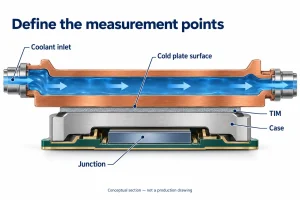
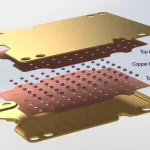
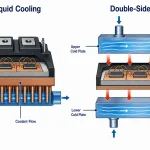
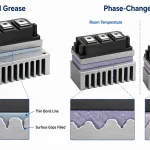
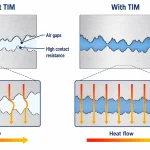
Key design factors for an IGBT liquid cold plate include channel layout, baseplate thickness, surface flatness, thermal resistance, and mounting conditions. Serpentine and parallel channels are commonly used to support more uniform cooling across the contact area. Material selection should match heat density, available space, coolant path requirements, and target thermal performance. Thermal interface material and mounting pressure also affect heat transfer between the IGBT module and the cold plate.
| Material | Thermal Conductivity (W/m·K) |
|---|---|
| Aluminum | 180–220 |
| Copper | 380–400 |
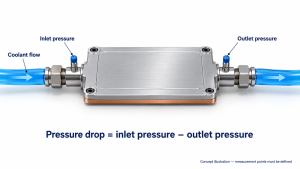
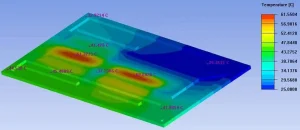
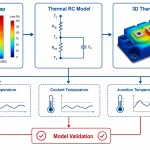
Flow rate and pressure drop also need careful balance. Higher flow can improve heat removal, but it may require greater pumping capacity. Low flow can reduce cooling uniformity and create thermal variation across the module. For custom liquid cold plates, Ecothermgroup can support engineering review, channel design, material selection, and prototype development based on drawings and application requirements. CFD simulation and prototype testing are recommended to refine channel geometry, port placement, and surface flatness for the specific IGBT cooling application.
Material and Manufacturing Options
Aluminum and copper are the primary materials used for IGBT liquid cold plates. Aluminum is lightweight, cost-efficient, and easy to machine, making it suitable for moderate heat loads. Copper offers higher thermal conductivity and better heat spreading, which is ideal for concentrated heat sources, though it is heavier and more expensive. Selecting the right material depends on thermal requirements, operating conditions, and budget considerations.
| Material | Typical Advantages | Considerations |
|---|---|---|
| Aluminum | Lightweight, cost-effective, easy to machine | Lower thermal conductivity compared to copper |
| Copper | High thermal conductivity, excellent heat spreading | Higher weight and material cost |
CNC machining is commonly employed to fabricate cold plates, providing precise channel geometry, tight dimensional tolerances, and consistent surface flatness. The design of liquid channels—including width, depth, and routing—directly impacts coolant distribution, pressure drop, and heat removal efficiency. Properly balancing flow rate and pressure drop helps prevent hotspots while ensuring reliable operation, making these considerations essential for high-performance thermal management. Ecothermgroup works with clients to optimize these factors for custom IGBT liquid cold plates, tailoring solutions to specific device layouts and operational conditions.
Applications and Customization
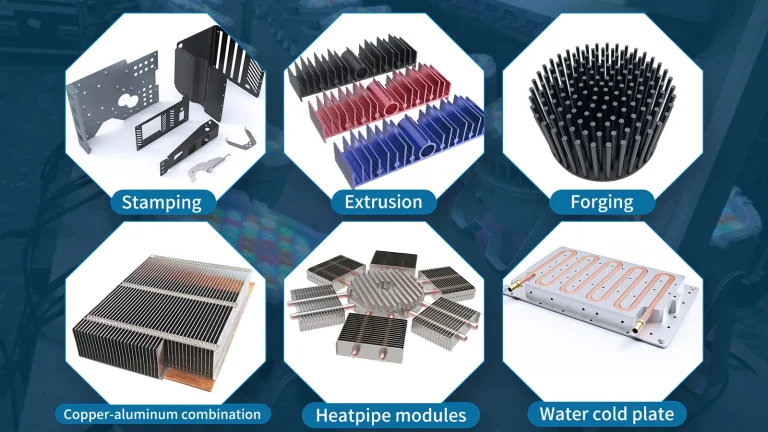
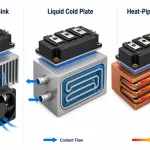
Custom IGBT liquid cold plates are used in situations where high heat loads need to be efficiently removed from compact electronic assemblies. Typical applications include industrial inverter cooling, AI server thermal management, CNC machine cooling, and IGBT module cooling. Standard heat sinks often cannot meet the thermal and mechanical demands of these systems, making custom designs essential.
| Application | Customization Focus |
|---|---|
| Industrial inverter cooling | Channel layout, mounting pattern, flow distribution |
| AI server cooling | Compact liquid paths, space constraints |
| CNC machine thermal management | Stable temperature control, mechanical fit |
| IGBT module cooling | Surface flatness, heat transfer efficiency |
Key design considerations include material selection, channel geometry, surface flatness, flow rate, and pressure drop. Aluminum is commonly chosen for weight-sensitive applications, while copper is preferred when maximum heat removal is required. Both materials can be CNC machined to achieve precise geometry and ensure optimal thermal performance. Ecothermgroup specializes in designing these custom solutions to match specific operational and spatial requirements.
RFQ Checklist for Buyers
Providing clear details upfront helps Ecothermgroup evaluate feasibility, reduce redesign, and support dependable thermal management for a custom IGBT liquid cold plate. A complete RFQ should include:
| RFQ Item | Purpose |
|---|---|
| Heat load and application | Supports thermal management evaluation |
| Flow rate and pressure drop | Guides liquid channel design |
| Drawings and dimensions | Checks compatibility and machining limits |
| Surface flatness requirement | Supports proper IGBT module contact |
| Material preference | Aligns thermal and production goals |
| Prototype and production quantities | Supports scalability and project planning |
| Coolant type and operating temperature | Helps verify design suitability for target conditions |
Buyers should also specify connector locations, mounting methods, sealing needs, and any assembly constraints. This allows the supplier to review manufacturability, channel layout, material selection, and thermal performance requirements before prototyping.
Requesting a Custom Cold Plate
To start a custom IGBT liquid cold plate project, buyers should prepare the key technical details needed for engineering review and quotation. A clear RFQ helps Ecothermgroup evaluate the cold plate structure, material choice, thermal contact areas, coolant path, and integration requirements for the target application.
- Specify material and thermal requirements
- Provide CAD drawings or dimensional data
- Define coolant type, flow rate, and allowable pressure drop
- Confirm surface flatness tolerance for IGBT mounting
- Estimate prototype and production quantities
Exact performance values, certifications, and lead times must be confirmed with the supplier and need manual verification. Common validation methods include leak testing, dimensional inspection, and thermal verification. Early review of thermal requirements, module geometry, and assembly constraints can reduce redesign risk and help ensure the cold plate fits the actual operating conditions.
This process helps engineers source custom thermal management components for high-power electronics applications, including industrial inverters, AI servers, CNC equipment, and other systems that require reliable heat removal from IGBT modules.
| RFQ Item | Purpose |
|---|---|
| 2D/3D drawings | Confirm dimensions, interfaces, and mounting points |
| Heat load data | Support thermal evaluation and cooling channel layout |
| Flow rate and pressure drop targets | Assess coolant path and cooling requirements |
| Material preference | Guide aluminum or copper cold plate selection |
| Quantity forecast | Support prototype and production planning |
- Provide IGBT module dimensions and contact surfaces.
- Specify thermal interface requirements.
- Identify coolant connection type and location.
- Share expected production volume when available.
During evaluation, suppliers typically review cooling channel design, sealing method, thermal contact areas, tolerance requirements, and integration constraints. For CNC-machined cold plates, dimensional tolerances, surface finish, mounting accuracy, and flatness requirements can affect manufacturing complexity and should be defined as early as possible.
Material selection should be based on actual thermal and mechanical requirements. Aluminum cold plates may be preferred when lower weight and good machinability are priorities. Copper cold plates may be considered when higher thermal conductivity is required, but cost, weight, machining needs, and assembly requirements should also be reviewed.
A detailed RFQ supports DFM review, pricing evaluation, and assessment of custom liquid cold plates, custom heat sinks, and IGBT thermal management components. Buyers should also define leak testing, dimensional inspection, thermal verification needs, and acceptance criteria in writing before order placement.
People Also Ask
What is a custom IGBT liquid cold plate and why is it important for industrial applications?
A custom IGBT liquid cold plate is a thermal management component designed to remove heat from IGBT modules in high-power industrial systems. Effective cooling helps support stable performance, reliability, and service life when electronics operate under heavy loads.
Which materials are commonly used for manufacturing IGBT liquid cold plates?
Common materials include copper, aluminum, and aluminum alloys because they offer strong thermal conductivity and practical machining options. Some projects may also require coatings or selected material combinations to improve corrosion resistance, strength, or compatibility with the working fluid.
How are custom IGBT liquid cold plates tailored to specific industrial systems?
Engineers adjust channel layout, flow path, pressure drop targets, mounting features, and contact surface requirements to match each IGBT module and system layout. Customization helps improve heat transfer while fitting available space, mechanical interfaces, and operating conditions.
What information is typically required when submitting an RFQ for a custom IGBT liquid cold plate?
An RFQ should include IGBT module drawings, power dissipation, target operating temperatures, coolant type, flow rate requirements, pressure drop limits, mounting details, and surface flatness needs. Clear thermal and mechanical data helps Ecothermgroup evaluate the design requirements and recommend a suitable custom liquid cold plate approach.
In which industries are IGBT liquid cold plates most commonly applied?
IGBT liquid cold plates are commonly used in industrial motor drives, renewable energy inverters, CNC equipment, EV charging equipment, AI server cooling components, and other high-power electronics. Applications with concentrated heat loads often benefit from custom liquid cold plates designed around specific module geometry and cooling requirements.