High-Density Server Cooling for AI and HPC: When Air Cooling Is Not Enough
With the growing demand for AI and high-performance computing (HPC), data centers are increasingly challenged by the heat produced by high-density servers. Traditional air cooling methods often struggle to keep up, impacting the efficiency of these advanced systems. This article looks at innovative high-density server cooling solutions designed to maintain reliability and performance in today’s computing environments.
Introduction to High-Density Server Cooling
What Is High-Density Server Cooling?
High-density server cooling involves advanced thermal management systems designed to handle the significant heat generated by high-performance computing (HPC) and artificial intelligence (AI) workloads. As server racks surpass 20 kW power density, traditional air-based cooling methods often fail to maintain safe operating temperatures. High-density cooling solutions, such as liquid cooling and hybrid systems, address this issue by improving heat transfer efficiency and supporting higher compute densities.
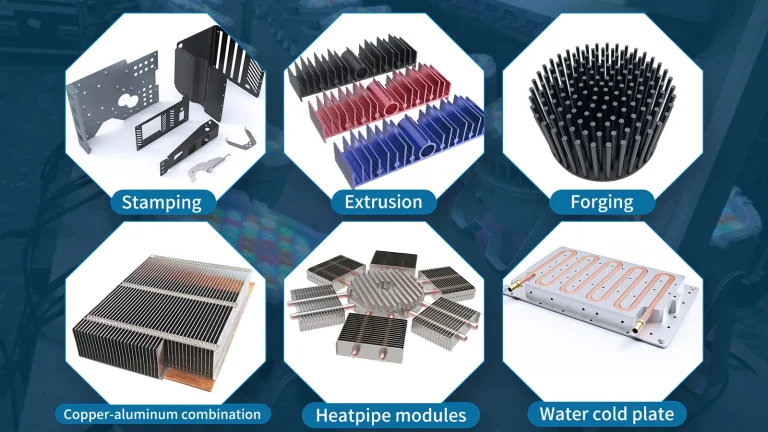
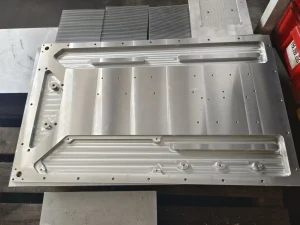
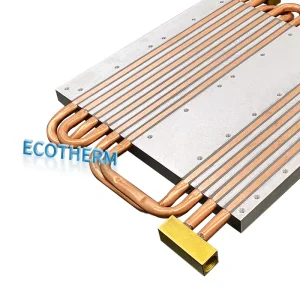
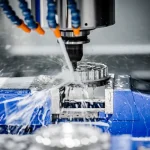
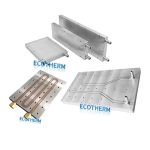
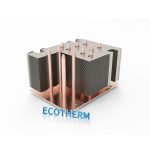
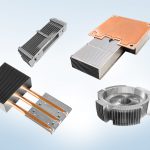
Liquid cooling technologies, including direct-to-chip cooling and cold plate systems, are commonly used in high-density setups. These systems rely on custom thermal components like vapor chamber heat sinks, heat pipe cooling modules, and CNC-machined heat sinks to ensure precise and reliable cooling. Cold plate liquid cooling, in particular, is gaining popularity due to its ability to target heat-intensive components like GPUs and CPUs, maintaining stable performance even under heavy workloads.
Ecothermgroup has become a trusted name in the industry, offering custom heat sinks and liquid cooling modules tailored to the specific demands of AI and HPC applications. Their solutions include high power heat sinks, skived heat sinks, and server cold plates designed to maximize thermal efficiency and save energy.
Why Traditional Air Cooling Falls Short
Traditional air cooling systems, which rely on fans and airflow to remove heat, are becoming insufficient for high-density server environments. This limitation is especially apparent as rack power densities exceed 20 kW, a common benchmark in modern data centers. Air cooling struggles to efficiently manage heat at these densities, leading to thermal hotspots, shorter hardware lifespans, and reduced performance.
| Cooling Method | Efficiency |
|---|---|
| Traditional Air Cooling | Best for low-density racks; inefficient above 20 kW/rack |
| Liquid Cooling (Direct-to-Chip) | 1,000–3,000 times more efficient than air cooling |
Liquid cooling methods, such as GPU and CPU cold plates, outperform air cooling by directly transferring heat from critical components. Single-phase liquid cooling, where coolant remains in liquid form throughout the process, is especially effective and reliable. These systems not only enhance thermal performance but also lower energy consumption, aligning with the sustainability goals of modern data centers.
- Eliminates thermal bottlenecks in high-performance servers
- Enables higher compute densities without requiring additional physical space
- Reduces energy costs associated with cooling infrastructure
As AI and HPC workloads demand greater computational power, adopting high-density server cooling solutions has become essential. By incorporating advanced thermal management technologies, data centers can ensure reliable operations, scalability, and energy efficiency to meet growing demands.
Challenges in Cooling AI and HPC Workloads
Thermal Management Challenges for AI and HPC
AI and high-performance computing (HPC) workloads generate significant heat due to dense server configurations and high-power components like GPUs and CPUs. Traditional air cooling systems, which typically manage up to 20 kW per rack, struggle to handle racks producing 50-100 kW of heat. This gap underscores the need for advanced high-density server cooling solutions to ensure reliability and prevent thermal throttling.
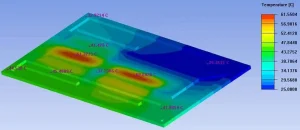
Uneven heat distribution within racks is a major challenge. Components like GPUs create hotspots, requiring targeted cooling methods. Direct-to-chip cooling, using cold plates for GPUs and CPUs, has proven highly effective. These systems transfer heat directly from the chip to the cooling medium, offering much better efficiency than air-based systems.
Another issue is the fast-paced evolution of AI and HPC hardware. As GPUs, TPUs, and accelerators improve, their thermal output rises, demanding adaptable cooling technologies. Custom thermal components, like CNC machined heat sinks and vapor chamber heat sinks, provide the flexibility needed to meet these demands.
| Cooling Challenge | Recommended Solution |
|---|---|
| High heat density (50-100 kW per rack) | Cold plate liquid cooling or immersion cooling |
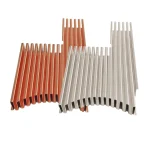
| Component hotspots | Custom heat sinks like skived or zipper fin designs |
| Hardware advancements | Modular and scalable thermal modules |
Energy Efficiency and Sustainability Concerns
Energy efficiency is a major consideration in high-density server cooling for AI and HPC workloads. Traditional air cooling systems consume large amounts of energy while offering limited cooling capacity. Liquid cooling methods, including direct-to-chip and cold plate cooling, are up to 3,000 times more efficient at heat transfer. This efficiency not only cuts energy use but also reduces the environmental impact of data centers.
Sustainability has led the industry to embrace liquid cooling. For instance, Ecothermgroup focuses on energy-efficient thermal modules and custom liquid cold plates in its solutions. These systems are designed to boost performance while lowering the carbon footprint of AI and HPC operations.
Liquid cooling also enables heat reuse initiatives. The heat extracted from components can be repurposed for applications like heating nearby buildings, further enhancing data center sustainability.
- Liquid cooling reduces noise and improves worker safety in data centers.
- Modular designs simplify upgrades as workloads and hardware evolve.
- Energy-efficient cooling systems help lower long-term operational costs.
Advanced Cooling Technologies for High-Density Servers
Liquid Cooling Systems
As AI and high-performance computing (HPC) workloads grow, traditional air cooling systems often struggle to manage the heat generated by high-density servers. Liquid cooling systems offer advanced thermal management by addressing heat directly at its source. These systems use liquid as a thermal transfer medium, providing much higher heat capacity compared to air. With rack densities frequently exceeding 20-30 kilowatts, liquid cooling has become essential for modern data centers handling AI and HPC workloads.
One popular liquid cooling method is direct-to-chip cooling. This technique uses custom liquid cold plates, such as GPU and CPU cold plates, to transfer coolant directly to critical components. By minimizing thermal resistance, direct-to-chip cooling efficiently dissipates heat, even in servers designed for demanding AI training or inference tasks. Custom thermal components, including CNC machined heat sinks and cold plate designs, are crucial for tailoring solutions to specific server configurations.
Another commonly used system is cold plate liquid cooling, which excels in high-density environments by effectively managing localized heat loads. Cold plates are often combined with existing infrastructure like rear-door heat exchangers, creating hybrid systems that integrate liquid and air cooling. Brands like Ecothermgroup specialize in custom liquid cold plate designs optimized for server rack thermal management, ensuring smooth integration with data center layouts.
Energy efficiency is another key benefit of liquid cooling. By targeting heat sources directly, these systems reduce reliance on energy-intensive air conditioning, improving overall power usage effectiveness (PUE). This makes liquid cooling an environmentally sustainable option for data centers aiming to balance performance with energy savings.
| Cooling Method | Key Features |
|---|---|
| Direct-to-Chip Cooling | Uses custom cold plates for efficient heat transfer; ideal for high-performance CPUs and GPUs |
| Cold Plate Liquid Cooling | Manages localized heat loads; integrates with hybrid cooling systems |
| Rear-Door Heat Exchangers | Combines liquid cooling with air systems; minimizes facility redesigns |
Two-Phase Cooling Systems
For ultra-high-density applications, two-phase cooling systems are emerging as a transformative solution. These systems utilize phase change processes, where a dielectric liquid absorbs heat from server components, evaporates into gas, and condenses back into liquid for reuse. This method achieves outstanding heat removal efficiency, supporting rack densities of over 200 kilowatts—critical for next-generation AI and HPC deployments.
Immersion cooling is a leading example of two-phase systems. In this approach, servers are submerged in a dielectric fluid that manages heat without electrical conductivity risks. The fluid’s phase change properties enable it to effectively dissipate heat from components like GPUs and CPUs, making it a reliable choice for high-density server cooling in AI data centers. However, immersion cooling often requires specialized infrastructure and poses challenges related to hardware compatibility and maintenance.
An alternative is heat pipe and vapor chamber heat sinks, which apply phase change technology on a smaller scale. These components are built into server designs to enhance thermal management without full immersion. Custom server heat sinks, such as skived and zipper fin designs, are often used to improve the efficiency of these systems. Ecothermgroup offers tailored solutions in this area, using advanced manufacturing techniques to meet the specific needs of HPC and AI server cooling.
- Immersion Cooling: Submerges servers in dielectric liquid for efficient heat dissipation
- Heat Pipe Cooling: Uses phase change within heat pipes for localized thermal management
- Vapor Chamber Heat Sinks: Distributes heat evenly across server components
While two-phase systems deliver exceptional performance, they are best suited for applications demanding extreme density and efficiency. Data centers adopting these technologies must carefully evaluate costs, infrastructure requirements, and maintenance to ensure feasibility. As AI and HPC workloads continue to grow, two-phase cooling represents a vital advancement in high-density server cooling strategies.
Implementing Scalable Cooling Solutions
Retrofitting Existing Data Centers
Retrofitting data centers for high-density server cooling can be a cost-effective approach, especially for facilities not originally designed to handle the thermal loads of modern AI and HPC workloads. Traditional air cooling systems often struggle with rack densities above 10–15 kW, making liquid-assisted systems a vital upgrade. One common method is the use of rear-door heat exchangers (RDHx), which can manage densities up to 50 kW without significant infrastructure changes. These systems work alongside air-based cooling by capturing and dissipating heat directly at the rack level.
For higher density needs, direct-to-chip cooling with custom cold plates offers notable benefits. This technique transfers heat directly from components like GPUs and CPUs to liquid cooling systems, improving efficiency and lowering thermal resistance. Ecothermgroup’s custom liquid cold plates are particularly effective, providing optimized thermal management for AI and HPC clusters.
Facility layout and airflow patterns should also be evaluated during retrofits. Adding cooling distribution units (CDUs) centralizes heat removal, simplifying scalability as workloads grow. Modular liquid cooling systems, including vapor chamber heat sinks and heat pipe cooling modules, can be added incrementally to address evolving demands.
| Retrofit Solution | Optimal Use Case |
|---|---|
| Rear-Door Heat Exchangers | Moderate-density racks (up to 50 kW) |
| Direct-to-Chip Cooling | High-density AI/HPC clusters |
| Cooling Distribution Units | Centralized heat removal in retrofits |
Designing New Facilities for High-Density Workloads
Designing data centers for high-density workloads requires prioritizing direct liquid cooling systems from the start. Facilities built for AI and HPC applications often exceed rack densities of 100 kW, where traditional air cooling becomes inefficient. Direct-to-chip cold plates integrated with liquid cooling loops deliver high efficiency by reducing thermal resistance and optimizing heat transfer. Custom thermal components like CNC machined heat sinks and cold plate designs further enhance cooling performance.
Two-phase cooling systems offer another effective solution for new facilities, especially for ultra-dense clusters. These systems use phase change processes to manage heat, making them ideal for racks exceeding 200 kW. Ecothermgroup’s scalable two-phase solutions are designed to meet the increasing thermal demands of AI and HPC workloads.
Scalable data centers should also adopt modular cooling architectures. Prefabricated systems allow operators to expand cooling capacity with minimal disruption as computational demands grow. To ensure consistent thermal performance across diverse workloads, integrating GPU and CPU cold plates tailored to specific hardware configurations is essential.
- Evaluate workloads to project future thermal requirements.
- Focus on liquid cooling loops for high-density racks.
- Integrate modular cooling systems for scalability.
- Use custom-designed cold plates for GPUs and CPUs.
- Implement two-phase cooling for ultra-dense clusters.
Future Trends in High-Density Server Cooling
AI-Driven Cooling Optimization
As artificial intelligence (AI) and high-performance computing (HPC) workloads expand, data centers are increasingly adopting AI-driven cooling systems to efficiently manage high-density server environments. These systems use machine learning algorithms to predict temperature changes and dynamically optimize cooling processes. By analyzing real-time data from thermal sensors and workload patterns, AI-driven cooling solutions allocate resources precisely where needed, helping to reduce energy consumption.
A key application of AI in high-density server cooling is its integration with advanced liquid cooling systems, such as cold plate liquid cooling and vapor chamber heat sink designs. AI can monitor coolant flow rates and adjust pump speeds to balance cooling performance with energy efficiency. This precision not only improves server performance but also extends the lifespan of critical components like GPUs and CPUs used in AI and HPC workloads.
Innovators like Ecothermgroup are leading the way by combining AI-driven thermal management with custom components such as heat pipe cooling modules and CNC machined heat sinks. These advancements enable data centers to handle server rack densities exceeding 100 kW more efficiently, delivering both reliability and cost savings.
Sustainability and Green Data Center Initiatives
With cooling systems accounting for 40-50% of a data center’s energy use, sustainability has become a key priority for the industry. High-density server cooling technologies are evolving to meet green initiatives, focusing on energy efficiency and minimizing environmental impact. Liquid cooling systems, including direct-to-chip cooling and server cold plates, are at the forefront of this shift, offering superior thermal management with lower power requirements compared to traditional air cooling.
Cold plate designs, for example, use efficient liquid cold plates to transfer heat directly from CPUs and GPUs, reducing energy waste. Advanced designs like zipper fin and skived heat sinks further enhance heat dissipation, enabling data centers to tackle demanding AI and HPC workloads while maintaining energy efficiency targets.
Hybrid solutions, such as rear-door heat exchangers (RDHx), are also gaining traction. These systems combine air and liquid cooling, making them a practical option for facilities not yet fully transitioned to liquid systems. They work by capturing hot air from server racks and cooling it with water, reducing reliance on energy-intensive air conditioning units.
| Cooling Technology | Key Benefits |
|---|---|
| Direct-to-Chip Liquid Cooling | High efficiency, direct heat transfer, reduced energy usage |
| Cold Plate Thermal Design | Optimized for CPUs/GPUs, minimal coolant loss |
| AI-Driven Cooling | Dynamic optimization, lower operational costs |
| Rear-Door Heat Exchangers | Hybrid cooling, transitional for legacy systems |
Beyond technology, the focus on sustainability is driving industry-wide collaboration to develop standardized practices. Companies like Ecothermgroup are creating scalable, eco-friendly solutions that meet the unique demands of AI and HPC-driven data centers while reducing their carbon footprint.
- Using renewable energy sources to power cooling systems
- Incorporating water-saving technologies in liquid cooling
- Designing modular thermal components for easier upgrades
Looking ahead, the combination of AI-driven optimization and sustainable cooling technologies will shape the future of high-density server cooling, enabling data centers to tackle growing demands while minimizing environmental impact.
People Also Ask
What is high-density server cooling, and why is it important for AI and HPC workloads?
High-density server cooling involves advanced methods to manage the heat produced by densely packed servers, commonly used in AI and HPC environments. Traditional air cooling often falls short for these workloads, making technologies like liquid cooling crucial to maintain performance and prevent hardware issues.
What challenges do AI and HPC workloads pose for traditional air cooling systems?
AI and HPC workloads generate significant heat due to their high computational demands, often surpassing the limits of traditional air cooling systems. This can lead to overheating, reduced efficiency, and higher energy use, driving the need for more advanced cooling solutions.
What are some advanced cooling technologies used for high-density servers?
Advanced cooling solutions include liquid cooling methods like cold plate and immersion cooling, as well as rear-door heat exchangers and two-phase systems. These technologies are designed to efficiently handle the heat challenges in high-density server setups.
How can scalable cooling solutions be implemented in existing data centers?
Scalable cooling options can be introduced by retrofitting existing facilities with systems such as liquid-assisted cooling or modular units like rack-based or rear-door heat exchangers. These solutions enable data centers to manage higher heat loads without major infrastructure changes.
Why is liquid cooling becoming more popular for high-density server cooling?
Liquid cooling is gaining popularity because it is more efficient than air cooling, with a higher capacity for heat transfer. As servers become more powerful and compact, liquid cooling effectively manages the increased heat, making it ideal for modern AI and HPC workloads.
What are the main advantages of using rear-door heat exchangers for cooling high-density servers?
Rear-door heat exchangers efficiently cool servers by capturing and releasing heat directly at the rack level, reducing the strain on overall cooling systems. They are modular and can be added to existing data centers with minimal disruption.
What are the energy efficiency benefits of advanced server cooling technologies?
Advanced cooling systems like liquid cooling and two-phase methods use less energy compared to traditional air cooling. By improving thermal management, they lower power usage effectiveness (PUE) and support more sustainable data center operations.
What future trends are expected in high-density server cooling for AI and HPC workloads?
Future trends include AI-driven cooling systems, advancements in immersion and two-phase cooling, and the development of eco-friendly solutions that use less water and energy. These innovations aim to meet the growing computational needs of AI and HPC applications.