Custom Heat Sink Design: Vapor Chamber vs Traditional Cooling — Which Is Right for Your Application?
Choosing the right cooling method for a custom heat sink can be challenging when your device needs to stay reliable, compact, and efficient. This article compares vapor chamber cooling with traditional cooling solutions so you can determine which option best fits your application, performance requirements, and design constraints at Ecothermgroup.
Cooling Basics
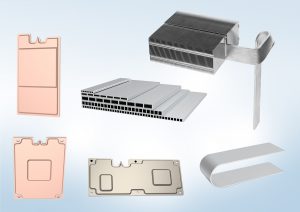
At the core of custom heat sink design, vapor chamber cooling and traditional cooling both aim to move heat away from a chip, power module, or other hot component before temperatures rise too far. The main difference is how they spread that heat. In compact electronics, a vapor chamber can flatten hot spots faster than a solid base plate, which is why it is often discussed alongside high-wattage AI servers and dense power systems. Traditional heat sinks still matter because they are simpler, lower cost, and easier to build into many thermal management solutions.
How Heat Moves
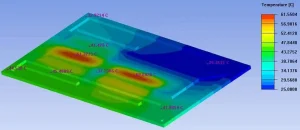
Heat always flows from a hotter area to a cooler one, but in real products the path is limited by material, contact quality, airflow, and available space. A heat pipe vs vapor chamber comparison usually starts with thermal spreading: heat pipes move heat along a tube, while a vapor chamber spreads heat across a flat plate more evenly. That difference matters when a small chip creates a strong hotspot, because uneven heat can reduce performance and shorten life.
In general practice, passive cooling depends on natural airflow and the shape of the heat sink, while active cooling uses fans or pumps to increase heat transfer. Vapor chamber cooling is often paired with fin stacks or forced air, but it can also improve the starting point for a passive design by distributing heat before it reaches the fins. By contrast, a conventional custom heat sink may rely more heavily on base thickness, fin density, and fan placement to manage the same load.
| Cooling element | Main role | Typical strength | Common tradeoff |
|---|---|---|---|
| Heat pipe | Move heat from one point to another | Good for routing heat to a remote fin area | Less effective for broad spreading |
| Vapor chamber | Spread heat across a flat surface | Better for hotspot-heavy loads | Higher cost and more integration work |
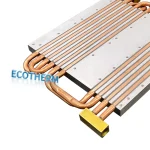
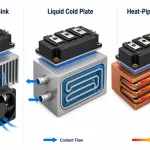
| Cold plate / liquid cold plate | Transfer heat to liquid flow | Strong for very high power density | Needs plumbing, seals, and system support |
Role of the Heat Sink
The heat sink is the final release point for heat in many designs, so its shape and material matter as much as the heat source. Aluminum is common because it is light and cost-effective; copper offers better conductivity but adds weight and cost. In a vapor chamber vs heat sink design, the chamber often acts as the base layer that feeds the fins more evenly, which helps the full assembly perform better under uneven loads. Ecothermgroup and similar suppliers often size the stack around the real power map, not just the peak wattage.
For many products, the right choice depends on whether the challenge is spreading heat or rejecting it. If the problem is local hotspot control, vapor chamber vs heat sink planning can improve results without moving straight to liquid cooling vs vapor chamber designs. If the power level is very high, a cold plate or liquid cold plate may be more suitable. A practical rule is simple: use the least complex solution that still keeps junction temperature, noise, cost, and thickness within target limits. That approach keeps the design realistic and easier to manufacture.
- Check hotspot size before choosing the base structure.
- Match fin layout to airflow direction and available pressure.
- Use a vapor chamber when spreading is the main weakness.
- Move to liquid cooling only when air-based options are not enough.
For custom heat sink design, the basic question is not which option is best in general, but which one fits the application limits. That is the point where the right cooling basics become a reliable product decision.

Vapor Chamber Cooling
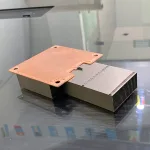
Vapor chamber cooling is a strong option in custom heat sink design when a small hotspot needs to be spread across a larger cooling area. In high-power electronics, this matters because a local hotspot can limit the entire assembly, even when the fins or housing still have spare capacity. Ecothermgroup often treats the chamber as a heat-spreading layer, not a full replacement for the rest of the thermal path, which is the right way to think about vapor chamber vs heat sink decisions in real products.
How It Works
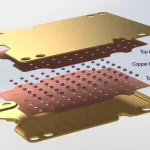
A vapor chamber uses a sealed internal cavity, a working fluid, and a wick structure to move heat laterally. When the base of the chamber absorbs heat, the fluid vaporizes, travels to cooler regions, condenses, and returns through the wick. This gives it much better heat spreading than a solid copper plate of the same size, which is why it is often used when the heat source is small and the fin area is much larger.
In practice, engineers compare heat pipe vs vapor chamber based on the shape of the load. Heat pipes are often better for moving heat in one direction, while vapor chambers are better when the design needs two-dimensional spreading under a compact device. That makes them useful in AI servers, dense power modules, and other thermal management solutions where hotspot control is the main challenge. A vapor chamber can also sit above a fin stack, a cold plate, or even a liquid cold plate interface when the goal is to smooth temperature before the heat enters the next stage.
| Option | Best Use | Main Tradeoff |
|---|---|---|
| Vapor chamber cooling | Fast heat spreading from a small hotspot | Higher cost and integration effort |
| Traditional heat sink | Lower power, lower cost, simpler builds | Less effective on concentrated heat |
| Liquid cold plate | Very high heat loads with available pumping | Needs active cooling support |
Main Benefits
The biggest benefit of vapor chamber cooling is even temperature distribution. That reduces thermal bottlenecks, helps the fins work better, and can improve reliability by lowering peak device temperature. In a custom heat sink design, this is often the difference between a design that barely passes and one that has enough margin for real-world airflow changes. It can also allow a slimmer package than some layered heat pipe layouts, which is useful when thickness is limited.
Another advantage is flexibility in the overall assembly. A vapor chamber can support passive cooling or work alongside active cooling, depending on the system. For example, a fan-cooled fin stack may gain better performance when the chamber spreads heat first, while a liquid cooling vs vapor chamber comparison may favor the chamber when you need spreading without pumps, hoses, or maintenance concerns. This is why engineers often see it as a bridge between a basic heat sink and a more complex cold plate system.
Key Limits
Vapor chamber cooling is not the right answer for every custom heat sink. It adds cost, thickness, and manufacturing complexity, and it still depends on good interface material, fin design, and airflow. If the rest of the thermal path is weak, the chamber cannot fix that by itself. For lower power products, a traditional heat sink may be the better choice because it is simpler, easier to make, and more robust in production.
The main design question is not whether a vapor chamber looks advanced, but whether the application truly needs its spreading performance. Use it when the heat source is small, the dissipation area is larger, and hotspot control drives the design. Use a simpler heat sink when cost, weight, and assembly speed matter more than maximum thermal performance. That balance is the core of choosing between active cooling vs passive cooling and selecting the right thermal management solution for the product.
Traditional Cooling Options
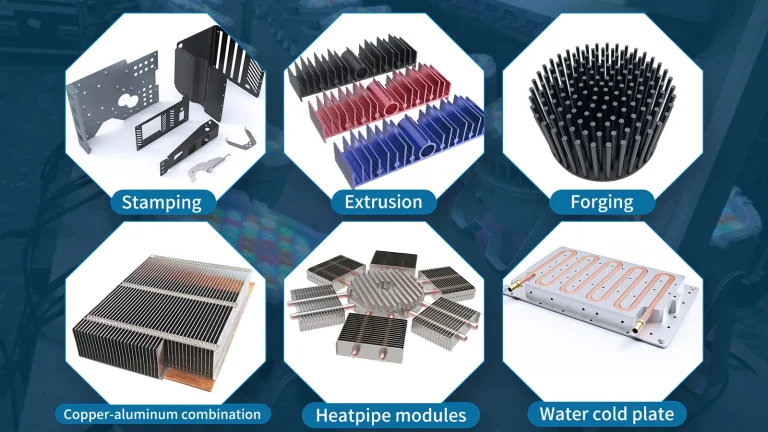
In custom heat sink design, traditional cooling still matters because it is simple, proven, and often less expensive than vapor chamber cooling. For many products, the first decision is not whether to use advanced hardware, but whether air cooling, heat pipes, or a larger aluminum or copper sink can meet the target temperature rise. Ecothermgroup and other thermal management providers often begin with these options because they are easier to manufacture, test, and integrate than more complex systems.
Air Cooling
Air cooling is the most common passive cooling method in heat sink design, and it works best when the load is moderate and airflow is available. In general, it uses a finned body, natural convection, or a fan to move heat away from the component. In the vapor chamber vs heat sink choice, air cooling is usually the lower-cost option, but it can struggle with hot spots and tight enclosures. That is why designers often compare active cooling vs passive cooling early in the project, especially when noise, power use, and maintenance are important.
Heat Pipes
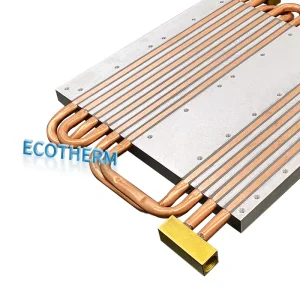
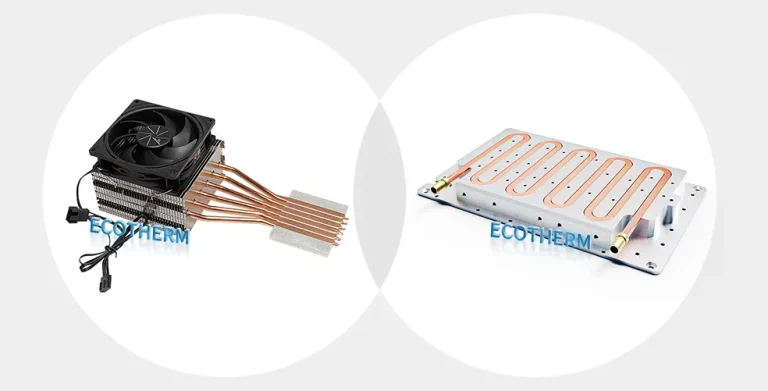
Heat pipes are often chosen when heat must move from a small source to a larger fin area. In the common heat pipe vs vapor chamber discussion, heat pipes are better for transporting heat over a distance, while a vapor chamber spreads heat more evenly across a surface. That difference matters in compact electronics with localized hotspots, such as AI boards and power modules. A heat pipe system can be a strong middle ground before moving to liquid cooling vs vapor chamber options, especially when the design needs lower cost and simpler packaging than a liquid cold plate.
Base Plates And Fins
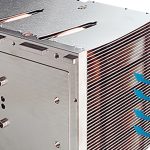
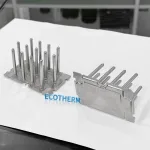
Base plates and fins remain the core of many custom heat sink builds. A thicker copper base can help spread heat before it reaches the fins, while aluminum fins usually keep weight and cost down. However, standard base plates have limits when the heat source is small and power density is high. In those cases, a vapor chamber vs heat sink comparison often shows better temperature balance with a vapor chamber because it spreads heat across the full fin field more effectively. The tradeoff is added cost, thickness, and assembly complexity.
| Option | Best Use | Main Limit |
|---|---|---|
| Air cooling | Low to medium heat loads | Weak hotspot control |
| Heat pipes | Moving heat to remote fins | Less even spreading than a vapor chamber |
| Base plates and fins | General-purpose custom heat sink use | Can saturate under high heat flux |
For a practical selection, engineers usually check airflow, heat flux, space, noise, and cost before deciding on vapor chamber cooling or a traditional approach. A short checklist helps:
- Use air cooling when the enclosure can move enough air.
- Use heat pipes when the hotspot is small but the sink can be spread out.
- Use base plates and fins when the load is steady and the geometry is simple.
For many applications, traditional cooling options are still the right answer. When the heat load rises or the hotspot becomes harder to manage, that is when vapor chamber cooling starts to offer a clearer advantage.

Application Fit
Choosing between vapor chamber cooling and traditional cooling starts with the load, not the label on the device. In custom heat sink design, the key question is whether the assembly needs to pull heat away from one dense hotspot or from a broader, lower-intensity area. Ecothermgroup and other thermal management solutions often treat this as a geometry problem first: if the base area is small, the heat flux is high, and the enclosure leaves little room for spreading, vapor chamber cooling usually has a stronger case than a standard finned heat sink.
High-Power Electronics
High-power electronics often fail at the hotspot, not across the whole board. That is where vapor chamber vs heat sink decisions become clear. A vapor chamber spreads heat laterally before it reaches the fins, so more of the fin area works at an even temperature. That can improve heat sink design when a power device, RF module, or compact industrial drive has one intense source but only moderate airflow. In many cases, a heat pipe vs vapor chamber comparison also shows why the chamber is better for flat, crowded layouts, while heat pipes can still be the lower-cost choice when the load path is simpler.
The practical rule is simple: if the thermal budget is tight and the base plate would otherwise run too hot near the source, vapor chamber cooling is often the better fit. If the load is moderate and the enclosure gives the fins enough room to do the work, a traditional custom heat sink may be enough. A common mistake is to choose by component type alone instead of checking heat flux, mounting pressure, and available base area.
| Application factor | Better fit | Why |
|---|---|---|
| Dense hotspot | Vapor chamber cooling | Spreads heat more evenly across the base |
| Moderate load | Traditional heat sink | Lower cost and simpler build |
| Very limited height | Vapor chamber or heat pipe hybrid | Improves spreading without a large base block |
AI And HPC Systems
AI and HPC hardware pushes the decision further because power density keeps rising and localized hotspots are common. In those systems, vapor chamber vs heat sink is not just a cost choice; it is often a packaging choice. A vapor chamber can move heat away from processors and accelerators before the airflow stage, which helps avoid wasting fin area on one overloaded spot. This is why thermal design for AI servers increasingly includes vapor chambers, liquid cold plate options, or a liquid cooling vs vapor chamber comparison early in the project.
That said, active cooling vs passive cooling still matters. If rack-level airflow is strong and the board spacing is generous, passive thermal management solutions may be enough. When airflow is limited or the device must support a higher wattage per square centimeter, a cold plate or liquid cold plate may outperform a passive custom heat sink. The best practice is to model the real heat flow, not assume that one approach will work because it is common in server design.
Space And Thickness Limits
Space drives many application-fit decisions. Vapor chambers are often selected when thickness is capped, weight matters, or the design cannot afford a thick base plate that steals room from fins. They are also useful when the chassis has a wide footprint but very little vertical clearance, because the chamber can distribute heat across the full base more efficiently than a thick solid plate. In those cases, vapor chamber cooling can make a compact design practical without forcing a larger enclosure.
Still, there are tradeoffs. Vapor chambers can raise manufacturing cost, integration complexity, and risk if the assembly must survive vibration, repeated thermal cycling, or strict mounting tolerances. For that reason, engineers usually compare performance gains against cost and tooling early, then validate with simulation and application-specific testing. The right answer is not universal. It is the one that matches the real thermal load, the enclosure, and the budget for the custom heat sink project.
Design Decision
The right choice in custom heat sink design depends on where the thermal bottleneck sits. If the source is small and the load is concentrated, vapor chamber cooling can spread heat across a larger base area more effectively than a solid plate. That is why it often appears in compact electronics, AI boards, and other high heat-flux systems. By contrast, a traditional heat sink with a solid base is usually enough when the heat is already spread out, the wattage is lower, or the build needs to stay simple and low cost. In practice, the decision is less about vapor chamber vs heat sink as a label and more about whether the assembly is conduction-limited before air or liquid flow even does its job.
| Option | Best Fit | Main Tradeoff |
|---|---|---|
| Vapor chamber cooling | Small hotspot, large spread area, tight package | Higher cost and more integration effort |
| Traditional solid-base heat sink | Evenly distributed load, moderate power | Less spreading for hotspot-heavy parts |
| Cold plate or liquid cold plate | Very high heat loads or dense systems | More system complexity and plumbing |
Cost And Manufacturing
Cost is a major filter in thermal management solutions. Vapor chambers add process steps, tighter quality control, and more packaging risk than a standard finned sink, so they normally cost more to source and assemble. They also need careful thickness control and enough flat contact area to work well. For many programs, Ecothermgroup and other builders will first check whether a heat pipe vs vapor chamber layout can meet the target before moving to a more complex custom heat sink. If the design must be thin, but the budget is fixed, a simpler base plate or heat pipe array may be the better business choice.
Manufacturing also affects reliability. More parts and interfaces can increase variation, so the best design decision is the one that can be built repeatably at volume, not only the one with the best lab result.
Thermal Targets
Thermal targets should be set from the real source geometry, airflow, mounting space, and duty cycle. Vapor chamber vs heat sink is often decided by spreading resistance: if a small die or power module creates a hotspot, a vapor chamber can move heat sideways before it reaches fins, a cold plate, or an external liquid cooling loop. If the heat load is already broad and the temperature rise is modest, passive cooling is often enough. Active cooling vs passive cooling becomes important when ambient limits are tight or fan noise is restricted. In higher power systems, liquid cooling vs vapor chamber may also be compared, but the liquid option is usually reserved for stronger heat rejection needs.
As a rule, match the architecture to the full stack, not just the peak wattage. A design that meets the target in a test fixture may still fail once airflow, tolerance stack-up, and mounting pressure are added.
Selection Checklist
- Is the heat source small and highly concentrated?
- Is the package thickness limited?
- Does the system need passive cooling, or can it use forced air or liquid?
- Will a vapor chamber improve spreading enough to justify the added cost?
- Can the custom heat sink be built reliably at production volume?
If most answers point to a hotspot-driven layout, vapor chamber cooling is often the strongest option. If the answers point to broad load, low complexity, and lower cost, a traditional sink usually wins.
People Also Ask
When does vapor chamber cooling outperform traditional heat sinks in custom designs?
Vapor chamber cooling is usually the better choice when heat is concentrated in one or more small hotspots and needs to be spread quickly across a larger base area. It is especially useful in compact, high-power devices where a traditional heat sink or heat pipe layout cannot move heat evenly enough.
How does a vapor chamber compare with heat pipes in thermal spreading performance?
A vapor chamber spreads heat more uniformly across a two-dimensional surface, while heat pipes mainly move heat along a more linear path. That makes vapor chambers stronger for hotspot-heavy layouts, especially when the source area is small but the cooling surface needs to be much larger.
What tradeoffs should engineers consider before choosing a vapor chamber?
The main tradeoffs are higher cost, added design complexity, and possible thickness constraints compared with simpler cooling options. Those factors matter most in custom heat sink design when manufacturability, package height, or budget limit the thermal solution.
Why are vapor chambers increasingly used in AI servers and HPC hardware?
AI and HPC systems often create dense localized hotspots and rising power densities that are difficult to manage with conventional base plates alone. Vapor chamber cooling helps distribute that heat more evenly before it reaches the fin stack or other downstream cooling stages.
What is the difference between a vapor chamber and a traditional heat sink?
A traditional heat sink relies on conduction through its base and convection through fins to remove heat, while a vapor chamber adds internal phase-change heat spreading. In practice, the vapor chamber improves thermal distribution before the heat reaches the fins.
Is vapor chamber cooling better than air cooling for every application?
No. Vapor chamber cooling helps most when heat flux is high or the source is concentrated, but it still depends on the rest of the cooling stack, including airflow and fin design. For lower-power or less constrained systems, simpler air cooling can be more economical and easier to integrate.
How do I know if my application needs a vapor chamber or a traditional cooling solution?
Start by looking at heat load, hotspot size, available volume, airflow, and cost targets. If the design has tight packaging and strong localized heat, vapor chamber cooling is often a better fit; if the heat is lower or more evenly distributed, a traditional heat sink may be enough.
Are vapor chambers hard to manufacture into a custom heat sink design?
They can be more complex to integrate than standard heat sinks because they require careful packaging, bonding, and material compatibility. That added complexity is usually worth it only when the application needs better spreading performance than conventional designs can provide.