Industrial Heat Dissipation Solutions
Overheating reduces uptime, efficiency, and lifespan of industrial equipment. Heat sinks remove excess heat from power electronics, servers, LED lighting, CNC machinery, and control systems, keeping components within safe operating temperatures. Companies like Ecothermgroup provide tailored solutions for reliable cooling in industrial settings.
Heat Sink Cooling Overview
Heat sinks transfer heat from components to air or liquid. Design affects reliability, manufacturability, and fit. Key factors include thermal resistance, material conductivity, contact quality, airflow, mounting pressure, and available space.
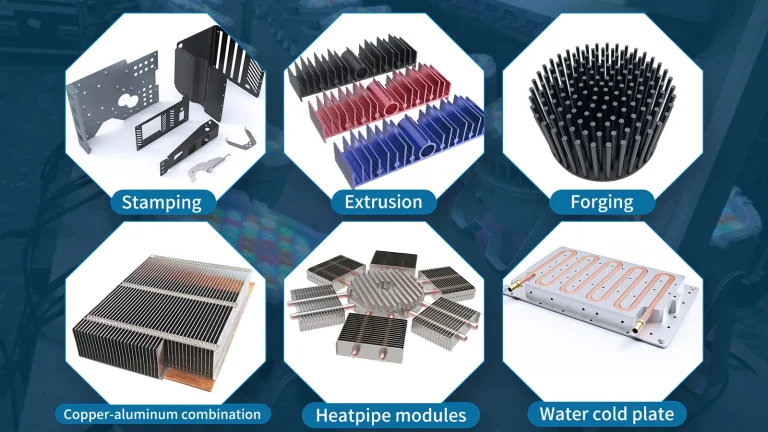
Aluminum extrusions suit scalable production. CNC-machined heat sinks handle tighter tolerances, custom footprints, and special mounts. High heat flux or restricted airflow may require liquid cold plates.
| Cooling Component | Typical Use |
|---|---|
| Aluminum extrusion heat sinks | LED lighting, general electronics, power assemblies |
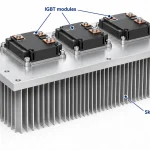
| CNC-machined heat sinks | IGBT modules, inverters, CNC equipment, custom interfaces |
| Liquid cold plates | AI servers, dense power electronics, high heat flux systems |
Heat moves from the source through thermal interfaces to the heat sink or cold plate. Aluminum balances conductivity, weight, corrosion resistance, and cost. Copper improves local heat spreading but adds weight and cost. Hybrid designs combine copper bases or inserts with aluminum fins.
Applications and Challenges
Industrial systems face high power density, tight spaces, vibration, dust, restricted airflow, and long operating hours. Standard heat sinks work for simple layouts, but custom solutions are often needed.
High-Power Electronics & IGBT Modules
IGBT modules in motor drives, converters, welding, and renewable energy generate concentrated heat. Flat surfaces, controlled clamping, proper thermal interfaces, and low thermal resistance are critical. CNC-machined bases and copper inserts improve heat spreading. Liquid cold plates may be needed for extreme densities.
AI Servers & High-Density Electronics
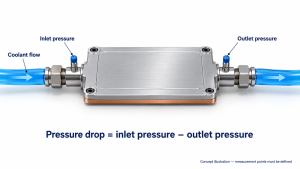
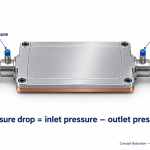
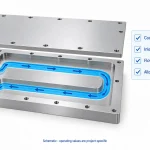
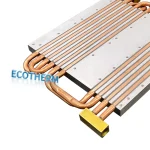
Dense racks create high heat in compact spaces. Airflow limits may prevent large finned heat sinks from working effectively. Liquid cold plates offer lower thermal resistance and even temperature control. RFQs should specify coolant type, flow rate, pressure drop, sealing, and connection layout.
Power Inverters, LED Systems & CNC Equipment
Power inverters need stable thermal performance during load cycling. LEDs require junction temperature control to maintain lumen output. CNC machines need precision heat sinks for spindle drives, motor controllers, and electronics in dust- or vibration-prone environments.
| Application | Recommended Solution | Main Design Focus |
|---|---|---|
| IGBT modules | CNC-machined heat sinks, liquid cold plates | Flatness, clamping, thermal resistance |
| AI servers | Custom heat sinks, liquid cold plates | Heat flux, rack density, flow control |
| Power inverters | IGBT heat sinks, custom components | Thermal cycling, reliability, integration |
| LED systems | Aluminum extrusion heat sinks | Junction temperature, size, cost |
| CNC equipment | CNC-machined or extrusion heat sinks | Precision, dust, vibration |
Choosing the Right Thermal Solution
Selection should match operating conditions: heat source location, component temperature limits, ambient temperature, airflow, enclosure constraints, orientation, mounting method, and production volume.
Custom vs Standard Heat Sinks
Standard heat sinks suit simple geometries at lower cost. Custom heat sinks handle specific footprints, optimized fins, special mounts, improved flatness, or integration with other components. Ecothermgroup supports both.
| Feature | Custom Heat Sink | Standard Heat Sink |
|---|---|---|
| Thermal performance | Optimized | General-purpose |
| Size & shape | Tailored | Catalog options |
| Material | Aluminum, copper, hybrid | Standard aluminum/copper |
| Cost | Higher | Lower |
| Best use | OEM, power modules, dense assemblies | Moderate loads, simple layouts |
Heat Sinks vs Liquid Cold Plates
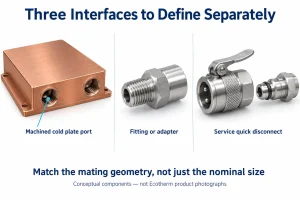
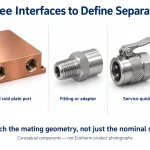
Heat sinks use air cooling and are easier to integrate for inverters, LED drivers, controllers, and industrial computers. Liquid cold plates handle high heat flux or tight spaces where air cooling fails. Liquid systems require pumps, hoses, fittings, coolant compatibility, sealing, pressure drop, and maintenance. Thermal benefit must justify complexity.
| Technology | Applications | RFQ Data Needed |
|---|---|---|
| Heat sink cooling | LED drivers, inverters, CNC controls | Heat load, airflow, space, mounting layout |
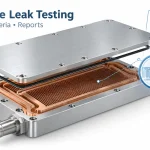
| Liquid cold plates | AI servers, compact high-power systems | Flow rate, pressure drop, coolant, leak testing |
Materials & Manufacturing
Aluminum, Copper & Hybrids
Aluminum is light, affordable, and easy to machine. Copper spreads heat locally but adds weight and cost. Hybrids balance performance and cost.
| Material | Advantages | Use |
|---|---|---|
| Aluminum | Light, machinable, cost-effective | Extrusions, LED systems, server cooling |
| Copper | High conductivity, local spreading | IGBT modules, high-power electronics, inserts |
| Hybrid | Balanced performance | Power modules, compact assemblies |
Extrusion & CNC Machining
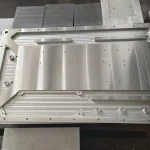
Extrusion produces consistent profiles cost-effectively. CNC machining adds tight tolerances, complex geometries, or custom fluid paths. Many designs combine extrusion with CNC finishing for performance and accuracy.
Surface & Flatness
Flat, smooth surfaces reduce thermal resistance. Anodizing and nickel plating improve corrosion resistance but must not compromise thermal contact. Critical for IGBT modules, liquid cold plates, and precision electronics.
Thermal Design
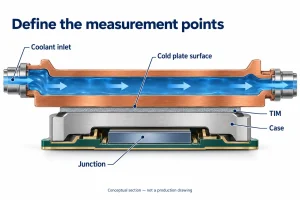
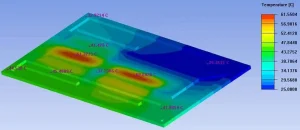
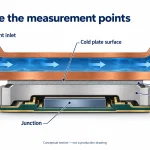
Heat paths should be short. Fin geometry must match airflow. Contact surfaces must meet tolerance. Thermal interface materials must match mounting pressure and temperature. Evaluate thermal resistance across the full path, including airflow or coolant channels.
- Define heat load, source location, and max temperature.
- Check space, airflow, orientation, and enclosure limits.
- Choose material for thermal performance, weight, cost, and environment.
- Specify flatness, surface finish, mounting pressure, and assembly needs.
- Validate performance under real conditions before production.
Contact Ecothermgroup
For custom heat sinks, aluminum extrusions, IGBT module heat sinks, CNC-machined components, or liquid cold plates, submit drawings, heat load data, material requirements, quantities, and application details to Ecothermgroup for engineering review and a tailored quote.