Inverter Cooling Principles: Heat Sink and Liquid Cooling Design
An inverter converts electrical energy through high-speed switching, and every switching device produces a certain amount of heat. The purpose of inverter cooling is to move that heat away from IGBTs, diodes, capacitors and other heat-generating components while maintaining stable electrical performance.

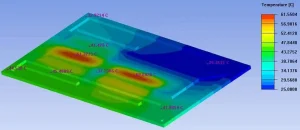
The outside of an operating inverter may feel warm because the enclosure and heat sink are transferring heat away from the internal power devices. A warm housing is not automatically a sign of poor design. The important question is whether the semiconductor junction remains within its allowable temperature range and whether the temperature distribution remains uniform.
Why Inverters Generate Heat
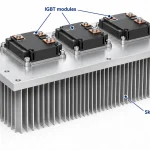
The main sources of heat are semiconductor conduction loss, switching loss, magnetic component loss and resistive loss in busbars and connections. IGBT modules are often the dominant heat source in high-power systems. Their loss depends on load current, switching frequency, DC-link voltage, modulation method and device characteristics.
Cooling design should therefore begin with a complete loss estimate rather than a simple percentage of rated power. The thermal load must be considered at normal load, peak load and high ambient temperature.
Choosing Heat Sink Materials
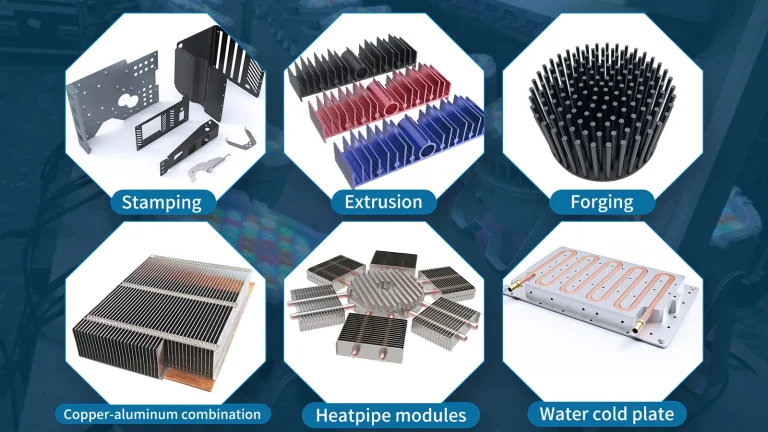
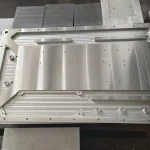
Aluminium is widely used for inverter heat sinks because it offers a practical balance between thermal conductivity, weight, cost, corrosion resistance and manufacturability. Extrusion, skiving, die casting and machining allow the cooling geometry to be adapted to different module layouts.
Copper can provide higher thermal conductivity, but its greater density and cost often limit its use to local heat spreaders or hybrid constructions. The best material is the one that achieves the required thermal resistance while meeting mechanical, electrical and manufacturing requirements.
Air-Cooled Inverters
Air cooling is suitable when sufficient space is available for fins and airflow. Natural convection can work for lower heat loads, while forced air is usually needed for higher power density. Fan selection should be based on the airflow available at the actual system pressure drop, not only on the fan’s free-air rating.
The enclosure must guide air through the intended thermal path. Recirculation, blocked intake openings and uneven flow can produce local hot spots. The heat sink should also be positioned so that heat from one component does not unnecessarily raise the inlet temperature of another.
Liquid-Cooled Inverters
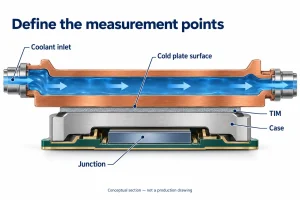
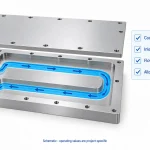
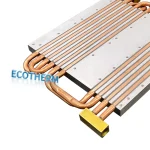
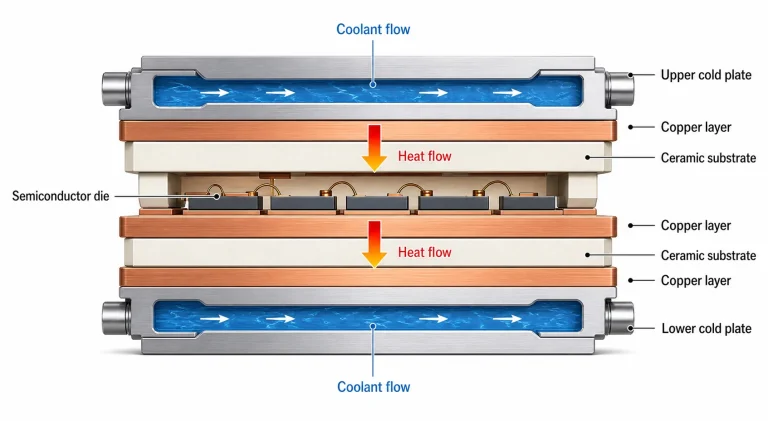
Liquid cooling uses a cold plate, pump, reservoir, heat exchanger and connecting lines to transfer heat away from the power module. It is useful when the enclosure is compact, the heat flux is high or acoustic noise must be controlled.
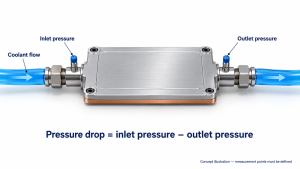
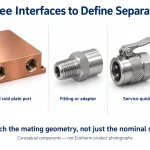
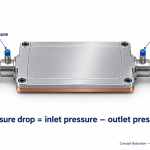
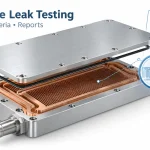
The cold plate channel layout should match the heat source distribution. Coolant flow, pressure drop, sealing, corrosion resistance and serviceability must be evaluated together. A cold plate with a low calculated thermal resistance may still perform poorly if flow bypasses the hottest region.
Thermal Interface and Mounting
The connection between the IGBT module and the cooling component is part of the cooling system. Surface flatness, interface thickness, mounting pressure and tightening sequence directly affect contact resistance. Reliable assembly is particularly important in systems exposed to vibration and repeated temperature cycling.
Ecothermgroup supports custom thermal management designs for power electronics. Customers can provide module drawings, heat load, installation dimensions and cooling conditions through the Ecothermgroup website.
FAQ
Is a hot inverter enclosure always a problem?
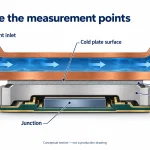
No. The enclosure may be intentionally transferring heat to the outside. The correct assessment requires junction-temperature, case-temperature and thermal-distribution measurements.
Is aluminium suitable for an inverter heat sink?
Yes. Aluminium is commonly selected because it combines adequate conductivity with low weight, good corrosion resistance and flexible manufacturing options.
When is liquid cooling better than air cooling?
Liquid cooling is generally more attractive when heat density is high, available space is limited or a more uniform temperature distribution is required.