Data Center Liquid Cooling Solutions for High-Density Servers: Custom Thermal Design & Cold Plate Engineering
Modern data centers are under pressure to handle the growing demands of high-density servers, and traditional air cooling methods often fall short of managing the resulting heat. Data center liquid cooling solutions offer an effective and dependable way to tackle these thermal challenges, helping maintain peak performance and energy efficiency. This article examines custom thermal design and advanced cold plate engineering as essential innovations for meeting these needs.
Introduction to Data Center Liquid Cooling Solutions
As the demand for high-density servers grows, driven by AI, HPC workloads, and hyperscale data centers, traditional air-cooling methods are falling behind. Data center liquid cooling solutions have become a transformative approach for managing heat, improving energy efficiency, and supporting higher server densities. Companies like Ecothermgroup and OEM liquid cooling manufacturers are leading the development of advanced thermal designs and custom cooling systems to meet these evolving needs.
Why Traditional Cooling Systems Fall Short
Traditional air-cooling systems rely on fans and airflow to remove heat from servers. While suitable for low to medium-density racks, these systems face significant challenges as server heat output increases. High-density environments, especially those exceeding 20kW per rack, generate heat levels that air-cooling infrastructures struggle to handle effectively.
Key drawbacks of air cooling include:
- Lower thermal conductivity compared to liquids, which limits heat transfer efficiency.
- Higher energy consumption due to increased fan speeds and cooling unit demands.
- Difficulty maintaining consistent temperatures across densely packed components.
These challenges highlight why liquid cooling is becoming essential for modern data center designs.
| Cooling Method | Key Limitations |
|---|---|
| Air Cooling | Limited efficiency for racks >20kW, high energy usage, uneven cooling |
| Liquid Cooling | Higher initial cost but scalable and energy-efficient |
Benefits of Liquid Cooling for High-Density Servers
Liquid cooling systems, particularly direct-to-chip (D2C) and cold plate solutions, address the heat dissipation challenges in today’s data centers. These systems use cold plates placed directly on heat-generating components like CPUs and GPUs, circulating liquid coolant to efficiently absorb and remove heat. Coolant Distribution Units (CDUs) are essential to maintaining the cooling loop, ensuring optimal performance and reducing thermal resistance.
Key benefits of liquid cooling include:
- Improved Heat Management: Liquids have higher thermal conductivity than air, enabling precise temperature control for high-heat components.
- Scalability: Supports rack densities of 50kW or more, meeting the demands of AI and HPC workloads.
- Energy Efficiency: Reduces energy use, leading to lower PUE and operational costs.
- Sustainability: Helps meet environmental goals by reducing carbon footprints.
For instance, Ecothermgroup’s advanced cold plate designs leverage optimized microchannel engineering to maximize heat transfer while minimizing pressure drop. This ensures efficient performance even in the most demanding conditions.
In addition, custom thermal solutions offered by liquid cooling providers allow data centers to tailor their cooling systems to specific requirements, from chip-level cooling to closed-loop designs that prevent water contamination and scaling issues.
Data center liquid cooling solutions are no longer optional for high-density server environments. By partnering with a trusted thermal solution provider like Ecothermgroup, data center operators can adopt efficient, sustainable, and scalable cooling systems to stay ahead of the curve.
Core Technologies in Liquid Cooling Systems
Coolant Distribution Units (CDUs)
Coolant Distribution Units (CDUs) are essential for managing liquid cooling systems in high-density data centers. These units control coolant flow, monitor pressure, and maintain temperatures to optimize heat dissipation. CDUs are particularly critical in large-scale server deployments, where managing multiple cooling loops can be challenging.
Ecothermgroup, a leading OEM in liquid cooling, offers modular CDUs with redundancy features to ensure reliability during peak workloads or unexpected issues. Advanced CDUs from companies such as Schneider Electric include smart sensors and IoT capabilities for real-time monitoring and automated adjustments. By minimizing manual intervention, these systems enhance efficiency and reduce maintenance costs.
Balancing flow rates across server racks is a common challenge in coolant distribution. CDUs address this with variable-speed pumps and flow control mechanisms. These features support best practices in server heat flux management, improving the overall cooling infrastructure.
| Feature | Benefit |
|---|---|
| IoT Integration | Real-time monitoring and adjustments |
| Redundancy | Ensures system reliability during failures |
| Variable-Speed Pumps | Optimized flow rate management |
Direct-to-Chip Cooling Systems
Direct-to-chip cooling systems are a key component of modern data center cooling designs, offering efficient management of localized heat sources. These systems use cold plates mounted directly onto CPUs, GPUs, or memory modules for immediate heat transfer from critical components.
Ecothermgroup specializes in closed-loop liquid cooling solutions that reduce thermal resistance. Their designs often incorporate advanced cold plates with minimal thermal impedance, enabling high-performance chips to maintain optimal temperatures. Widely adopted by providers like Fabric8Labs, direct-to-chip cooling is scalable and suitable for AI and HPC workloads that generate significant heat.
In addition to their cooling efficiency, direct-to-chip systems simplify maintenance. Modular designs with quick-disconnect couplings allow technicians to replace or upgrade components without disrupting the cooling loop. This feature is especially beneficial for high-density servers requiring regular updates.
- Efficient heat transfer at the chip level
- Scalable for high-density workloads
- Reduced maintenance downtime
Cold Plate Technology and Heat Sink Design
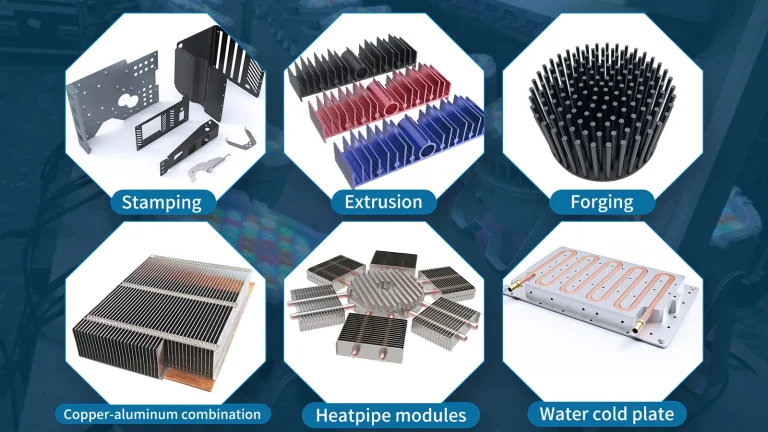
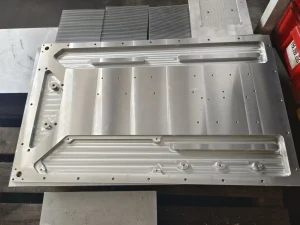
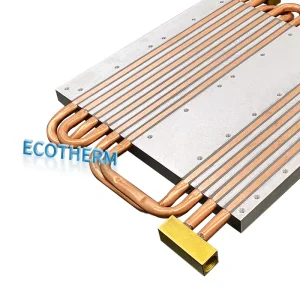
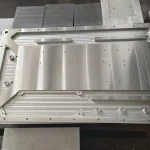
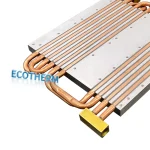
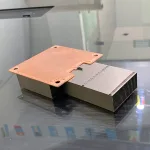
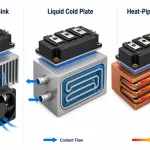
Cold plate technology is crucial in liquid cooling systems for managing server heat flux at the component level. These plates feature channels and surfaces designed to optimize coolant flow and thermal conductivity. Materials such as aluminum and copper are widely used for their superior heat transfer capabilities.
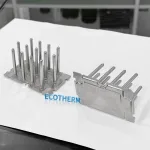
Ecothermgroup collaborates with leading thermal solution providers to create cold plates tailored to modern silicon architectures. Innovations like additive manufacturing enable intricate channel designs that boost cooling performance while minimizing pressure drop. Cold plates are often paired with heat sinks to effectively disperse residual heat into the surrounding environment.
When choosing cold plates, factors such as material, flow rate compatibility, and thermal performance should be considered. Regular inspections to prevent clogging and ensure consistent coolant distribution are recommended. By following these practices, data centers can improve Power Usage Effectiveness (PUE) and meet sustainability goals.
| Material | Key Property |
|---|---|
| Copper | High thermal conductivity |
| Aluminum | Lightweight and cost-effective |
| Stainless Steel | Corrosion resistance |
Custom Thermal Design for High-Density Data Centers
Engineering Tailored Cooling Solutions
As data centers shift towards high-density server configurations to support artificial intelligence (AI) and high-performance computing (HPC), efficient thermal management becomes essential. Custom thermal designs address these challenges by optimizing heat dissipation, reducing thermal resistance, and improving energy efficiency. Advanced liquid cooling technologies, including direct-to-chip (D2C) cooling systems and closed loop liquid cooling, deliver precise heat management at the chip level, minimizing hotspots and ensuring system reliability during heavy workloads.
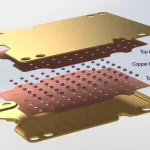
Ecothermgroup, a trusted thermal solution provider, focuses on creating tailored cooling systems to meet the specific needs of server architectures. For instance, cold plates used in liquid cooling loops are often customized with microchannel designs to improve heat flux management and provide uniform cooling. By optimizing flow paths and pressure drops, these solutions effectively handle thermal loads in densely packed server setups. Collaborating with OEM liquid cooling manufacturers ensures compatibility with existing infrastructure while scaling to meet future performance needs.
The use of Coolant Distribution Units (CDUs) enhances efficiency by centralizing coolant management. These units ensure consistent liquid distribution across multiple cold plates, reducing operational bottlenecks and simplifying maintenance. Together with liquid cooling loop designs, CDUs help lower Power Usage Effectiveness (PUE) ratings, enabling data center operators to align with sustainability goals while maintaining performance.
Additive Manufacturing for Advanced Cold Plates
Innovative techniques like additive manufacturing have revolutionized cold plate design for high-density data centers. This method enables engineers to create highly precise and complex geometries, such as intricate microchannels, that maximize heat removal from server components. Unlike traditional manufacturing methods, additive manufacturing allows for greater customization based on specific cooling requirements, improving efficiency and reducing material waste.
Ecothermgroup applies additive manufacturing expertise to produce advanced cold plates designed for HPC and AI workloads. Using materials with superior thermal conductivity, such as aluminum alloys and copper, these cold plates enhance heat transfer while maintaining durability under extreme conditions. Features like optimized flow channel dimensions and surface treatments further reduce thermal resistance, ensuring reliable cooling performance during peak operations.
The scalability of additive manufacturing supports rapid prototyping and cost-effective production, making it a preferred method for data center cooling designs. This approach not only shortens lead times but also allows for iterative design improvements based on real-world testing and feedback, ensuring compatibility with operational requirements.
| Cooling Method | Key Features |
|---|---|
| Direct-to-Chip Cooling | Localized heat management, reduced energy consumption, improved performance |
| Cold Plate Systems | Precision microchannels, uniform heat dissipation, compatibility with high-density servers |
| Coolant Distribution Units (CDUs) | Centralized liquid management, operational resilience, simplified maintenance |
- Optimize cooling designs for server-specific architectures
- Incorporate additive manufacturing for advanced cold plate geometries
- Integrate CDUs to streamline liquid distribution and maintenance
- Choose materials with high thermal conductivity for enhanced performance
Challenges and Innovations in Liquid Cooling
Scalability and Performance for AI and HPC Workloads
The rise of artificial intelligence (AI) and high-performance computing (HPC) workloads is creating new thermal challenges for data centers. These applications rely on high-density servers that produce significant heat, often beyond the limits of traditional air-cooling systems. Data center liquid cooling solutions, such as direct-to-chip (D2C) systems and closed-loop liquid cooling, provide a scalable and efficient way to handle thermal loads in these high-demand environments. By transferring heat directly from CPUs and GPUs using cold plates, these systems reduce thermal resistance and improve heat dissipation, helping maximize server performance.
Coolant Distribution Units (CDUs) are crucial for scalability, as they regulate fluid flow and maintain consistent temperatures across racks. They ensure dependable cooling performance, even under high thermal flux conditions. For instance, integrating advanced CDUs into custom data center cooling setups allows operators to expand cooling capacity as AI and HPC computational demands increase.
Material Choices and Flow Channel Optimization
Material selection is key to the efficiency and durability of liquid cooling systems. Using incompatible materials can lead to issues like corrosion, scaling, or biological fouling, which compromise performance. Copper and aluminum alloys are commonly used for cold plates due to their excellent thermal conductivity. Ecothermgroup highlights the importance of anti-corrosion coatings and precise pH control to maintain material integrity over time.
Flow channel optimization is another area where innovation is driving progress. Modern cold plate designs use micro-channel architectures to maximize surface area and improve heat transfer. Research published in “A Comprehensive Review of Cold Plate Liquid Cooling Technology for Data Centers” shows that micro-channels enhance fluid dynamics and reduce thermal resistance, ensuring effective heat dissipation across densely packed server arrays. CFD (Computational Fluid Dynamics) simulations are frequently used during design to optimize flow patterns and achieve uniform cooling performance.
| Material | Key Benefits |
|---|---|
| Copper | High thermal conductivity, durability |
| Aluminum Alloy | Lightweight, cost-effective |
| Stainless Steel | Corrosion resistance, structural integrity |
Beyond materials, advanced cooling infrastructure design services help create solutions tailored to specific facility requirements. Collaboration between OEM liquid cooling manufacturers and data centers often leads to customized systems that address unique thermal and spatial challenges, optimizing performance and cost-efficiency.
- Direct-to-chip cooling minimizes thermal resistance and boosts server performance.
- Coolant Distribution Units enable scalable cooling for expanding workloads.
- Micro-channel cold plate designs enhance heat dissipation efficiency.
Future Trends in Data Center Liquid Cooling
The Role of Sustainability in Cooling Innovations
As high-performance computing continues to grow, sustainability is becoming a major factor in the development of data center liquid cooling solutions. Traditional air cooling systems are energy-intensive and can account for as much as 40% of a data center’s energy use. Liquid cooling, on the other hand, offers significant energy savings. Direct-to-chip cooling systems, for example, reduce thermal resistance and allow for heat reuse, making them a more sustainable choice.
Ecothermgroup and other thermal solution providers are emphasizing closed loop liquid cooling designs that reduce water waste. These systems rely on Coolant Distribution Units (CDUs) to circulate non-evaporative coolants, cutting down on water dependency. Advances in material science, such as using recycled aluminum in cold plate manufacturing, are also enabling OEM liquid cooling manufacturers to produce eco-friendly components without sacrificing performance.
Integrating renewable energy into data center operations is another key trend shaping the future. Liquid cooling systems, which perform well at higher operating temperatures, can work efficiently with low-carbon energy sources like geothermal and solar heating. These innovations align with global sustainability targets and support data centers in achieving carbon neutrality.
Emerging Technologies and Market Outlook
New technologies are transforming liquid cooling systems to address challenges like server heat flux management and scalability. Direct-to-chip liquid cooling, which circulates coolant directly across CPUs and GPUs, is gaining popularity for its ability to manage heat densities exceeding 50 kW per rack. This technology is particularly effective for AI and high-performance computing (HPC) workloads, where traditional air cooling falls short.
Industry forecasts project that the liquid cooling market will grow at a compound annual growth rate (CAGR) of 15-20% through 2030. This growth is driven by the increasing adoption of chip-level cooling solutions, which are critical for handling the rising power and thermal demands of modern silicon architectures. Leading liquid cooling system providers are also investing in R&D to improve loop efficiency, reduce leak risks, and streamline maintenance.
Additionally, additive manufacturing is playing a crucial role in creating customized data center cooling solutions. Advanced 3D printing techniques enable the production of intricate cold plate designs tailored to specific server configurations, improving thermal performance. Companies like Ecothermgroup are utilizing these innovations to deliver personalized solutions that address their clients’ unique needs.
| Technology | Key Advantages |
|---|---|
| Direct-to-Chip Cooling | Reduces thermal resistance, improves efficiency for high-density servers |
| Closed Loop Liquid Cooling | Minimizes water waste, works with renewable energy sources |
| Additive Manufacturing | Enables custom cold plate designs for better heat dissipation |
As the industry evolves, collaboration between data center cooling design services and technology providers will be crucial. Companies that focus on innovation and sustainability will be well-positioned to meet the growing demand for advanced liquid cooling systems. By staying ahead of these developments, Ecothermgroup and similar providers can help data centers tackle the challenges of heat management and energy efficiency.
People Also Ask
What are data center liquid cooling solutions, and why are they important for high-density servers?
Data center liquid cooling solutions use liquids to remove heat from servers, providing better thermal management compared to traditional air cooling. They are essential for high-density servers because they enable efficient cooling in compact spaces and support the performance needs of AI, HPC, and modern workloads.
What are Coolant Distribution Units (CDUs), and how do they function in liquid cooling systems?
Coolant Distribution Units (CDUs) manage the flow and temperature of coolant in liquid cooling systems, ensuring effective heat transfer from servers to external cooling infrastructure. They are crucial for maintaining reliability and scalability in high-density data centers.
How does custom thermal design benefit high-density data centers?
Custom thermal design adapts cooling solutions to specific server architectures and workloads, improving heat dissipation and energy efficiency. This approach is vital for addressing the unique cooling challenges of high-density data centers and modern silicon technologies.
What are the challenges associated with implementing liquid cooling in data centers?
Challenges include higher initial costs, preventing leaks, and integrating liquid cooling with existing systems. However, advancements in cold plate technology and coolant materials are helping to overcome these obstacles.
What is direct-to-chip liquid cooling, and how does it work?
Direct-to-chip liquid cooling delivers coolant directly to components like CPUs and GPUs via cold plates. This method ensures efficient heat transfer by targeting heat sources directly, reducing thermal resistance and energy use.
How does liquid cooling help reduce operational costs in data centers?
Liquid cooling increases energy efficiency by reducing reliance on large-scale air cooling systems and cutting power usage for fans and HVAC systems. This results in lower operational costs and greater sustainability for data centers.
What innovations are driving the future of liquid cooling in data centers?
Advancements such as additive manufacturing for custom cold plates, improved coolant materials, and AI-based thermal management systems are enhancing liquid cooling efficiency and scalability. These innovations address the growing demands of AI and HPC workloads.
What are the key differences between air cooling and liquid cooling in data centers?
Air cooling uses fans and HVAC systems to dissipate heat, which can be less effective for high-density servers. Liquid cooling provides better thermal performance by transferring heat directly through liquids, enabling higher server density and lower energy consumption.