Direct-to-Chip Cooling for AI Servers: When Liquid Cold Plates Are Needed
As AI servers take on more demanding workloads, traditional air cooling methods often fall short in managing their growing heat output. This is where advanced solutions like AI server liquid cooling, such as direct-to-chip cooling with liquid cold plates, play a crucial role in ensuring performance and efficiency. In this article, we discuss when and why this cutting-edge cooling method becomes necessary.
Introduction to AI Server Liquid Cooling
Why AI Servers Require Advanced Cooling
AI servers handling high-performance computing (HPC) and demanding AI workloads generate significant heat. Components like GPUs and CPUs in these systems often have thermal design power (TDP) ratings ranging from 300W to over 1200W, especially with NVIDIA GPUs used for AI training. Traditional air cooling methods struggle to manage this heat effectively, leading to thermal throttling, reduced performance, and potential hardware issues.
The increasing density of AI servers adds to the cooling challenges. Modern AI data centers frequently house hundreds or thousands of interconnected servers, further increasing the heat load. Solutions like direct-to-chip liquid cooling are essential for tackling these challenges while maintaining efficiency and performance.
Liquid cooling systems are highly effective due to their superior thermal conductivity compared to air. By transferring heat from CPUs and GPUs to a liquid coolant via cold plates, these systems remove heat more efficiently, enabling stable operations even during intensive workloads. This method is critical for achieving high compute density and preventing overheating in AI and HPC environments.
Overview of Liquid Cooling Solutions
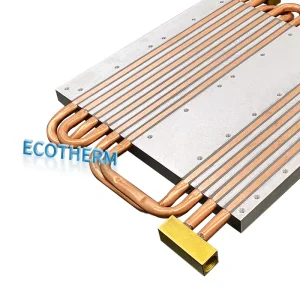
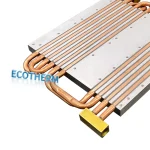
Direct-to-chip liquid cooling (DLC) is a leading solution for managing the intense heat output of AI servers. DLC systems use liquid cold plates mounted directly onto high-heat-generating components like GPUs and CPUs. Coolant circulates through these plates, efficiently absorbing and transferring heat away from the chip surfaces.
One key factor influencing DLC performance is coolant flow rate. Higher flow rates enhance heat dissipation but may increase pressure drops and cause potential erosion within the system’s channels. Careful design of flow channels and cold plate geometry is vital to balance thermal performance with long-term reliability. The thermal interface material (TIM) also plays a crucial role in optimizing heat transfer between the chip and cold plate by minimizing thermal resistance.
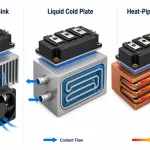
To highlight the benefits of liquid cooling, consider the following comparison:
| Cooling Method | Heat Dissipation Efficiency | Maximum Component TDP Supported |
|---|---|---|
| Traditional Air Cooling | Low | ~250W |
| Direct-to-Chip Liquid Cooling | High | 300–1200W |
Single-phase cooling is the most commonly used approach in DLC systems for AI servers. Unlike two-phase cooling, where the coolant undergoes phase changes (e.g., liquid to vapor), single-phase systems maintain a consistent liquid state. This simplifies maintenance, reduces risks, and ensures consistent thermal performance under varying workloads.
- Efficient heat removal for high-density server configurations
- Improved energy efficiency compared to air-cooled systems
- Scalability for retrofitting existing data centers
Ecothermgroup focuses on innovative cold plate designs and intelligent coolant management systems to maximize the performance and reliability of DLC solutions. As AI workloads continue to push server capabilities, advanced liquid cooling systems are crucial for effective thermal management and operational stability.
How Direct-to-Chip Liquid Cooling Works
AI server liquid cooling is gaining attention as a critical method for maintaining optimal performance and energy efficiency. Understanding the basics and implementing effective techniques can significantly improve outcomes.
There are a few key points to keep in mind when exploring AI server liquid cooling. First, grasping the core principles is crucial. Second, employing practical methods can lead to better results.
Components of Direct-to-Chip Cooling Systems
Understanding the components of direct-to-chip cooling systems is essential for effective application. Knowing how these systems function allows you to make informed decisions for your setup.
The Role of Liquid Cold Plates in Heat Dissipation
Liquid cold plates play a vital role in transferring heat away from high-performance components. Familiarity with their operation can help you optimize your cooling solution.
When Liquid Cold Plates Are Needed
Addressing Thermal Challenges in AI Servers
AI servers running high-performance computations face significant thermal challenges. Components like GPUs and CPUs often generate power densities exceeding 200-300 watts, making traditional air cooling systems insufficient for maintaining optimal temperatures. This is especially true for workloads using NVIDIA H100 GPUs or similar hardware, where thermal loads are densely concentrated. Liquid cold plates, integrated into direct-to-chip cooling systems, play a vital role in efficiently dissipating heat and preventing thermal throttling.
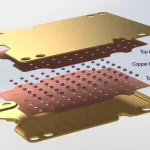
Liquid cold plates are engineered to effectively manage heat flux, ensuring stable performance for high-density processors. Unlike traditional cooling methods, cold plates directly contact the heat source, transferring heat to a coolant flowing through internal channels. Research indicates that advanced flow channel designs can enhance heat dissipation by improving coolant flow rates and minimizing thermal resistance. This is critical in AI servers, where consistent cooling is essential to prevent hotspots that can impair hardware performance.
| Thermal Challenge | How Liquid Cold Plates Address It |
|---|---|
| High power density (>200 W) | Direct contact cooling for efficient heat transfer |
| Non-uniform heat loads | Custom flow channel designs for targeted cooling |
| Thermal throttling | Maintains stable temperatures under heavy workloads |
| Energy efficiency | Reduces reliance on energy-intensive air conditioning |
Non-Uniform Heat Loads and Performance Optimization
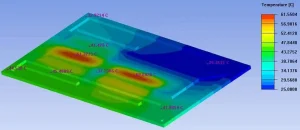
A key challenge in AI server liquid cooling is managing non-uniform heat loads. Components like GPUs and accelerators often produce varying heat levels across their surfaces. Advanced flow channel designs in liquid cold plates help distribute cooling proportionally, targeting areas with higher heat flux. This approach prevents overheating and improves the efficiency of the cooling system.
Thermal interface materials (TIMs) with high thermal conductivity are recommended to further enhance performance. These materials fill microscopic gaps between the cold plate and the heat source, reducing thermal resistance. Ensuring precision in surface flatness is also critical for maximum contact and effective heat transfer. Ecothermgroup, a leader in AI server cooling solutions, underscores the importance of rigorous leak testing and pressure drop analysis to ensure system reliability and peak performance.
- Align coolant inlets and outlets for consistent flow rates.
- Use high-quality TIMs to improve thermal transfer efficiency.
- Monitor coolant flow rates to avoid erosion or underperformance.
Liquid cold plates are crucial for AI server cooling, effectively handling high power densities, non-uniform heat loads, and demanding workloads. Their precision and efficiency make them essential for modern AI data centers.
Design and Performance Factors
Generative Design for Cold Plate Optimization
The design of cold plates is a critical element in ensuring effective AI server liquid cooling. Generative design, powered by advanced algorithms, allows engineers to create optimized flow channel layouts tailored to dissipate the massive heat loads generated by high-density AI servers. By leveraging physics-based modeling, this approach identifies the most efficient pathways for coolant flow, reducing thermal resistance and ensuring uniform heat dissipation across components, such as GPUs and CPUs.
A notable example is the use of generative design in NVIDIA GPUs for AI workload cooling. In one study, optimized cold plates achieved a significant reduction in chip temperatures, addressing the thermal management challenges posed by non-uniform heat flux. This level of precision is especially important for HPC server cooling and environments with high-performance accelerators, where any thermal inefficiency could lead to hardware throttling or failure.
Key design factors, such as surface flatness and the thermal interface material (TIM), also play pivotal roles. Ensuring the cold plate’s surface is uniformly flat enhances contact with the chip, minimizing thermal resistance. High-quality TIM further bridges microscopic gaps, improving overall heat transfer efficiency.
Impact of Flow Rates on Cooling Efficiency
Coolant flow rate is another critical aspect of AI server cooling. Higher flow rates can enhance heat transfer by ensuring faster removal of heat from the cold plate’s surface. However, these rates must be carefully managed to prevent potential issues such as increased pressure drop and material erosion within the cooling channels. A balance between flow rate and pressure is essential to avoid damaging the system while maintaining optimal cooling performance.
Research has shown that increasing flow rates in direct-to-chip cooling systems can improve heat dissipation efficiency for AI GPU cooling applications. However, excessively high flow rates can lead to diminishing returns and elevated energy consumption due to pump demands. The ideal flow rate depends on variables such as coolant viscosity, heat load, and flow channel design.
Proper maintenance of coolant quality is equally important. Contaminants or improper coolant mixtures can lead to clogging and reduced performance. Regular leak testing and monitoring of coolant inlet and outlet temperatures ensure long-term reliability and prevent downtime in AI data center cooling systems.
| Factor | Impact on AI Server Liquid Cooling |
|---|---|
| Flow Channel Design | Prevents hot spots and ensures uniform cooling performance |
| Flow Rate | Enhances heat dissipation but must be balanced to avoid energy inefficiency |
| Thermal Interface Material (TIM) | Improves heat transfer by minimizing gaps between chip and cold plate |
| Surface Flatness | Enhances contact area, reducing thermal resistance |
- Optimize generative design to create efficient cold plate layouts
- Maintain appropriate coolant flow rates to balance performance and system wear
- Use high-quality TIM and ensure proper installation to boost heat dissipation
Brands like Ecothermgroup specialize in designing tailored AI server liquid cooling solutions that address these challenges. Their innovative approaches to GPU thermal management and cold plate optimization exemplify the importance of precise engineering in meeting the demands of modern AI workloads. For organizations handling increasing computational complexities, investing in advanced liquid cooling technologies ensures reliability, performance, and scalability in high-density server environments.
Energy Efficiency and Sustainability
Reducing Energy Consumption in AI Data Centers
AI server liquid cooling systems, particularly those using direct-to-chip technology, are revolutionizing energy efficiency in data centers. Traditional air cooling methods often struggle to manage the high heat flux generated by AI workloads and HPC server cooling demands. Liquid cooling, by contrast, directly dissipates heat from CPUs and GPUs using cold plates, significantly lowering thermal resistance. This leads to reduced energy usage for cooling infrastructure and improves the overall power usage effectiveness (PUE) of AI data centers.
Studies have shown that optimized liquid cooling systems can reduce cooling energy consumption by up to 40%. For example, using generative designs for cold plate flow channel layouts, such as those modeled for NVIDIA GPUs, has demonstrated superior heat dissipation efficiency while maintaining low pressure drops. Furthermore, high coolant flow rates enhance thermal performance without excessive erosion, ensuring long-term reliability.
Integrating coolant distribution units (CDUs) with liquid cold plates further supports energy savings by enabling precise thermal management. This is critical for sustaining high-density server cooling while accommodating future scalability of AI hardware requirements. Data from Ecothermgroup highlights how properly designed liquid cooling systems can cut electricity demand, reducing operational costs and supporting energy efficiency goals.
| Cooling Method | Energy Efficiency |
|---|---|
| Traditional Air Cooling | Moderate, limited by high thermal resistance |
| Direct-to-Chip Liquid Cooling | High, reduces cooling energy by up to 40% |
Environmental Benefits of Liquid Cooling
Switching to AI server liquid cooling contributes directly to sustainability efforts by lowering the carbon footprint of data centers. Air cooling systems typically require high-powered fans and large-scale infrastructure, consuming substantial electricity. In contrast, liquid cooling systems, including single-phase direct-to-chip solutions, utilize fewer resources while ensuring efficient heat dissipation.
Another environmental advantage is the potential for heat recovery. Waste heat captured by liquid cooling systems can be repurposed for other facility operations, such as heating office spaces or water supplies, further enhancing sustainability. This aligns with industry trends that prioritize energy reuse and environmental responsibility.
Moreover, liquid cooling eliminates the need for refrigerants commonly used in air-based systems, which are often harmful to the environment. By adopting cold plates optimized for AI workload cooling, operators can achieve a balance between thermal performance, energy efficiency, and ecological impact.
- Reduces carbon emissions by minimizing cooling energy demand
- Enables heat recovery for secondary facility use
- Eliminates reliance on harmful refrigerants
As AI data center cooling needs continue to grow, adopting sustainable solutions like direct-to-chip liquid cooling is essential. With brands like Ecothermgroup leading innovation in liquid cooling technology, operators can meet both performance and sustainability objectives effectively.
Future Trends in AI Server Liquid Cooling
Advancements in Cooling Technologies
The ongoing development of AI server liquid cooling solutions is driven by the rising heat loads generated by high-performance GPUs and CPUs. Generative design methods are being applied to refine flow channel designs in cold plates, boosting heat dissipation. Studies indicate that using physics-based modeling in cold plate design can lower thermal resistance in NVIDIA GPUs by up to 20%, improving cooling efficiency for AI workloads.
Additionally, advances in coolant flow rate management are enhancing system reliability. Research shows that higher flow rates in direct-to-chip systems can better manage heat flux, though they may bring challenges like erosion. Manufacturers like Ecothermgroup are focusing on balancing flow rates, maintaining surface flatness, and using durable thermal interface materials (TIM) to ensure optimal performance in innovative cooling systems.
| Technology | Key Benefit |
|---|---|
| Generative Cold Plate Design | Lower thermal resistance and reduced GPU temperatures |
| High Flow Rate Systems | Improved heat flux management with increased coolant velocities |
Scalability for Next-Generation AI Workloads
As AI workloads become more demanding, scalable cooling systems are essential. High-density server solutions must handle varying heat loads across CPUs and GPUs without sacrificing energy efficiency. Modular cold plate designs offer flexibility, enabling easier adjustments to different server setups and making them suitable for AI data center cooling.
Leak testing and thermal performance benchmarks are gaining traction to ensure these systems meet the needs of next-generation workloads. By leveraging predictive analytics in cooling system design, companies like Ecothermgroup are creating smarter solutions that address the thermal challenges of HPC and accelerator cooling.
- Modular cold plates for adaptable scalability
- Predictive analytics to optimize coolant flow
- Advanced TIMs for improved thermal conductivity
The future of AI server liquid cooling is centered on balancing performance, cost, and sustainability, ensuring robust and reliable support for AI infrastructure in the years ahead.
People Also Ask
What is direct-to-chip liquid cooling, and how does it work in AI servers?
Direct-to-chip liquid cooling uses cold plates to transfer heat directly from AI server components, such as CPUs and GPUs, to a liquid coolant. The coolant absorbs the heat and circulates to a heat exchanger or chiller, ensuring efficient temperature management for AI workloads.
Why are liquid cold plates necessary for AI server cooling?
Liquid cold plates are essential when AI servers generate heat levels that air cooling cannot manage effectively. They provide direct thermal contact, ensuring consistent cooling for components with uneven heat loads, like GPUs handling AI tasks.
What role does flow rate play in direct-to-chip cooling performance?
Flow rate is a key factor in the performance of liquid cooling systems. Higher flow rates enhance heat dissipation but can increase erosion risks and energy use, making it important to balance efficiency with reliability.
How does generative design improve liquid cold plate performance for AI servers?
Generative design uses advanced modeling to optimize the channel layouts of cold plates, promoting even heat distribution and better thermal performance. This method is especially useful for cooling dense AI server components like NVIDIA GPUs.
What are the advantages of liquid cooling over air cooling for AI servers?
Liquid cooling provides better efficiency than air cooling in managing the intense heat produced by AI servers. It helps lower temperatures, reduces energy use, and enables higher performance for demanding AI workloads.
Are liquid cooling systems for AI servers energy-efficient and sustainable?
Yes, liquid cooling systems are generally more energy-efficient than air cooling since they require less power to maintain optimal temperatures. They can also integrate with sustainable technologies, such as heat reuse systems, to further enhance efficiency.
What factors should be considered when designing a liquid cooling system for AI servers?
Important considerations include the heat output of server components, the type of coolant, flow rate, system reliability, and cold plate design. Addressing these factors ensures efficient performance, energy savings, and durability.
What are the future trends in AI server liquid cooling technologies?
Emerging trends include advancements in cold plate design through AI and computational modeling, development of more energy-efficient coolants, and integration with sustainable solutions like waste heat recovery. These innovations aim to meet the growing thermal demands of AI workloads.