About Heat Sinks——Basic Knowledge You Need to Know
This article will provide you with essential knowledge about heat sinks, starting from their definition and working principles, and then exploring different types of heat sinks, material selection, and application areas. Understanding the basic concepts of heat sinks will help you better appreciate the importance of heat dissipation in industrial equipment and make informed decisions when necessary.
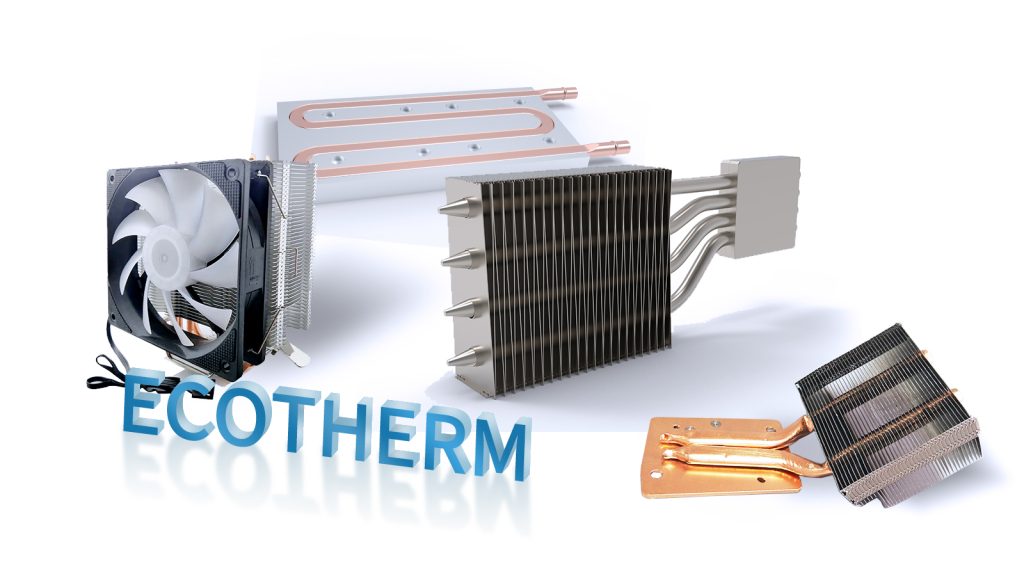
Principles of Heat Dissipation:
The principles of heat dissipation in heat sinks are based on fundamental physical principles of heat conduction and convective cooling. There are three modes of heat conduction: conduction, convection, and radiation.
Conduction Heat Transfer:
Conduction refers to the process of transferring heat energy through the vibration and collision of molecules within a substance (achieved through direct contact). Heat sinks absorb heat from the heat source and disperse it to their surface through conduction. This is the primary mode of heat dissipation in heat sinks.
Convection Heat Transfer:
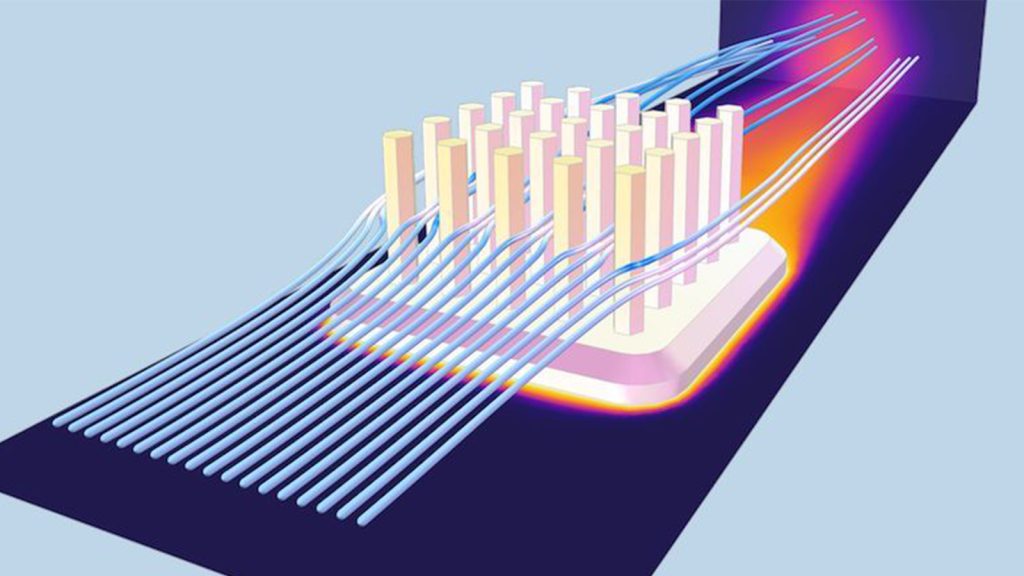
Convection involves the exchange of heat energy through the movement of surrounding air or fluid. In liquids or gases, warmer portions rise, while cooler portions sink, creating convection currents. Convection can be either natural or forced. Natural convection often occurs due to density differences or temperature gradients. Forced convection, on the other hand, is generated by external forces such as fans added to heat fins to enhance heat dissipation.
3. Radiation Heat Transfer:
Radiation involves the emission of heat from a body to cooler objects in the form of electromagnetic waves (transmitted by photons), without the need for a medium. Radiation can propagate in a vacuum, making it important in environments like space. However, radiation is not the primary mode of heat transfer in heat sinks.
Types of Heat Sinks:
1.Extrusion Heat Sink:
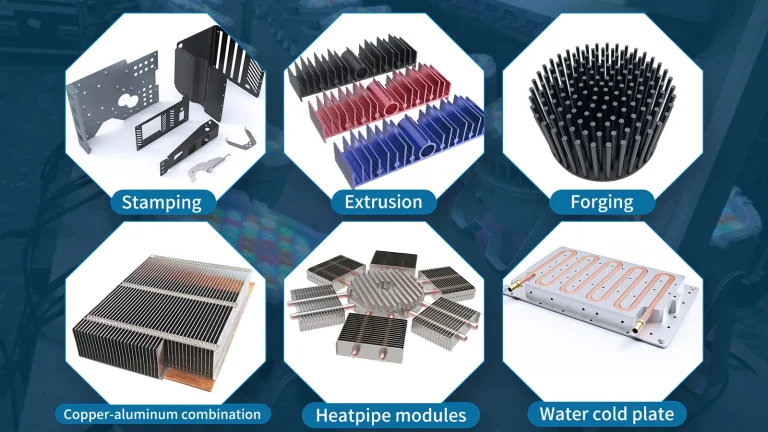
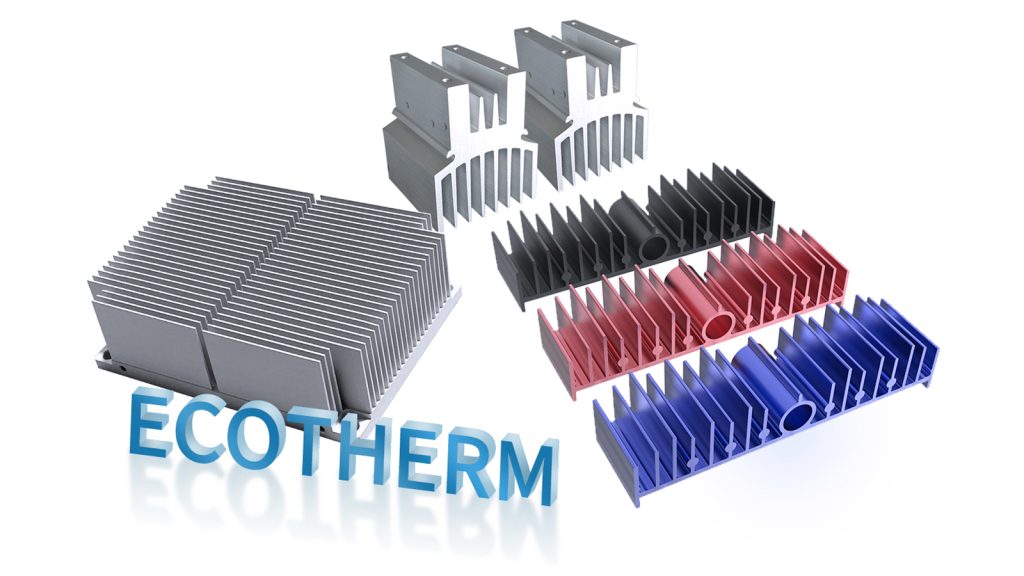
Extrusion is heating aluminum ingots to around 520-540°C and passing the molten aluminum through extrusion dies with grooves to create the basic shape of heat fins. Extrusion heat sinks offer advantages such as low investment, low technical barriers, short development cycles, low mold costs, low production costs, high output, and wide applicability. However, their disadvantage lies in relatively simple fin shapes and limitations in heated surface area for some specific shapes or requirements.
2.Skived Heat Sink:
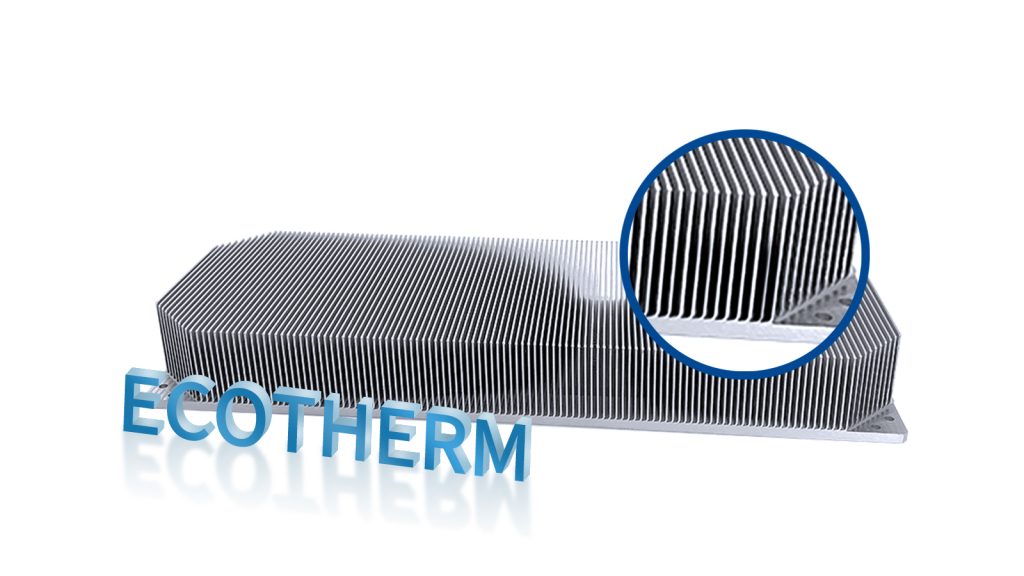
Skived heat sinks are created by cutting precise-thickness sheets from a metal block using a skiving machine and then bending them into an upright position to form cooling fins. Skived heat sinks excel in integrating the heat-absorbing baseplate with fins, increasing the contact area and enhancing heat dissipation efficiency. Copper and aluminum are suitable materials for skived heat sinks. Skived heat sinks are more suitable for small-batch and customized production due to higher equipment and labor costs compared to extrusion.
3.Die-Casting:
Die-casting is used for processing products with complex or special structures. In die-casting, aluminum alloy ingots are melted, injected into specialized molds under high pressure, and formed in a single step. Afterward, post-processing steps such as trimming, deburring, and surface treatment are performed to create individual heat sink components. Die-casting offers advantages like single-piece forming without interface impedance and the ability to manufacture thin, dense, or complex fins. However, it has limitations in balancing mechanical and thermal properties, surface imperfections during casting, reduced intrinsic thermal conductivity due to internal shrinkage holes, shorter mold life, complex equipment, lower production volume, and slightly higher costs.
4.Heat Pipe Heat Sink:
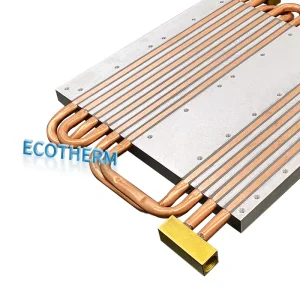
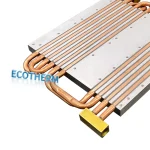
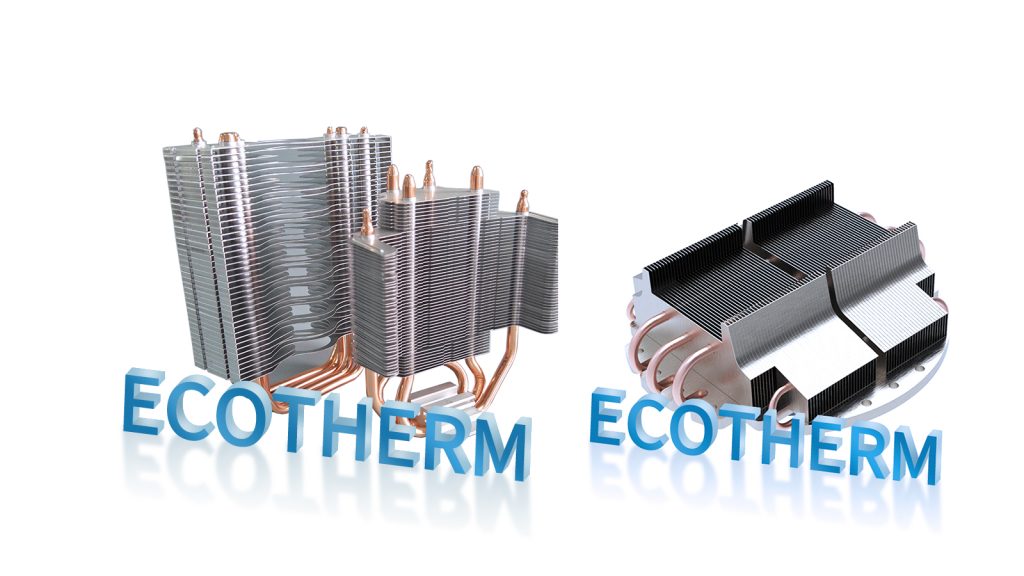
Heat pipe heat sinks combine heat pipes and heat fins to improve heat conduction and dissipation efficiency. The basic structure of heat pipe heat sinks consists of a heat storage module, a heat conduction module, and heat fins. The heat storage module typically serves as the base of the heat sink and is made of pure aluminum or copper. Heat pipes are highly thermally conductive elements that transfer heat through phase changes of the working fluid inside a sealed vacuum tube. Heat is absorbed at one end (the evaporator) and released at the other (the condenser). Heat pipes are integrated with metal heat fins to exchange heat with the surrounding air.
5.Liquid Cold Plate:
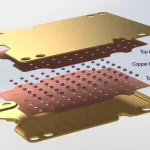
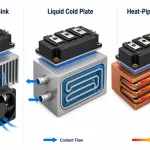
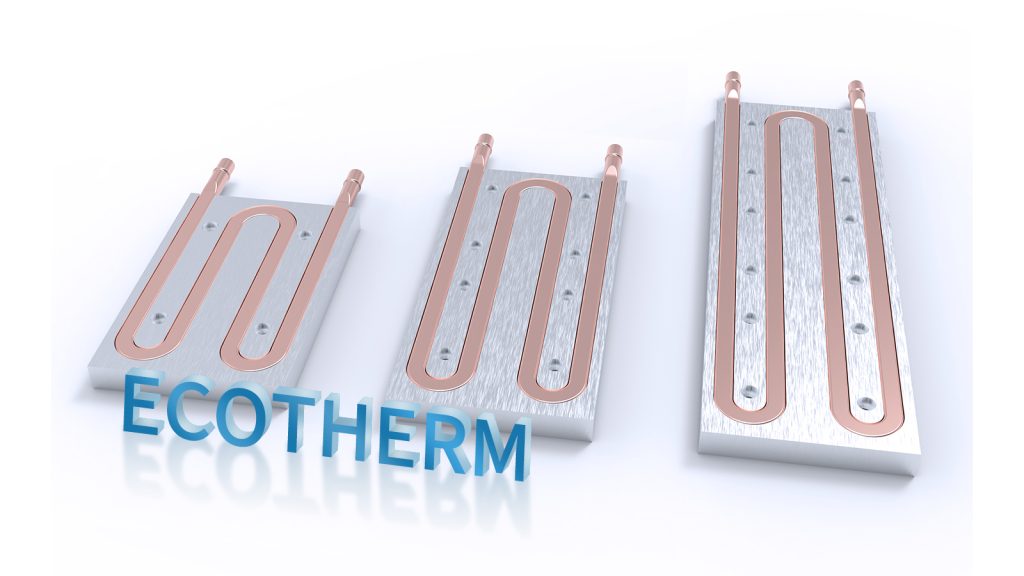
A liquid cold plate is a metal block with internal water channels made of copper or aluminum. It contacts the heat source, absorbs heat, and functions similarly to air-cooled heat fins. The key difference is that the liquid cold plate must have sealed channels for the circulation of coolant to prevent leakage and electrical shorts. Liquid cold plates balance heat evenly and operate with low noise. Due to the high heat capacity of water, they efficiently absorb large amounts of heat while maintaining a stable temperature.
6.Folding Heat Sink:
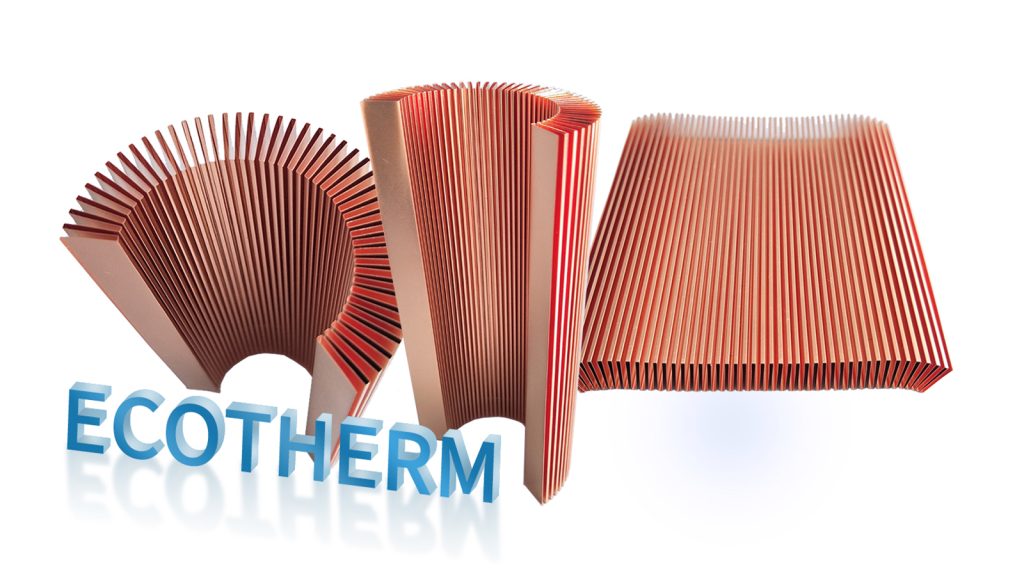
Folding heat sinks offer a larger heat dissipation surface area and design flexibility. Materials that can be easily folded into thin sheets, such as copper and aluminum, are preferred for manufacturing folding heat sinks. Folding heat sinks with an added baseplate, maximizing contact with the heat sink base, are the most common type. This configuration allows most of the heat to transfer from the base to the folding heat sink.
7.Zippered Fin Heat Sink:
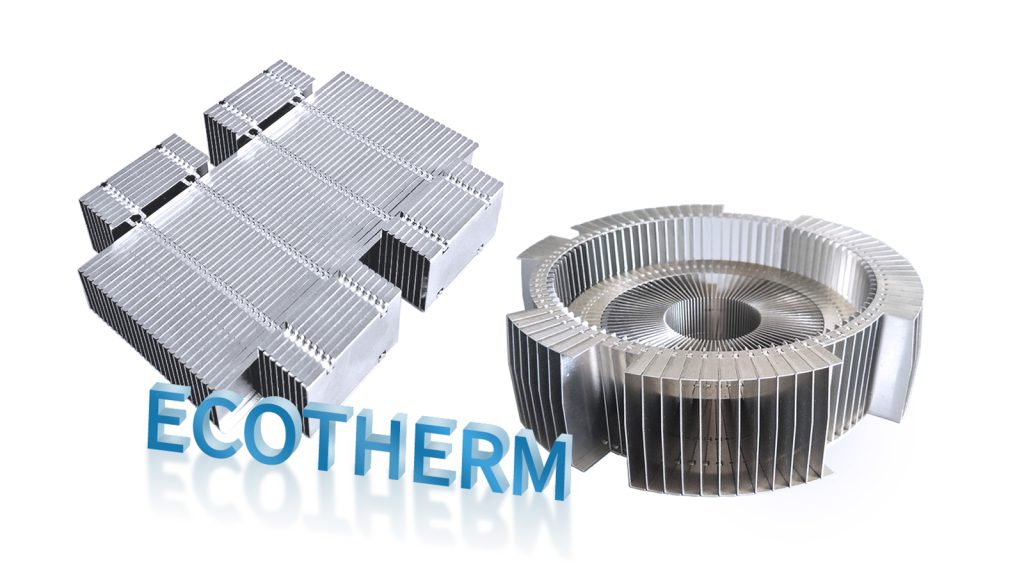
Zippered fin heat sinks are made by stamping copper or aluminum into designed shapes, typically ranging from 0.2 to 0.6 millimeters in thickness, and connecting them together. These fins are welded to heat pipes or a copper or aluminum baseplate, and heat is transferred from the heat source to the zippered fins via the heat pipes. Zippered fin heat sinks offer a larger heat dissipation surface area but require higher mold costs. They can be assembled with heat pipes, heat sink bases, fans, and other components.
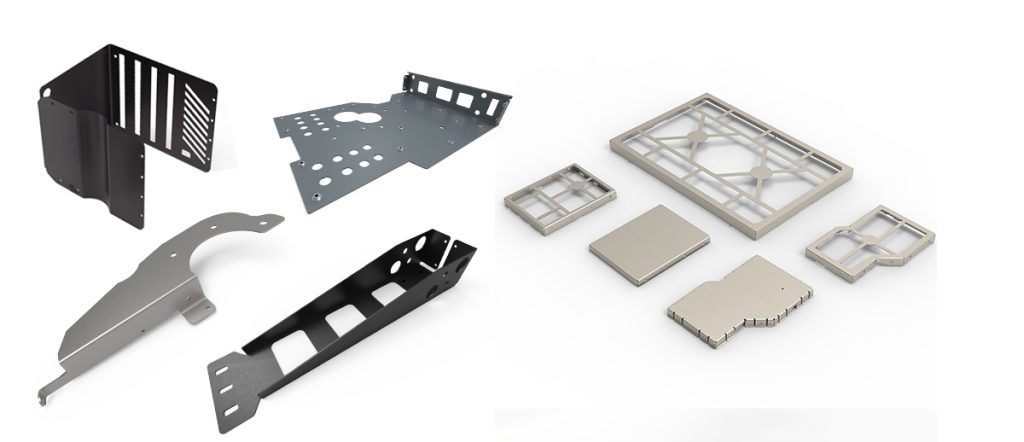
8.Stamping Heat Sink:
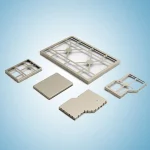
Stamping is a cold forming process that transforms metal sheets into different shapes using molds and stamping presses. Flat metal sheets, known as blanks, are fed into stamping presses, which use tools and die surfaces to shape the metal into the desired form. Stamping facilities and metal manufacturers providing stamping services place the material to be stamped between mold sections, where it is shaped and trimmed into the final product or component.