Cold Plate Heatsink: Cooling Plates, Design Data & Selection Guide
A cold plate heatsink is used when air cooling cannot remove enough heat in limited space. It transfers heat from electronics into liquid coolant, but performance depends on material, channel design, flow rate, pressure drop, flatness, and leak control.
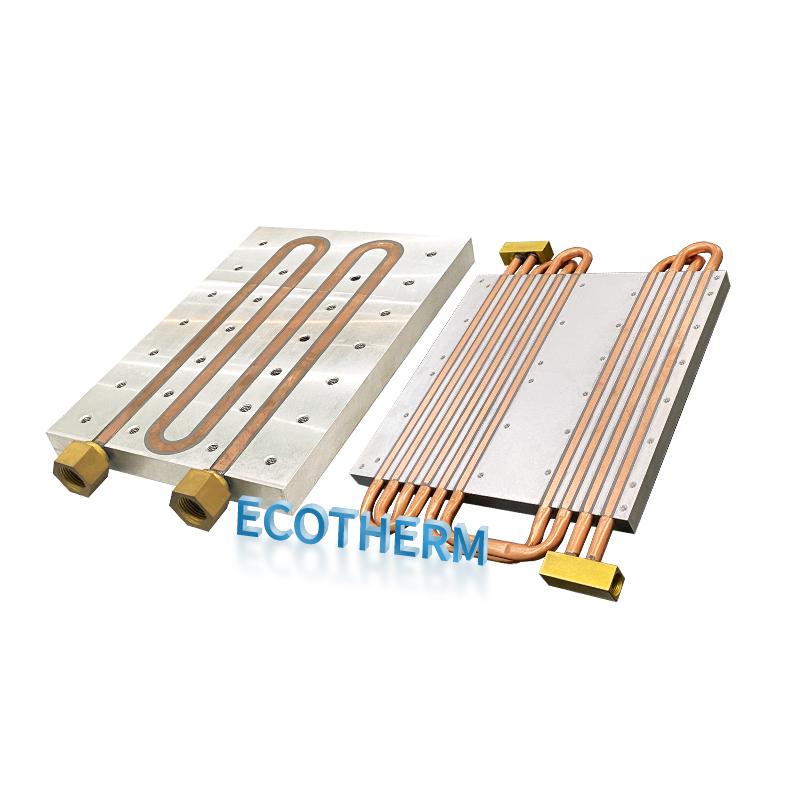
What Is a Cold Plate Heatsink?
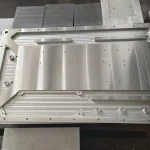
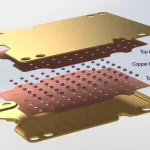
A cold plate heatsink is a metal cooling plate with internal liquid channels. The heat source contacts the plate surface, heat conducts into the metal, and coolant carries the heat away through the internal flow path.
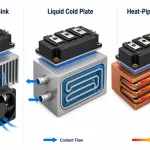
Compared with a finned air heat sink, a cold plate does not rely mainly on air around the device. It moves heat into a liquid loop, which can then reject heat through a radiator, CDU, heat exchanger, or facility cooling system.
| Item | Cold plate heatsink | Why it matters |
|---|---|---|
| Main function | Transfers heat into liquid coolant | Supports higher heat density than air cooling |
| Heat path | Device → TIM → metal plate → coolant | Short and controlled thermal path |
| Common materials | Copper, aluminum, stainless steel | Affects thermal performance, weight and corrosion |
| Internal structure | Tube, channel, microchannel, fin, manifold | Controls heat transfer and pressure drop |
| Key risks | Leakage, corrosion, clogging, flatness error | Affects long-term reliability |
| Typical applications | EVs, lasers, IGBTs, servers, inverters, power modules | Used where air cooling is not enough |
Cold Plate Cooling vs Air Heat Sink: What Is the Difference?
Cold plate cooling uses liquid flow to remove heat. A traditional heat sink uses fins and air. The right choice depends on heat load, available space, airflow, noise limit, and system complexity.
Air heat sinks are simpler and cheaper. Cold plates are more complex, but they can move heat away from compact, high-power components more effectively.
| Comparison | Air heat sink | Cold plate cooling |
|---|---|---|
| Cooling medium | Air | Liquid coolant |
| Main structure | Base + fins | Metal plate + internal channels |
| System complexity | Low | Medium to high |
| Cooling capacity | Low to medium | Medium to high |
| Noise source | Fan, if used | Pump, radiator fan, system loop |
| Maintenance | Lower | Coolant, fittings and leakage control |
| Best use | General electronics | High-power or compact systems |
Practical rule: use a heat sink when airflow and fin space are enough. Use a cold plate when the heat load is high, the space is compact, or heat must be moved away from the device.
Compact Cold Plate Heatsink: Which Internal Channel Design Works Best?
A compact cold plate heatsink needs more than a smaller size. It must balance heat transfer, pressure drop, flow distribution, manufacturing cost, and clogging risk.
Smaller channels can increase the internal heat transfer area, but they may also increase pressure drop. A good design keeps chip temperature low without overloading the pump.
| Internal design | Strength | Limitation | Best use |
|---|---|---|---|
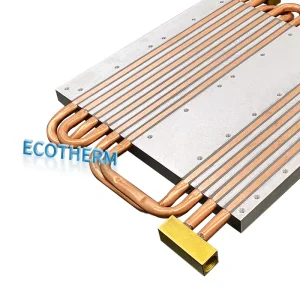
| Embedded tube | Simple and cost-effective | Higher thermal resistance than direct channels | IGBT, power electronics, moderate heat loads |
| Gun-drilled channel | Strong and robust | Mostly straight flow paths | Industrial cooling and durable cold plates |
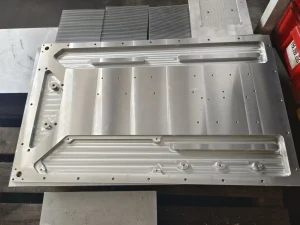
| CNC machined channel | Flexible design | Requires sealing or joining process | Custom prototypes and medium-power plates |
| Brazed cold plate | Complex channels and good sealing | Process control required | High-power electronics |
| FSW cold plate | Strong aluminum joint | Geometry depends on process | Large aluminum plates |
| Microchannel cold plate | High internal surface area | Higher pressure drop and clogging sensitivity | Lasers, compact high heat flux devices |
| Internal fin cold plate | More wetted area | More complex machining or brazing | Compact modules and power devices |
Practical rule: the best internal channel is not always the smallest one. It must match flow rate, coolant type, pressure drop limit, cleanliness requirement, and heat source size.
Cold Plates Car Applications: EV Battery, Inverter and Power Electronics Cooling
The query cold plates car usually refers to EV battery cooling, inverter cooling, onboard charger cooling, motor controller cooling, and other automotive power electronics.
Automotive cold plates are different from server or laser cold plates. They often need larger surface coverage, lower weight, vibration resistance, corrosion control, and stable temperature uniformity.
| Automotive application | Cooling target | Design focus |
|---|---|---|
| EV battery pack | Battery cells or modules | Temperature uniformity and safety |
| Inverter | IGBT / SiC power modules | High heat flux and cycling reliability |
| Onboard charger | Power electronics | Compact liquid cooling |
| Motor controller | MOSFET / IGBT modules | Stable operation under load |
| Fuel cell system | Power electronics and stack interface | Fluid compatibility and durability |
| Sensor / laser module | Local hot spots | Compact heat removal |
| Car cold plate factor | Typical requirement |
|---|---|
| Material | Often aluminum for weight and cost |
| Coolant | Water-glycol mixture is common |
| Design goal | Uniform temperature, low weight, corrosion resistance |
| Reliability focus | Vibration, pressure cycling, leak control |
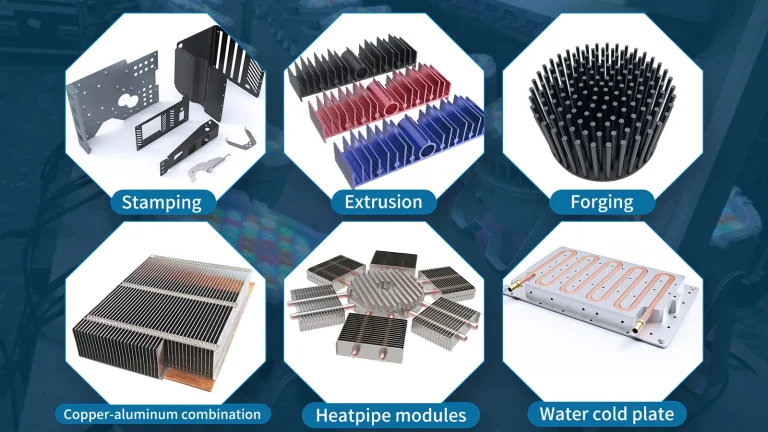
| Manufacturing | Extrusion, brazing, stamping, FSW or CNC depending on structure |
Practical rule: EV cold plates usually focus on uniform temperature over a larger area. Server and laser cold plates usually focus on removing high heat from a smaller area.
Cooling Plates: Flatness, Pressure Drop and Leak Test Data
For engineering cooling plates, performance is not only about heat transfer. A cold plate must also meet flatness, pressure drop, surface quality, and leakage requirements.
If the contact surface is not flat, the thermal interface material becomes uneven and thermal resistance increases. If pressure drop is too high, the pump or cooling loop may not support the design.
| Engineering data | Common design concern | Why it matters |
|---|---|---|
| Surface flatness | Contact surface tolerance | Reduces TIM resistance |
| Surface roughness | Contact quality and sealing | Affects interface and gasket performance |
| Pressure drop | kPa or bar at target flow | Affects pump and loop design |
| Flow rate | L/min per plate | Affects heat transfer |
| Leak test pressure | Test pressure and hold time | Verifies sealing reliability |
| Burst pressure | Maximum safe pressure | Important for safety margin |
| Internal cleanliness | Particles and residue | Protects pumps, valves and microchannels |
| Dimensional tolerance | Mounting and connector fit | Reduces assembly risk |
Example specification table for custom cooling plates
| Parameter | Standard project | High-performance project |
|---|---|---|
| Flatness | Define by contact area and chip size | Tighter flatness for high heat flux |
| Pressure drop | Moderate loop resistance | Lower pressure drop at required flow |
| Flow path | Tube or machined channel | Microchannel, finned channel, split-flow |
| Leak test | Required for all liquid parts | Higher test pressure or longer hold time |
| Surface treatment | Anodizing, coating, nickel plating if needed | Selected by coolant and corrosion risk |
| Inspection | Dimension and visual check | Dimension, flatness, leak, pressure drop, thermal test |
Practical rule: compare cold plates only under the same heat load, flow rate, coolant temperature, and pressure drop. Otherwise, performance data is not comparable.
Copper vs Aluminum Cold Plate Heatsink: Material Comparison
Material choice affects heat spreading, weight, cost, corrosion, and manufacturing process. Copper transfers heat faster, while aluminum is lighter and more cost-effective for larger plates.
| Material | Typical thermal conductivity | Weight | Cost | Best use |
|---|---|---|---|---|
| Copper | ~390–400 W/m·K | Heavy | Higher | High heat flux, compact hot spots, GPU/laser cooling |
| Aluminum | ~160–205 W/m·K | Light | Lower | EV plates, large plates, cost-sensitive systems |
| Stainless steel | ~15–20 W/m·K | Medium | Medium | Special fluid or corrosion environments |
| Coated copper | High | Heavy | Higher | High performance with corrosion control |
| Coated aluminum | Medium | Light | Lower | Lightweight systems with compatible coolant |
Practical rule: choose copper when heat flux and contact resistance are the main limits. Choose aluminum when weight, cost, and plate size matter more.
How to Choose a Custom Cold Plate for Your Project
A custom cold plate should be selected by heat load, heat source size, coolant condition, pressure drop, material, mounting method, and reliability requirements.
Before requesting a quote, send both thermal and mechanical data. A drawing alone is not enough if the supplier does not know coolant type, flow rate, pressure drop limit, and maximum temperature.
| Required data | Example |
|---|---|
| Heat source | GPU, CPU, IGBT, battery module, laser |
| Heat load | 100 W, 500 W, 1000 W+ |
| Heat source size | 20 × 20 mm chip, 60 × 80 mm module |
| Maximum temperature | Case, junction, surface or coolant outlet limit |
| Coolant type | Water-glycol, DI water, dielectric fluid |
| Inlet temperature | 25°C, 35°C, 45°C |
| Flow rate target | L/min per cold plate |
| Pressure drop limit | kPa or bar at target flow |
| Space limit | Length, width, thickness |
| Material preference | Copper, aluminum, stainless steel, coating |
| Mounting method | Screws, clamping, spring pressure |
| Surface treatment | Anodizing, nickel plating, coating |
| Test requirements | Leak test, pressure drop test, thermal test |
| Quantity | Prototype, pilot run, production |
Common selection mistakes
| Mistake | Result |
|---|---|
| Choosing by material only | Ignores channel design and pressure drop |
| Making channels too small | Higher clogging risk and pressure drop |
| Ignoring coolant compatibility | Corrosion or contamination risk |
| Not defining flatness | Poor TIM contact and higher thermal resistance |
| Comparing data from different test conditions | Wrong process selection |
| Forgetting leak test requirements | Higher field failure risk |
FAQ
What is a cold plate heatsink used for?
It is used for high-power electronics cooling. Common applications include EV battery packs, inverters, IGBT modules, lasers, servers, GPUs, CPUs, and industrial power systems.
What is the difference between cold plate cooling and a heat sink?
Cold plate cooling uses liquid flow to remove heat. A heat sink uses fins and air. Cold plates handle higher heat density but require pumps, coolant and leak control.
What makes a compact cold plate heatsink efficient?
A compact cold plate is efficient when the channel design provides enough internal surface area while keeping pressure drop acceptable. Flow distribution and flatness are also critical.
Where are cold plates used in cars?
Cold plates are used in EV battery packs, inverters, onboard chargers, motor controllers, fuel cell systems and other automotive power electronics.
Should I choose copper or aluminum for cooling plates?
Choose copper for high heat flux and compact hot spots. Choose aluminum for lightweight, larger plates and cost-sensitive systems. Coolant compatibility must also be checked.
What data is needed for a custom cold plate quote?
Send heat load, heat source size, maximum temperature, coolant type, inlet temperature, flow rate, pressure drop limit, space limit, material preference, test requirements and quantity.