CUSTOM HEAT SINK, PERFECTED FOR YOU.

Table of Contents

End-to-End Data Center Liquid Cooling Solutions: Preventing AI Overheating

How Liquid Cooling Solutions Prevent Data Center Overheating

The rapid evolution of Artificial Intelligence and High-Performance Computing (HPC) has pushed server thermal design power (TDP) beyond the limits of traditional HVAC systems. Implementing effective data center liquid cooling solutions is no longer optional; it is a critical requirement to prevent hardware throttling and catastrophic overheating. This guide provides data-driven insights into upgrading your infrastructure from single chips to facility-wide deployments.

What Are the Best Liquid Cooling Solutions for AI Data Centers?
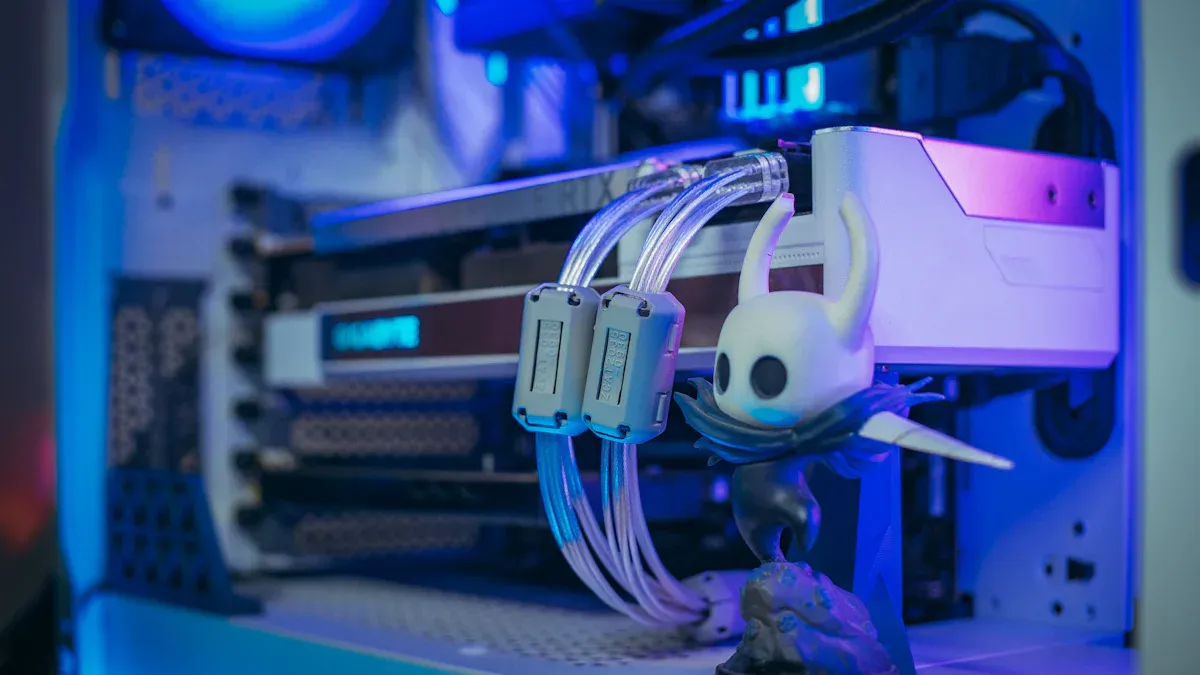
Liquid Cooling Solution Overview

For AI data centers housing high-density racks (e.g., NVIDIA H100/B200 clusters), the optimal approach is a hybrid deployment of Cold Plate Liquid Cooling and rear-door heat exchangers (RDHx). Traditional air cooling hits a physical limit at 30kW to 40kW per rack. In contrast, the best liquid cooling solutions for ai data centers can manage thermal loads exceeding 120kW per rack.

  • Efficiency Data: Facilities utilizing advanced cold plates experience a Power Usage Effectiveness (PUE) drop from an average of 1.55 to below 1.15. This translates to a 35-40% reduction in overall cooling OpEx.

  • Reliability Data: By maintaining a consistent core temperature, end-to-end liquid cooling solutions can extend the operational lifespan of expensive GPU clusters by up to 25%, virtually eliminating thermal throttling.

Data Center D2C Liquid Cooling Solutions vs. Traditional Air Cooling

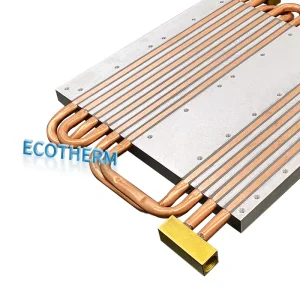
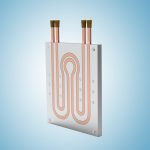
Direct-to-Chip (D2C) liquid cooling fundamentally shifts how heat is managed at the silicon level. Instead of blowing chilled air across a finned heat sink, data center d2c liquid cooling solutions pump dielectric fluid or treated water directly over a micro-channel cold plate attached to the CPU/GPU.

  • Heat Capture Metrics: A high-precision D2C cold plate captures 75% to 80% of the server’s total heat load at the source. The remaining 20% is handled by ambient air systems.

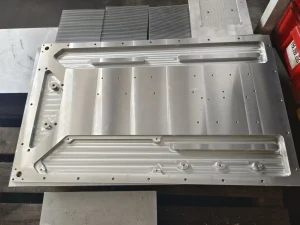
  • TDP Capacity: While premium air coolers struggle at 500W TDP, D2C liquid cooling plates manufactured with Friction Stir Welding (FSW) easily handle TDPs exceeding 1000W+ with a thermal resistance as low as 0.01°C/W.

How to Deploy Liquid Cooling for Existing Data Centers?

You do not need to build a new facility to transition to liquid cooling. Implementing liquid cooling for existing data center infrastructure is highly feasible using liquid-to-air Coolant Distribution Units (CDUs) or blind-mate manifolds.

  • Retrofit Data: Upgrading a 1MW air-cooled data center to a hybrid D2C system typically requires zero structural floor reinforcement if using In-Rack CDUs. The space utilization improves by 300%, as one 80kW liquid-cooled rack can replace three standard 25kW air-cooled racks. The Return on Investment (ROI) for this retrofit usually falls between 18 to 24 months.

What Are the Most Efficient Small Data Center Cooling Solutions?

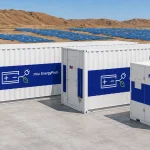
Edge computing nodes and enterprise server rooms also face density challenges. For these environments, closed-loop In-Rack liquid cooling systems are the superior small data center cooling solutions.

  • Space & Noise Metrics: A self-contained liquid cooling rack requires no connection to a facility-wide chilled water loop. It reduces the physical cooling footprint by 45% and drops acoustic noise levels from a deafening 85 dB (typical server fans) to a quiet 60 dB, making it ideal for office-adjacent telecom rooms.

The Role of Data Center Cooling Fluid Solutions

The lifeblood of any liquid system is the coolant. Choosing the right data center cooling fluid solutions prevents corrosion and galvanic reactions inside the micro-channels.

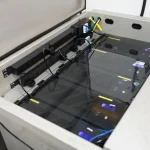
  • Maintenance Data: Using industrial-grade Propylene Glycol (PG25) or engineered fluorochemicals (for immersion) provides a lifespan of 5+ years before requiring replacement. Filtration down to 25 microns ensures that CNC-machined micro-channels (often as narrow as 0.1mm) never clog, maintaining a 100% flow rate.
Frequently Asked Questions (FAQ)

If I use liquid cooling systems, how will it impact the overall temperature management of the data center?

 It significantly stabilizes ambient temperatures and eliminates hot spots.

 By capturing over 75% of the server heat directly at the chip via D2C cold plates, the reliance on massive CRAH units decreases. The room temperature can safely be raised to 27°C (80°F), and cold/hot aisle containment pressures are drastically reduced, creating a more stable and predictable thermal environment.

Custom Liquid Cold Plates and Vapor Chambers are the most efficient choices.

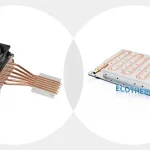
 For high-density AI servers, FSW (Friction Stir Welded) Liquid Cold Plates are mandatory for >700W TDPs. For secondary components or lower-density racks (300W-500W), highly dense Skived Fin Heat Sinks or 3D Vapor Chambers offer the best cost-to-performance ratio without the need for plumbing.

Transition to D2C liquid cooling manifolds to save space and improve airflow.

In dense setups (1U or 2U AI servers), oversized air heat sinks block airflow and cause localized overheating. Replacing bulky air coolers with low-profile liquid cold plates (typically under 15mm thick) frees up physical space, reduces aerodynamic impedance by 60%, and allows for denser blade packing.

Use automated filtration for liquid loops and compressed air with vacuums for dry fins.

For liquid cold plates, maintenance is minimal: simply replace the 25-micron inline CDU filters annually and check coolant pH levels. For traditional skived or zipper fin heat sinks, cleaning should be done bi-annually using ESD-safe vacuums and compressed air to remove dust build-up that acts as an insulator.

arm-water Direct-to-Chip (D2C) liquid cooling is the optimal solution.

Liquid cooling is 3000 times more effective at transferring heat than air. By utilizing ASHRAE W45 standards, the coolant inlet temperature can be as high as 45°C (113°F). This allows data centers in tropical climates to use dry coolers instead of energy-heavy chillers for year-round free cooling.

Direct OEM manufacturers like Ecotherm offer the most customizable and cost-effective solutions.

Instead of purchasing marked-up standard systems from integrators, sourcing directly from a CNC and thermal manufacturing factory ensures tight tolerances (±0.01mm) on cold plates, guaranteed leak-free vacuum brazing, and the ability to customize cooling manifolds to your exact server architecture.

Need Custom Thermal Solutions ?

Free Design Support

Rapid Quoting

24h Quick Quotation

Free Thermal Evaluation

Sample MOQ for 1 pc

Send your 2D/3D CAD files (STEP, IGS, PDF) for a rapid technical review and quote.

Need a Custom Thermal Solution for Your AI Project?

Submit your CAD drawing or thermal requirements. Our engineers provide a rapid thermal evaluation within 24 hours.

About Ecothermgroup

Custom Heat Sink Manufacturer

At Ecothermgroup, we do more than manufacture heat sinks; we provide end-to-end thermal engineering solutions. Backed by over two decades of manufacturing expertise, we partner with your engineering teams to solve complex thermal challenges. Whether you require a critical design review or a rapid shift from prototype to mass production, we ensure your high-power systems achieve optimal thermal performance with maximum cost-efficiency.

Our Service

Sample MOQ for 1 pc

Free Custom Design

Free Thermal Analysis

Best Price Guaranteed

24 Hours Feedback

Custom Heat Sink Types

custom zippered fin heatsink

*Reliable Thermal Transfer for Power Supplies and Telecom.

*Efficient Thermal Management for 1000W+ AI Chips.

custom vapor chamber heatsink

*Ultra-thin, High-Performance Heat Spreaders for Compact Spaces.

custom skived fin heatsink

*High-Density Skived Fins – Up to 3 Meters in Length.

You can find ECOTHERM On :

Related Insights

Featured Case Studies

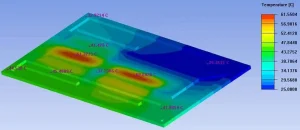
CFD thermal contour map showing temperature distribution for 3800W EV charging cold plate
  • Application: 800V EV Charging Station

  • Heat Load: 3800W | Thickness: 12mm

  • Technology: Friction Stir Welding (FSW) + CFD Simulation

Latest Engineering Insights

Scroll to Top

contact Ecotherm

We are available to assist you via email. Please don’t hesitate to get in touch, and we will respond to your inquiry as soon as possible.


Email:  support@ecothermgroup.com

Follow us on YouTube | TikTok | LinkedIn
Stay connected with us for updates, news, and more!


Please fill out the form below, and we will get back to you as soon as possible.

Get a Custom DFM Review & Quote

Please email your 3D CAD files (STEP/IGES) and project details. Max attachment: 50MB

support@ecothermgroup.com

100% Secure & Confidential | NDAs Supported | MOQ: 1 Piece

support@ecothermgroup.com

Contact Ecotherm

Please upload your design or requirements, and our experts will provide a precise cooling solution tailored to your needs.