Brazed Cold Plate Design Guide: When to Use Vacuum Brazing for Liquid Cooling
Efficient heat management is crucial in electronics and high-performance computing. This article discusses when vacuum brazing is beneficial in designing a brazed cold plate for liquid cooling systems, aiding engineers in making informed choices. Understanding the advantages and uses of this technique helps ensure your cooling solutions perform optimally and last longer.
Takeaway
- Brazed cold plates are key components for efficient liquid cooling in high-performance electronics, offering superior heat transfer capabilities.
- A well-designed brazed cold plate should focus on thermal conductivity, fluid flow optimization, and mechanical strength to boost performance and durability.
- Vacuum brazing is recommended for brazed cold plates as it creates high-quality joints free from oxidation, ensuring long-term reliability in challenging applications.
- It’s crucial to consider material compatibility and potential galvanic corrosion when designing brazed cold plates to prevent degradation and ensure top performance.
- Emerging trends in cold plate design involve using advanced materials and techniques, like additive manufacturing, to enhance thermal performance and cut production costs.
- Engineers should evaluate specific cooling needs and environmental conditions to decide if vacuum brazing suits their application.
- Using corrosion-resistant materials and coatings can increase the lifespan of brazed cold plates, especially in tough operating environments.
Introduction to Brazed Cold Plates
Importance in Liquid Cooling Systems
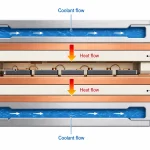
Brazed cold plates are key components in liquid cooling systems, designed to efficiently dissipate heat from high-performance electronics. They are particularly important in industries like power electronics, aerospace, and defense, where managing heat is crucial for reliability. These systems cool technologies such as IGBT cold plates and SiC power modules, demanding high thermal conductivity and durability.
As sectors like EV inverter cooling and battery liquid cold plates seek better cooling solutions, brazed cold plates have proven effective in providing stable and uniform heat removal. Ecothermgroup, a leader in thermal management, highlights the role of brazed cold plates in keeping critical equipment at optimal temperatures. Their design flexibility allows customizable flow paths, meeting specific cooling needs in areas like renewable energy inverter cooling and BESS cooling.
Overview of Brazing Techniques
Various brazing techniques are used to make cold plates, with vacuum brazing favored for creating leak-free, high-conductivity joints. This method is particularly beneficial in environments needing precise thermal management, such as semiconductor equipment and medical equipment cooling.
| Brazing Technique | Benefits |
|---|---|
| Vacuum Brazing | Leak-free joints, high conductivity |
| Traditional Brazing | Lower cost, simpler setup |
Vacuum brazing is notable for its uniform heating and precise temperature control, eliminating post-cleaning. This precision reduces part distortion and enhances durability, making it ideal for aerospace cold plates and laser cooling plates. Research on vacuum brazing emphasizes optimizing processing parameters to achieve quality joints.
- Uniform heating ensures consistent joint quality
- Tight temperature control prevents material degradation
- Eliminating post-cleaning enhances efficiency
Traditional brazing techniques might offer cost benefits and simpler setups but often lack the precision needed for critical applications. Choosing between vacuum and traditional brazing involves considering the application’s thermal needs and budget.
Brazed cold plates, especially those using vacuum brazing, provide reliability and efficiency in demanding environments. Their corrosion resistance and fatigue durability are vital for maintaining integrity in defense electronics cooling. As the industry innovates, brazed cold plates continue to be essential for effective power electronics cooling solutions.
Design Principles of Brazed Cold Plates
Thermal Management Considerations
Effective thermal management is crucial in the design of brazed cold plates, especially for applications like power electronics cooling and EV inverter cooling. These plates aim to efficiently dissipate heat from high-power components such as IGBT cold plates and SiC power module cooling systems. Vacuum brazing is beneficial here due to its ability to create strong, leak-proof joints that ensure optimal thermal conductivity. Operating in a vacuum environment minimizes oxidation and enhances the reliability of cooling systems, which is vital for mission-critical uses like defense electronics cooling and aerospace cold plates.
For practical implementation, consider the specific heat load and thermal requirements of the system. Evaluate factors like the power density of components, cooling fluid properties, and desired temperature gradients. For example, in renewable energy inverter cooling, efficient heat transfer can greatly improve system performance and longevity. Therefore, designing brazed cold plates with precise internal geometries to maximize fluid flow and heat dissipation is key to achieving optimal thermal management.
Material Selection and Compatibility
Material selection is crucial in designing brazed cold plates. The materials must be compatible with the cooling fluid and withstand the operational environment. Common choices include aluminum and copper, offering excellent thermal conductivity and often paired with aluminum-silicon alloys as filler metals during brazing. This selection lowers the melting point and ensures strong bonds without melting the base materials. Corrosion resistance is another critical factor, especially with water-based coolants in applications like battery liquid cold plates.
Vacuum brazing removes the need for chemical flux, reducing corrosion risk and enabling cleaner manufacturing processes. This makes it ideal for sensitive applications like semiconductor equipment cooling and medical equipment cooling, where purity and reliability are crucial. Additionally, vacuum brazing supports creating complex geometries and ultra-thin profiles, useful for high-density and space-constrained applications in sectors such as aerospace and high-performance computing.
| Application | Material Recommendation |
|---|---|
| EV Inverter Cooling | Aluminum with aluminum-silicon filler |
| Defense Electronics Cooling | Copper for high conductivity |
- Ensure material compatibility with cooling fluid
- Evaluate corrosion resistance for longevity
- Consider operational environment impacts
Vacuum Brazing Process
Advantages of Vacuum Brazing
Vacuum brazing is a preferred method for creating brazed cold plates due to several advantages. It is known for producing leak-free and high-integrity joints, crucial for reliable liquid cooling systems. This method is favored in industries like power electronics and EV inverter cooling, where component longevity is essential. The absence of corrosive flux during the process eliminates oxidation risks, resulting in cleaner and stronger joints. This benefit is important when designing cold plates for applications such as aerospace and defense electronics cooling, where reliability and performance are critical.
Additionally, vacuum brazing allows for creating complex internal geometries and ensures uniform heating throughout the component. This uniformity reduces distortion and enhances the thermal performance of cold plates, making it ideal for applications such as laser cooling plates and semiconductor equipment cooling. The scalability of vacuum brazing, from prototypes to mass production, offers flexibility to manufacturers like Ecothermgroup, enabling them to provide custom thermal solutions for various industrial needs.
Key Processing Parameters
Successful vacuum brazing relies on precise control of processing parameters. Temperature, time, and vacuum level are critical factors that determine the quality and strength of the brazed joint. Typically, brazing temperatures range from 850°C to 1150°C, depending on the materials involved. Maintaining a high vacuum level, usually below 10-5 torr, is crucial to prevent contamination that could compromise the joint’s integrity. The cooling rate post-brazing also influences the desired microstructure and mechanical properties of the cold plate.
Selecting the appropriate filler material is vital. Common choices include copper, silver, and nickel-based alloys, which offer excellent thermal conductivity and compatibility with materials like aluminum and stainless steel used in cold plates. These parameters are crucial for IGBT cold plate applications, as well as for battery liquid cold plates and renewable energy inverter cooling systems, where efficient heat dissipation is paramount.
Microstructural Aspects
The microstructure of brazed cold plates significantly influences their performance, especially in high-demand applications like medical equipment cooling and BESS cooling. Vacuum brazing fosters a fine-grained microstructure, which enhances strength and thermal conductivity. This process also minimizes the formation of intermetallic compounds that can weaken the joint and reduce efficiency.
Research papers on vacuum brazing highlight the importance of controlling the cooling rate to achieve optimal microstructural characteristics. Slow cooling rates can lead to undesirable coarsening of grains, while rapid cooling helps maintain a refined structure. This aspect is crucial in semiconductor equipment cooling, where precise thermal management is required to prevent overheating and ensure operational stability.
| Parameter | Typical Value |
|---|---|
| Brazing Temperature | 850°C – 1150°C |
| Vacuum Level | Below 10-5 torr |
| Common Filler Materials | Copper, Silver, Nickel-based alloys |
- Leak-free joints
- Complex geometries
- Uniform heating
- Scalability
- High thermal performance
Corrosion Considerations in Cold Plates
Impact of Water-Based Coolants
When designing brazed cold plates, understanding the impact of water-based coolants is crucial. These coolants, commonly used in applications like IGBT cold plates and EV inverter cooling, can cause corrosion over time. Corrosion can drastically affect the efficiency and lifespan of cold plates, leading to increased maintenance costs and potential system failures, particularly in power electronics cooling and aerospace cold plates. Therefore, selecting the right materials, such as copper-nickel alloys, which offer superior resistance to corrosion, is essential for maintaining system integrity.
Ecothermgroup emphasizes the importance of maintaining coolant chemistry to prevent corrosion. Regular monitoring and adjusting the pH levels of the coolant can mitigate corrosive effects, ensuring the longevity of semiconductor equipment cooling systems. Moreover, vacuum brazing offers leak-free joints that improve structural integrity, further reducing the risk of corrosion-related failures in renewable energy inverter cooling systems.
Predictive Corrosion Models
Predictive corrosion models are indispensable for assessing the longevity of brazed cold plates under various operating conditions. These models, detailed in IEEE papers, provide insights into the mechanisms of corrosion, offering a framework to predict how different materials will behave over time. By simulating corrosion impacts, engineers can optimize the design of battery liquid cold plates and medical equipment cooling systems to enhance durability.
Incorporating predictive models into the design process allows for the anticipation of potential failures and the implementation of preventative measures. Ecothermgroup recommends using these models to tailor the brazing process, ensuring the formation of robust joints that resist corrosion in defense electronics cooling applications. This approach is particularly beneficial for complex systems like SiC power module cooling, where precise thermal management is critical.
| Material | Corrosion Resistance |
|---|---|
| Copper-Nickel Alloy | High |
| Aluminum | Moderate |
| Steel | Low |
Vacuum brazing enhances the ability to include complex internal channel designs, which not only improve heat transfer efficiency but also minimize corrosion risks. In laser cooling plates, where precision is paramount, these designs ensure optimal performance and reliability. By understanding and implementing predictive corrosion models, manufacturers can significantly extend the lifespan and efficiency of brazed cold plates across various sectors.
- Monitor coolant pH levels regularly.
- Choose materials with high corrosion resistance.
- Implement predictive corrosion models during the design phase.
Future Trends in Cold Plate Design
Innovations in Thermal Management
The demand for efficient cooling solutions in power electronics is driving rapid changes in brazed cold plate design. Innovations in thermal management are crucial for applications like EV inverter cooling and defense electronics cooling, where reliability and performance are vital. Ecothermgroup, a leader in this field, highlights microchannel architectures that enhance heat transfer by increasing the surface area. This advancement is essential for handling the higher power densities found in SiC power module cooling and battery liquid cold plates.
An important trend is the use of advanced materials like aluminum alloys, known for their thermal conductivity and lightweight properties. These materials are ideal for aerospace cold plates and medical equipment cooling. Additionally, the move towards eco-friendly solutions encourages the use of sustainable materials and refrigerants, a trend reflected in renewable energy inverter cooling systems. Such innovations are enhancing efficiency while supporting global sustainability goals.
Advancements in Brazing Technology
Vacuum brazing is a leading method in cold plate design, providing benefits like leak-proof seals and complex internal channel designs. Recent research, including studies from Academia.edu, shows how vacuum brazing fine-tunes processing parameters for high-quality joints. This is critical for semiconductor equipment cooling, where precision and durability are essential.
Experts anticipate more sophisticated brazing techniques in the future, enabling the development of cold plates tailored to specific cooling needs. The increase in power density in electronics means reliable vacuum brazing is crucial for system performance and leak prevention. Ecothermgroup is at the forefront, using advanced brazing technologies to improve the structural integrity and thermal efficiency of cold plates.
| Application | Trend |
|---|---|
| EV Inverter Cooling | Microchannel Design |
| Defense Electronics Cooling | Advanced Material Use |
| Semiconductor Equipment Cooling | Enhanced Brazing Techniques |
Besides technological advancements, future trends include a focus on corrosion management, especially in systems using water-based coolants. According to IEEE findings, new models are emerging to predict corrosion impacts, ensuring the longevity and performance of laser cooling plates and BESS cooling systems.
Manufacturers should consider several factors in their design processes to adapt effectively:
- Choosing materials based on thermal performance and sustainability
- Using microchannel architectures for improved heat transfer
- Applying advanced brazing techniques for reliability
By adopting these innovations, companies like Ecothermgroup are set to lead the way in brazed cold plate design, meeting the growing demands across various industries.
People Also Ask
What are brazed cold plates and why are they used in liquid cooling systems?
Brazed cold plates are vital components in liquid cooling systems, particularly in high-performance computing. They efficiently transfer heat from electronic parts to the coolant, ensuring effective thermal management.
What are the main design principles to consider when creating brazed cold plates?
Important design principles for brazed cold plates include optimizing microchannel geometry for heat transfer and ensuring compatibility with the coolant to prevent corrosion. Material choice and joint quality are also key for durability and performance.
How does vacuum brazing enhance the quality of brazed cold plates?
Vacuum brazing enhances brazed cold plates by creating a controlled atmosphere that avoids oxidation and contamination, resulting in strong, clean joints. This process is essential for producing high-quality, reliable plates in liquid cooling systems.
What corrosion considerations should be taken into account for brazed cold plates?
Corrosion considerations involve choosing materials that resist corrosion from water-based coolants and incorporating design features to reduce corrosion risks. Predictive models can estimate corrosion impacts over time.
What is a brazed cold plate and how is it different from other cold plates?
A brazed cold plate is a heat exchanger using brazing to join parts, creating strong, leak-proof joints. Compared to other cold plates, brazed versions offer greater durability and efficiency, suited for demanding liquid cooling tasks.
When is vacuum brazing the preferred method for manufacturing cold plates?
Vacuum brazing is preferred when a high-quality joint is needed without oxidation risk. It’s ideal for applications requiring precise temperature control and where cold plate integrity is crucial, such as in high-performance computing.
What future trends are expected in cold plate design for liquid cooling?
Future cold plate designs may see advancements in microchannel technology for better thermal efficiency and smart materials that adjust to heat changes. Enhanced corrosion resistance and sustainability features are also expected.
How can corrosion in liquid cooling systems impact brazed cold plates?
Corrosion can harm brazed cold plates, decreasing thermal performance and causing leaks. Regular monitoring and using corrosion-resistant materials can help mitigate these risks and extend the lifespan of cold plates.