IGBT Cold Plate for Efficient Electronics Cooling
In the fast-paced world of power electronics, keeping inverters and drives at the right temperature is a crucial challenge. The IGBT Cold Plate offers an effective solution by managing heat in these high-power setups. This article looks at how using liquid cooling technology can boost the performance and lifespan of power electronic systems.
Takeaway
- IGBT cold plates are crucial for managing heat in power electronics, improving the reliability and efficiency of devices like inverters and drives.
- Key design factors for IGBT cold plates include optimizing the coolant flow path, choosing materials with high thermal conductivity, and ensuring they fit well with the IGBT module packaging.
- Liquid cooling is more effective than air cooling for heat dissipation, which is essential for the performance and lifespan of high-power electronic components.
- Inverters and drives see great benefits from liquid-cooled IGBT systems, especially in challenging applications such as renewable energy systems and electric vehicles, where efficient thermal management is vital.
- The choice of coolant is important, as it impacts the performance and maintenance of the cooling system; water-glycol mixtures are popular due to their effective heat transfer capabilities.
- New trends in IGBT liquid cooling include creating more compact and efficient cold plate designs and using advanced materials like graphene to improve thermal conductivity.
- Advancements in IGBT cooling technologies are driven by the demand for higher power densities and improved efficiency in power electronics, highlighting the need for continuous improvements in thermal management solutions.
Introduction to IGBT Cold Plates
What is an IGBT Cold Plate?
An IGBT cold plate is a crucial part of the cooling systems for inverters, drives, and other power electronics. These cold plates are designed to manage the significant heat generated by Insulated Gate Bipolar Transistor (IGBT) modules. IGBT modules are essential in modern power electronics due to their efficiency and compact size, but they require effective thermal management to prevent overheating and ensure optimal performance.
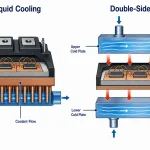
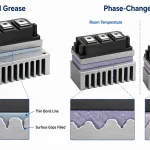
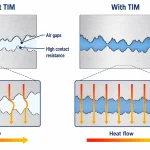
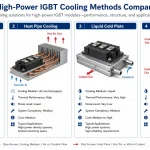
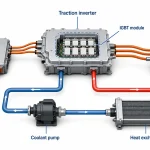
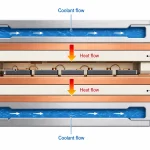
The IGBT cold plate works by directly contacting the thermal interface of the IGBT module, efficiently transferring heat away. Liquid cooling is generally preferred over air cooling for these plates, as it can handle higher power densities and provide uniform temperature distribution. Designing IGBT liquid cold plates involves careful consideration of several factors, including the selection of thermal interface materials and coolant distribution channels. The design must also account for heat exchanger efficiency, environmental conditions, and specific application requirements to optimize performance.
| Component | Description |
|---|---|
| IGBT Module | Generates high heat; requires cooling |
| Cold Plate | Transfers heat from IGBT module |
| Coolant Channels | Distribute liquid for efficient cooling |
| Thermal Interface Material | Improves heat transfer between the module and cold plate |
| Coolant Type | Varies based on application (e.g., water, glycol mixtures) |
Importance in Power Electronics
The importance of IGBT cold plates in power electronics cannot be overstated. Efficient thermal management is crucial in preventing thermal runaway, reducing electrical losses, and avoiding component degradation. These issues are common concerns in high-power applications such as EV inverter cooling, industrial drive cooling, and solar inverter cooling.
IGBT cold plates are especially vital in industries where reliability and uninterrupted operation are paramount. For instance, in rail transit systems, traction inverters rely on effective cooling solutions to maintain consistent performance during extended operation. Similarly, in renewable energy systems such as wind and solar power, IGBT cold plates ensure inverters operate efficiently under fluctuating environmental conditions. The ability to maintain uniform temperatures across modules contributes to prolonged system life and reduced maintenance costs.
Ecothermgroup, a leader in thermal management solutions, emphasizes custom IGBT cold plate designs tailored to specific applications. Customization ensures compatibility with various operational environments and module footprints, maintaining system integrity and performance. Additionally, experts recommend considering factors such as pressure drop characteristics and coolant flow for optimal heat dissipation. Incorporating advanced materials like aluminum or copper alloys can also improve thermal conductivity while minimizing weight.
- Prevents thermal runaway
- Reduces electrical losses
- Avoids component degradation
- Improves energy efficiency
- Extends component lifespan
IGBT cold plates are indispensable in maintaining the reliability and efficiency of power electronics systems. By leveraging advanced designs and materials, manufacturers like Ecothermgroup ensure these components meet the demanding requirements of modern applications, from traction inverter cooling in rail transit to DC fast charger cooling. As industry standards evolve, the role of IGBT cold plates will continue to grow in significance. Their adaptability, whether through modular designs or enhanced cooling strategies, positions them as a cornerstone in supporting high-performance electronic systems in diverse sectors.
Design and Material Considerations
Material Choices for Efficiency
When designing IGBT cold plates, choosing the right material is crucial for effective power electronics cooling. Common materials include aluminum and copper. Aluminum is preferred for its lightweight nature and cost-effectiveness, making it ideal when weight is a critical factor. However, it offers lower thermal conductivity compared to copper. Copper, on the other hand, provides excellent heat transfer capabilities, essential for efficient IGBT module cooling. Despite its superior thermal performance, copper is heavier and more expensive, affecting the overall cost and design of the IGBT liquid cold plate.
The shift from traditional silicon IGBTs to silicon carbide (SiC) power modules has increased the demand for advanced cooling solutions. SiC devices operate at higher temperatures and heat fluxes, requiring materials that can withstand these conditions. This makes copper an attractive option despite its higher cost. Ecothermgroup and other industry leaders often recommend copper for applications where performance is prioritized over cost.
| Material | Advantages | Disadvantages |
|---|---|---|
| Aluminum | Lightweight, Cost-effective | Lower thermal conductivity |
| Copper | High thermal conductivity | Heavy, Expensive |
Custom Design for Specific Applications
Designing an IGBT cold plate requires careful consideration of the specific needs of the application. Custom designs are often necessary to achieve optimal performance in various power electronics systems, such as EV inverter cooling or wind power converter cooling. The channel design within the cold plate is particularly important. A balance must be struck between thermal efficiency and fluid dynamics. While straight channels offer low pressure drops, complex geometries like serpentine or microchannels enhance heat exchange but increase pressure drop.
Ecothermgroup emphasizes custom IGBT cold plate designs to meet the diverse requirements of industrial drive cooling and other specialized applications. By tailoring the design to specific operating conditions, such as those found in rail transit inverter cooling or solar inverter cooling, manufacturers can ensure reliable and efficient performance. Incorporating thermal interface materials and ensuring appropriate mounting pressure also contribute to effective heat transfer and long-term reliability.
- Industrial drive cooling
- Traction inverter cooling
- Energy storage converter cooling
For applications like DC fast charger cooling, maintaining uniform temperature distribution is vital to avoid hotspots that could compromise system stability. Custom designs allow for precise control over these variables, enhancing the longevity and reliability of the power electronics systems they serve.
Benefits of Liquid Cooling for IGBT
Enhanced Performance and Reliability
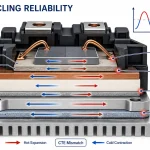
Liquid cooling solutions, particularly IGBT cold plates, significantly enhance the performance and reliability of power electronics systems. Unlike air cooling, liquid cooling offers superior thermal management by efficiently dissipating heat generated by IGBT modules. This results in lower junction temperatures, which help maintain optimal performance and extend the lifespan of the modules.
In applications such as inverter cooling, motor drive cooling, and EV inverter cooling, liquid cold plates are preferred for handling high power densities. By maintaining a consistent and lower temperature, these systems operate at higher efficiency levels, reducing the risk of overheating and reliability issues. Ecothermgroup’s liquid cold plates are designed to meet the specific thermal management needs of various power electronics applications, ensuring systems remain stable and reliable even under heavy loads.
System Stability and Efficiency
System stability and efficiency are crucial in power electronics cooling. Using a liquid cold plate for IGBT modules ensures that heat is consistently removed from the heat-generating components, preventing temperature fluctuations that could impact system performance. This is particularly important in high-power applications such as traction inverter cooling and rail transit inverter cooling, where maintaining a stable operating temperature is essential.
Customization of IGBT liquid cold plates offers another significant advantage. Tailoring the design to specific requirements allows for precise thermal management, optimizing cooling performance for unique operational environments. For example, the rise of Silicon Carbide (SiC) power modules, which present higher thermal challenges, demands effective cooling solutions like liquid cold plates to efficiently manage their increased power density.
The following table highlights the benefits of liquid cooling over traditional air cooling methods:
| Cooling Method | Benefits |
|---|---|
| Liquid Cooling | Superior heat dissipation, consistent temperature control, higher efficiency, extended component lifespan |
| Air Cooling | Lower cost, simpler installation, adequate for lower power densities |
By integrating advanced liquid cooling solutions, such as those provided by Ecothermgroup, power electronics systems achieve higher efficiency and reliability along with enhanced system stability. These improvements are vital for applications like wind power converter cooling and solar inverter cooling, where consistent performance is crucial.
- Reduces risk of overheating
- Ensures consistent performance
- Optimizes power electronics cooling
The use of IGBT liquid cold plates is essential for managing the thermal demands of modern power electronics. They provide a reliable method to enhance performance, ensure system stability, and improve overall efficiency, making them indispensable in various high-power applications.
Applications in Inverters and Drives
Role in Inverter Cooling
Inverter cooling is crucial for maintaining the efficiency and reliability of power electronics systems. The IGBT cold plate is essential for dissipating the heat produced by IGBT modules. These modules are vital in converting DC to AC power in inverters, making efficient thermal management necessary. Liquid cooling methods, such as those from Ecothermgroup, outperform traditional air cooling with higher heat transfer coefficients, ensuring inverters operate within safe temperature ranges. This is especially important in high-power applications like electric vehicle inverters and solar power systems, where overheating can cause efficiency losses or component failure.
The shift to SiC and GaN devices in inverter systems has increased the demand for advanced cooling solutions. These devices operate at higher frequencies and temperatures, requiring more effective thermal management strategies. Custom IGBT cold plates, with optimized channel geometries and material choices, offer tailored solutions to meet these needs. Copper cold plates provide superior thermal conductivity, suitable for densely packed IGBT modules, while aluminum plates are preferred for their lightweight and cost-effectiveness.
| Cooling Method | Heat Transfer Coefficient (W/m²K) |
|---|---|
| Air Cooling | 50-100 |
| Liquid Cooling | 500-10,000 |
Impact on Drive Systems
Drive systems, including industrial and motor drives, greatly benefit from IGBT liquid cold plates. Effective cooling is key to enhancing performance and extending component lifespan. Liquid cold plates maintain optimal operating temperatures, prevent thermal stress, and ensure drives function efficiently under varying load conditions. This is vital in applications like variable frequency drives and traction inverters in rail transit systems, where reliability and performance are essential.
Furthermore, the adaptability of IGBT liquid cold plates allows them to be used in various environments, from wind power converters to energy storage solutions. The ability to customize the design, including channel layout and thermal interface materials, ensures each application achieves maximum heat dissipation and system stability. Experts note that these advanced cooling solutions improve system efficiency and reduce maintenance costs, making them a preferred choice in modern power electronics.
- Improved thermal performance
- Extended component lifespan
- Reduced maintenance costs
IGBT cold plates are indispensable in inverters and drives for cooling power electronics systems. By ensuring efficient heat dissipation, these cold plates enhance the performance, reliability, and lifespan of various drive systems.
Future Trends and Innovations
Technological Advancements
The rapid development in power electronics is reshaping the landscape of IGBT cold plate technology. A key trend is the shift from silicon-based IGBTs to silicon carbide (SiC) MOSFETs. This change is driven by the need for higher efficiency and power density, which requires more effective cooling solutions. Liquid cold plates are gaining popularity for their ability to handle higher heat flux and junction temperatures, ensuring system stability and reliability in applications such as inverter cooling and industrial drive cooling.
Direct liquid cooling systems are now preferred over traditional air cooling methods due to their superior ability to manage higher power densities. This trend is especially evident in sectors like electric vehicles and renewable energy, where maintaining safe operation temperatures is crucial. For example, Ecothermgroup has been leading the development of custom IGBT cold plates tailored to meet specific OE project requirements, focusing on optimizing power electronics cooling.
| Technological Feature | Benefit |
|---|---|
| SiC Power Modules | Higher efficiency and power density |
| Direct Liquid Cooling | Improved thermal management |
| Direct Bond Copper (DBC) Structures | Minimized thermal interfaces |
The integration of Direct Bond Copper (DBC) structures within liquid cold plates is a key innovation. This technology reduces thermal resistance and enhances system reliability by ensuring efficient heat removal. Such advancements are crucial for applications like EV inverter cooling and VFD cooling, where performance and longevity are essential.
Sustainability in Cold Plate Design
As the industry evolves, sustainability has become central to IGBT cold plate design. Manufacturers are focusing on eco-friendly materials and processes to reduce environmental impact while maintaining high thermal performance. The use of recyclable materials and energy-efficient manufacturing techniques is gaining traction, aligning with global sustainability goals.
Advanced channel designs within cold plates are being explored to optimize heat removal from localized hotspots, a common challenge in power electronics cooling. This not only improves efficiency but also contributes to the overall sustainability of the systems by reducing the energy required for cooling.
- Eco-friendly materials
- Energy-efficient manufacturing
- Optimized channel designs
The future of IGBT cold plate technology lies in balancing technological advancements with sustainability. By integrating innovations like SiC power modules and DBC structures with sustainable practices, companies like Ecothermgroup are setting new standards in the power electronics cooling industry. These innovations enhance performance and align with the growing emphasis on environmental responsibility.
People Also Ask
What is an IGBT cold plate and why is it important for power electronics cooling?
An IGBT cold plate dissipates heat from Insulated Gate Bipolar Transistors (IGBTs) and other power electronics. It is essential for maintaining stability and efficiency by preventing overheating, which can lead to reduced performance or failure.
How do liquid cold plates improve the cooling efficiency of IGBTs in inverters and drives?
Liquid cold plates boost cooling efficiency by directly cooling IGBTs with liquid coolant that effectively absorbs heat. This results in lower junction temperatures and greater reliability in applications like inverters and drives.
What materials are commonly used in the design of IGBT cold plates?
Aluminum and copper are common materials for IGBT cold plates due to their excellent thermal conductivity. The choice of material affects the cooling performance and durability of the cold plate in various applications.
What are the benefits of using custom IGBT liquid cold plates for OE projects?
Custom IGBT liquid cold plates are tailored to meet specific engineering needs, ensuring optimal cooling performance and compatibility with existing systems. They can address unique cooling challenges in original equipment (OE) projects.
In what ways do IGBT cold plates contribute to the reliability of power electronics systems?
IGBT cold plates maintain consistent thermal management, preventing overheating and ensuring stable operation. This boosts the overall reliability and longevity of power electronics systems by reducing thermal stress and potential damage.
How is the manufacturing process of IGBT liquid cold plates reviewed to ensure quality?
The manufacturing process for IGBT liquid cold plates includes rigorous reviews, such as RFQ inputs and engineering evaluations, to ensure high-quality standards are met. This ensures the cold plates effectively meet cooling requirements for power electronics.
What future trends are expected in the design of IGBT cold plates?
Future trends in IGBT cold plate design may include advancements in material technology and integration with smart cooling systems for better performance. Innovations aim to enhance cooling efficiency and adapt to evolving power electronics needs.
How can IGBT cold plates be integrated into existing inverter and drive systems?
IGBT cold plates can be integrated into existing systems by ensuring compatibility with current designs and cooling requirements. Custom solutions may be developed to fit specific system configurations and optimize thermal management.